
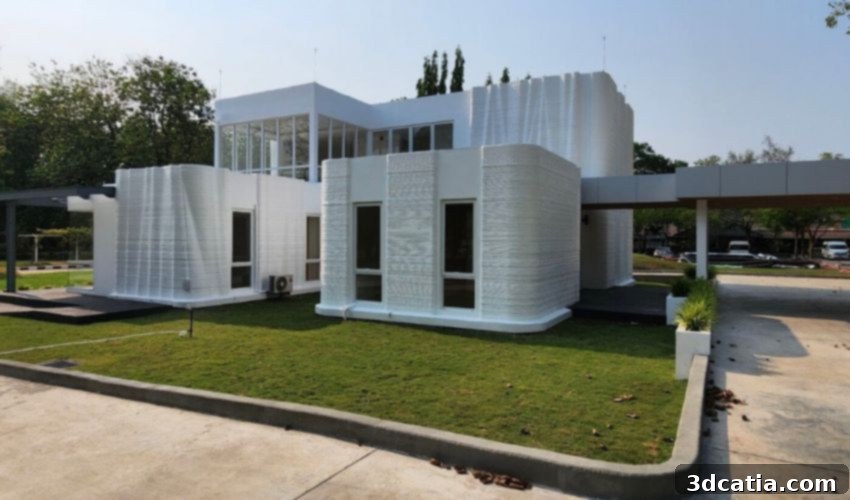
Revolutionizing Healthcare Infrastructure: Thailand’s Pioneering 3D Printed Medical Center
In a monumental leap forward for healthcare infrastructure, Thailand has proudly unveiled its inaugural 3D printed medical center. This groundbreaking facility, meticulously constructed by the Siam Cement Group (SCG) utilizing COBOD’s advanced BOD2 printer, stands as a vivid testament to the transformative power of additive manufacturing. It highlights the immense potential of this technology to redefine the landscape of healthcare construction globally. With its innovative design, dramatically improved construction speed, and remarkable cost-effectiveness, this state-of-the-art 3D printed medical center establishes an unprecedented standard for the future of healthcare architecture and patient care.
The healthcare sector worldwide faces persistent challenges in expanding and modernizing its infrastructure efficiently. Traditional construction methodologies often struggle to meet the escalating demands, characterized by lengthy timelines, high labor costs, and limited design flexibility. This is where the innovative promise of 3D construction printing, or additive manufacturing, emerges as a game-changer. COBOD, a globally recognized pioneer in this field, with accolades such as holding the world record for the fastest 3D printed building in Oman and pioneering the first two-story 3D printed building in India, has once again spearheaded a transformative project: the construction of Thailand’s first 3D printed medical facility. This advanced technological approach not only facilitates significantly faster construction and substantial cost savings but also offers unparalleled design flexibility, ultimately contributing to enhanced patient care and overall well-being.
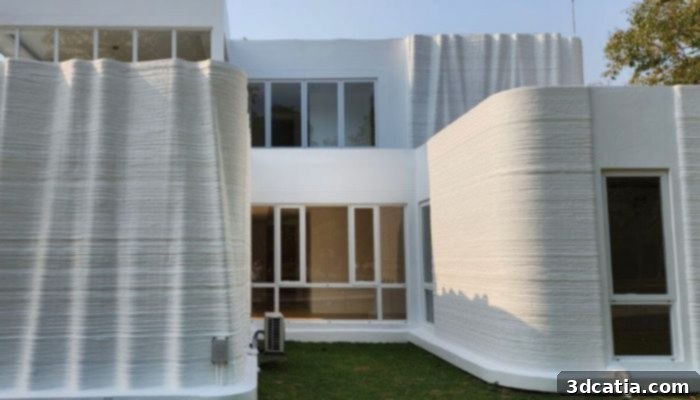
The new 3D printed medical center located in Saraburi, Thailand.
Innovative Design and Precision Engineering with COBOD BOD2
The recently completed 3D printed medical center in Thailand exemplifies the seamless integration of innovative design principles with state-of-the-art construction techniques. The deployment of COBOD’s robust BOD2 3D printer, synergized with cutting-edge software, enabled the precise, layer-by-layer deposition of specialized concrete. This meticulous process resulted in intricate architectural features and a visually striking aesthetic appeal that would be challenging and costly to achieve with conventional methods. Furthermore, the inherent modular design of the facility grants exceptional scalability and customization options, ensuring it can readily adapt to the dynamic and evolving needs of the modern healthcare system. This adaptability is crucial for future expansions and modifications, making the investment highly future-proof.
Unlocking Unprecedented Efficiency: Speed and Cost Advantages
One of the most compelling advantages of integrating 3D printing into healthcare construction is the dramatic reduction in both construction time and overall project costs. The automation inherent in the 3D printing process, coupled with the precise and optimized usage of building materials, significantly minimizes waste and subsequently lowers expenses. This efficiency translates into tangible benefits: healthcare facilities can be erected in a fraction of the time typically required by traditional construction methods. For a sector where rapid deployment of critical infrastructure is paramount, this acceleration is invaluable. It not only speeds up the delivery of essential medical services but also drastically reduces disruptions caused by prolonged construction activities in surrounding communities or existing medical campuses. The agility offered by 3D printing means resources can be allocated more effectively, ensuring vital services are available sooner to those who need them most.
Beyond raw speed, the cost savings are multifaceted. Reduced labor requirements on-site, minimized material transportation, and less reliance on heavy machinery all contribute to a leaner budget. Moreover, the ability to print complex geometries directly from digital designs eliminates the need for expensive formwork and intricate manual labor, further optimizing the financial outlay. These combined factors make 3D printed construction an economically attractive solution for developing new healthcare facilities, particularly in regions with limited resources or urgent needs.
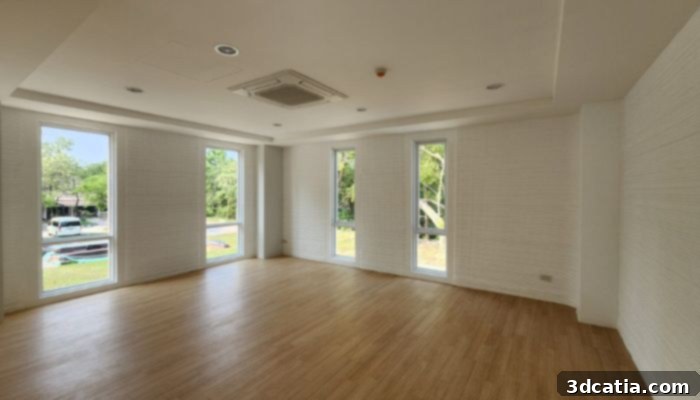
Inside the innovative two-story medical center, showcasing its functional design.
Pioneering Sustainability in Medical Architecture
The 3D printed medical center in Thailand represents far more than just speed and cost benefits; it signifies a profound paradigm shift towards sustainable development in healthcare infrastructure. This innovative construction method inherently offers improved environmental credentials by significantly minimizing the carbon footprint typically associated with traditional building techniques. The precise, on-demand deposition of materials drastically reduces construction waste, a major contributor to landfill volume and resource depletion. Furthermore, the potential for using locally sourced or recycled materials in the printing process can lower transportation emissions and support regional economies. This approach aligns perfectly with global efforts to create greener, more responsible buildings.
The design flexibility afforded by 3D printing extends beyond aesthetics, enabling the seamless integration of patient-centric features that enhance functionality and well-being. This includes ergonomic layouts tailored for efficient workflow patterns, optimized natural lighting and ventilation systems, and advanced infection control measures integrated directly into the building’s design. By allowing architects and medical professionals to co-create spaces that are inherently better suited for patient recovery and staff efficiency, 3D printing fosters an environment that is genuinely conducive to healing and promotes superior healthcare outcomes. This holistic approach considers every aspect of the medical experience, from patient comfort to operational excellence, making the facility truly revolutionary.
Thailand’s Vision: A Model for Global Healthcare Transformation
Thailand’s decision to embrace additive manufacturing for its first medical center underscores a forward-thinking vision for its national healthcare strategy. This project is not merely an architectural feat; it’s a strategic investment in rapidly expanding access to modern medical facilities across the nation, including potentially underserved rural areas. By demonstrating the viability and benefits of 3D printed construction on such a critical project, Thailand sets a powerful precedent, not just for itself but for other developing nations grappling with similar infrastructure challenges. It showcases how technology can bridge gaps, accelerate development, and provide high-quality, sustainable solutions for public services.
The Global Impact and Future Prospects of Additive Manufacturing in Healthcare
The success of Thailand’s first 3D printed medical center stands as a powerful testament to the transformative potential of additive manufacturing in the healthcare sector. As this technology continues to evolve and mature, we can anticipate a global revolution in how healthcare infrastructure is conceived, designed, and constructed. The remarkable efficiency, substantial cost savings, and inherent patient-centric design capabilities of 3D printing position it as a pivotal force that will undoubtedly shape the future of medical architecture. This innovation promises to deliver improved facilities that foster enhanced patient care, offer greater accessibility, and provide a more sustainable pathway for meeting the world’s growing healthcare needs.
Looking ahead, the applications for 3D construction printing extend beyond medical centers. We could see 3D printed emergency clinics deployed rapidly in disaster zones, modular extensions for existing hospitals, or even specialized research facilities built with unprecedented speed and precision. The ongoing advancements in printable materials, including those with enhanced antiseptic properties or superior insulation, will further broaden the scope and benefits of this technology. Regulatory frameworks will need to adapt, and skilled workforces will need training, but the trajectory towards widespread adoption in public and private construction is clear. This pioneering project in Thailand serves as a beacon, illuminating the path forward for a healthier, more efficient, and more sustainable future for healthcare infrastructure worldwide.
What are your thoughts on this groundbreaking 3D printed medical center and its implications for the future of healthcare? We invite you to share your insights in a comment below or join the conversation on our LinkedIn, Facebook, and Twitter pages! Don’t forget to sign up for our free weekly Newsletter here to receive the latest 3D printing news directly in your inbox! You can also explore all our informative videos on our YouTube channel for more content on additive manufacturing innovations. Find out more details about this specific project HERE.
*All photo credits: COBOD