
Revitalizing Automotive Heritage: Nissan, Solize, and HP Pioneer 3D Printed Aftermarket Parts for Classic GT-R Models
The dynamic intersection of the automotive and additive manufacturing industries continues to drive innovation, pushing boundaries in vehicle design, production, and maintenance. In a groundbreaking collaboration that exemplifies this synergy, Nissan, through its NISMO Heritage Parts program, has partnered with leading 3D printing service provider Solize and technology giant HP. This alliance is focused on producing vital 3D printed aftermarket parts for the iconic Skyline GT-R R32, R33, and R34 models, addressing a critical need for enthusiasts and collectors worldwide. This isn’t Nissan’s first foray into 3D printing; the Japanese automaker previously utilized the technology for customizing a vehicle during the release of Rogue One. However, this initiative marks a significant shift, leveraging additive manufacturing not for bespoke aesthetics but for the pragmatic purpose of creating functional, replacement parts that are no longer available through traditional supply chains.
Maintaining classic or discontinued vehicle models presents a unique set of challenges. As vehicles age or are phased out of production, finding authentic, high-quality replacement parts can become incredibly difficult and prohibitively expensive. This scarcity often forces owners to either resort to unreliable second-hand components, costly custom fabrication, or, in the worst cases, abandon their restoration projects. Recognizing this pressing issue within the passionate GT-R community, Nissan embarked on a mission to ensure the longevity of these legendary sports cars. After meticulously identifying the most critical and hard-to-find components suitable for additive manufacturing, Nissan turned to Solize. Solize, in turn, enlisted HP and its cutting-edge Multi Jet Fusion technology, renowned for its ability to produce complex, durable parts efficiently and cost-effectively.
The decision to embrace 3D printing for this program stems from the inherent advantages the technology offers for low-volume, on-demand production. Traditional manufacturing methods, such as injection molding, require significant upfront investment in tooling, which is often uneconomical for producing small batches of discontinued parts. Additive manufacturing bypasses this obstacle, enabling the direct production of parts from digital designs. Yasutoshi Kudo, President of Solize Corporation, articulated the significance of this partnership: “We have jointly developed 3D printing technology with Nissan for commercial parts that have been discontinued and take charge of manufacturing the parts. With HP’s market-leading 3D printing technology, we are able to support industries including automotive with sustainable production that delivers fast, high-quality and cost-effective results.” This statement underscores the strategic importance of this collaboration, highlighting its commitment to both technological advancement and environmental responsibility.
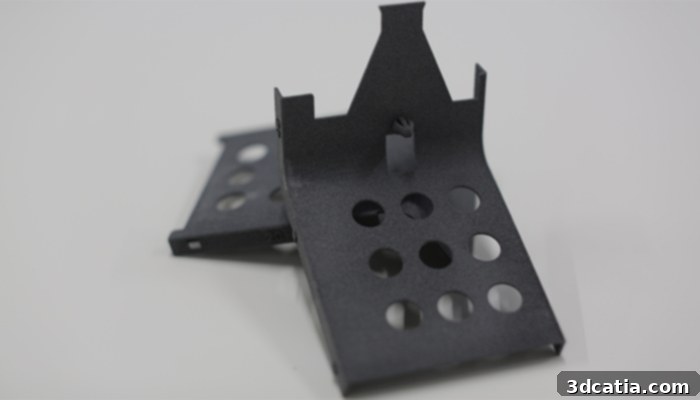
Parts manufactured using HP High Reusability PA 11 (photo credits: Nissan)
Leveraging HP High Reusability PA 11 Thermoplastic for Automotive Excellence
For the initial phase of this pioneering project, the companies have focused on 3D printing harness protection parts. These critical components, often subjected to wear and tear over decades, are being produced using HP High Reusability PA 11 thermoplastic. This advanced material is specifically chosen for its exceptional mechanical properties, which include high strength, excellent impact resistance, and superb ductility. Furthermore, PA 11 offers remarkable design flexibility, allowing for the precise replication of original part geometries and, where appropriate, even minor design enhancements for improved performance or durability. The material’s high reusability factor aligns perfectly with the sustainable production goals of the partnership, significantly reducing material waste during the printing process.
The choice of harness protection parts as the starting point for this collaboration is strategic. These components are vital for protecting wiring and ensuring the electrical integrity of the vehicle, yet they are often among the first to degrade due to environmental factors and age. By successfully replicating these parts using additive manufacturing, Nissan can ensure that even the most intricate and overlooked components of the GT-R models can be replaced with factory-grade quality. This initial success paves the way for a broader application of 3D printing within the NISMO Heritage Parts program, potentially encompassing a wider range of components in the future.
One of the most significant advantages that additive manufacturing brings to this project is the concept of a “virtual inventory.” Unlike traditional manufacturing, where companies must produce and physically store vast quantities of spare parts, often leading to substantial warehousing costs and potential obsolescence, 3D printing allows for parts to be manufactured on demand. This means that digital files of the parts are stored, and production only commences when an order is placed. This “print-on-demand” model drastically reduces inventory costs, minimizes waste associated with overproduction, and ensures that parts can be produced precisely when and where they are needed, enhancing supply chain efficiency and responsiveness.
Beyond cost and logistical benefits, 3D printing also champions sustainable production practices. The additive nature of the technology, building objects layer by layer, inherently generates less material waste compared to subtractive manufacturing processes that cut away from larger blocks of material. Furthermore, HP’s Multi Jet Fusion technology, particularly when combined with High Reusability PA 11, maximizes material utilization and minimizes environmental impact. This commitment to sustainability is increasingly crucial for industries like automotive, which are under growing pressure to adopt greener manufacturing methods and reduce their carbon footprint. The ability to produce parts locally and on demand also reduces the need for extensive global shipping, further contributing to environmental benefits.
Jon Wayne, Head of Global Business Operations for 3D Printing at HP, elaborated on the broader implications of this type of collaboration: “Digital manufacturing is a viable, long-term solution for accelerating production, transforming supply chains and activating industries such as automotive. Together with SOLIZE we are focused on helping businesses transform their manufacturing with sustainable, digital production.” His statement highlights HP’s vision for additive manufacturing as a cornerstone of future industrial production, enabling greater agility, resilience, and environmental responsibility across various sectors. This partnership with Nissan and Solize serves as a powerful testament to the transformative potential of digital manufacturing, not just for niche markets but for mainstream industrial applications.
The collaboration between Nissan, Solize, and HP represents a significant milestone in the integration of additive manufacturing into the automotive aftermarket. It demonstrates a forward-thinking approach to preserving automotive heritage while simultaneously embracing sustainable and efficient production methodologies. By providing reliable, high-quality replacement parts for revered models like the Skyline GT-R, this program not only supports a dedicated community of enthusiasts but also sets a new standard for how discontinued parts can be managed and supplied in the future. This initiative showcases how strategic partnerships and advanced technologies can overcome traditional manufacturing hurdles, ensuring that iconic vehicles can continue to be enjoyed for generations to come, all while promoting a more sustainable industrial landscape.
What are your thoughts on this innovative association between Solize, HP, and Nissan in leveraging 3D printing for classic car parts? We invite you to share your insights in a comment below or join the conversation on our Facebook, Twitter and LinkedIn pages! For the latest updates and news in the world of 3D printing, remember to sign up for our free weekly Newsletter here, delivered straight to your inbox!