
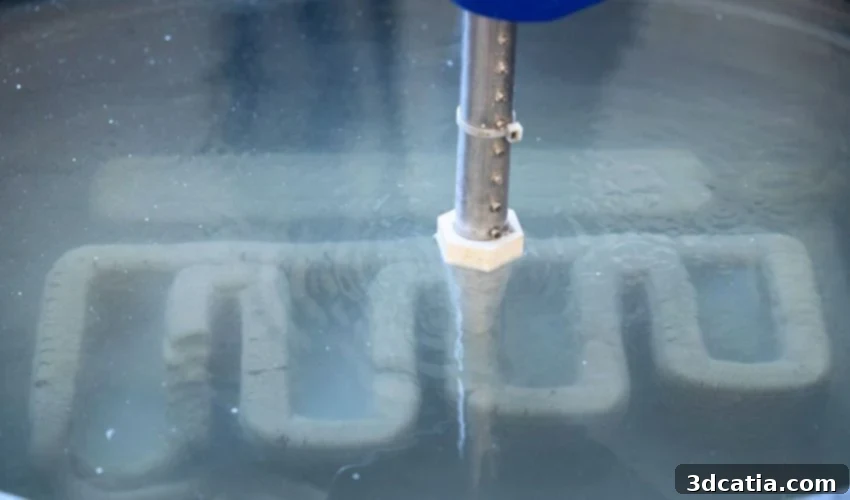
Revolutionizing Underwater Construction: 3D Printing with Seafloor Sediment
The ocean’s depths have always presented formidable challenges for construction. The combination of extreme pressure, limited visibility, and the sheer difficulty of operating in a submerged environment makes even the most routine construction and repair projects incredibly complex and expensive. This is especially true for the crucial infrastructure that lies hidden beneath the surface, supporting everything from energy pipelines to communication cables.
Rethinking Subsea Construction with 3D Printing
Researchers at Cornell University are pioneering a groundbreaking approach to overcome these limitations: in situ construction using concrete 3D printing. Instead of adapting traditional land-based methods to the underwater realm, their innovative technique involves fabricating structures directly on the seafloor. This eliminates the need for prefabrication on land and the complicated logistics of deploying large structures from the surface.
This approach promises a more efficient, quieter, and environmentally conscious model for maritime construction. By minimizing logistical complexities and reducing environmental disruption, it offers a sustainable alternative to current practices. According to Sriramya Nair, assistant professor of civil and environmental engineering at Cornell and the project’s leader, “We want to be constructing without being disruptive. If you have a remotely operated underwater vehicle that shows up on site with minimal disturbance to the ocean, then there is a way to build smarter and not continue the same practices that we do on land.”

The Cornell-led research initiative, which began in 2024, has garnered significant support from the Defense Advanced Research Projects Agency (DARPA). DARPA launched a challenging one-year program focused on developing 3D-printable concrete capable of being deposited several meters underwater. In 2025, the Cornell team received a substantial $1.4 million grant, contingent upon achieving specific technical milestones. They are now competing against five other teams in this ambitious endeavor. The culmination of the challenge will occur this March, when each team will be tasked with 3D printing a concrete arch underwater, demonstrating the viability of their respective approaches.
Utilizing Seafloor Sediment as a Primary Material
DARPA introduced a particularly demanding requirement: the concrete mixture must be composed primarily of seafloor sediment, with only a minimal amount of cement. The rationale behind this constraint is to reduce the environmental impact associated with transporting large quantities of cement by ship. However, using locally sourced seafloor sediment introduces significant material and process-related hurdles. To date, the successful 3D printing of structural concrete using seafloor sediment remains an elusive goal. “Nobody is doing this right now,” Nair emphasized. “Nobody takes seafloor sediment and prints with it. This is opening up a lot of opportunities for reimagining what concrete could look like.” The successful development of this technique could revolutionize underwater construction by making it more sustainable and cost-effective.
Addressing Washout and Visibility Challenges
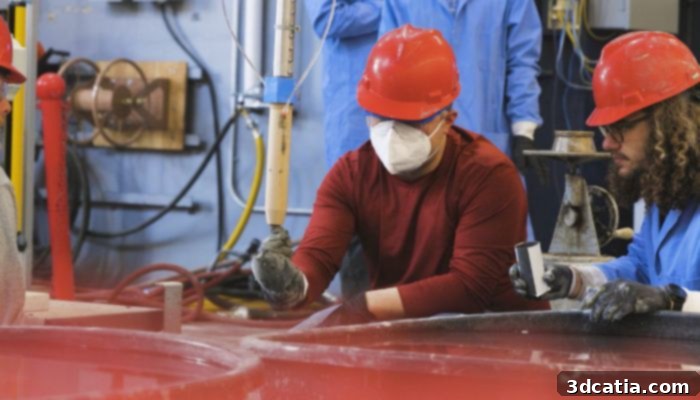
One of the most significant obstacles to underwater concrete 3D printing is washout. This phenomenon occurs when cement particles disperse in the water before they can properly bind, resulting in a weakened printed structure. Chemical admixtures can be used to mitigate washout, but they often increase the viscosity of the mixture, making it more difficult to pump and extrude. Nair explained the delicate balance: “When you add those chemicals, it makes your mixture really viscous, and you can’t pump. You’re balancing pumpability with anti-washout agents, while still making sure the material holds its shape and bonds well between layers.” Achieving the optimal combination of these properties is crucial for creating strong and durable underwater structures.
To fine-tune this balance, the Cornell team conducts frequent test prints in a large, water-filled tank at the university’s Bovay Civil Infrastructure Laboratory Complex. This controlled environment allows for detailed observation of layer placement, strength, and overall geometry. However, such close, hands-on evaluation is not feasible in the unpredictable conditions of a real-world underwater environment.
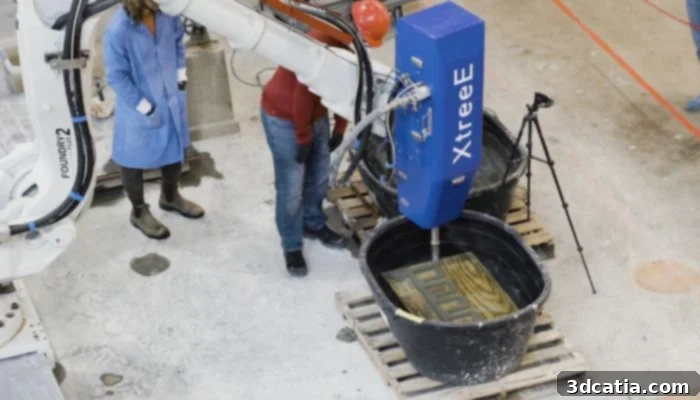
Therefore, the researchers are also developing sophisticated sensor-based systems and robotic control mechanisms to enable real-time monitoring and adjustment during the printing process. The challenges of underwater visibility, which can drop to near zero once sediment is disturbed, make autonomous operation not just a convenience, but a necessity for successful underwater 3D printing. These advancements in sensing and robotics will be critical for ensuring the quality and stability of the printed structures.
As the final demonstration rapidly approaches, this groundbreaking project offers a tantalizing glimpse into the future of in situ additive manufacturing. It demonstrates how 3D printing technology can be extended into one of the most challenging construction environments on Earth, opening up new possibilities for building and maintaining vital infrastructure beneath the waves. The potential applications are vast, ranging from the construction of artificial reefs to the repair of underwater pipelines and the creation of new energy infrastructure.
What role do you think underwater 3D printing could play in the future of maritime construction and infrastructure repair? Let us know in a comment below or on our LinkedIn or Facebook pages! Plus, don’t forget to sign up for our free weekly Newsletter to get the latest 3D printing news straight to your inbox. You can also find all our videos on our YouTube channel. For more 3D printing news in the aerospace and defense sectors, check out our dedicated page HERE.
*All Photo Credits: Ryan Young/Cornell University