
Revolutionizing Additive Manufacturing: Formlabs’ Speed Breakthrough, Strategic Acquisitions, Sustainable Fashion & Historic 3D Recreations
Welcome to our latest #3DEXPRESS update, where we delve into the most impactful and intriguing developments from the world of 3D printing this week. The additive manufacturing landscape is constantly evolving, driven by innovation, strategic business moves, and a growing recognition of its potential across diverse sectors. From groundbreaking hardware advancements promising unprecedented speeds to significant corporate mergers and inspiring applications in cultural preservation and sustainable fashion, this week’s news underscores the dynamic nature of the industry. We’ll explore how Formlabs is setting new benchmarks for resin printing, Matterhackers is expanding its market reach, Solidscape is making a resilient comeback, and Stratasys is pushing the boundaries of fashion. Finally, we take a fascinating look at how 3D printing technology is bringing a century-old WWI submarine back to life for historical insight. Join us as we unpack these pivotal stories that are shaping the future of 3D printing.
Formlabs Unleashes the Form 4: A New Era of High-Speed Resin 3D Printing
In a move set to redefine desktop stereolithography (SLA), American manufacturer Formlabs, renowned for its expertise in resin and Selective Laser Sintering (SLS) additive manufacturing, has proudly unveiled its next-generation resin 3D printer: the Form 4. This highly anticipated machine is not just an upgrade; it represents a significant leap forward, built on advanced MSLA (Masked Stereolithography) technology. Formlabs is championing the Form 4 with the compelling motto, “blazing speed meets industrial production,” a testament to its commitment to delivering rapid prototyping and end-part manufacturing capabilities that were previously unattainable at this scale and price point. The company asserts that the Form 4 is an astonishing two to five times faster than its acclaimed predecessor, the Form 3+, dramatically cutting down production times and increasing throughput for professionals across various industries.
The Form 4 boasts an impressive precision level, capable of producing parts with details as fine as 50 microns. This exceptional resolution ensures that complex geometries and intricate features are rendered with remarkable accuracy, making it ideal for applications demanding high fidelity, from dental models and medical devices to engineering prototypes and jewelry casting patterns. Beyond its raw speed and precision, the Form 4 is engineered for enhanced user experience and operational efficiency. It integrates automatic resin management, a feature that intelligently dispenses and monitors resin levels, minimizing manual intervention and ensuring consistent print quality. Instant resin loading further streamlines the workflow, allowing users to quickly swap out materials and commence new print jobs without delay. Furthermore, automated post-processing solutions are available, designed to integrate seamlessly with the Form 4, further reducing labor and accelerating the journey from digital design to physical part. These innovations collectively aim to significantly boost user productivity, enabling the promise of printing substantial parts in as little as 15 minutes, a game-changer for rapid iteration and just-in-time manufacturing.
Max Lobovsky, CEO and co-founder of Formlabs, eloquently summarized the significance of this launch: “Form 4 is a huge leap not only for Formlabs and our customers, but also for the entire 3D printing world. More than a decade ago, Formlabs created the desktop SLA 3D printer category and set a new standard for accuracy, reliability, ease of use, and affordability in 3D printing. We’ve built on the strength and insights gathered from more than 130,000 printers on the market and over 300 million parts printed to deliver the Form 4, our best SLA printer ever. Its reliability and new level of speed will transform how our customers develop new products.” Lobovsky’s statement highlights Formlabs’ enduring legacy of innovation, tracing back to its pioneering efforts in establishing the desktop SLA category. The Form 4, born from over a decade of market leadership and extensive real-world data from hundreds of thousands of printers and millions of printed parts, embodies the culmination of this experience. Its unparalleled reliability combined with its groundbreaking speed promises to revolutionize how engineers, designers, and manufacturers approach product development, enabling faster cycles, more iterations, and ultimately, quicker market entry for innovative products.
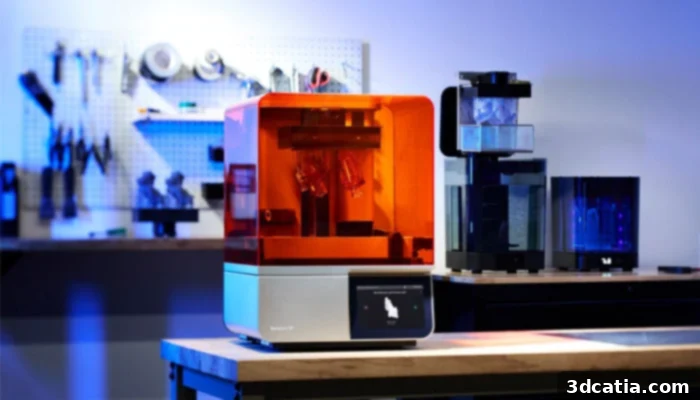
The new Form 4 3D printer (photo credits: Formlabs)
Matterhackers’ Strategic Expansion: Acquiring Source Graphics and Deepening Formlabs Partnership
Matterhackers, a dominant force among US resellers in the additive manufacturing market, has announced a significant strategic move designed to bolster its extensive portfolio of 3D printing solutions and enhance its market position. This week, the company revealed its acquisition of Source Graphics, a well-established supplier specializing in large-format 3D printers and related services. This acquisition is poised to broaden Matterhackers’ capabilities, allowing it to cater to an even wider range of customer needs, especially those requiring larger build volumes and industrial-scale additive manufacturing solutions.
Concurrently with this acquisition, Matterhackers also confirmed the strengthening of its already robust partnership with Formlabs. This dual announcement signals a clear intent to consolidate and expand its offerings, particularly within the burgeoning resin 3D printing segment where Formlabs excels. The synergy between Matterhackers’ broad distribution network and customer support infrastructure, combined with Source Graphics’ expertise in large-format systems and the innovative technology of Formlabs, creates a formidable presence in the additive manufacturing ecosystem.
Kevin Pope, COO of Matterhackers, elaborated on the strategic vision behind these developments: “The collaboration between MatterHackers and Formlabs, catalyzed by our acquisition of Source Graphics, represents a shift in the 3D printing landscape. Formlabs has consistently been at the forefront of 3D printing innovation, and we are beyond excited to join forces with them. Together, we are committed to expanding the reach and capabilities of 3D printing technology, empowering creators and innovators to bring their visions to life.” Pope’s statement underscores the transformative potential of this integrated strategy. By combining forces, Matterhackers aims to not only increase the accessibility of advanced 3D printing solutions but also to empower a broader community of users—from hobbyists and educators to industrial designers and manufacturers—to leverage the full potential of additive manufacturing for their innovative projects.
Indeed, the acquisition of Source Graphics is strategically vital for Matterhackers, enabling it to significantly strengthen its technical expertise, particularly in large-format printing. This expanded knowledge base will be crucial in meeting the ever-growing and increasingly sophisticated demand for Formlabs’ 3D printing solutions. The enhanced partnership will allow Matterhackers to offer more comprehensive packages, including sales, service, and support, for Formlabs’ cutting-edge printers like the newly launched Form 4. This integrated approach is expected to streamline the purchasing and implementation process for customers, providing them with a single, reliable source for leading-edge additive manufacturing technology and expert guidance. This strategic alignment positions Matterhackers as an even more influential player in the distribution and support of 3D printing solutions across North America.

Photo Credits: MatterHackers/Formlabs
Solidscape’s Resilient Return: Back as an Independent Innovator in Wax 3D Printing
Earlier this year, the additive manufacturing community noted with concern Prodways’ decision to discontinue sales of its specialized jewelry 3D printers under the Solidscape brand. This created uncertainty around the future of a company that has been a long-standing pioneer in precision wax 3D printing. However, we are delighted to report truly good news for Solidscape and its dedicated user base. The company, which notably developed the world’s first commercial inkjet 3D printer for wax 3D printing, has found a new lease on life. It has been acquired by a new investor group and is set to recommence its normal business operations, proudly returning as an independent entity in the highly specialized additive manufacturing market.
Solidscape holds a unique and critical position in industries such as jewelry, dental, and investment casting, where the ability to produce highly detailed, smooth, and castable wax patterns is paramount. Its proprietary technology offers unparalleled surface finish and accuracy, making its machines indispensable for creating intricate designs that translate directly into high-quality finished products through the lost-wax casting process. The brief hiatus caused by Prodways’ divestment left a gap in these niche markets, underscoring Solidscape’s enduring value and the loyalty of its customer base who rely on its precise wax models.
Alban d’Halluin, CEO of Solidscape, expressed immense enthusiasm and reassurance regarding the company’s return: “My Solidscape colleagues and I are delighted to provide certainty to our community that we are back to business-as-usual. We will continue to manufacture our unique range of 3D printers and consumables, provide technical service and support to customers, and develop new products.” D’Halluin’s statement provides crucial clarity and confidence to Solidscape’s global network of customers and partners. It confirms that the company’s renowned range of 3D printers, specifically designed for ultra-high precision wax modeling, will continue to be produced. This also extends to the availability of essential consumables, ensuring uninterrupted operations for existing users. Furthermore, the commitment to ongoing technical service and support means that Solidscape users can expect the same level of dedicated assistance they have come to rely on. Most importantly, the promise to “develop new products” signifies Solidscape’s renewed dedication to innovation, suggesting that even more advanced solutions tailored to the exacting demands of the jewelry and casting industries are on the horizon. This resurgence not only safeguards a vital technology but also reinforces the importance of specialized solutions within the broader additive manufacturing landscape.
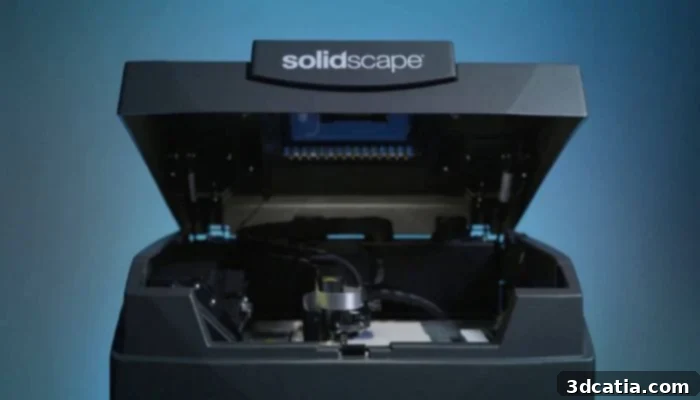
Photo Credits: Solidscape
Stratasys Pioneers Sustainable Fashion with Direct-to-Garment 3DFashion™ Solution
Stratasys, a global leader in industrial 3D printing solutions, is once again demonstrating its commitment to pushing the boundaries of innovation, this time with a significant foray into the fashion industry. Leveraging its sophisticated 3DFashion™ technology, the company aims to revolutionize both 3D printing applications and the broader fashion sector, particularly in the realm of sustainability. This initiative sees Stratasys collaborating with several leading fashion designers to create an inspiring “Urban Tattoo” collection. This collection is specifically designed to highlight the immense potential of upcycling, or creative reuse, demonstrating how everyday denim garments can be transformed and given a vibrant second life through the application of advanced 3D printing techniques.
At the heart of this groundbreaking initiative is the official launch of the Direct-to-Garment (D2G) solution, specifically developed for the Stratasys J850 TechStyle™ printer. This cutting-edge D2G solution represents a significant advancement in garment customization and personalized fashion. It enables the direct application of full-color, multi-material 3D printing onto a diverse array of fabric types. Imagine the possibilities: intricate, tactile designs seamlessly integrated onto denim jackets, soft textures added to cotton t-shirts, vibrant patterns printed onto polyester activewear, or delicate embellishments on linen garments. The D2G solution opens up a new frontier for designers, offering unparalleled creative freedom to personalize clothing, add unique structural elements, and produce limited-edition or bespoke fashion pieces with unprecedented speed and precision.
The “Urban Tattoo” collection, which epitomizes the capabilities of the D2G solution and Stratasys’ 3DFashion™ technology, is not just a showcase of technical prowess; it’s a powerful statement on sustainable fashion. By transforming existing garments rather than producing new ones from scratch, the collection promotes a circular economy approach, reducing waste and minimizing the environmental footprint typically associated with textile production. The ability to directly print intricate, durable, and colorful designs onto pre-existing fabrics significantly extends the lifespan and aesthetic appeal of clothing, offering a compelling alternative to traditional manufacturing processes that often involve multiple steps, extensive water usage, and chemical treatments.
The highly anticipated “Urban Tattoo” collection is set to make its global debut at the prestigious Texprocess trade show in Frankfurt, Germany, on April 23. This renowned international exhibition for processing textile and flexible materials provides the perfect platform for Stratasys to unveil its vision for the future of sustainable fashion and demonstrate the transformative power of 3D printing. The launch at Texprocess is expected to generate significant interest from fashion designers, manufacturers, and sustainability advocates, signalling a new era where technology and environmental responsibility converge to create truly innovative and impactful apparel. This move positions Stratasys not just as a 3D printer manufacturer, but as a key enabler for a more creative, personalized, and environmentally conscious fashion industry.
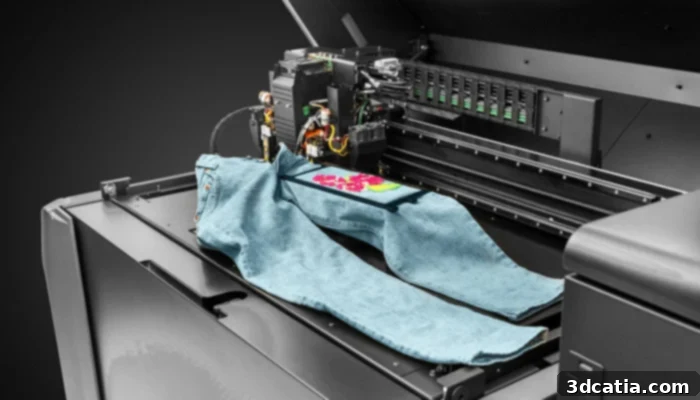
Photo Credits: Stratasys
Reviving History: A 3D-Printed Model of the WWI Submarine UC71 in the Helgoland Museum
The infamous UC71, a German minelaying submarine from the First World War, holds a dark yet significant place in naval history, credited with sinking an astonishing 63 Allied ships. Following Germany’s defeat, the UC71 was slated for transfer to England as part of war reparations. However, fate had other plans, and the submarine mysteriously capsized—though widely suspected of being scuttled by her own crew to prevent capture—and has since rested on the seabed off the coast of Heligoland. For over a century, this underwater relic remained largely out of sight, a silent testament to a bygone era of conflict. Now, thanks to the power of modern technology, the UC71 has been resurrected in a new, accessible form, allowing visitors to engage with its compelling story.
An extraordinary exhibition, which opened its doors on April 14 at the Helgoland Museum, offers a unique opportunity to explore the history and mystery surrounding the UC71. The exhibition meticulously recreates the submarine’s last voyage, details its previous missions, and provides insights into daily life onboard for its crew. The centerpiece of this immersive experience is a remarkable replica of the infamous submarine, brought to life through advanced 3D modeling and printing techniques. This physical model serves as a tangible link to the past, allowing visitors to visualize the scale and intricate design of this historical vessel.
Bringing this 3D version of the UC71 to fruition was no small feat; it required years of dedicated research and pioneering underwater archaeological work. The journey began over a decade ago when Florian Huber, a renowned underwater archaeologist and research diver, fortuitously stumbled upon the wreck of the submarine. Intrigued by the discovery, Huber initiated a comprehensive research project in 2014, aiming to document and understand the long-lost vessel. This involved extensive underwater surveys using state-of-the-art documentation methods, including photogrammetry and high-resolution cameras. Photogrammetry, a technique that uses multiple overlapping photographs to create precise 3D models, was crucial in capturing the submarine’s current state on the seabed, complete with its historical decay and marine growth.
The vast amount of data collected from these underwater expeditions was then meticulously processed using specialized software. This sophisticated digital reconstruction transformed raw photographic and video input into a highly reliable and accurate 3D model of the UC71. Once the digital model was perfected, it was then brought into the physical world through 3D printing. The plastic replica, crafted from this digital blueprint, allows museum-goers to examine the submarine’s details up close, far beyond what would be possible from historical photographs or drawings alone. To enhance the authenticity and historical accuracy of the model, acclaimed visual effects artist Lars Groeger, known for his work on Hollywood films and other high-profile projects, was commissioned. Groeger’s expertise was invaluable in adding numerous details, meticulously imitating the effects of a century of decay and the natural growth of marine organisms on the submarine’s exterior. This attention to detail ensures that the 3D-printed model is not just a replica, but a faithful representation of the UC71 as it exists today, albeit in a preserved and educational form. The 3D-printed model of the UC71 will remain on display at the Helgoland Museum until January 2025, offering a compelling blend of history, archaeology, and cutting-edge 3D printing technology.
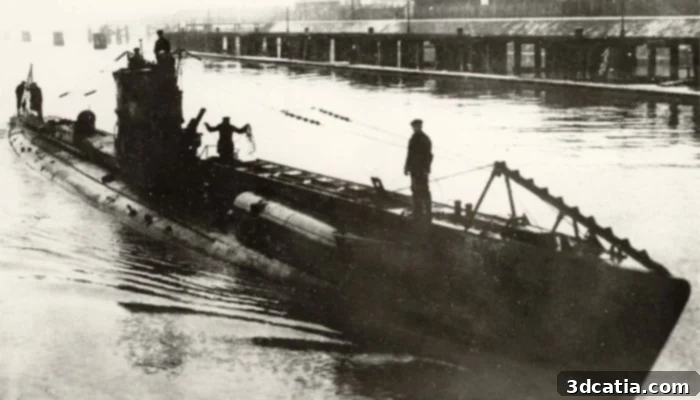
Historical photo of the UC71 from 1917 entering the port of Zeebrugge (photo credits: Heligoland Museum)
This week’s roundup truly highlights the incredible breadth and ongoing evolution of the 3D printing industry. From Formlabs pushing the boundaries of speed and efficiency in resin additive manufacturing to strategic business consolidations like Matterhackers’ acquisition of Source Graphics, and Solidscape’s inspiring return to independence, the commercial landscape is buzzing with activity. Beyond the business realm, Stratasys is pioneering sustainable practices in high fashion, demonstrating 3D printing’s potential to transform traditional industries. And in a remarkable testament to its versatility, 3D printing technology is also serving as a powerful tool for historical preservation, bringing a forgotten WWI submarine back into public consciousness. These stories collectively illustrate that additive manufacturing is not just a technology for prototyping; it is a catalyst for innovation, sustainability, and education across virtually every sector imaginable.
What are your thoughts on the groundbreaking Form 4 and its potential impact on industrial production? Or perhaps the resurgence of Solidscape, or Stratasys’ foray into eco-friendly fashion caught your eye? Let us know in a comment below or on our LinkedIn, Facebook, and Twitter pages! Don’t forget to sign up for our free weekly newsletter here for the latest 3D printing news straight to your inbox! You can also find all our videos on our YouTube channel.