
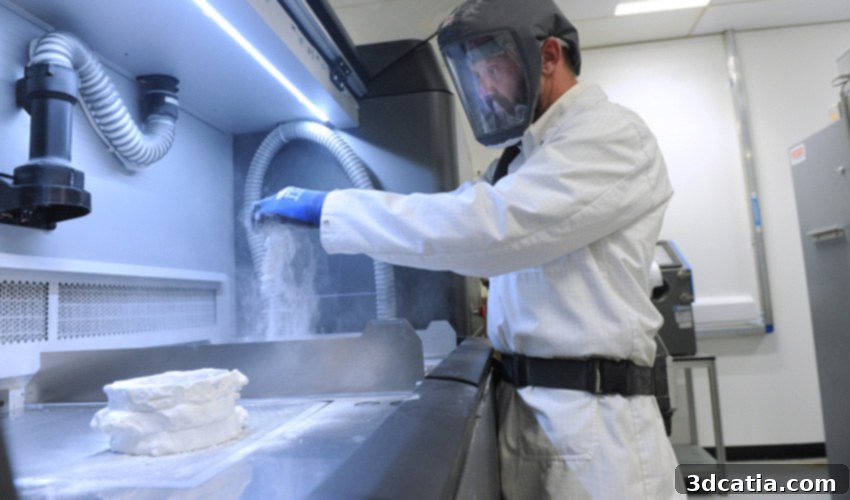
Ricoh’s Pivotal Role in Additive Manufacturing: Pioneering Solutions from COVID-19 Response to Advanced Bioprinting
The global landscape of manufacturing witnessed an unprecedented shift during the health crisis brought on by additive manufacturing. This innovative industry demonstrated its agility and critical importance in providing rapid, tangible solutions, significantly contributing to efforts to curb the spread of COVID-19. Among the key players mobilizing their expertise and machinery, Ricoh stood out, deploying its advanced capabilities to deliver concrete solutions for frontline healthcare workers and individuals at heightened risk of exposure. For Ricoh, 3D printing is not merely a supplementary tool but a practical and transformative solution across diverse sectors, including dental, medical, and industrial applications. Its inherent ability to dramatically accelerate the design and production cycles of complex models and parts makes it invaluable. To gain deeper insights into Ricoh’s cutting-edge technologies and their impactful contributions to combating the COVID-19 pandemic, we engaged with integral members of their dedicated team.
Ricoh’s Journey into 3D Printing: A Natural Evolution
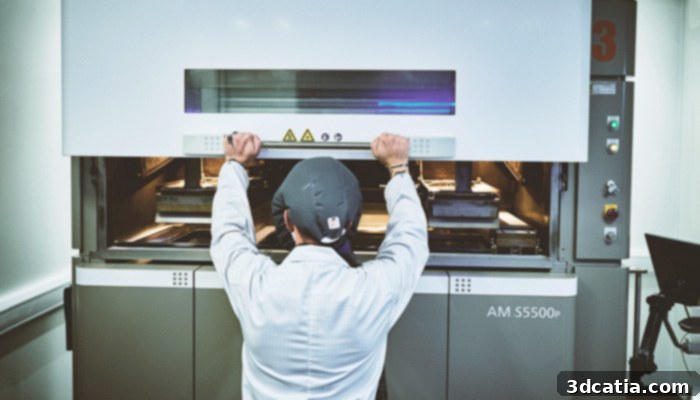
Ricoh, a name synonymous with innovation in 2D production printing since its establishment in 1936, has a rich legacy of pioneering technological advancements. With decades of experience in transforming business processes and information management as a global technology provider, the foray into 3D technology was a logical and strategic progression for the group. Before formally launching its 3D printing business, Ricoh was already harnessing the power of additive manufacturing internally, integrating it into the development of its own sophisticated production printers and industrial systems. This internal application provided a solid foundation of expertise and understanding of the technology’s potential. The company significantly expanded its printing dimension in 2015 with the introduction of its proprietary AM S5500P Selective Laser Sintering (SLS) system. This marked a pivotal moment, leading to the establishment of Ricoh’s 3D print business in Europe, specifically designed to offer comprehensive sales support and produce high-quality benchmark parts for a growing customer base, showcasing the immense capabilities of their new system. This strategic move underscored Ricoh’s commitment to becoming a leader in the evolving additive manufacturing landscape, leveraging its deep-rooted engineering prowess and global reach.
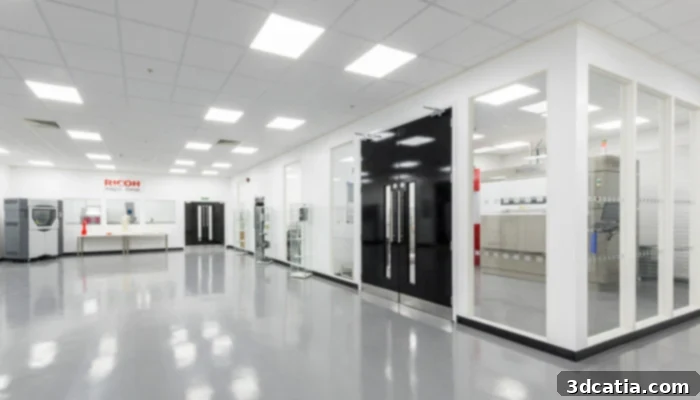
Ricoh’s foundation in 2D printing since 1936 provided a strong base for its additive manufacturing ventures | Credits: Ricoh
Strategic Integration of Additive Manufacturing and European Operations
Today, Ricoh 3D in Europe operates with a considerable degree of autonomy, effectively controlling its own destiny while benefiting from the vast resources and global network of the larger Ricoh corporation. This unique positioning sets Ricoh 3D apart from many other service bureaus in the market. Their distinction lies in having an integrated, multi-disciplinary team comprising highly skilled design engineers, experienced material scientists, and seasoned production experts. This comprehensive in-house expertise allows Ricoh 3D to collaborate intimately with customers, fostering innovation and enabling them to develop groundbreaking applications from conception to production. The business’s transition to a full-fledged 3D printing service bureau in 2016 was a direct response to a recognized gap in the market, particularly for Ricoh’s unique Polypropylene material. This proprietary material boasts an exceptional combination of purity, flexibility, and durability, distinguishing it from conventional alternatives. Beyond these core characteristics, it is also remarkably lightweight, completely watertight, and chemically resistant, making it suitable for a vast array of demanding applications.
These very properties proved indispensable during the height of the COVID-19 crisis, making Ricoh’s Polypropylene an ideal solution for manufacturing comfortable, yet resilient, Personal Protective Equipment (PPE) for healthcare workers. Its chemical resistance ensured safety in contaminated environments, while flexibility and durability provided essential comfort for prolonged use. Currently, Ricoh 3D’s UK-based marketplace factory offers an extensive suite of SLS, MJF (Multi Jet Fusion), and FDM (Fused Deposition Modeling) systems. This diverse technological offering is complemented by a comprehensive range of facilities, including advanced material testing laboratories, expert design services to optimize parts for additive manufacturing, and precision metrology capabilities to ensure quality and accuracy. Furthermore, with an impressive 828m² injection molding plant co-located on site, the team at Ricoh 3D possesses a holistic understanding of manufacturing processes. They keenly recognize that 3D printing, while revolutionary, is not always the most appropriate technology for every single application. This awareness allows them to provide unbiased guidance, working closely with customers to strategically scale up production effectively, whether through additive means or conventional manufacturing methods, ensuring optimal outcomes and cost-efficiency for their clients’ specific needs.
Pioneering DNA Bioprinting for Precision Genetic Reference Materials
Ricoh’s innovative DNA bioprinting technology represents a significant leap forward in precision medicine and genetic diagnostics. This ground-breaking process focuses on manufacturing highly accurate reference materials capable of handling a diverse range of viruses. The core methodology involves utilizing homologous recombination, a sophisticated genetic engineering technique, to precisely insert a target gene – specifically, one of a variety of viral genes – into the genome of yeast cells. This meticulous process ensures the creation of yeast cells that each contain only a single, precisely placed molecule of the desired target DNA. Once these engineered yeast cells are prepared, they are then meticulously dispensed into individual wells using Ricoh’s cutting-edge inkjet technology. It is crucial to emphasize the absolute safety of this process: the DNA sequence employed is merely a small, partial fragment of a coronavirus sequence. This partial sequence is entirely harmless and, importantly, is not extracted from an actual coronavirus but is instead an artificially synthesized DNA sequence, ensuring no risk of infection or biological hazard.
In this intricate bioprinting process, cells serve as the precise receptacles for the target DNA. A single, specific DNA sequence molecule is inserted into these cellular receptacles with unparalleled accuracy through homologous recombination. What truly sets Ricoh’s approach apart is its proprietary cell-discharging inkjet technology. This advanced system is capable of dispensing individual cells one at a time, concurrently performing a precise cell count. This extraordinary level of control allows for the creation of cells containing a specific, pre-determined number of DNA molecules, measured down to single-molecule units. This precision is vital for creating highly standardized and reliable reference materials. Further enhancing this process, the microscopic droplets discharged by the inkjet are irradiated with ultra-short laser light pulses. By meticulously observing the fluorescence emitted from the cells within these droplets, a highly accurate cell count can be achieved. The laser light irradiation time is incredibly brief, operating at a remarkable 10-nanosecond level. This rapid pulsing is precisely synchronized with the droplet’s time of flight, ensuring an exact and reliable cell counting mechanism. This level of technical sophistication guarantees the integrity and consistency of each reference material produced, establishing a new benchmark for genetic testing and quality control.
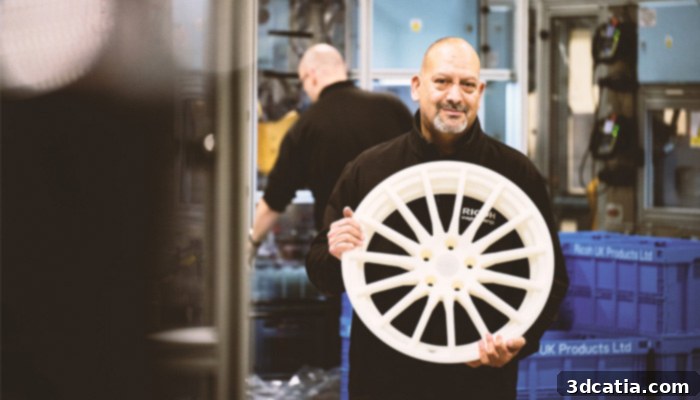
Ricoh’s bioprinting technology ensures precise control over DNA molecule placement in cells | Credits: Ricoh
Transforming Genetic Testing: Benefits for the COVID-19 Health Crisis and Beyond
The project’s implications for the health crisis, particularly in the context of COVID-19, are profound. PCR (Polymerase Chain Reaction) is a cornerstone of modern genetic testing, widely adopted for its sensitivity and specificity in detecting viral genetic material. However, the reliability of PCR results hinges critically on rigorous quality control measures across all facets of the testing process—including the equipment used, the reagents consumed, and the overarching detection methodology. Any oversight in these critical stages can lead to inaccuracies, with potentially devastating consequences. Ricoh’s innovative product addresses this fundamental challenge head-on, enabling the imposition of stringent quality control standards across various types of genetic testing. This includes applications far beyond viral detection, extending to critical areas such as genetically modified organism (GMO) testing, quality assurance in the rapidly evolving field of regenerative medicine, and indispensable clinical laboratory testing for human diagnostics.
The potential for errors in these tests, from minor inconsistencies to major flaws, carries significant risks. For instance, in the context of viral outbreaks, “false negatives”—where an infected individual tests negative—can be particularly perilous. These individuals, unaware of their infection status, may continue daily activities, inadvertently becoming vectors for further spread of the virus. Ricoh’s reference standard provides a crucial safeguard against such scenarios. By containing a precisely measured single molecule of DNA, this standard allows testing laboratories to accurately verify that their testing apparatus, reagents, and the tests themselves are functioning optimally. This unparalleled precision guarantees that viral DNA can be detected with an exceptionally high degree of accuracy and reliability. Consequently, the ability to significantly reduce the incidence of “false negatives” directly contributes to mitigating the risk of infection spreading within communities, bolstering public health efforts, and enhancing trust in diagnostic results. This advanced quality control solution not only strengthens our immediate response to health crises like COVID-19 but also establishes a new paradigm for accuracy and reliability in genetic diagnostics for the long term, impacting everything from personalized medicine to environmental pathogen detection.
Ricoh’s reference standard for PCR testing improves detection accuracy | Credits: Ricoh
Ricoh’s Future in 3D Printing: Innovation, Medical Standards, and Strategic Growth
Looking ahead, Ricoh’s commitment to innovation in additive manufacturing is unwavering, driven by a strong R&D focus and a strategic vision for growth. We anticipate a future rich with pioneering 3D printing projects, characterized by deep strategic partnerships with both customers and suppliers. These collaborations are integral to our approach, allowing us to co-create solutions that push the boundaries of what’s possible. A prime example of this collaborative spirit is our announced partnership with Austria-based TIGER at Formnext 2019. This collaboration is specifically aimed at developing a groundbreaking 30% flame-retardant material, designed to meet the stringent safety requirements of critical industries such as electrical, rail, automotive, and aerospace applications. Such tailored material development is a testament to our ability to respond to highly specific industrial needs. Our state-of-the-art testing facilities are central to this adaptive capability, enabling us to meticulously refine and validate solutions that precisely match our customers’ unique material property requirements. By working hand-in-hand with clients, we ensure that new materials and processes are not only innovative but also perfectly aligned with their operational demands.
Furthermore, Ricoh is dedicated to expanding its footprint and influence within the medical space. This year, a significant undertaking involves the pursuit of the ISO 13485 Medical standard. This certification, once achieved, will complement our existing ISO certifications, underscoring our commitment to the highest quality and regulatory compliance necessary for medical device manufacturing. Our involvement in the medical sector is not new; even prior to the COVID-19 pandemic, we had several active medical engagements, highlighting a long-standing dedication to this critical field. We are eager to leverage this momentum and further demonstrate the capabilities of our unrivaled back office system. This system is distinguished by its fully digital, automated, and seamless traceability features, which are absolutely essential in regulated industries like healthcare where precise record-keeping and accountability are paramount. Such a robust system ensures that every step of the manufacturing process, from raw material to finished product, is meticulously documented and transparent, providing unparalleled assurance of quality and compliance to our medical sector partners.
Embracing the Additive Manufacturing Future: Ricoh’s Commitment to Tailored Solutions
To our valued readers, we want to convey a clear message: Ricoh is not merely observing the evolution of additive manufacturing; we are actively driving it forward. We firmly believe that 3D printing is not just a technology of the future, but a powerful, transformative tool available right now. We also recognize, however, that many companies face considerable challenges in seamlessly and cost-effectively integrating 3D printing into their existing operations. This understanding forms the bedrock of our service philosophy. Our specialized expertise in forging strategic partnerships and enabling efficient serial production positions us uniquely to offer a truly tailored service to each of our customers. Whether it’s guiding a company through its initial additive manufacturing adoption or optimizing processes for high-volume production, we provide comprehensive support designed to meet specific needs and overcome integration hurdles.
Taking the first step towards leveraging the power of additive manufacturing with Ricoh is made simple and transparent through our online instant quote system. This platform allows prospective clients to quickly understand the potential costs and timelines associated with their projects, facilitating informed decision-making. We invite you to explore more about how Ricoh is shaping the future of manufacturing and how we can support your specific innovation and production goals. You can find comprehensive information about our services and capabilities HERE.
What are your thoughts on Ricoh’s innovative applications of additive manufacturing and their contributions to critical sectors like healthcare? We encourage you to share your perspectives in a comment below or join the conversation on our Facebook and Twitter pages! Don’t miss out on the latest advancements in 3D printing—sign up for our free weekly Newsletter and have all the breaking news delivered straight to your inbox!