
The Future of Vision: How 3D Printing is Revolutionizing Ophthalmology and Personalized Eye Care
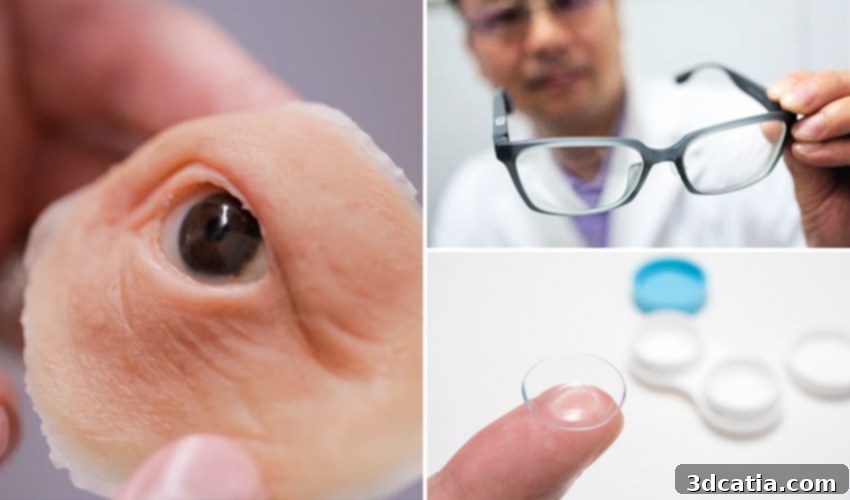
3D printing, also known as additive manufacturing, is rapidly transforming the medical landscape, and its influence in medicine is becoming increasingly profound. This innovative technology has now carved out a critically important role within ophthalmology, offering unprecedented possibilities for enhancing eye care. Beyond the creation of custom-fitted items like 3D-printed glasses, which can be perfectly adapted to the unique needs and aesthetic preferences of patients, additive manufacturing is unlocking a new era of precision and individualization in ocular treatments. The potential is vast, leading to improved outcomes for a wide range of conditions. Industry reports underscore this rapid progress: according to Research And Markets, the global market for 3D-printed medical devices is projected to soar to an impressive $4.9 billion by 2026, boasting an annual growth rate of 24.5%. This significant expansion highlights the technology’s immense impact and future potential. This article delves into the diverse and groundbreaking applications of 3D printing in ophthalmology. We will explore various implants, instruments, cutting-edge projects, and even advanced contact lenses that are being produced using additive manufacturing techniques. Join us to discover how 3D printing is fundamentally changing ophthalmology and the remarkable benefits it offers to both patients seeking better vision and the medical professionals striving to deliver superior care.
Groundbreaking Eye Implants and Prosthetics with 3D Printing
Achieving Realism: A Pioneering 3D Printed Eye Prosthetic in the UK
A significant milestone in both ophthalmology and 3D printing occurred in November 2021 when Moorfields Eye Hospital, a leading institution, proudly announced that the first British patient had successfully received a 3D-printed eye. This remarkable achievement was the result of a collaborative effort involving the hospital, NHS, and dedicated UCL researchers, with critical software contributions from Fraunhofer and Ocupeye. The prosthetic eye was heralded as a true biomimic, offering an unprecedented level of realism. Unlike traditional prosthetics, it featured genuine depth in the pupil and significantly clearer definition, making it almost indistinguishable from a natural eye. Steve Verze, the patient who received this innovative prosthetic, shared his profound satisfaction, noting that it looked “fantastic.” This exceptional realism was achieved by utilizing digital scans of his healthy eye, allowing for a near-perfect match in appearance and structure. This accomplishment represents an incredible leap forward, setting new standards for aesthetic and functional outcomes in ocular prosthetics and offering renewed confidence to patients.

Steve Verze with his new 3D printed eye prosthetic (photo credits: Moorfields Eye Hospital)
Fraunhofer and OCUPEYE Advance Ocular Prostheses with AI and 3D Printing
Researchers at the Fraunhofer Institute for Computer Graphics Research IGD, in close collaboration with OCUPEYE Ltd., have introduced an innovative, AI-based method specifically designed for 3D printing artificial eyes. This groundbreaking technique addresses the high demand for artificial eyes by dramatically improving efficiency and accessibility. The process significantly reduces production time, requiring 80 percent less time than conventional methods and capable of producing a complete, high-quality prosthesis in just 90 minutes. This efficiency translates to a fivefold reduction in workload for ocularists, allowing them to serve more patients effectively. The 3D-printed prostheses are meticulously modeled using a precise scan of the patient’s functioning eye. This ensures a perfect fit within the patient’s eye socket and achieves an incredibly realistic appearance. The detailed data acquired from the scan is then fed into an advanced AI model, which generates the optimal design for the prosthesis. Printing is subsequently carried out using the state-of-the-art J750 Polyjet multi-material printer, utilizing VeroVivid materials. With an astonishing resolution of 18 billion droplets per cubic centimeter, this printer enables the creation of eye implants with unparalleled precision and color fidelity, ensuring a realistic and aesthetically pleasing match to the remaining eye. Looking ahead, the dedicated team plans to further refine this method, aiming to reduce production costs and make these advanced prosthetics even more accessible to a wider patient population.
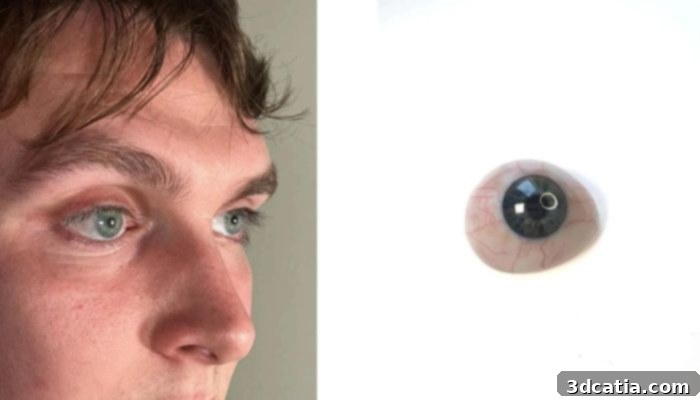
Photo Credits: Fraunhofer IGD, Johann Reinhard
VisioPrinTech: Offering Personalized, 3D Printed Corneas for Enhanced Vision
As global populations continue to age, the incidence of age-related health issues, including those affecting vision, is on the rise. A significant concern is corneal deformation, which can lead to various corneal diseases, severely restricting vision and impacting quality of life. Traditionally, these conditions have been treated surgically, often relying on corneal donations. However, the scarcity of donor corneas and the inherent risk of transplant rejection present substantial challenges to effective treatment. To overcome these hurdles, the Karlsruhe Institute of Technology (KIT), in collaboration with Carl Zeiss Meditec AG and Evonik Healthcare, is pioneering an innovative solution to improve the treatment of corneal diseases through the power of 3D printing. Their revolutionary VisioPrinTech method utilizes a specialized bio-ink, meticulously composed of the patient’s own stem cells and chemically modified collagen fibers. This unique bio-ink is then precisely printed during an operation using laser-based 3D printing technology. This advanced method offers multiple advantages: it entirely circumvents the difficulties associated with finding suitable donors and eliminates the potential for immune rejection, as the material is derived from the patient’s own cells. Furthermore, it delivers unparalleled precision and functionality, as the printed cornea can be custom-tailored to the individual patient’s needs. The successful application of these 3D-printed corneas promises to restore vision for countless patients, marking a transformative step forward in ophthalmological care.
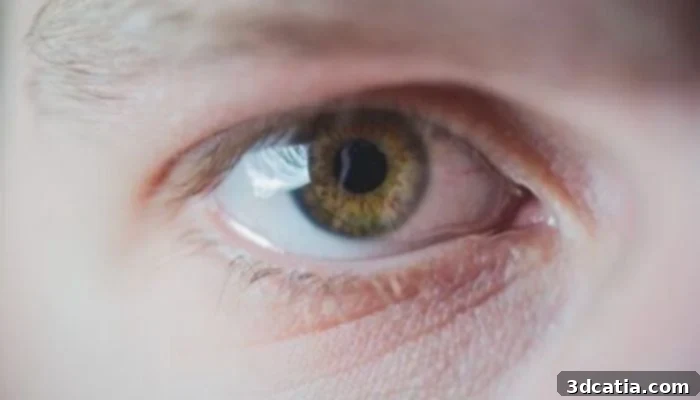
Photo Credits: KIT
Artificial Eyes: Blending 3D Printing with Traditional Manual Craftsmanship
Nicholas Puls, a skilled ocularist at the Royal Brisbane and Women’s Hospital in Australia, dedicates his expertise to crafting artificial eyes for patients who have suffered vision loss due to cancer or severe injury. This vital work is inherently time-consuming, particularly given the hospital’s annual requirement to supply approximately 100 patients with prosthetic eyes. Recognizing the potential for greater efficiency, the Herston Biofabrication Institute initiated evaluation studies with patients to investigate how 3D printing could enhance and streamline this intricate production process. The primary objective was to thoroughly assess the aesthetic and functional differences between 3D-printed eyes and those crafted entirely by hand. To achieve this, the institute employed advanced 3D scanning and high-resolution photography techniques. By mirroring a detailed photo of the patient’s healthy eye, a highly accurate replica could be generated, offering a significant time-saving advantage in the initial design phase. Despite the advancements, the study suggests that 3D technology is not envisioned as a replacement or direct competitor for traditionally hand-made prostheses. Instead, the future likely lies in a synergistic approach, combining the precision and speed of 3D printing with the irreplaceable artistry and intricate detailing of manual craftsmanship. This hybrid model promises to optimize both the quality and accessibility of artificial eyes, ensuring patients receive the best possible aesthetic and comfort.
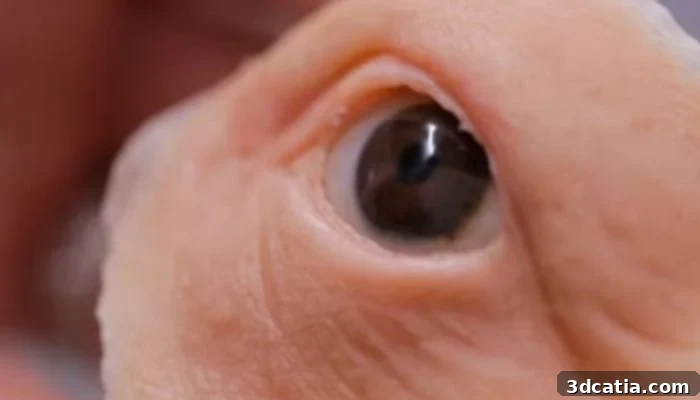
The prosthesis can be made from traditionally manufactured or 3D-printed ocular prostheses (photo credits: ABC News/Chris Gillette)
OMFS-IMPATH Optimizes Ocular Prosthesis Development for Patient Well-being
For individuals experiencing anophthalmia (absence of an eye), microphthalmia (abnormally small eye), or total enucleation, securing a precisely fitted, customized ocular prosthesis is absolutely crucial. This is not merely about aesthetics but fundamentally impacts the patient’s physical and psychosocial rehabilitation. A common challenge faced by many patients is the development of anophthalmic alveolus syndrome, a condition characterized by the sagging of the prosthesis and drooping of the eyelids. This can significantly reduce patient satisfaction with their prosthesis and profoundly affect their overall quality of life. In response to this critical need, experts at OMFS-IMPATH have pioneered an innovative process for designing custom, precision-fit ocular prostheses. Their method integrates advanced 3D scanning, sophisticated planning software, and cutting-edge 3D printing technology to achieve an exact replication of the natural eye. This meticulous approach ensures a precise anatomical fit, which not only enhances the patient’s functional capabilities by providing better support and movement but also dramatically improves their physical appearance and, consequently, their self-confidence and quality of life. The result is a prosthesis that truly integrates with the patient, offering comfort and a natural look.
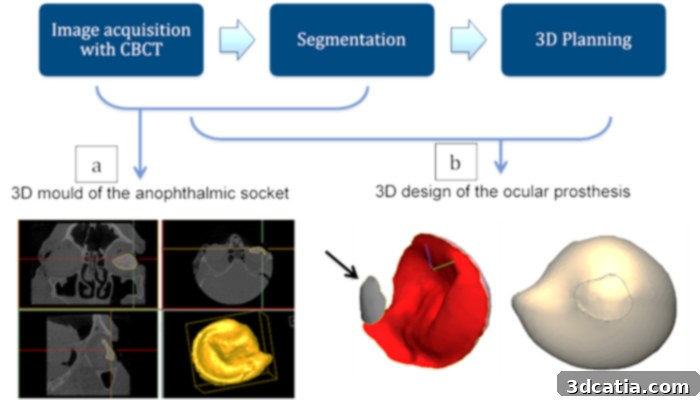
Photo Credits: OMFS-IMPATH
Innovative 3D Printing Projects, Instruments, and Contact Lenses in Ophthalmology
3D Printed Artificial Eyelids: Revolutionizing Surgical Training
At the prestigious University of Innsbruck, medical students are gaining invaluable hands-on experience by studying and practicing on intricately designed 3D-printed artificial eyelids. These advanced models are meticulously recreated based on detailed human anatomical data, allowing for comprehensive analysis and study. Researchers can precisely compare the mechanical properties of human tissues with those of these sophisticated 3D-printed models, ensuring their realism and functional accuracy. This pioneering project holds immense importance, not only for the rigorous training of future doctors and surgeons but also for its direct impact on providing superior patient care. Critically, these lifelike models enable surgeons to practice the faithful reproduction of a specific patient’s eyelid before they even enter the operating room. This pre-surgical rehearsal capability significantly refines surgical techniques, reduces risks, and ultimately leads to better outcomes for patients undergoing delicate eyelid procedures. It represents a significant step forward in medical education and surgical preparedness.
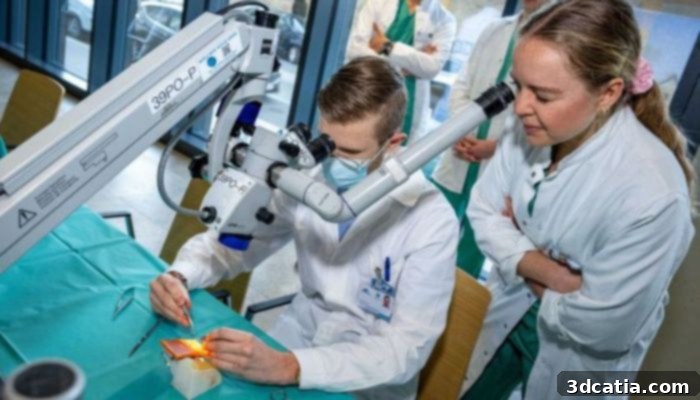
Photo Credits: Medizinische Universität Innsbruck
3D Bioprinted Eye Tissue for Advanced Disease Understanding
Scientists at the National Eye Institute (NEI) in the United States have achieved a remarkable feat by utilizing patient-derived stem cells and cutting-edge 3D bioprinting technology to produce functional eye tissue. The primary goal of this innovative research is to deepen the understanding of the complex mechanisms underlying diseases that cause blindness. The research team successfully bioprinted a combination of cells that form the eye’s crucial outer blood-retinal barrier, a structure essential for supporting the light-sensitive retinal photoreceptors. This sophisticated technique offers an unprecedented opportunity to use patient-specific tissue to study degenerative retinal diseases, such as age-related macular degeneration (AMD). Historically, the initiation and progression of AMD to its advanced stages have remained poorly understood, largely due to the scarcity of physiologically relevant human models. However, the analysis of this 3D-printed tissue, combined with extensive genetic and functional testing, demonstrated that the printed tissue remarkably appeared and behaved similarly to the human outer blood-retinal barrier. This significant breakthrough paves the way for a more profound understanding of the origins of these debilitating diseases and, crucially, enables the specific testing of preventive and therapeutic strategies, promising a brighter future for those at risk of vision loss.
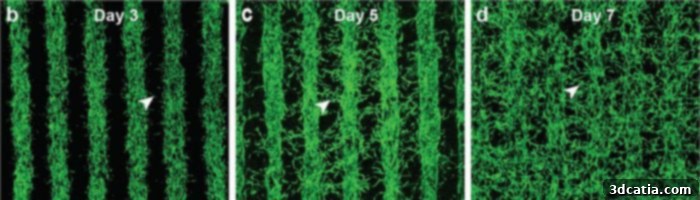
Crescita di vasi sanguigni nel tessuto oculare stampato in 3D. Al settimo giorno, i vasi sanguigni riempiono lo spazio tra le file, formando una rete di capillari. (Crediti: Kapil Bharti, Ph.D., NEI)
Innovative 3D Printed Smart Contact Lenses
While the concept of 3D printed glasses has already showcased the potential of additive manufacturing in vision correction, a truly revolutionary development emerged from the Khalifa University of Science and Technology (KUST) in 2021: the creation of 3D-printed smart contact lenses. This pioneering project leveraged advanced Digital Light Processing (DLP) 3D printing technology in conjunction with sophisticated CAD software. These tools allowed researchers to precisely design and fabricate intricate contact lenses. A crucial step involved careful post-processing to ensure an impeccably smooth surface finish, vital for ocular comfort and safety. The most exciting aspect of these lenses is their ‘smart’ functionality, which includes integrated sensing abilities. These capabilities could potentially enable real-time monitoring of various physiological parameters in the eye, facilitate targeted drug delivery, or even integrate augmented reality features. This innovation represents a significant leap beyond simple vision correction, pushing the boundaries of what contact lenses can achieve and opening up new avenues for personalized eye health monitoring and treatment.
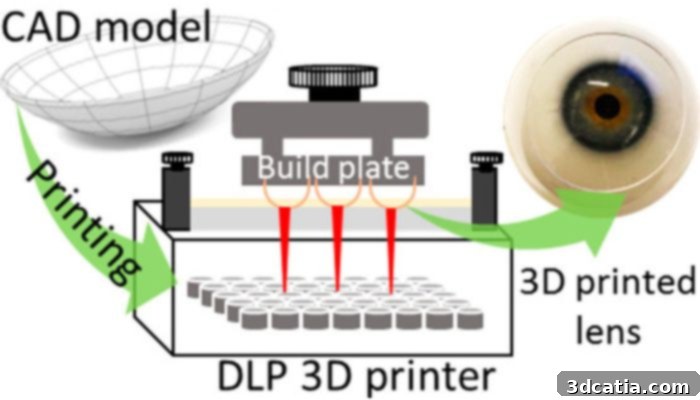
Photo Credits: KUST
The First Eye and Face Transplantation Supported by Additive Manufacturing
In complex surgical procedures, the precision and customization of surgical instruments are paramount, and this was dramatically demonstrated in the world’s first eye and partial face transplant. This extraordinary medical feat, performed on an American man, was made possible through meticulous planning and the expert application of additive manufacturing by the renowned Belgian company Materialise. The patient, Aaron James, suffered a devastating high-voltage accident during work, which necessitated the removal of his left eye and a significant portion of his face. While he was on the waiting list for a suitable donor, a dedicated medical team from New York University Langone Health Hospital collaborated closely with clinical engineers from Materialise to meticulously plan the intricate transplant. Materialise played a crucial role, providing indispensable support in both the initial planning stages and during the complex surgery itself. Leveraging computed tomography (CT) scans, they developed a comprehensive virtual preoperative plan, charting a step-by-step route for the entire surgical procedure. When a donor became available, Materialise responded with remarkable speed, taking less than 24 hours to finalize the case plan and subsequently design and 3D print all the necessary instruments. These included highly customized medical devices, precise bone models, and cutting guides, all specifically adapted to the unique anatomical structures of both the patient and the donor. The customization and unparalleled precision afforded by these 3D-printed instruments significantly reduced risks and ensured the success of this pioneering surgery, marking a monumental achievement in reconstructive medicine.
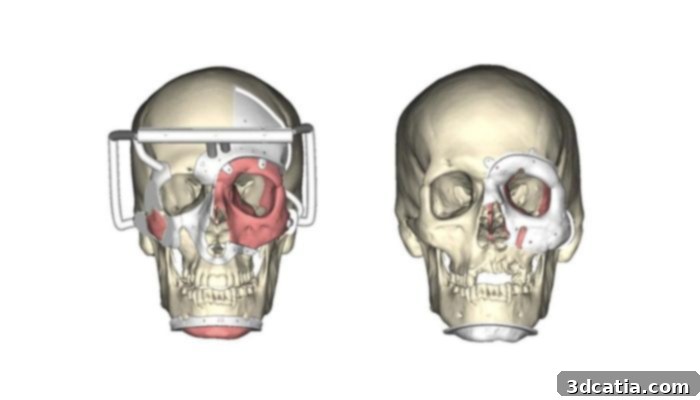
Custom surgical guides made by Materialise for donor (left) and patient Aaron James (right)(photo credits: Materialise)
Customized Contact Lenses for Cataract Treatment and Refractive Correction
Researchers at the University of East Anglia have recently achieved a significant and promising breakthrough in the field of eye device technology. Their work focuses on developing a novel type of 3D printing resin, specifically engineered for the manufacturing of highly advanced eye implants. This innovative material is a crucial element in refining refractive and cataract surgery outcomes. The artificial intraocular lens (IOL) developed using this new resin is designed for easy and safe implantation within the capsular bag of the eye. A key advantage of this 3D-printed lens technology is its unprecedented ability to be customized precisely to the unique shape of each patient’s eye and their specific visual requirements. This level of personalization promises to dramatically improve visual correction, offering enhanced clarity and comfort that standard, off-the-shelf lenses cannot match. While these cutting-edge lenses are still undergoing development and rigorous testing, the research team is optimistic that they will also be highly effective in correcting a range of refractive defects, including common conditions such as nearsightedness (myopia), farsightedness (hyperopia), and presbyopia. This breakthrough heralds a future of truly personalized and highly effective vision correction options.
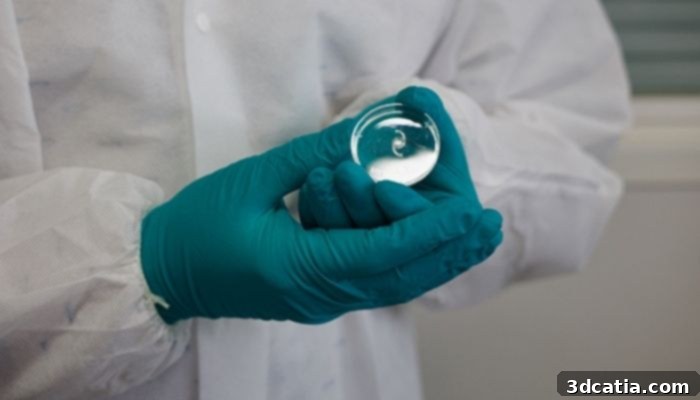
Photo Credits: University of East Anglia
Advanced Simulation Models for Eye Trauma Training Using 3D Printing
At King’s College Hospital in the UK, researchers have developed an ingenious solution for enhancing surgical preparedness: highly realistic simulation models for eye trauma, produced entirely using 3D printing. These models, designed with advanced software like Fusion 360 and printed using the sophisticated Stratasys J850, are meticulously based on real clinical cases, ensuring their authenticity and relevance for training. The effectiveness of these models was rigorously evaluated by a panel of 14 ophthalmologists and five clinicians. The results were overwhelmingly positive, demonstrating a marked improvement in user confidence when assessing eye trauma and practicing delicate suturing techniques. 3D printing offers several key advantages in this context, including significantly reduced production times and accelerated prototyping, allowing for rapid iteration and refinement of models. These innovative models can be mass-produced within hospitals, providing a scalable and accessible resource for medical professionals to hone their critical skills more efficiently. Furthermore, they offer a crucial ethical and practical alternative to relying on animal eyes and cadavers for surgical training, aligning with modern ethical standards and providing consistent, high-quality training experiences.
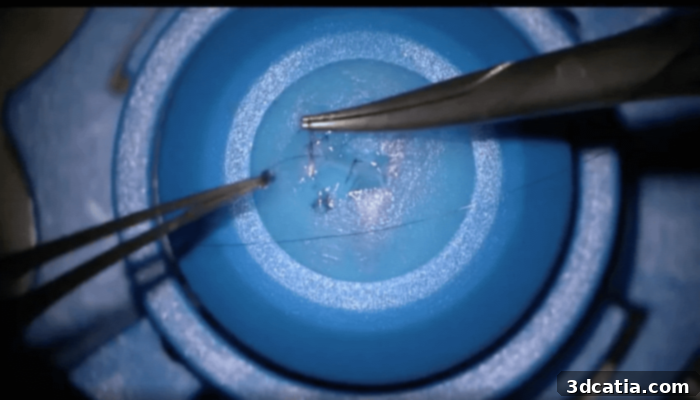
Photo Credits: King’s College Hospital
3D Printed Glasses to Correct Color Blindness
Researchers at Khalifa University have made significant strides in addressing color vision disorders by developing innovative 3D-printed glasses. These specialized glasses feature tinted lenses, meticulously designed to filter out unwanted wavelengths of light while allowing the rest of the visible spectrum to pass through unimpeded. The lenses are securely housed within frames manufactured using advanced MSLA 3D printing technology, ensuring both precision and comfort. After designing a detailed prototype with SOLIDWORKS software, the researchers printed the frames using ASIGA DentaClear and Gray resin on a Prusa SL1S printer. The printing process was remarkably efficient, with a print time of just six seconds per layer and a finely tuned layer thickness of 25 microns. According to the dedicated team, these customized 3D-printed frames offer a significantly more adaptable and potentially more effective alternative to many current commercial eyewear options available for color blindness. The ability to precisely tailor the frames and lens integration through 3D printing promises a more personalized and impactful solution for individuals with color vision deficiencies, enhancing their perception of the world.
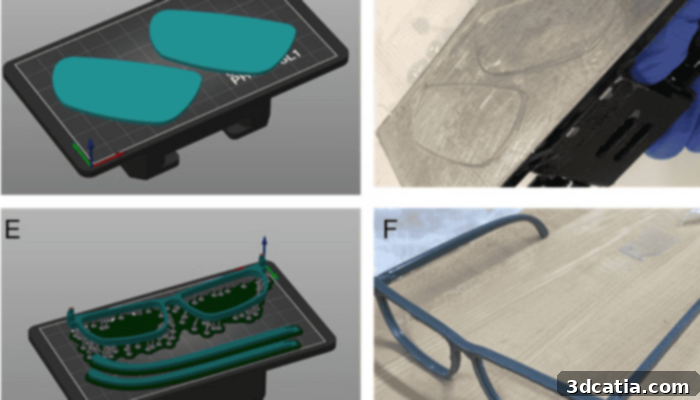
Photo Credits: Khalifa University
3D-Printed Glasses for the Tailored Treatment of Deformed Corneas
Dr. Song Hongix, a distinguished ophthalmologist and researcher at Beijing Tongren Hospital in China, has pioneered the production of specialized glasses for patients suffering from deformed corneas, utilizing the transformative capabilities of 3D printing. These innovative glasses are particularly suited for the treatment of keratoconus, an ocular disease characterized by a progressive thinning and outward bulging of the cornea, which severely impairs vision. The genius of Dr. Hongix’s approach lies in the bespoke design of these lenses: each is tailor-made to individually stabilize the patient’s vision. Thanks to the unparalleled precision and flexibility of 3D printing, the lens can be custom-adapted to the unique and often irregular shape of each patient’s cornea. Dr. Hongix drew inspiration from NASA’s advanced adaptive optics technology, a system originally developed to improve the image quality of telescopes by correcting distortions caused by the Earth’s atmosphere. Applying similar principles to ocular care, these 3D-printed corrective lenses offer a highly personalized and effective therapeutic option, promising clearer and more stable vision for those affected by complex corneal conditions.
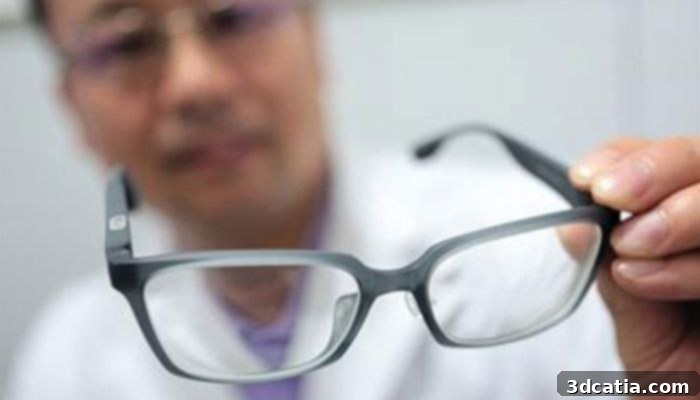
Photo Credits: Bejing News
The integration of 3D printing into ophthalmology is undeniably revolutionizing how eye conditions are diagnosed, treated, and managed. From creating highly realistic and custom-fit ocular prosthetics that restore patient confidence, to bioprinting advanced eye tissues for crucial research into blinding diseases, and even developing smart contact lenses and precision surgical guides, additive manufacturing is proving to be a game-changer. It offers unprecedented levels of personalization, enhances surgical precision, improves training methodologies for future medical professionals, and dramatically increases efficiency in device production. These innovations translate directly into improved patient outcomes, greater comfort, and a more hopeful future for individuals facing vision challenges. The continuous advancements in materials and printing techniques promise even more sophisticated and accessible solutions for eye care in the years to come, solidifying 3D printing’s vital role in shaping the future of vision.
What are your thoughts on the transformative potential of 3D printing in ophthalmology? We invite you to share your insights in a comment below or engage with us on our LinkedIn, Facebook, and Twitter pages! Don’t forget to sign up for our free weekly newsletter here for the very latest 3D printing news delivered straight to your inbox! You can also find all our compelling videos and content on our YouTube channel.