
The Rise of Silicone 3D Printing: Revolutionizing Personalized Medical Devices and Infant Care
The integration of additive manufacturing (AM), commonly known as 3D printing, into the production of medical devices has seen an explosive increase in recent years. This transformative technology is rapidly reshaping the healthcare landscape, moving towards more personalized and efficient patient solutions. Statistical data underscores this rapid expansion: the global market for 3D printing in healthcare, which stood at a significant $2 billion in 2021, is projected by Global Data to double its volume, reaching approximately $4 billion by 2026. This impressive growth trajectory is accompanied by an ever-widening array of potential applications, which in turn places increasingly stringent demands on the materials employed in these advanced manufacturing processes. The versatility of medical 3D printing allows its application across diverse medical fields, including orthopedics, dentistry, and complex surgical procedures, among others. Consequently, a vast spectrum of materials is utilized, each chosen for its ability to not only meet rigorous medical safety and performance requirements but also to be amenable to 3D printing processes. Among these critical materials, silicone is emerging as a particularly significant and increasingly adopted choice for medical applications.
Silicone’s Unique Properties Driving Medical Innovation
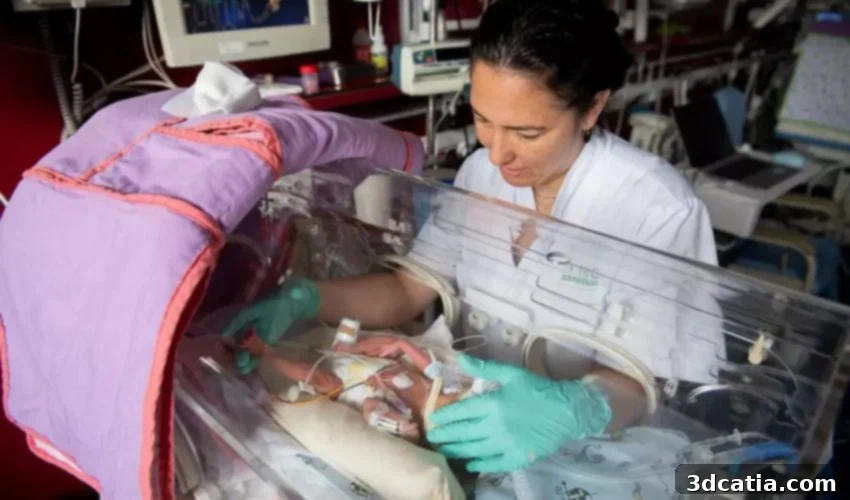
Silicone possesses a unique combination of properties that make it exceptionally valuable within the medical sector. Its increasing prominence is clearly reflected in the expanding silicone additive manufacturing (AM) market. In 2021, the total market value for silicone AM was estimated at $1.5 billion, with forecasts predicting a robust compound annual growth rate (CAGR) of 19.9% through 2028. This upward trend is indicative of a broader industry recognition of silicone’s superior attributes. Key among these are its inherent biocompatibility, which means it can safely interact with living tissue without causing adverse reactions; its impressive UV-resistance, ensuring material integrity under various light exposures; its thermal stability, allowing it to maintain its properties across a wide range of temperatures, crucial for sterilization and clinical environments. Furthermore, silicone can be readily sterilized using standard medical protocols, and its inherent flexibility, combined with the precision of 3D printing, allows for unparalleled customization to suit individual patient anatomies. A compelling real-world example of this innovative application is the collaborative proof-of-concept project between Elkem Silicones, a leading silicone manufacturer, and the Hospital Clínic of the University of Barcelona. This pioneering initiative is focused on developing 3D-printed silicone medical respiratory masks specifically designed to treat premature infants, addressing a critical need in neonatal care.
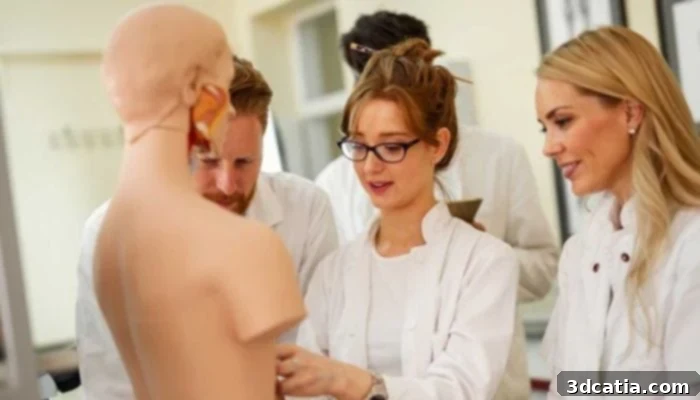
Silicone 3D printing is taking on an increasingly important role in medicine, especially for personalized patient solutions. (Image: Elkem)
Addressing Critical Challenges in Neonatal Respiratory Support
A significant medical challenge exists in neonatal care, as approximately 70% of premature babies require some form of respiratory support. Non-invasive ventilation techniques, such as Continuous Positive Airway Pressure (CPAP) devices, are frequently employed. These systems deliver a constant stream of air pressure through a connected mask and tube, helping to keep the infants’ airways open. However, a major limitation arises with conventionally manufactured masks: they are often suboptimal for infants. Babies possess much smaller and distinctly shaped faces compared to adults, making it incredibly difficult to achieve a proper, comfortable, and effective seal with generic, mass-produced masks. Moreover, the rapid growth rate of infants necessitates frequent mask replacements, adding to both the logistical and financial burdens for healthcare providers and families. This is where 3D printing offers a revolutionary advantage. The technology allows for the creation of masks that are meticulously customized to each infant’s unique facial topography, ensuring an optimal fit. Furthermore, the ability to rapidly redesign and reprint masks as an infant grows provides unprecedented flexibility and responsiveness in care. The inherent capabilities of 3D printing – to produce intricate cavities, complex and unconventional geometries, and to facilitate iterative design changes – are crucial here. The core problem that Elkem Silicones and Hospital Clínic Barcelona are tackling with 3D-printed silicone masks is the fundamental inadequacy of traditionally manufactured generic medical products, which, despite their wide range of manufacturers, sizes, and shapes, simply cannot achieve a universally perfect fit for every individual, especially for vulnerable populations like premature infants.
The Detrimental Effects of Ill-Fitting Medical Devices
Beyond the discomfort, the use of ill-fitting medical devices can lead to serious health complications. A second critical point highlighted by the project is the potential for injuries such as painful pressure sores, permanent scarring, and even hair loss, particularly in delicate areas like an infant’s face and head. These sores are not just uncomfortable; they can become severely infected if the medical device, in this case, a respiratory mask, is not properly cleaned or if the skin barrier is compromised due to constant friction and pressure. In stark contrast, custom-made medical devices, meticulously tailored to the patient’s anatomy, offer superior comfort and a far better fit, leading to improved outcomes in both the short and long term. Karsten Schlichter, Global Business Development Manager at Elkem Silicones, emphasizes the holistic approach required: “It isn’t just the mask. It’s also the way you put the mask on the baby,” he explains. He further elaborates on the critical goal: “Allowing the mask to remain on the baby without the straps pushing it down and putting pressure on the skin and on the head.” This highlights that the design must consider not only the mask itself but also its interaction with the infant’s delicate skin and fragile facial structures, aiming to minimize any potential for harm or discomfort.

Around 70% of premature babies need respiratory support, and standard masks often fall short of their specific needs. Medical-grade silicone masks produced with 3D printers offer a promising solution. (Image: Pixabay)
The Crucial Role of Material Science: Hypoallergenic Silicone
While customization through 3D printing is a significant advantage, the choice of printed material plays an equally crucial role in the success of these medical devices. For infant masks, the primary element is the material itself: hypoallergenic silicone. Silicone’s inherent softness provides unparalleled comfort against the delicate skin of a baby’s face. Unlike hard, stiff materials that can cause irritation, pressure marks, or even permanent scars, silicone conforms gently, protecting the infant’s skin. Schlichter highlights the material’s adaptability: “With silicone, you can have many formulations,” he states. “You can adjust to the final use and comfort level for the patient.” This flexibility is vital. While the mask needs to be soft for facial contact, it also requires specific mechanical properties for functionality. As Schlichter explains, “The mask is on the face of the patient, but at the same time, the mask must be connected to oxygen. The mask also has to have some mechanical properties to allow the tube to go into the mask correctly with no leakage.” This presents a design challenge that 3D printing with silicone adeptly overcomes. The technology allows for the precise integration of different material properties within a single component. For instance, the mask can be designed with soft, pliable silicone for the facial interface, while incorporating harder, stiffer silicone for connection ports, ensuring secure attachment of oxygen tubes without leakage. This multi-durometer printing capability, often achieved in a single additive manufacturing process, is a groundbreaking advancement. Schlichter further elaborates on silicone’s broader advantages: “Silicones have now become maybe the best material for elastomer parts in medical applications. That’s due to the properties of silicone, such as biocompatibility and chemical inertness.” Its inert nature means it won’t react with the body or other substances, ensuring stability and safety over time, a paramount concern for any medical implant or device.
Promising Results and the Future of Silicone Additive Manufacturing
The proof-of-concept project focusing on 3D-printed silicone masks for premature infants, which commenced in August 2022, has already yielded highly encouraging initial results, despite not yet being fully completed. Rigorous tests conducted on mannequins demonstrated a notable 14% reduction in air leakage compared to traditional masks, indicating a significantly improved seal and enhanced respiratory support efficiency. Beyond this quantifiable improvement, the customized silicone masks led to greater comfort for the simulated patients, a critical factor in preventing the development of painful pressure sores, ulcers, and potentially dangerous infections that can arise from ill-fitting devices. Karsten Schlichter interprets these outcomes with immense positivity and expresses strong optimism regarding the continued development of additive manufacturing, particularly emphasizing the pivotal role silicone is poised to play. “We see silicones as a real, novel material for 3D printing, with all the applications that silicones have in their variety, from medical to industrial applications,” he remarks, highlighting the material’s broad potential. Looking forward, Elkem is actively engaged in developing several new technologies that will further expand the capabilities and accessibility of silicones in the realm of 3D printing. This commitment promises to unlock even wider applications and foster greater innovation across various sectors, from advanced medical implants and surgical tools to industrial components requiring high-performance elastomers. The ability to precisely tailor both the geometry and the material properties of silicone through 3D printing heralds a new era of highly functional, patient-specific medical solutions. To delve deeper into how this revolutionary technology is profoundly impacting the medical field and specifically benefiting premature infants, further information can be accessed HERE.
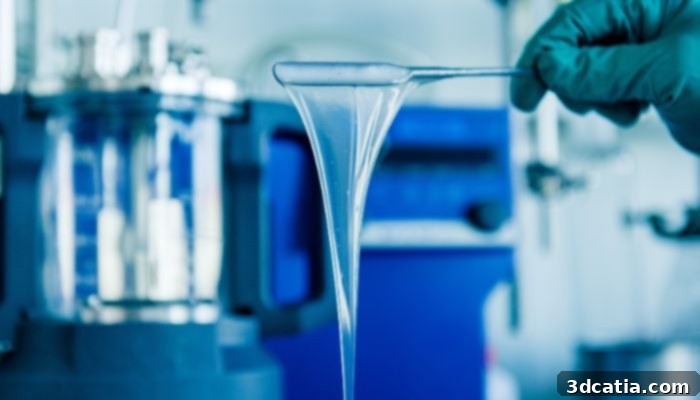
Elkem is dedicating significant resources to the research and production of advanced silicones optimized for additive manufacturing processes. (Image: Elkem)
What are your thoughts on the groundbreaking potential of 3D printed silicone technology to improve care for newborns and revolutionize medical device manufacturing? We encourage you to share your insights and comments below, or engage with us on our official LinkedIn, Facebook, and Twitter pages! Don’t miss out on the latest advancements and news in the 3D printing industry—sign up for our free weekly Newsletter here, delivered directly to your inbox! You can also explore all our informative videos and content on our dedicated YouTube channel for more in-depth perspectives.
*Cover photo credits: Hospital Clínic Barcelona