
Revolutionizing Breast Cancer Care: How 3D Printing is Transforming Diagnosis, Treatment, and Reconstruction
Breast cancer remains a formidable global health challenge, profoundly impacting millions of lives each year. While men are not entirely immune, accounting for approximately 1% of diagnoses, it was the most prevalent cancer among women worldwide in 2022. The World Health Organization (WHO) reports that an average of one in twelve women will develop breast cancer during their lifetime. This sobering statistic holds true across the globe, although mortality rates tend to be higher in developing countries compared to highly developed regions. In 2022 alone, 2.3 million women were diagnosed with breast cancer, and a staggering 670,000 succumbed to the disease.
At its core, breast cancer involves the uncontrolled growth of abnormal cells in the breast, which, if left untreated, can metastasize and spread throughout the body. Given these alarming figures, early detection, comprehensive education about prevention, and access to advanced treatment options are not merely beneficial but absolutely crucial. Recognizing this urgency, October is globally observed as Breast Cancer Awareness Month, with October 19th designated as World Breast Cancer Day. Throughout this month, initiatives worldwide strive to raise awareness, promote early screening, and offer support for treatment and coping strategies. Concurrently, a growing number of companies and research institutions are pioneering innovative solutions to assist women battling this disease. Among these groundbreaking advancements, 3D printing technology, also known as additive manufacturing, is emerging as a powerful tool in various facets of breast cancer care. From advanced diagnostic aids to personalized reconstruction and even novel drug delivery systems, 3D printing is significantly advancing the fight against breast cancer. Below, we explore some of the most current and impactful applications where this technology is making a tangible difference.
CollPlant and Stratasys: Pioneering Regenerative Implants with 3D Bioprinting
Traditional breast reconstruction often faces limitations due to the scarce availability of human cadaver or animal tissues. This challenge significantly restricts access to reconstructive surgery for many patients. However, CollPlant’s innovative 3D bioprinting approach directly addresses this supply barrier, promising broader accessibility to reconstructive options. This year, CollPlant joined forces with Stratasys, a leader in polymer 3D printing, for a new preclinical study focused on producing regenerative breast implants. This collaboration leverages Stratasys’ advanced Origin system and CollPlant’s unique rh collagen bioink. The goal of these groundbreaking implants is to regenerate natural breast tissue without triggering an adverse immune response, offering a more natural and integrated solution for patients. CollPlant had previously demonstrated promising results, reporting evidence of well-developed connective tissue and blood vessels within their 3D bioprinted implants, alongside significant tissue growth. The highly anticipated results of this specific collaboration are expected to be unveiled in the second quarter of 2025, marking a potential leap forward in biomaterial-based breast reconstruction.
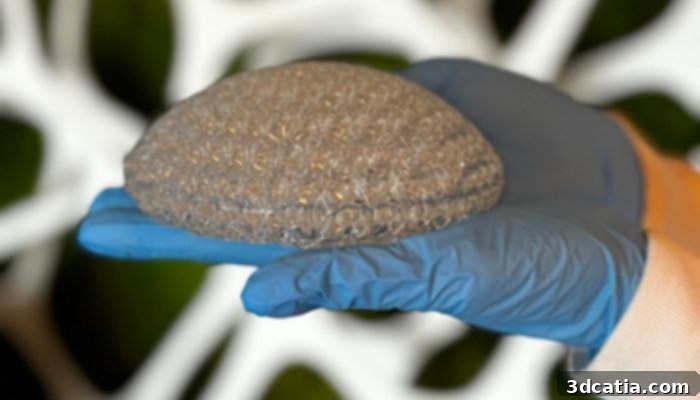
Although the Stratasys Origin is not a bioprinter, the machine has been adapted to allow processing of rh collagen bioink (Photo credits: Stratasys)
Lattice Medical’s MATTISSE Bioprosthesis: Advancing Natural Breast Regeneration
From Lille, France, Lattice Medical has solidified its reputation as a leader in medical innovation, building on six years of intensive research and the registration of 12 patents. The company’s flagship product, MATTISSE, represents a significant breakthrough in breast reconstruction. This advanced breast bioprosthesis ingeniously combines state-of-the-art 3D printing techniques, sophisticated biomaterials, and cutting-edge tissue engineering. More than just providing aesthetic volume and shape, MATTISSE is specifically designed to facilitate the natural regeneration of breast tissue. It achieves this through the additive manufacturing of resorbable biomaterials, which actively encourages the regeneration of autologous adipose tissue (the patient’s own fat tissue). Once surgically implanted, the prosthesis seamlessly integrates into the body. Over approximately six months, it acts as a scaffold for new tissue growth, gradually dissolving without leaving any residual foreign material. This innovative approach promises a more natural and enduring outcome for patients undergoing breast reconstruction. To delve deeper into Lattice Medical’s impactful work and their application of 3D printing in the ongoing battle against breast cancer, an exclusive interview provides further insights into their pioneering activities.
Healshape: 3D Printing for Natural, Resorbable Breast Prosthetics
Founded in Lyon in January 2020, Healshape is a dynamic biomedical startup dedicated to transforming breast reconstruction and augmentation through advanced bioprinting technologies. The company’s core mission is to “develop natural solutions for breast reconstruction for every woman,” specifically addressing the needs of the estimated 40% of the 2.2 million women diagnosed with breast cancer in 2020 who require a mastectomy. Similar to Lattice Medical’s approach, Healshape offers a fully customized bioprosthesis named UR SHAPE. This innovative device is described as a “100% natural matrix made from bio-sourced materials [that are 3D-printable] and resorbable,” thanks to a specialized bio-ink that promotes the regeneration of each woman’s unique tissue. After implantation, surgeons can perform a lipofilling procedure, injecting the patient’s own cells into the bioprosthesis. This streamlined process requires only a single operation. These injected cells then gradually adopt the shape of the bioprosthesis, facilitating the reconstruction of natural breast tissue. Over several months, the bioprosthesis naturally resorbs, leaving behind only the patient’s own regenerated cells, thereby restoring their breast. In a significant step forward for patient care, Healshape announced a strategic partnership with l’Institut de Cancérologie de l’Ouest in the Pays de la Loire, France, in 2023, further expanding its reach and impact.
Isolating Aggressive Cancer Cells with 3D Printed Scaffolds
In a significant stride for breast cancer research, a dedicated research group at the University of Girona has successfully utilized 3D printing technology to isolate the specific cells responsible for causing breast cancer in women. Their innovative method involves creating tiny, intricate 3D matrices, commonly referred to as scaffolds. These scaffolds are meticulously designed to mimic the complex tissues and fibers found within the human body, providing a realistic environment for cell study. Employing BCN3D Cura software and the Barcelona-based manufacturer’s Sigma 3D printer, the team systematically tested various parameters to develop the most optimal scaffold models for their research. They produced 10 copies of each configuration to precisely determine which geometry was most effective at separating stem cells – the notoriously aggressive cells often implicated in cancer relapses. By successfully isolating these stem cells from a specific subtype of breast cancer, researchers gain an unparalleled opportunity to study them in greater detail. This critical advancement will enable them to identify the unique biomarkers responsible for tumor formation and progression, paving the way for the development of highly targeted drugs and more effective therapeutic strategies to combat cancer recurrence.
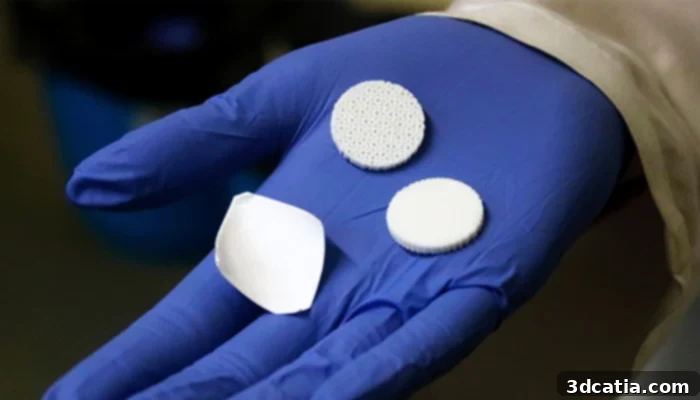
Photo Credits: University of Girona
BellaSeno: Innovating with Resorbable 3D Implants for Breast Reconstruction
BellaSeno, a pioneering German company at the forefront of 3D printing medical implants, is making significant strides in the development of resorbable implants for both bone and soft tissue reconstruction. These advanced implants are manufactured with precision using 3D printing technology. At the 93rd Annual Plastic Surgery Meeting in San Diego, BellaSeno unveiled compelling preliminary results from its ongoing clinical trial. The data showcased a remarkable achievement: its medical-grade polycaprolactone (mPCL) scaffolds demonstrated twice the breast volume retention compared to fat grafting alone, a common technique in breast reconstruction. Crucially, these scaffolds also exhibited an optimal safety profile, with no reported complications such as infection or necrosis, which are significant concerns in reconstructive surgery. In this particular study, 19 patients received mPCL breast scaffolds that were subsequently filled with 50% autologous fat grafting, primarily following the removal of their silicone implants. Follow-up examinations conducted over a period of 12 to 24 months consistently revealed no major complications, underscoring the potential safety and efficacy of BellaSeno’s approach.
Looking ahead, BellaSeno has ambitious plans to further expand its innovative capabilities. The company intends to open a fully automated production plant in Australia in 2025, specializing in the high-volume manufacturing of 3D printed medical implants. This state-of-the-art facility will be capable of producing up to 100,000 custom-made breast scaffolds annually, promising to deliver highly customized and effective solutions for a greater number of patients requiring breast reconstruction.
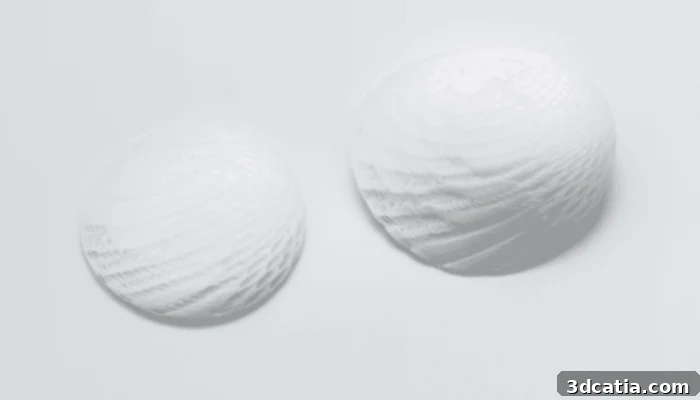
Photo credits: BellaSeno
The University of Limerick’s World-First 3D-Printed, Bespoke Breast Prostheses
Researchers at the University of Limerick (UL) in Ireland have announced what they proudly claim to be a ‘world first’ in post-mastectomy care: the creation of bespoke breast prostheses for women using a combination of advanced 3D scanning and printing technologies. This pioneering pilot service is the result of a powerful collaboration between the Rapid Innovation Unit at UL, the Symptomatic Breast Care Unit at University Hospital Limerick (UHL), and the Mater Private Network’s Mid-Western Radiation Oncology Centre. The overarching goal of this initiative is to significantly improve the quality of life for breast cancer survivors. The service provides women who have undergone a complete mastectomy (the full removal of one or both breasts) with access to fully personalized prostheses. These prostheses are uniquely produced onsite at the point of care, ensuring a perfect match to the residual breast, regardless of its shape or size. While the researchers have not yet disclosed the specific 3D printing technology employed, they emphasize that this tailored treatment aims to overcome the limitations of the current ‘one-size-fits-most’ approach, which often leads to discomfort and dissatisfaction. The project is designed with the ambition of delivering these customized prosthesis solutions across Ireland, offering a new standard of personalized care.
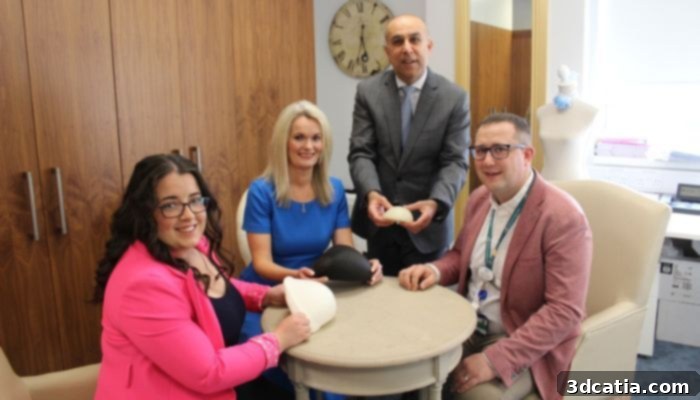
The team behind the UL project (left to right): Emmajude Lyons, PhD Researcher, Rapid Innovation Unit, University of Limerick; Dr Lorraine Walsh, Consultant Radiation Oncologist, Mater Private Network Limerick; Mr. Chwanrow Baban, Consultant General and Oncoplastic Breast Surgeon, Symptomatic Breast Unit, University Hospital Limerick; and Dr Kevin J O’Sullivan, Senior Research Fellow, Rapid Innovation Unit (Photo credits: University of Limerick)
The 3D Printed Implant that Adapts to the Body and Releases Drugs (Queen’s University Belfast)
Researchers at Queen’s University Belfast (QUB) are at the forefront of developing highly efficient breast cancer treatments through the creation of innovative 3D printed implants. Utilizing design software like Tinkercad and the advanced Cellink Bio X 3D bioprinter, these customized implants are manufactured from “intelligent materials.” These smart materials possess the remarkable ability to change their shape and characteristics in response to external stimuli, effectively making them 4D printed objects. This cutting-edge technology allows the implants to be programmed and controlled by factors such as temperature or humidity, significantly enhancing their adaptability to each individual patient’s unique physiological environment. The benefits of incorporating 4D printing into these implants extend beyond mere aesthetics. Crucially, these intelligent implants are capable of gradually releasing chemotherapy drugs, such as doxorubicin (DOX), directly and precisely into specific locations within the body. This targeted drug delivery system is designed to prevent the recurrence of cancer cells by concentrating treatment where it is most needed, minimizing systemic side effects often associated with traditional chemotherapy and offering a more personalized and effective therapeutic approach.
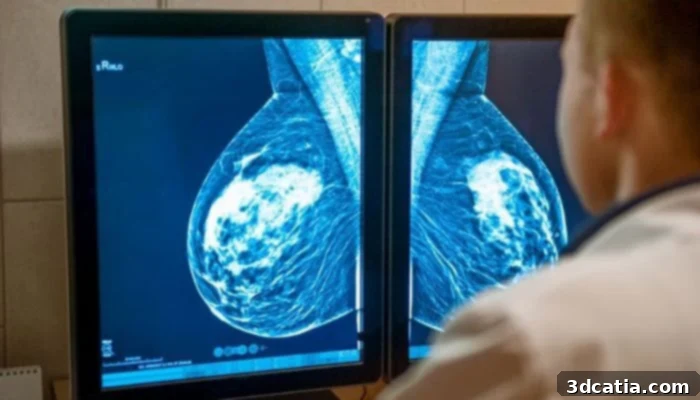
Photo credits: Queen’s University Belfast
MIT’s 3D-Printed Ultrasound Device for Early Detection of Interval Cancers
A pioneering research team at MIT has developed a groundbreaking 3D-printed device that holds immense promise in the ongoing fight against breast cancer. The primary purpose of this innovative ultrasound device is to significantly improve the early detection of breast cancer, particularly addressing the critical issue of “interval cancers.” Interval cancers are a major concern for both medical professionals and patients, as these aggressive tumors develop rapidly between routine mammography appointments and are often more advanced when detected. Canan Dagdeviren, the lead author of the study, emphasized that their central aim was to design a user-friendly device that would enable more frequent and convenient screening for high-risk individuals. The resulting device, named the cUSBr-Patch, consists of a flexible, 3D printed patch featuring strategically placed openings. This design allows for in-depth scans and provides comprehensive images of the breast from multiple angles. The device was created using a Prusa i3 MK3S+ 3D printer, employing both TPU (thermoplastic polyurethane) for flexibility and PLA (polylactic acid) for structural components. Designed to be comfortably attached to a standard bra, the cUSBr-Patch empowers individuals to conduct ultrasound scans from the comfort of their homes. This capability promises to significantly combat the challenge of interval cancers by facilitating earlier detection and intervention, potentially saving countless lives.
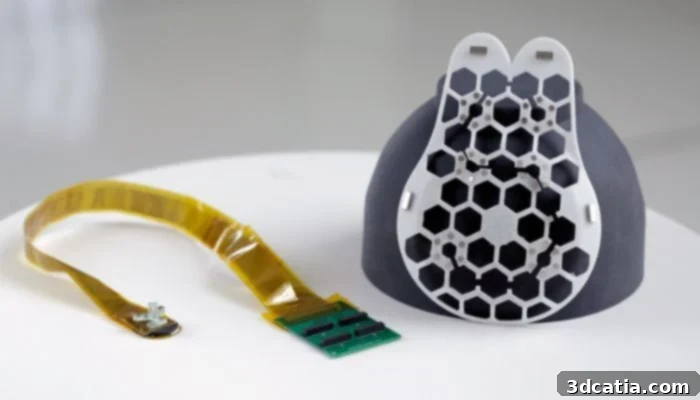
Photo credits: MIT
ONEBra: Customized 3D Printed Bra Cups for Post-Mastectomy Support
ONEBra, a burgeoning Italian company, has introduced an ingenious solution to support women who have undergone a mastectomy following breast cancer. It is widely acknowledged that the asymmetry of the breasts often resulting from this life-altering surgery can impose significant additional psychological distress on patients. Recognizing this crucial need, ONEBra has developed customized, 3D-printable bra cups meticulously designed to precisely fit each woman’s unique physiology. The process is remarkably user-friendly and respects patient privacy. Clients can perform a body scan at home using a smartphone app or a dedicated scanning device, and then securely transmit these images to the company. Leveraging the power of additive manufacturing, ONEBra then 3D prints the perfectly customized bra cups, ensuring an accurate and comfortable fit. These personalized products are then swiftly shipped directly to the patient’s home. Through this innovative application of 3D printing, ONEBra not only delivers a product that significantly enhances comfort and appearance but also upholds complete respect for the individual’s privacy and emotional well-being, offering a thoughtful and effective solution for post-mastectomy care.
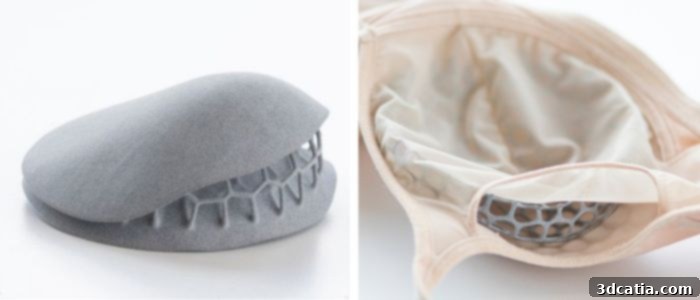
ONEBra 3D printed cups are made with HP MJF technology in TPU. (Photo credits: ONEBra)
ReConstruct Bio: Harnessing SWIFT 3D Bioprinting for Personalized Breast Reconstruction
ReConstruct Bio, a pioneering company spun out of the prestigious Wyss Institute at Harvard University, is dedicated to revolutionizing breast reconstruction and augmentation for women who have undergone mastectomy. Their approach is centered on the advanced 3D bioprinting technology known as SWIFT (Sacrificial Woven Fabrics for Engineering Tissue), which was ingeniously devised by the Wyss Institute. The team at ReConstruct Bio has developed the BioImplant, an innovative bioengineered tissue created using the patient’s own cells. This bespoke tissue, precisely printed with the SWIFT technique, is specifically designed to be vascularized. This crucial feature ensures immediate integration with the patient’s existing blood supply, a critical factor for the viability and longevity of the implant. Furthermore, by utilizing the patient’s autologous cells, ReConstruct Bio significantly minimizes the risk of immune rejection and other potential complications often associated with foreign materials. According to the company, this cutting-edge technique not only produces superior aesthetic and functional results compared to conventional synthetic breast implants but also holds broad applicability for various reconstructive or cosmetic procedures beyond breast reconstruction, signaling a new era in personalized regenerative medicine.
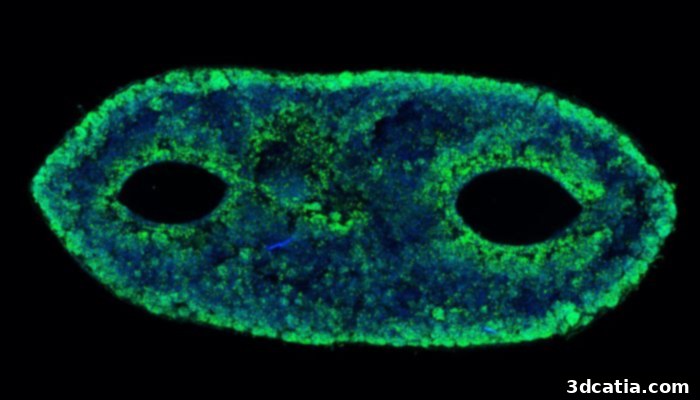
A microscopic image of vascular channels within adipose tissue that has been bioprinted and perfused in vitro for four days. (Photo credits: Wyss Institute – Harvard University)
Cellbricks: Bioprinting Biological Implants as an Alternative to Silicone
For many women who undergo surgical removal of breast cancer, the option of an implant after the procedure is a crucial consideration. Historically, these implants have predominantly been made of silicone. However, silicone implants carry inherent risks, including the body’s potential to encapsulate them, often necessitating their removal after a period. To address these limitations and offer a superior alternative, Cellbricks, a visionary startup based in Berlin, is actively working on the development of biological implants crafted from human tissue. Leveraging its proprietary biofabrication technology, Cellbricks possesses the remarkable capability to bioprint an implant directly from human cells, sometimes even derived from the patient themselves. The success of this innovative approach hinges on several key elements: their specialized bio-ink, an advanced stereolithographic multi-material bioprinting process, and sophisticated software and process technology. By creating implants from living tissue, Cellbricks aims to provide a more natural, durable, and biocompatible solution for breast reconstruction, significantly reducing the risks and complications associated with traditional silicone implants and offering a more integrated solution for patients.
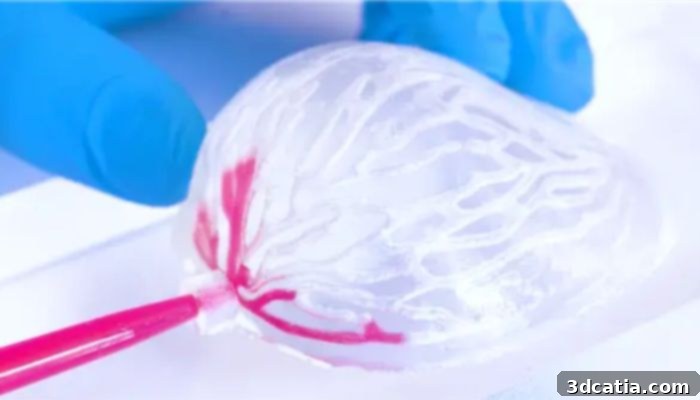
Cellbricks breast implant (Photo credits: Cellbricks)
3D Printed Mini-Tumors to Enhance Cancer Immunotherapy Research
Researchers at the Leiden Academic Center for Drug Research have achieved a significant breakthrough by 3D printing mini-tumors within an environment that closely mimics human tissue. This advanced model is being used to accurately assess the efficacy of various cancer immunotherapies. These innovative immunotherapies include enhanced T-cells, which are specialized immune cells genetically engineered to attack cancer cells more effectively, and bispecific antibodies, which act as bridges to help T-cells locate and destroy cancer cells with greater precision. By creating these sophisticated 3D printed mini-tumors, researchers gain a far more realistic and complex model for studying immunotherapy interactions compared to traditional testing methods conducted in a simple Petri dish. Their 3D printed mini-tumors, which are carefully embedded in a collagen gel, much more accurately replicate the intricate physiological conditions found within the human body.
The research team employs a 3D bioprinter to precisely inject tumor cells into the collagen gel, resulting in the formation of small, three-dimensional tumors. These mini-tumors then grow and invade the surrounding gel, mirroring the progression of cancer within the body. Subsequently, the enhanced T-cells or bispecific antibodies are introduced, and their interactions are meticulously monitored using automated microscopes. This sophisticated testing method has already proven highly successful, enabling researchers to identify which antibodies are most effective against specific cancer types. Furthermore, the team has collaborated with Reno Debets’ immunology lab at Erasmus Medical Center in Rotterdam, where they have tested novel receptors for potential triple-negative breast cancer therapies, demonstrating the immediate translational impact of their 3D bioprinted models in advancing cancer treatment research.
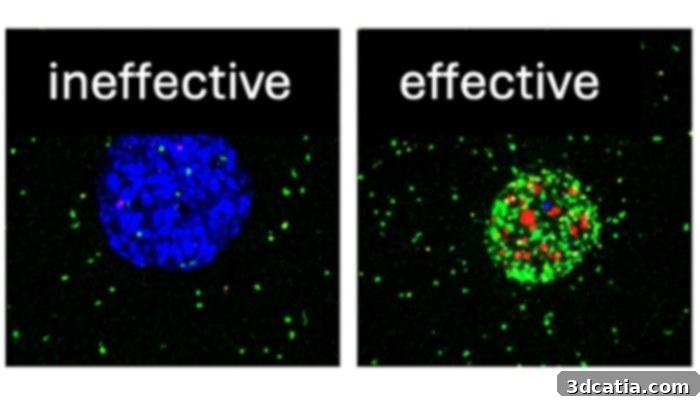
The tumor on the left has inactive antibodies, and the tumor on the right has active antibodies. The green indicates T-cell recruitment, and the red indicates tumor killing. (Photo credits: Liao et al. (2024))
The University of East Anglia and Its Approach to Breast Reconstruction with 3D Printing
Recent groundbreaking research conducted at the University of East Anglia (UEA) is actively exploring the transformative potential of 3D printing technology to significantly enhance breast reconstruction surgeries for cancer patients. This innovative project involves the creation of highly customized molds, precisely generated from 3D scans of the patient’s breast taken prior to surgery. These bespoke molds serve a crucial purpose, facilitating accurate tissue measurement and optimizing both the shape and volume achieved during the reconstruction procedure. This meticulous approach promises to improve not only the aesthetic quality of the reconstruction but also the efficiency and speed of the surgical process. Another exciting facet of the research focuses on leveraging MRI data to design customized implants, which are then 3D printed using biodegradable polymers. These advanced implants are specifically intended for use in breast-conserving surgery, a critical procedure that involves removing the tumor while meticulously preserving as much of the natural breast tissue and shape as possible. Once implanted, this 3D printed scaffold would gradually degrade within the body after being injected with the patient’s own fat, providing a temporary matrix for natural tissue regeneration and a more natural, lasting outcome.
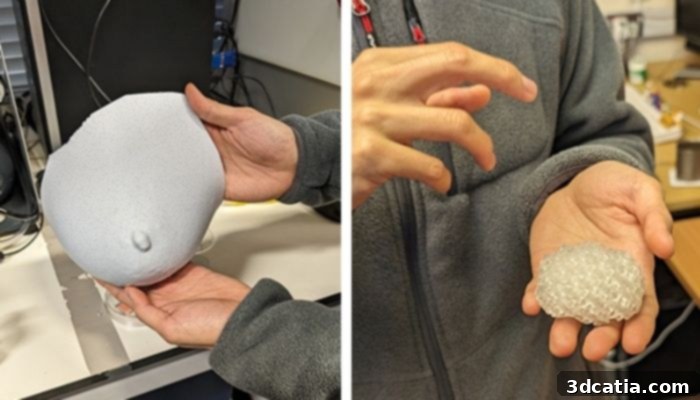
On the left, a 3D printed breast mold. Right, biodegradable implant with the exact shape of a tumor (Photo credits: University of East Anglia).
Ricoh and SimBioSys Unite AI and 3D Printing to Personalize Breast Cancer Treatment
Ricoh USA, through its specialized division Ricoh 3D for Healthcare, stands as a leading manufacturer of personalized medical devices. In a forward-thinking move to advance breast cancer treatment, the company has forged a strategic agreement with SimBioSys, an innovative tech company specializing in artificial intelligence (AI) and sophisticated computer modeling. This powerful collaboration is focused on rigorously evaluating the immense potential of integrating artificial intelligence with advanced 3D printing technologies to significantly enhance surgical experiences and deliver truly personalized care for breast cancer patients. At the prestigious American Society of Breast Surgeons conference in April 2024, Ricoh and SimBioSys proudly showcased their initial advancements, unveiling groundbreaking and innovative breast cancer models. While the specific details of the technologies employed remain confidential, this partnership holds immense promise for ushering in a new era of innovative solutions for the precise treatment and comprehensive management of breast cancer, ultimately leading to better patient outcomes through highly individualized approaches.
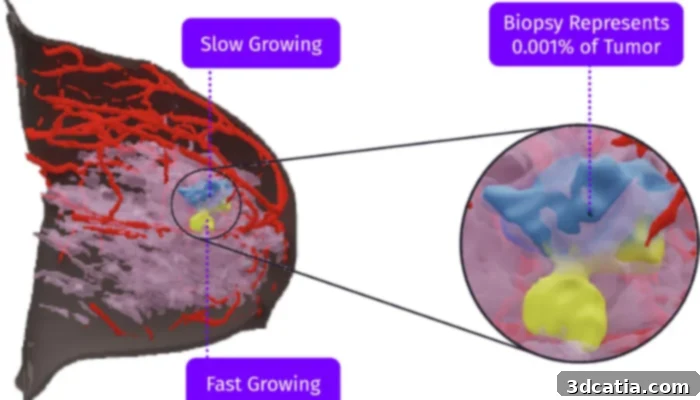
Photo credits: SimBioSys
ZULE Offers 3D Printed Breast Prosthesis Alternatives in Ecuador
Last October marked the exciting launch of ZULE, an innovative project spearheaded by ESPOL (Escuela Superior Politécnica del Litoral) in Ecuador. This groundbreaking initiative utilizes the power of 3D printing to create customized external breast prostheses, offering a new standard of care for women. This advanced technological approach allows for the design of prostheses that precisely conform to the unique anatomy of each patient, thereby ensuring unparalleled comfort, a natural appearance, and a significant boost in confidence. The dedicated team, expertly led by Professor Gabriel Helguero, has developed a streamlined process that skillfully combines 3D scanning and sophisticated modeling techniques. This allows each prosthesis to be meticulously adapted not only to the patient’s overall dimensions but also to the specific contours of their scar, ensuring a seamless and individualized fit. During the formal presentation of this impactful initiative, strong emphasis was placed on the critical importance of early detection in combating breast cancer. Furthermore, Cecilia Paredes, the rector of ESPOL, underscored how research-driven innovations, particularly those powered by additive manufacturing technology, possess the profound ability to transform lives and contribute significantly to the overall well-being and recovery of patients, especially in regions where access to personalized solutions might be limited.
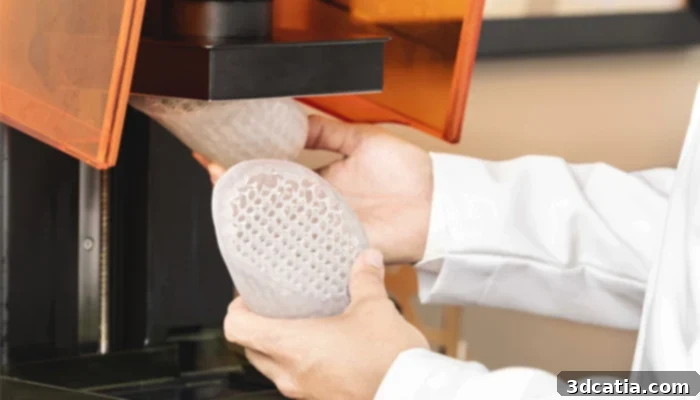
Photo credits: ESPOL / Escuela Superior Politécnica del Litoral
The examples above clearly illustrate that 3D printing is not just a niche technology but a rapidly evolving field with profound implications for breast cancer care. From creating personalized breast implants that regenerate natural tissue and reduce rejection risks to developing bespoke external prostheses that restore confidence and comfort, additive manufacturing is redefining what’s possible in reconstruction. Beyond patient-facing solutions, 3D printing is also accelerating critical research, enabling scientists to isolate aggressive cancer cells, develop more accurate models for immunotherapy testing, and even engineer smart implants that deliver drugs precisely where needed. These innovations promise to improve early detection, enhance treatment efficacy, and significantly improve the quality of life for breast cancer patients and survivors worldwide. As research and technology continue to advance, the role of 3D printing in this vital fight will only grow, bringing us closer to more effective, personalized, and compassionate care.
What are your thoughts on these innovative applications of 3D printing in the battle against breast cancer? Share your insights in a comment below or join the conversation on our LinkedIn, Facebook, and Twitter pages! Don’t miss out on the latest 3D printing news by signing up for our free weekly newsletter here, delivered straight to your inbox. You can also discover more about the world of additive manufacturing by watching our videos on our YouTube channel.