

RENCA Pioneers Sustainable Construction with the World’s First 3D Printed Geopolymer House
The global construction industry stands at a critical juncture, facing immense pressure to adopt more sustainable practices and drastically reduce its environmental footprint. With traditional building methods contributing significantly to carbon emissions and material waste, the imperative for innovative solutions has never been stronger. In this transformative landscape, RENCA, a visionary leader in developing sustainable geopolymer materials for 3D printing in construction, has achieved a truly groundbreaking milestone. By leveraging their revolutionary zero-cement geopolymer 3D printing mortar, RENCA has successfully constructed the world’s first entirely 3D printed geopolymer house. This remarkable achievement not only signifies a major leap forward for RENCA but also offers a powerful blueprint for the future of sustainable building. As concerns about climate change and resource depletion intensify, construction 3D printing, especially with advanced materials like geopolymers, is rapidly emerging as a highly promising and viable solution to address these pressing environmental challenges and redefine how we build.
At the heart of this innovation lies the geopolymer – a sophisticated inorganic material renowned for its exceptional properties and profound environmental benefits. Unlike conventional cement-based composites, geopolymers are typically formulated by combining a reactive aluminosilicate source material, often derived from industrial by-products like fly ash or blast furnace slag, with an alkaline activator. This chemical reaction results in a highly durable, high-performance material that shares many desirable characteristics with cement but significantly outperforms it in terms of sustainability and often, mechanical strength. Critically, geopolymer materials are entirely free from Portland cement, lime, or gypsum, the production of which is notoriously energy-intensive and a major contributor to global CO2 emissions. This fundamental difference means that geopolymer alternatives can offer an astonishing up to 90% more sustainability compared to traditional cement-based options, presenting an unparalleled choice for environmentally conscious construction projects and driving the industry towards a truly eco-friendly future. Their ability to utilize industrial waste streams also aligns perfectly with circular economy principles, further amplifying their ecological appeal.
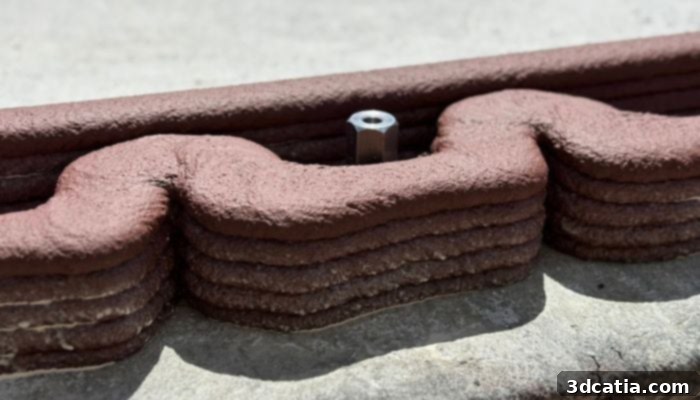
Geopolymer-based concrete
RENCA’s dedicated journey into the realm of geopolymer materials commenced in 2015, driven by a steadfast commitment to pioneering sustainable solutions across various industries. Over nearly a decade, this pioneering spirit has culminated in the development of an extensive portfolio of over 300 unique products, each meticulously engineered to address specific environmental concerns and industrial needs. The crowning achievement of this extensive research and development was the recent successful completion of the world’s first 3D printed geopolymer house. This monumental project was realized through a strategic and collaborative effort with industry partners Strong Print 3D and Geopolymer International. Together, they tackled the formidable challenges presented by the harsh and demanding desert environment of the western USA. Printing a complete house structure in such extreme conditions—characterized by significant temperature fluctuations, aridness, and logistical complexities—was a testament to the resilience and adaptability of RENCA’s geopolymer mortar and the collective expertise of the teams involved. This successful demonstration not only validates the material’s performance but also its practicality in real-world, demanding construction scenarios, paving the way for wider adoption in diverse climates.
The concept of construction 3D printing has, for good reason, captivated the imagination of the global building sector. It offers a revolutionary approach to architecture and engineering, promising unprecedented design freedom, the ability to create complex geometries with ease, and a drastic reduction in material waste through precise, on-demand deposition. Furthermore, it holds the potential to accelerate construction timelines, lower labor costs, and enhance site safety. However, a significant environmental hurdle has historically shadowed this promising technology: the substantial carbon dioxide emissions associated with the Portland cement typically used in existing 3D printing mortars. RENCA’s innovation with genuine geopolymer-based mortars and concretes effectively addresses this concern, unlocking a myriad of advantages specifically tailored for construction 3D printing. These benefits include remarkably rapid setting times, which are crucial for multi-layer printing processes, allowing for faster build speeds and reduced waiting periods between layers. Moreover, geopolymers offer exceptionally high compressive and flexural strength, ensuring the structural integrity and longevity of 3D printed structures. Their excellent chemical adhesion between layers guarantees a monolithic structure, minimizing the risk of delamination and enabling continuous, uninterrupted printing, which is vital for maximizing efficiency and throughput on construction sites. These combined properties make geopolymer 3D printing not just an eco-friendly choice, but a high-performance one.
Beyond their inherent eco-friendliness, geopolymer materials boast a suite of remarkable properties that make them exceptionally well-suited for a diverse range of construction applications. Their superior fire resistance is a critical safety feature, offering enhanced protection for occupants and infrastructure in the event of a fire, often outperforming traditional concrete. Furthermore, geopolymers exhibit outstanding corrosion resistance, making them ideal for structures exposed to harsh chemicals, saltwater environments, or industrial pollutants, significantly extending the lifespan of buildings and reducing maintenance costs. Their eco-friendly nature is not solely derived from the absence of Portland cement; it is further amplified by emitting significantly less CO2 during their manufacturing process and, crucially, by their ability to incorporate various industrial by-products as raw materials. This aspect transforms waste into valuable building resources, perfectly embodying the principles of a circular economy and resource efficiency. While conventional geopolymer mortars have historically required specific mixing procedures and reliance on batch mixing systems, which can present logistical challenges on dynamic construction sites, RENCA is actively pushing the boundaries of material science. Their ongoing research and development efforts are focused on introducing groundbreaking solutions such as a one-component geopolymer mortar designed for seamless integration with continuous mixers, streamlining the application process. Additionally, they are developing a sophisticated 2K (two-component) system that will enable precise control over the setting time directly at the 3D printer nozzle, offering unprecedented flexibility and adaptability to varying environmental conditions and project requirements. These advancements are poised to significantly enhance the ease of use and widespread adoption of geopolymer 3D printing.
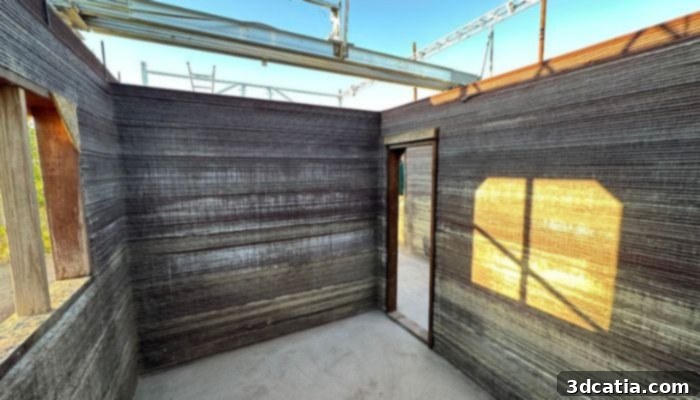
Pictured: the world’s first geopolymer house
RENCA’s extraordinary accomplishment in successfully 3D printing a complete geopolymer house represents far more than just a technological feat; it marks a monumental and definitive step towards actively promoting truly sustainable building materials and construction methodologies on a global scale. This pioneering project serves as a compelling proof-of-concept, demonstrating the viability, efficiency, and environmental benefits of an entirely new paradigm in construction. By showcasing the practical application of zero-cement geopolymer 3D printing mortar, RENCA is not merely introducing an alternative; it is actively paving the way for a cleaner, safer, and more resilient future for all inhabitants of our planet. The intrinsic potential of geopolymer 3D printing mortar to fundamentally revolutionize construction practices is immense. It offers a tangible and scalable solution to address some of the most pressing challenges facing humanity today, including climate change, resource scarcity, and the urgent need for affordable, sustainable housing. This innovative approach brings forth a profound sense of hope for the emergence of a construction industry that is not only greener and more efficient but also profoundly more responsible in its environmental stewardship. As the world continues to grapple with the consequences of conventional building practices, RENCA’s visionary work provides a beacon, illustrating how cutting-edge material science combined with advanced additive manufacturing can deliver truly transformative impacts for generations to come. To delve deeper into this groundbreaking achievement and understand the full scope of its implications, you can find more detailed information HERE.
What are your thoughts on RENCA’s pioneering use of zero-cement geopolymer 3D printing mortar to construct the world’s first 3D printed geopolymer house? We’d love to hear your perspective on this significant leap forward for sustainable construction and additive manufacturing. Share your insights and opinions by leaving a comment below or by engaging with us on our social media channels. You can find us on LinkedIn, Facebook, and Twitter! Don’t miss out on the latest advancements and breaking news in the world of 3D printing—be sure to sign up for our free weekly Newsletter here, delivering the most important stories straight to your inbox every week! For visual content and in-depth discussions, you can also find all our videos and interviews on our dedicated YouTube channel, where we explore the fascinating innovations shaping the future of additive manufacturing.
*All photo credits: RENCA