
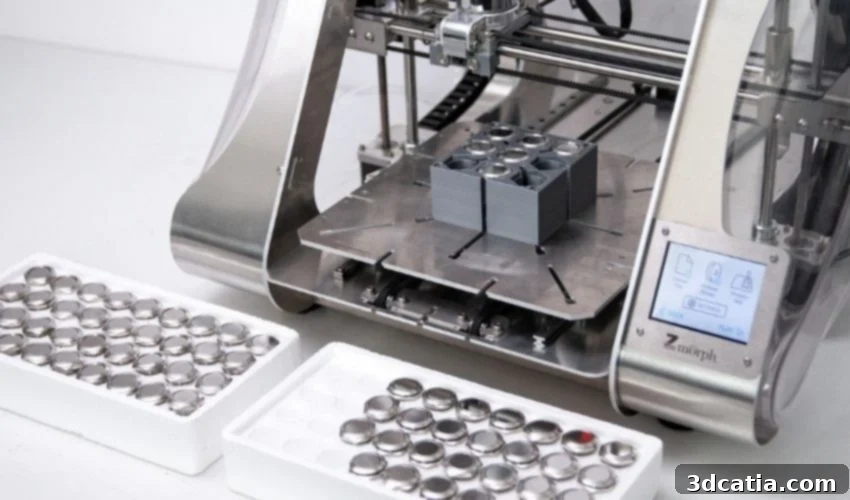
Additive Manufacturing: Driving the Future of Automotive Production with Siemens & the ICM Summit
Additive manufacturing, commonly known as 3D printing, has unequivocally established its pivotal role in shaping a forward-thinking future across a multitude of industries. Its disruptive potential is being realized as 3D printing gains traction, encountering an ever-expanding array of applications. This transformative impact is particularly pronounced within the automotive sector, where additive manufacturing is poised to redefine the very essence of car manufacturing. The core tenets of this technology — innovation, digitalization, and sustainability — are becoming the guiding principles for groundbreaking business models in the automotive world. While the potential applications and benefits of additive manufacturing might seem boundless, gaining a deeper understanding requires expert insight. To illuminate this exciting landscape, we recently had the opportunity to speak with Karsten Heuse, Vice President of Additive Manufacturing at Siemens. Mr. Heuse is a prominent speaker at this year’s Innovative Car Manufacturing (ICM) Summit in Munich, a prestigious event dedicated to exploring cutting-edge technologies. The summit delves into a broad spectrum of advancements, from 3D printing and advanced automation to sophisticated robotics, the Internet of Things (IoT), and artificial intelligence. Our discussion with Mr. Heuse aimed to uncover the impending challenges facing the automotive industry and, more specifically, how additive manufacturing can provide robust and innovative solutions to navigate these complexities.
3DN: Can you introduce yourself and your connection to AM?

Karsten Heuser, VP Additive Manufacturing at Siemens (photo credits: Karsten Heuser)
I have dedicated over two decades to Siemens, serving in various management capacities throughout my tenure. My primary focus has consistently been on scaling nascent businesses within the expansive framework of a global enterprise like Siemens. My journey into Additive Manufacturing began in 2012, at which point I was entrusted with the responsibility for PLM (Product Lifecycle Management) & Innovation Excellence as part of a significant cost-reduction initiative within Siemens Energy. For the past five years, my role has evolved considerably; I now lead all Additive Manufacturing activities within Siemens Digital Industries. Simultaneously, I manage the Company Core Technology for Additive Manufacturing and Materials, a role that places me at the forefront of strategic development and technological advancement in this field. Beyond my corporate responsibilities, I am deeply committed to fostering and shaping the broader AM community. This passion is reflected in my active participation as a member of the VDMA AG Additive Manufacturing Advisory Board and the Formnext Advisory Board. My academic foundation is in solid-state physics, complemented by a Postgraduate Diploma in Advanced Management, providing me with both the technical depth and strategic acumen necessary for this multifaceted role. Our overarching mission at Siemens is clear: to empower the entire ecosystem – from designers and manufacturers to end-users – to create, produce, and effectively utilize additive applications at an industrial scale. This involves not only developing cutting-edge technology but also fostering an environment where innovation can thrive and be practically implemented.
3DN: What specific insights will you be offering at the ICM Summit with your expertise, particularly regarding the future of car manufacturing and additive manufacturing?
At the upcoming ICM Summit, my presentation will focus on showcasing tangible examples from various major application fields where industrial 3D printing is already generating significant value. I will delve into specific case studies, illustrating how organizations are leveraging additive manufacturing to achieve breakthroughs in product design, performance, and efficiency. Furthermore, a crucial part of my contribution will involve sharing practical approaches and strategies on how to effectively scale Additive Manufacturing operations. This scaling process requires robust eco-system alliances forged along the entire value chain, encompassing everything from initial design and material development to production and post-processing. A key element of this scalability involves the comprehensive automation of both IT (Information Technology) and OT (Operational Technology) infrastructures. I will also be discussing the development and implementation of a holistic digital factory toolbox, which integrates various digital solutions to streamline workflows and enhance productivity in AM environments. During the conference, I will draw upon Siemens’ extensive internal experience, sharing our own journey and insights gained from deploying additive manufacturing as a vast enterprise across diverse sectors. Our applications span critical areas such as Mobility, industrial production, and healthcare. Currently, within the broader Siemens brand ecosystem, we operate over 230 industrial 3D printers across nearly 50 different locations worldwide. These deployments are strategically aimed at achieving multiple benefits: significantly reducing operational costs, minimizing our greenhouse gas emissions to support sustainability goals, and dramatically improving lead times, time to market, and overall product performance. These examples will provide practical evidence of AM’s transformative power.
3DN: How do you envision the future of car manufacturing, particularly with the integration of additive manufacturing?
I firmly believe that Additive Manufacturing is on a trajectory to become a standard, mainstream production technology within the automotive industry. Its ability to create performance-improved components is a game-changer. Imagine parts with optimized internal flow channels for enhanced cooling, dramatically lower carbon footprints due to material efficiency, and significantly reduced weight through advanced design and topology optimization. These are not distant dreams but increasingly tangible realities that AM delivers. For instance, the creation of complex geometries impossible with traditional manufacturing allows for highly efficient heat exchangers, lighter chassis components, or customized interior elements that enhance both functionality and aesthetics. Additive Manufacturing also plays a crucial role in enabling on-demand production of spare parts, which has profound implications for inventory management and supply chain resilience. This capability reduces the need for extensive physical warehousing, mitigates the risk of obsolescence for older models, and ensures faster, more localized delivery of critical components. Beyond end-use parts, AM serves as a powerful lever for higher productivity by facilitating the rapid creation of manufacturing aids. This includes custom jigs, fixtures, ergonomic tools for assembly lines, and specialized prototypes, all of which can be designed and produced quickly to optimize production processes and reduce downtime. The traditional car production industry faces an imperative to adapt. Companies must prepare today by investing in new capabilities, educating their workforce on design for additive manufacturing, material science, and digital workflows. It’s about empowering engineers and technicians to fully leverage the transformative power of AM for a more agile, sustainable, and innovative future in automotive manufacturing. This shift requires a proactive mindset to embrace new technologies and integrate them seamlessly into existing production paradigms.
3DN: Why do you think it is beneficial to attend the ICM Summit 2022?
Attending the ICM Summit 2022 offers an unparalleled opportunity for professionals within the automotive and manufacturing sectors to immerse themselves in a dynamic environment of knowledge exchange and collaboration. The primary benefit lies in the chance to actively participate in exchanging ideas, sharing valuable learnings, and establishing crucial connections. This kind of interaction is vital for accelerating the additive manufacturing transformation process across the industry. In a rapidly evolving technological landscape, leveraging the collective knowledge of others within open innovation ecosystems is not just beneficial, but essential. No single company or individual possesses all the answers, and the complexity of integrating advanced technologies like AM into intricate manufacturing processes demands a collaborative approach. The summit provides a unique platform for this critical engagement and exchange between diverse disciplines within car manufacturing. From design engineers and material scientists to production managers and strategists, participants can interact, discuss challenges, explore solutions, and forge partnerships that drive innovation forward. It’s an opportunity to gain insights into best practices, learn from both successes and failures, and understand the practical implementation strategies of AM from industry leaders and pioneers. Ultimately, the ICM Summit is designed to foster a community where synergistic relationships are built, ensuring that the industry collectively advances towards a more efficient, sustainable, and technologically advanced future. By offering this kind of focused, cross-disciplinary exchange, the ICM Summit serves as a catalyst for meaningful progress in automotive manufacturing.
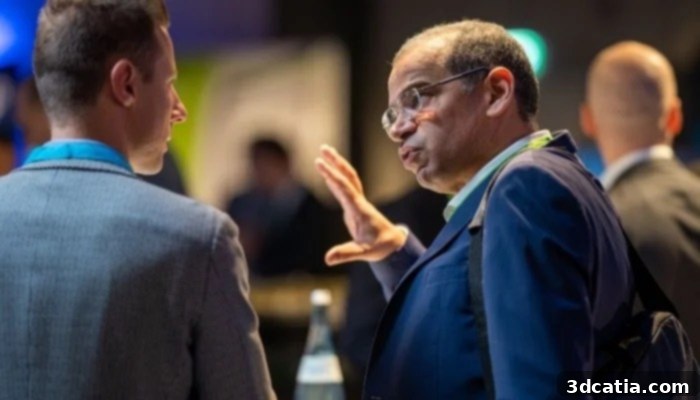
ICM provides an opportunity to network with other people in the industry (photo credits: ICM)
3DN: Any last words for our readers?
My final message to your readers is one of urgency and opportunity: it is far better to embark on your additive manufacturing journey today than to risk being left behind tomorrow. Additive Manufacturing is not merely a futuristic concept; it is a fundamental pillar of Industry 4.0, mature and ready to be scaled across various industrial applications right now. The time for contemplation is over; the time for action is upon us. There’s no need to reinvent the wheel when a wealth of knowledge and expertise already exists. By building on the insights, experiences, and innovations of others, companies can accelerate their adoption of AM and quickly realize its profound benefits. Embrace collaboration, leverage existing ecosystems, and invest in the capabilities that will define the next generation of manufacturing. For those looking to gain a deeper understanding and connect with industry leaders, more comprehensive information about the summit and its agenda can be found HERE. This event serves as a critical junction for learning, networking, and strategizing for the future.
What are your thoughts on the ICM Summit 2022? Are you planning to attend this pivotal event for the automotive manufacturing industry? We invite you to share your perspectives in a comment below or engage with us on our social media channels: LinkedIn, Facebook, and Twitter! Don’t miss out on the latest advancements and news in the 3D printing world—sign up for our free weekly Newsletter here to receive direct updates straight to your inbox. Additionally, for visual insights and comprehensive content, you can find all our videos on our dedicated YouTube channel. We look forward to hearing from you and continuing the conversation around the exciting future of additive manufacturing!