
Siemens Pioneers 3D Printed Nuclear Power Plant Part, Setting New Safety and Efficiency Benchmarks
In a monumental leap forward for both the energy sector and additive manufacturing, German high-technology giant Siemens has achieved a groundbreaking milestone: the successful production and installation of a 3D printed component within a nuclear power plant. This unprecedented accomplishment underscores the immense potential of additive manufacturing to revolutionize critical infrastructure maintenance, especially in highly regulated environments. The successful deployment of this part in a nuclear facility not only demonstrates Siemens’ advanced capabilities but also profoundly challenges long-held perceptions about the feasibility and reliability of 3D printing in the most stringent safety-critical applications. This achievement marks a significant departure from traditional manufacturing paradigms, paving the way for enhanced operational efficiency, reduced lead times, and an innovative approach to maintaining vital energy assets.
While this specific application is novel, Siemens is by no means new to the forefront of the additive manufacturing revolution. The company has consistently invested heavily in pushing the boundaries of 3D printing technology across various industries. Evident in their continuous innovations, Siemens has showcased its commitment through projects such as the development of advanced 3D printed parts for the aviation industry, significantly optimizing weight and performance for aircraft components. Furthermore, their dedication to democratizing and accelerating additive manufacturing is highlighted by their recent announcement of an additive manufacturing online platform, designed to connect users with specialized printing services and expertise. Tim Holt, CEO of Siemens Power Generation Services Division, succinctly articulated this commitment, stating, “We continue to push forward our investments and cutting-edge advancements in additive manufacturing and 3D printing, recognizing its transformative power across our diverse business units and for our global customer base.”
The Krško Nuclear Power Plant: A Beacon of Safety and Innovation
Siemens’ 3D printed spiders
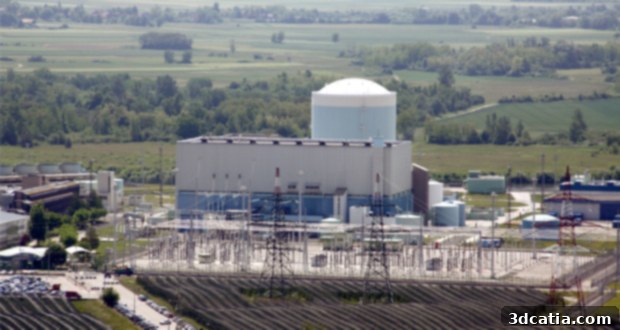
The pioneering 3D printed component was installed at the Krško nuclear power plant, situated in Slovenia. This facility is renowned across Europe for its exemplary safety record, a status proudly affirmed by the European Nuclear Safety Regulators Group. The specific part, a 108 mm diameter metallic impeller, plays a crucial role within the plant’s robust fire protection system. Designed for continuous rotational operation, the impeller is vital for ensuring the system’s reliability and effectiveness, thereby directly contributing to the plant’s esteemed safety profile. The meticulous selection of Krško for this pilot project underscores the trust and confidence placed in both Siemens’ additive manufacturing capabilities and the plant’s operational excellence, establishing a precedent for future applications of this technology in the nuclear sector.
Addressing Obsolescence with Cutting-Edge Solutions
The impetus for this innovative project stemmed from a significant challenge: the original manufacturer of the critical impeller part had ceased operations. Given that the part had been in continuous service since the Krško plant’s commissioning in 1981, securing a replacement through conventional means was no longer an option. This presented the plant with a formidable dilemma, highlighting the vulnerabilities in traditional supply chains for long-operating infrastructure. In this predicament, 3D printing emerged as not just a viable alternative, but the most effective and efficient solution. The technology allowed Siemens to reproduce the part with exact specifications, directly matching the original model’s intricate design and functional requirements. Leveraging advanced digital manufacturing techniques, the Siemens team, operating from their specialized facilities in Sweden, meticulously reverse-engineered the component. By converting the physical part into a precise digital format, they were able to manufacture the replacement with unparalleled speed and accuracy, bypassing the limitations of conventional spare parts procurement and demonstrating the agility of additive manufacturing in crisis scenarios.
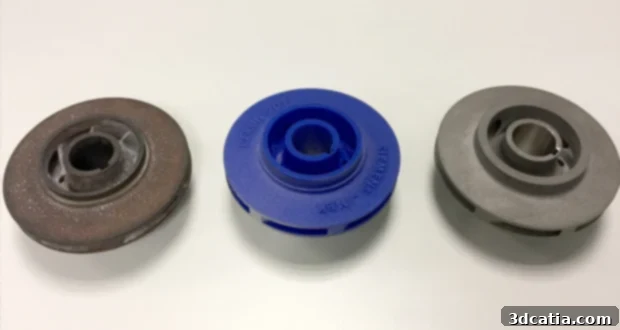
From left to right: the original piece, the prototype and the final piece printed in 3D
Tom Holt further elaborated on the broader implications of this success: “This achievement at the Krško nuclear power plant is another compelling example of how digital transformation and the robust data-driven capabilities we possess are profoundly impacting the energy industry in ways that genuinely matter. Additive manufacturing’s inherent ability to deliver reduced lead times and enable faster production cycles significantly optimizes parts replacement strategies, thereby creating tangible, measurable value for our customers facing similar challenges with aging infrastructure or supply chain disruptions.” This statement underscores the strategic importance of 3D printing as a cornerstone of modern, resilient industrial operations.
Rigorous Testing and Uncompromising Safety Standards
The most demanding aspect of this project was undoubtedly navigating the stringent safety and quality protocols intrinsic to nuclear power generation. The fundamental requirement was to guarantee that the 3D printed turbine – in this case, the impeller within the fire protection system pump – would be unequivocally reliable and flawlessly meet every specified operational and safety criterion. To achieve this, an exhaustive series of validation tests was conducted. This involved close collaboration with the operations team at the Krško plant in Slovenia, where the part underwent extensive functional testing under simulated and actual operating conditions. Concurrently, a comprehensive battery of material tests was performed. These tests meticulously evaluated the mechanical properties, corrosion resistance, and structural integrity of the 3D printed material. Utilizing state-of-the-art 3D scanning technologies, Siemens performed detailed post-production analyses of the final component. Remarkably, these advanced diagnostic procedures revealed that the material properties and structural integrity of the 3D printed impeller not only met but demonstrably *exceeded* those of the original, traditionally manufactured component. This finding is a testament to the precision, quality control, and material science advancements embedded within Siemens’ additive manufacturing processes, setting an unprecedented benchmark for critical infrastructure components.
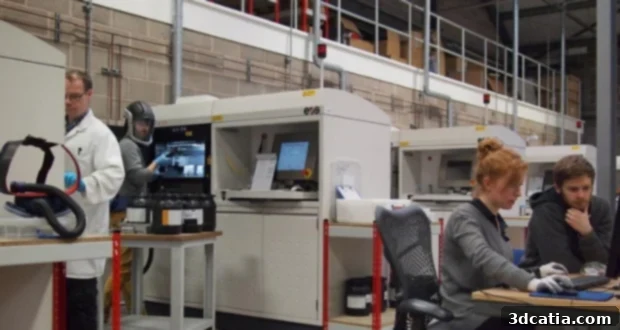
The Siemens factory is dedicated to additive manufacturing
Vinko Planinc, the Head of Maintenance at the Krško plant, expressed profound satisfaction with the outcome: “The better than expected performance of this 3D-printed part instilled in us great confidence that we can indeed achieve the full projected life expectancy from our asset, if not extend it. Siemens boasts a long and distinguished history of innovation in this critical area, and their unwavering dedication to providing their customers with the very latest, rigorously proven innovations made them an outstanding and indispensable partner for this landmark project. This collaboration has not only solved an immediate operational challenge but has also opened doors to exploring broader applications of additive manufacturing within our facility.”
A Strategic Partnership Forging Future Horizons
The successful deployment of the 3D printed impeller is a culmination of a decade-long collaborative relationship between Siemens and the Krško nuclear power plant. This enduring partnership is founded on a shared vision for operational excellence and technological advancement. Building on the success of this project, both entities are committed to continuing their collaborative research and development efforts in the field of 3D printing. Their ambitious long-term objective is to explore and implement additive manufacturing for creating lightweight yet incredibly durable structures, aiming for faster production cycles without compromising the optimal levels of safety, quality, and performance that are paramount in the nuclear energy sector. This forward-looking approach promises to unlock further efficiencies and innovations, potentially setting new global standards for critical infrastructure maintenance and construction. The potential for 3D printing to enable on-demand, customized production of complex geometries with superior material properties offers a compelling path toward more resilient, cost-effective, and sustainable energy infrastructure worldwide.
This landmark achievement by Siemens at the Krško nuclear power plant is not merely about replacing a single part; it represents a paradigm shift in how the energy industry approaches maintenance, supply chain management, and the lifecycle extension of critical assets. It underscores the maturity of additive manufacturing as a reliable and superior alternative to traditional methods, even in the most demanding industrial contexts. As the industry looks to the future, the integration of 3D printing promises to enhance operational flexibility, reduce downtime, and foster a new era of innovation in power generation.
What other transformative applications do you envision for 3D printing within the complex realm of nuclear power or other critical infrastructure industries? Share your thoughts and insights with us in a comment below, or engage in the conversation on our Facebook and Twitter pages! We’re eager to hear your perspectives on how this revolutionary technology can continue to shape the future.