
Relativity Space Unveils Mega Factory: Propelling the Future of Fully 3D Printed Rockets and Space Exploration
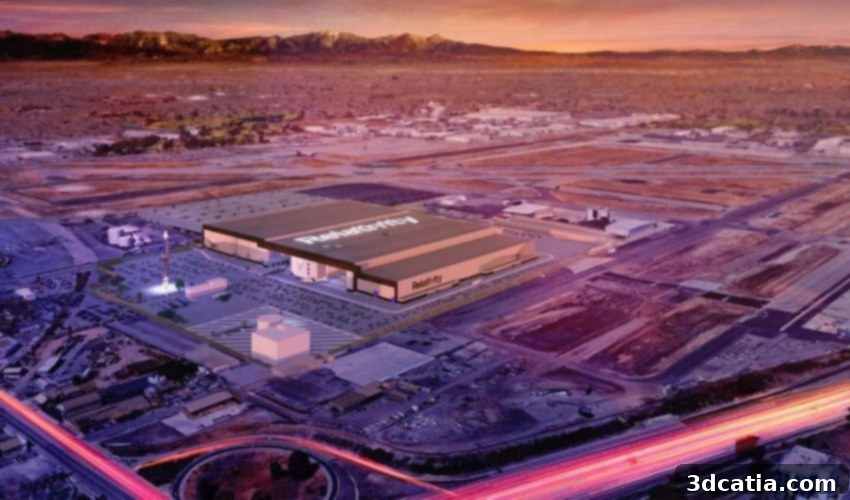
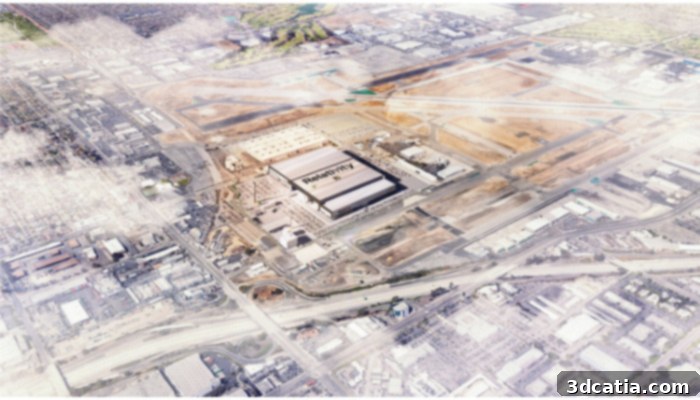
In a monumental stride for the aerospace industry and additive manufacturing, Relativity Space recently announced a significant expansion of its operations, securing a sprawling 1 million square foot headquarters factory at the Goodman Commerce Center in Long Beach, California. This strategic move follows the successful securing of $640 million in funding, earmarked to dramatically scale the production of its groundbreaking, entirely 3D printed rocket, Terran R. This expansion is not merely a physical growth; it’s a profound statement on the continued success and visionary trajectory of Relativity Space, underscoring the vital and growing health of 3D printing technologies within the demanding aerospace sector. As the company continues its impressive ascent, it anticipates bolstering its workforce even further, aiming to recruit over 200 additional employees by the close of the year, signaling robust confidence in its innovative approach to space manufacturing.
Relativity Space’s journey has been nothing short of meteoric. According to their official press release, the company has witnessed an astounding 300% growth over the past year alone. This rapid acceleration has seen its workforce expand to over 450 dedicated professionals, distributed across six critical locations: Long Beach, Vandenberg, Seattle, Washington D.C., Stennis, and Cape Canaveral. A key factor in their sustained momentum has been their pioneering adoption of automation in manufacturing. This advanced, largely autonomous approach proved instrumental in navigating the unprecedented challenges posed by the COVID-19 pandemic, allowing Relativity Space to remain largely unaffected and keep its ambitious development timelines on track, including the planned launch of its Terran 1 rocket. The new Long Beach headquarters is designed to not only accommodate but actively foster this exponential growth. It will boast capacity for over 2000 employees, becoming a vibrant hub of innovation. Furthermore, it will house a state-of-the-art metallurgical laboratory for advanced materials research, an array of Direct Metal Laser Sintering (DMLS) printers for high-precision component fabrication, and a cutting-edge mission control center – a nerve center for future space missions. Critically, the facility will also be home to dozens of the company’s proprietary Stargate 3D printers, renowned globally as the largest metal 3D printers in operation, capable of printing entire rocket structures. This unprecedented scale of additive manufacturing underscores Relativity’s commitment to revolutionizing rocket production.
The resilience of 3D printing, especially during the global health crisis, has been well-documented. While many industries faced severe disruptions, additive manufacturing demonstrated remarkable adaptability. The technology enabled companies to adjust rapidly to changing supply chains and production demands, facilitating localized manufacturing and the remote control of printing processes. This agility was crucial in allowing businesses, including Relativity Space, to continue operations and even pivot to produce essential medical supplies when needed. Relativity Space’s latest announcement serves as a powerful testament to the unwavering advancement of the 3D printing industry. Far from showing any signs of slowing down, the sector is accelerating, driven by innovations that are reshaping traditional manufacturing paradigms and opening doors to previously unimaginable possibilities, particularly in high-stakes fields like aerospace and defense.
At the core of this ambitious expansion lies Relativity Space’s vision to fully realize its “Factory of the Future” concept. This revolutionary manufacturing ecosystem is meticulously designed to integrate the transformative power of large-scale metal 3D printing with the intelligence of artificial intelligence and the precision of autonomous robotics. The ultimate goal is to forge an unprecedented level of collaboration between human ingenuity and machine efficiency, creating a highly agile, responsive, and innovative production environment. The success of their methods is already evident: their radically simplified supply chain, powered by additive manufacturing, enables them to print entire rockets with an astonishing 100 times fewer parts and in less than 60 days. This represents a monumental disruption to traditional aerospace manufacturing, which typically relies on complex, multi-component assemblies and protracted lead times. The strategic adoption of additive manufacturing by Relativity Space clearly illustrates its immense potential for future space exploration and commercial ventures. This trend is not isolated; leading global aerospace giants such as GE, Airbus, Boeing, and even government agencies like NASA, are increasingly integrating AM into their production processes. From GE’s lightweight, complex fuel nozzles for jet engines to Airbus’s structural components for the A350, and NASA’s 3D printed thrusters for lunar missions, the benefits of AM—including significant weight reduction, the creation of highly optimized complex geometries, and the consolidation of multiple parts into single, robust components—are being widely embraced across the sector, driving efficiencies and enabling new design possibilities.
Commenting on this landmark expansion, Tim Ellis, CEO and co-founder of Relativity Space, articulated the company’s pioneering philosophy: “Relativity is at the forefront of an inevitable shift to software-driven manufacturing, and the opportunity to reimagine this facility for the future of aerospace is incredibly exciting. Securing this space for Relativity Headquarters, which is now one of the largest facilities in private space, right here in Long Beach, is key for scaling out our Terran R program, while also continuing to tap into the unparalleled talent here to join us on our mission.” Ellis’s statement highlights the company’s commitment to a paradigm where manufacturing is increasingly controlled and optimized by software, enabling rapid iterations and unprecedented design freedom. This strategic location in Long Beach, a historic hub for aerospace innovation and a rich source of engineering talent, is crucial for developing and scaling the Terran R program, which promises to be the world’s first fully reusable, entirely 3D printed rocket. The Terran R is designed for high-performance, cost-effective satellite deployment and future interplanetary missions, with its reusability dramatically lowering the cost of access to space. The new headquarters will be instrumental in bringing this vision to fruition, with Relativity Space planning to officially move into the state-of-the-art facility in January 2022. This move is poised to redefine the landscape of space manufacturing and accelerate humanity’s multi-planetary future.
This expansion not only signifies Relativity Space’s growth but also solidifies Long Beach’s position as a burgeoning hub for private space ventures and advanced manufacturing. The investment in such a massive, technologically advanced facility demonstrates a strong belief in the long-term viability and disruptive power of additive manufacturing for complex systems like rockets. It also paves the way for a new era of space exploration where barriers to entry are lowered, and missions become more frequent and sustainable. The seamless integration of cutting-edge technologies like AI, robotics, and the Stargate printers exemplifies a holistic approach to manufacturing that transcends traditional methods. This ‘Factory of the Future’ promises not just efficiency gains but also a greater capacity for innovation, allowing engineers to rapidly prototype, test, and refine designs with unprecedented speed. The commitment to attract and retain top talent further ensures that Relativity Space will remain at the vanguard of this exciting revolution. You can find more comprehensive information about this pivotal development in Relativity’s official press release HERE.
What are your thoughts on Relativity Space’s ambitious new factory headquarters and its implications for the future of 3D printed rockets and space exploration? We encourage you to share your insights in a comment below or join the conversation on our Facebook and Twitter pages. To stay abreast of all the latest news, innovations, and developments in the rapidly evolving world of 3D printing, don’t forget to sign up for our free weekly newsletter, delivered directly to your inbox!
*All Image Credits: Relativity Space