
Revolutionizing Industries: Unveiling the Latest Global 3D Printing Innovations
The world of manufacturing is experiencing an unprecedented transformation, largely driven by the relentless advancements in 3D printing, also known as additive manufacturing. This week, we embark on an exciting journey across various sectors, highlighting how this groundbreaking technology is not only optimizing production processes but also fostering sustainable practices and pushing the boundaries of what’s possible. From revolutionary marine vessels crafted from recycled materials to crucial aerospace components enhancing safety and efficiency, and from robust military infrastructure to cutting-edge biomedical solutions, 3D printing is proving to be a versatile and indispensable tool. We will also touch upon the dynamic business landscape surrounding this technology, examining the challenges faced by innovative startups. Join us as we explore these pivotal developments that are shaping the future of diverse industries.
Dubai’s Vision: The First Fully 3D Printed Boat Setting Sail
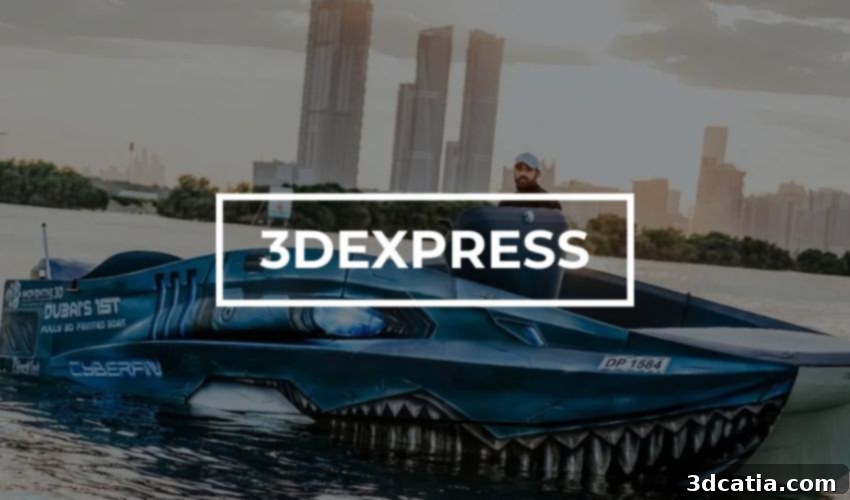
The vibrant city of Dubai continues to position itself as a global leader in technological adoption, particularly in the realm of additive manufacturing. Its ambitious vision extends far beyond architectural marvels, now embracing the maritime sector. In a groundbreaking move that underscores this commitment, Inoventive 3D, a Dubai-based company, has unveiled the city’s first fully 3D-printed boat, aptly named Cyberfin. This remarkable vessel measures an impressive 10 meters long, 2.1 meters wide, and 2.7 meters high, showcasing the capabilities of large-format additive manufacturing. What truly sets the Cyberfin apart is its eco-conscious construction: it is meticulously crafted from recycled marine waste, transforming environmental pollutants into a functional and innovative product. This sustainable approach aligns perfectly with global efforts to reduce plastic waste and promote a circular economy.
The efficiency gains achieved through 3D printing in this project are astounding. Inoventive 3D reported that the entire manufacturing process for the Cyberfin took precisely 6 days and 9 hours. This stands in stark contrast to the traditional boat-building methods, which typically demand an extensive lead time of 3 to 4 months. Such a drastic reduction in production time not only translates into significant cost savings but also enables faster market deployment and greater flexibility in design iteration. The Cyberfin is designed to comfortably accommodate up to 10 people, making it suitable for various applications, including tourism, surveillance, or research. Inoventive 3D is not stopping here; the company has ambitious plans to accelerate production, aiming to 3D print between 6 to 7 such structures every month. This projected capacity signifies a major leap forward in sustainable and rapid marine manufacturing, potentially revolutionizing how boats are designed, produced, and utilized globally, further solidifying Dubai’s reputation as a hub for future-forward technologies and sustainable innovation.
Soaring to New Heights: 3D Printed Armrests for Boeing 737s
In the highly regulated and safety-critical aerospace industry, innovation often means overcoming complex challenges while ensuring stringent quality standards. LOT Polish Airlines, Poland’s national carrier, serving a vast network of international destinations, has ingeniously turned to additive manufacturing to enhance its fleet. Specifically, the airline has equipped the economy-class seats of its Boeing 737s with newly designed 3D-printed armrests. This initiative marks a significant step in integrating additive manufacturing into commercial aircraft interiors, demonstrating its practical benefits beyond prototyping and specialized components. The airline has successfully deployed 1,200 of these advanced armrests, significantly upgrading the passenger experience and operational efficiency.
The decision to switch to 3D printed armrests stemmed from persistent issues with the traditionally manufactured components. The older armrests were produced using conventional methods that involved multiple assembly steps, which unfortunately compromised their overall durability and lifespan. A common problem was the attachment of a cap to an injection-molded frame, a connection point that frequently failed, leading to regular breakages and the need for constant repairs or replacements. Such failures not only incurred maintenance costs but also impacted the airline’s operational readiness and passenger satisfaction. To address these recurring problems, LOT Polish Airlines partnered with AM Craft, a specialist in additive manufacturing solutions for the aviation sector. AM Craft leveraged Fused Deposition Modeling (FDM) technology, utilizing ULTEM 9085 filament—a high-performance thermoplastic known for its excellent strength-to-weight ratio, flame retardancy, and compliance with aerospace regulations.
The collaboration allowed for a complete redesign of the armrest, eliminating the problematic assembly steps and inherent weak points. By consolidating parts and optimizing the geometry for FDM printing, the new armrests are not only significantly stronger and more durable but also quicker to produce. This strategic shift has liberated the airline from the conventional challenges associated with spare parts management, including long lead times for traditional manufacturing, the need for extensive storage, and the complexities of international logistics. Additive manufacturing enables on-demand production, reducing inventory costs and ensuring that replacement parts can be fabricated rapidly whenever needed, anywhere in the world. This approach provides LOT Polish Airlines with greater flexibility and resilience in its maintenance operations, ultimately contributing to a more reliable fleet and an improved passenger journey. The success of this project serves as a compelling case study for other airlines considering the integration of 3D printing into their supply chains for cabin interiors and beyond.
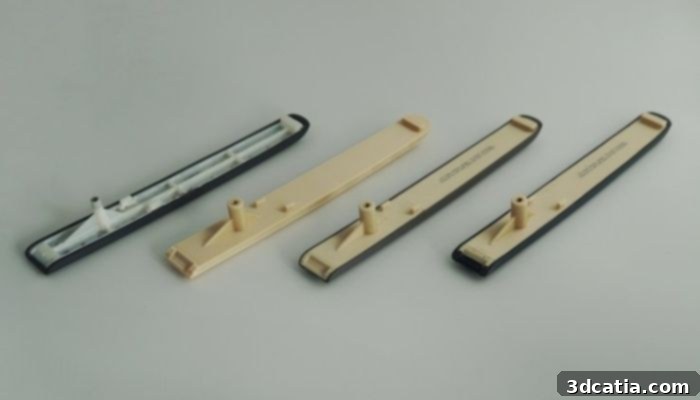
the original armrest; the unpainted 3D-printed part; two painted 3D-printed armrests (photo credits: AM Craft)
Fort Bliss Barracks: The Western Hemisphere’s Largest 3D Printed Military Structures
The U.S. Army has long explored innovative solutions to improve its operational efficiency and the welfare of its service members. A year ago, this pursuit led to the launch of a pioneering pilot program at Fort Bliss Base in Texas, aimed at constructing military barracks using advanced 3D printing technology. The primary objective of this ambitious project was to harness additive manufacturing to significantly enhance the living conditions for soldiers, providing them with more resilient, comfortable, and rapidly deployable housing solutions. We are now delighted to report that these cutting-edge barracks, spanning an impressive 530 square meters (approximately 5,700 square feet), have been successfully completed, marking a monumental achievement as the largest 3D printed structures in the Western Hemisphere.
This project showcases the remarkable capabilities of construction 3D printing for large-scale applications. The structures were designed and built to withstand the rigors of various environments, utilizing materials specifically chosen for their resistance to mold and extreme conditions. This includes enhanced durability against natural disasters such as earthquakes and severe weather phenomena, ensuring the safety and longevity of the barracks in diverse operational theaters. Each of these robust 3D printed barracks is engineered to house up to 72 soldiers, providing a modernized and improved living space. The successful execution of this initiative was a collaborative effort between ICON, a leading innovator in construction technologies, the U.S. Department of Defense, and the Army. ICON deployed its proprietary Vulcan construction system, which integrates advanced robotics and software, along with its specialized Lavacrete material, a high-strength concrete developed for rapid and resilient printing. While this project represents the Army’s first large-scale application of 3D printed structures for barracks, it builds upon earlier successes, such as a similar project completed in 2021 at the Camp Swift Training Center, highlighting a growing trend in the military’s adoption of additive manufacturing for infrastructure development. This milestone at Fort Bliss paves the way for future rapid construction deployments, offering a sustainable and efficient alternative to traditional building methods for military installations worldwide.
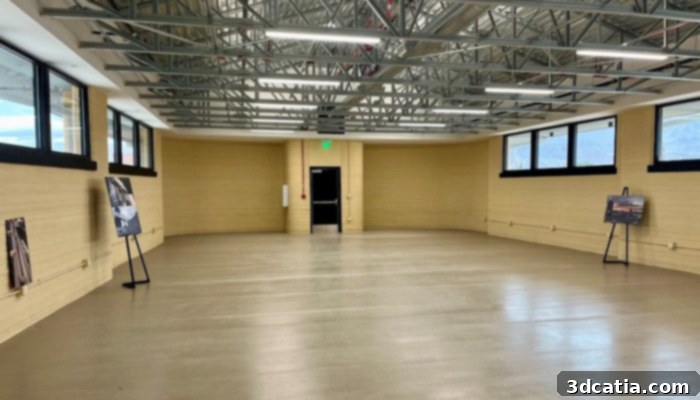
Photo Credits: Alyx Riebeling/US. Army
A Groundbreaking 3D Printing Bio-Ink Derived from Kombucha
In the rapidly evolving field of regenerative medicine, the ability to repair damaged tissues quickly and effectively remains a critical challenge. Researchers at Seoul National University of Science and Technology (SEOULTECH) have made a significant stride in this area by developing an innovative nanocellulose-based bio-ink, remarkably extracted from the SCOBY (Symbiotic Culture of Bacteria and Yeast) of kombucha tea. This novel biomaterial is not only sustainable but also offers a biocompatible and supportive structure crucial for cell growth and tissue regeneration. Its unique composition allows it to be directly applied to damaged tissue using a specialized digital biopen, representing a major leap towards immediate, in situ medical interventions.
The team at SEOULTECH meticulously optimized this biomaterial for 3D bioprinting applications. This involved structural modifications and the strategic combination of nanocellulose with chitosan and kaolin nanoparticles. Chitosan, known for its biocompatibility and wound-healing properties, and kaolin nanoparticles, which enhance mechanical stability and printability, work synergistically to improve the bio-ink’s overall performance and stability. This enhanced formulation ensures that the ink maintains its structural integrity during and after the printing process, providing a robust scaffold for cellular integration and proliferation. Leveraging a digital biopen, the researchers successfully demonstrated the ability to print high-resolution multilayer structures directly onto complex wounds and deformities. This precision printing capability is vital for recreating intricate tissue architectures required for effective repair.
This breakthrough technology holds immense promise for the future of regenerative medicine. Its capacity for immediate tissue repair, without the need for complex and time-consuming in vitro processes, makes it particularly valuable for emergency and first-aid situations where rapid intervention is crucial. Imagine paramedics or field medics being able to instantly print a supportive matrix directly onto a severe wound, facilitating healing and preventing further damage. Beyond emergency applications, this kombucha-derived bio-ink could revolutionize personalized medicine, allowing for the creation of patient-specific tissue constructs. By offering a sustainable, versatile, and immediately applicable solution for tissue regeneration, SEOULTECH’s innovation opens new avenues for treating a wide array of injuries and conditions, from skin grafts to cartilage repair, promising a future where biological repair is as accessible as printing a document.

Photo Credits: SEOULTECH
Q.BIG 3D Files for Insolvency: A Promising Startup Faces Challenges
The startup ecosystem, particularly within rapidly evolving tech sectors like 3D printing, is characterized by both immense potential and inherent volatility. Q.BIG 3D, a German startup based in Backnang, was once considered one of the country’s most promising ventures in additive manufacturing, largely due to its innovative large-format 3D printing technology. Their solutions offered new possibilities for industries requiring big, intricate components with the speed and flexibility of additive processes. However, despite its technical prowess and market potential, the company has now filed for insolvency, a stark reminder of the financial complexities involved in scaling a high-tech business.
The primary reason cited for this unexpected turn of events is cash flow difficulties. Q.BIG 3D had made significant investments throughout the past year, strategically channeling resources into initiatives aimed at paving the way for the company’s internationalization. While ambitious and necessary for long-term growth, such aggressive expansion often requires substantial capital and meticulous financial management. Miscalculations or unforeseen market shifts can quickly strain resources, leading to liquidity crises even for fundamentally sound businesses. Despite these immediate financial hurdles, the company’s core objective of achieving international reach remains firmly in place. The management, along with external support, is actively seeking new investors to inject the necessary capital and facilitate a successful restructuring.
In response to the insolvency filing, PLUTA Rechtsanwalts-GmbH has appointed an insolvency administrator, Lawyer Bananyarli, to oversee the restructuring process of Q.BIG 3D. The administrator’s role is crucial in navigating the company through this challenging period, ensuring continuity of operations while seeking viable paths forward. Lawyer Bananyarli stated, “Business activities are continuing uninterrupted, and we are now looking for an investor for this innovative company.” This commitment to ongoing operations is a positive sign, indicating that the core business and its valuable technology are still active and generating interest. Furthermore, in a piece of reassuring news for the company’s dedicated workforce, the salaries of its approximately twenty employees are guaranteed for the next three months. This provision offers a crucial period of stability, allowing the restructuring efforts to proceed without immediate pressure on the team. The situation at Q.BIG 3D underscores the delicate balance between innovation, investment, and market realities, but also highlights the potential for a fresh start with the right strategic partners to capitalize on its promising large-format 3D printing technology.
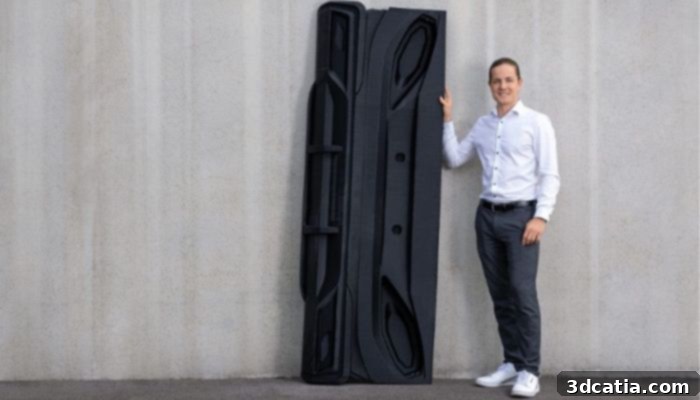
Dennis Herrmann, founder of Q.BIG 3D (photo credits: Q.BIG 3D)
From sustainable maritime engineering in Dubai to enhancing aircraft safety and efficiency, building resilient military infrastructure, and advancing biomedical frontiers with a kombucha-based bio-ink, 3D printing continues to redefine what is achievable across diverse industries. Even amidst the commercial challenges faced by promising startups like Q.BIG 3D, the overarching trajectory of additive manufacturing points towards a future of greater innovation, sustainability, and efficiency. What are your thoughts on these incredible advancements and the potential impact of a fully 3D printed boat made from recycled materials? Let us know your insights in a comment below or join the conversation on our LinkedIn, Facebook, and Twitter pages! Don’t forget to sign up for our free weekly Newsletter here to receive the latest 3D printing news straight to your inbox! You can also find all our videos and in-depth analyses on our YouTube channel.