

Advancing Additive Manufacturing: Lucideon’s Expert Insights on Metal and Ceramic 3D Printing Materials and Applications
Materials are, and will undoubtedly remain, the fundamental cornerstone of additive manufacturing (AM). However, successfully navigating the complex landscape of material selection—identifying the ideal material for a specific application and implementing the most suitable manufacturing process—presents a persistent challenge for many organizations aiming to embrace this transformative technology. This difficulty is significantly amplified when dealing with advanced materials like ceramics and metal AM. This is precisely where specialized companies such as Lucideon step in to bridge the gap. With their robust R&D capabilities and extensive, hard-earned experience in both material development and advanced manufacturing technologies, Lucideon stands at the forefront of enhancing the practical usability and applicability of AM across a diverse array of sectors. We recently had the opportunity to sit down with two distinguished Lucideon experts, each bringing unique insights—one specializing in metals and the other in ceramics—to delve deeper into their critical work and perspectives.
3DN: Could you introduce yourselves and provide an overview of Lucideon’s mission and expertise?
Robert Crookes: I currently serve as the Head of Advanced Materials at Lucideon’s UK-based facility. My team and I are dedicated to the comprehensive developmental work of engineering ceramics and the refinement of their associated manufacturing processes. Our efforts are applied to crucial sectors including aerospace, defense, and nuclear power. This encompasses not only the development of innovative material formulations but also the crucial advancement of the additive manufacturing processes themselves, guiding them from initial laboratory-stage concepts through to full-scale industrial application and production.
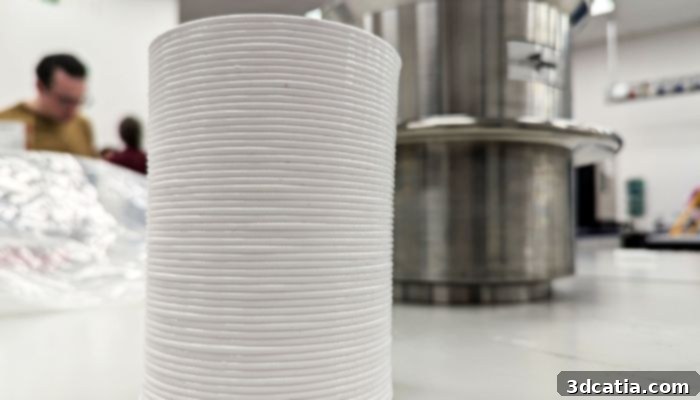
A finished part made with ceramic additive manufacturing
Lucideon, at its core, is a pioneering materials development and validation company. We comprise a dedicated team of materials engineers and scientists whose overarching goal is to empower other companies in their journey to develop cutting-edge materials and processes, effectively addressing and overcoming complex industrial challenges. Our expertise spans an extensive array of industries. Our heritage traces back to the British Ceramics Research Association (BCRA), which was later rebranded as CERAM in the 1970s and 80s. A significant milestone occurred in December 2006, when the company strategically acquired the US-based M&P Lab. Following this, in early 2014, CERAM and M+P Labs were collectively unified and rebranded under the singular, powerful company name: Lucideon, solidifying our global presence and integrated capabilities.
Julius Bonini: I bring over 40 years of experience as a metallurgist to my role as Principal Consultant for Lucideon, specifically focusing on all aspects of metals and, crucially, metal additive manufacturing. Our involvement in the 3D printing industry dates back to its nascent stages, working alongside foundational companies like EOS, Renishaw, and other leading metal solution providers. Today, we collaborate extensively with nearly every major aerospace OEM in the field, providing critical services such as failure analyses and material characterization for their most demanding applications.
The US branch of our business operates under the name Lucideon M&P, and our service portfolio is incredibly broad, encompassing advanced ceramics engineering, metallurgy, metal AM, and a comprehensive suite of testing services tailored for the aerospace, space, and defense sectors, among others. While our primary AM work is centered on ceramics and metals, our expertise also extends to construction materials and structures, and even pharmaceuticals.
In the United States, our services are particularly focused on our role as a leading testing and consulting house. We are especially renowned for our expertise in stress corrosion cracking (SCC) testing, a critical area for many high-performance applications. My group conducts a substantial volume of failure analyses, with a particular emphasis on components produced via additive manufacturing. We are also at the cutting edge of developing 3D printing solutions, including advancements in hybrid manufacturing, which strategically combines the benefits of AM with traditional manufacturing processes to achieve optimal results.
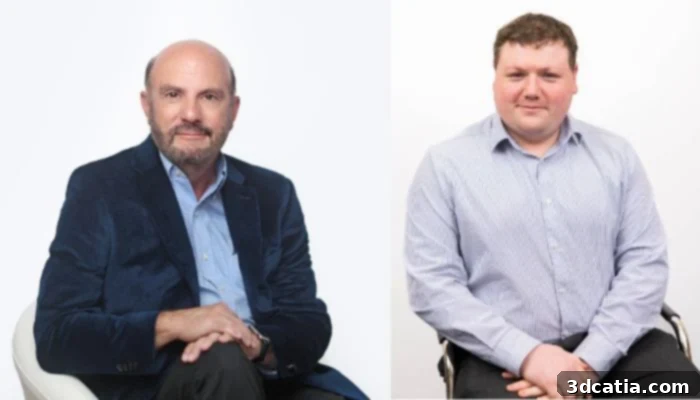
Julius Bonini (left) and Robert Crookes (right)
3DN: What are the primary challenges currently faced in developing new materials specifically for additive manufacturing processes?
RC: There are several significant hurdles in this domain. One of the paramount challenges we consistently encounter, particularly in ceramic AM, is the achievement of the correct and desired material densities. For ceramics, attaining full density is absolutely crucial to fully unlock their exceptional thermal and mechanical properties, which are often the primary reasons for choosing these materials. However, many current AM techniques struggle to consistently deliver this level of density. Some of the more mature technologies, such as Digital Light Processing (DLP) and Stereolithography (SLA), are highly effective at producing parts with intricate thin walls and fine features. Yet, these methods can be extremely costly, especially when you factor in not just the printer and raw materials, but also the extensive and often mandatory post-processing steps. This combination makes cost-effectiveness a formidable challenge for broader adoption.
Conversely, with other AM technologies, we often observe an almost inverse set of characteristics: the manufacturing process itself might be more cost-effective, and it may be easier to achieve higher densities. However, the trade-off typically lies in the currently attainable degree of printing resolution. It’s important to note that ceramics are still very much an emerging material family within additive manufacturing, especially when compared to the relatively more established field of metal AM. There are still very few fully developed and widely available solutions for ceramic AM, indicating that an intense ‘race’ to innovate and commercialize these solutions is actively underway. This dynamic environment presents both challenges and immense opportunities for development.
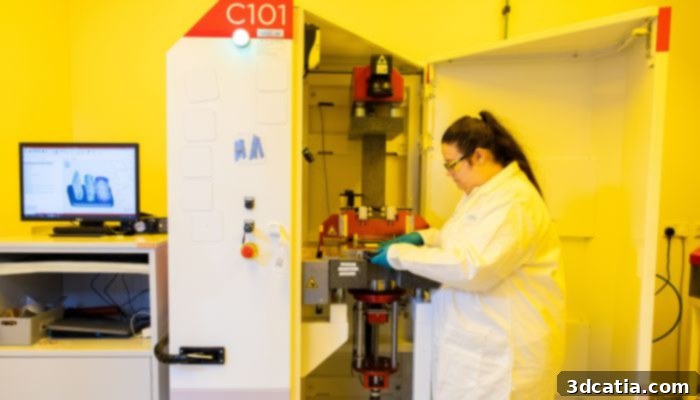
Ceramic SLA at Lucideon
JB: It’s interesting to observe the divergence in challenges when we look at the metal side of additive manufacturing. We have, in large part, already overcome some of our most significant initial hurdles. Just a few years ago, the industry was grappling intensely with the challenge of achieving fully dense metal parts. Today, however, attaining 99% density or even better has become a common and expected standard across most materials, including stainless steels, titanium, and various other alloys. The primary challenge has now shifted towards the development of new materials and, crucially, the precise preparation of their powders. The question is: how do we effectively expand beyond our current repertoire of established alloys and ensure they are meticulously prepared and qualified for the highly demanding medical and aerospace applications?
Much like Robert mentioned, a significant ongoing challenge for us is the persistent drive for cost and time reduction in metal AM processes. For instance, we’ve dedicated substantial effort to optimizing laser parameters, which can yield remarkable time savings during production. However, it’s during attempts to “cut corners” or accelerate processes too aggressively that failures often occur, compromising part integrity. Our critical role is to meticulously investigate how to fine-tune these parameters and implement process adjustments more effectively, ensuring enhanced speed and efficiency without ever diminishing the quality or performance of the final additively manufactured part.
A third, equally important challenge revolves around the concept of material design allowables. What precisely do I mean by this? In many instances, customers or applications will demand very specific properties for parts produced via AM, properties that can become the new industry design standard. If, for example, a company like EOS can provide a certified design allowable that engineers can confidently rely upon for specific performance characteristics, it would significantly enable and accelerate the adoption of additive manufacturing across various technologies, such as wire-arc or powder bed fusion. This standardization of performance metrics is vital for trust and widespread implementation.
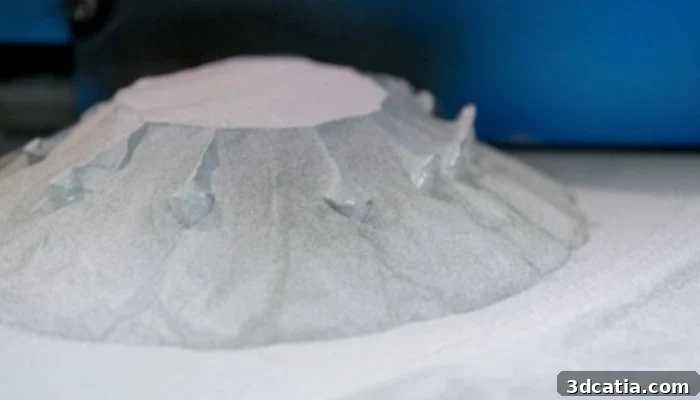
Metal AM powder analysis is a part of what Lucideon does
3DN: Could you elaborate specifically on the materials used for ceramic and metal AM? What are their unique requirements and key differences?
RC: When discussing ceramics, we must maintain a realistic perspective regarding the inherent challenges presented by their brittleness and extreme flaw sensitivity. While ceramic AM enables the creation of beautifully intricate and complex geometries, users must exercise considerable caution in how they design and implement AM processes due to the potential for catastrophic failure, particularly with sharp edges or critical stress points.
Despite these challenges, ceramics offer some truly robust and niche applications. The medical field, for instance, is actively exploring ceramic AM for advanced implants, leveraging ceramics’ biocompatibility and wear resistance. We observe numerous clients investigating AM for applications requiring complex lattice structures and lightweighting capabilities, particularly with materials like alumina and zirconia. Ultimately, the paramount need is to reliably and consistently produce these complex ceramic components without any failures. This underscores why continuous research and deep expertise in both the materials themselves and the associated manufacturing processes remain absolutely vital for advancing ceramic AM.
To highlight some key areas with significant potential, ceramic AM has promising applications in defense, aerospace, and nuclear power, even if current work in these sectors is largely exploratory. Industries where ceramic AM is already seeing more consistent use include automotive and medical, though Lucideon may not be directly involved in all commercial applications within these specific markets. Currently, we are actively charting the path forward, seeking to define and expand where ceramic AM can deliver the most impactful contributions to various industries.
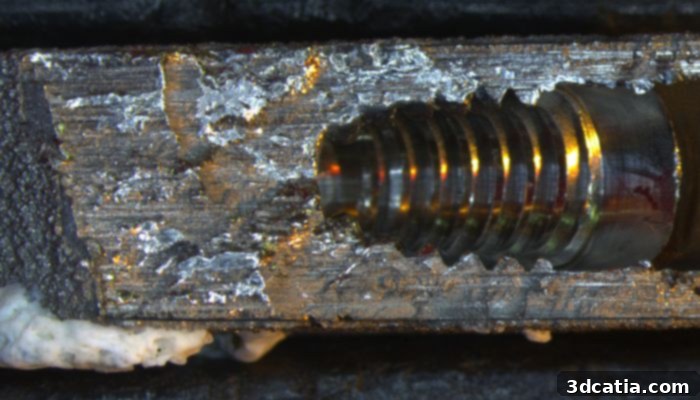
An implant failure analysis for a metal AM part
JB: On the metal side, the requirements and considerations are quite different, often dictated by the specific application. To illustrate, let’s compare the demands of aerospace versus medical applications. In aerospace, particularly with technologies like wire-arc additive manufacturing, companies are constructing massive components such as rocket structures. With powder bed fusion, they are fabricating complex engine parts. These applications typically involve building very large components that require extensive manufacturing time. Here again, the “design allowable” issue becomes critical, especially due to severe fatigue concerns. The central question is: how do we establish reliable design allowables for fatigue resistance for the immense components being produced for space applications, where failure is simply not an option?
Simultaneously, the medical sector has entirely different demands; it requires a high volume of small, often custom-made items produced rapidly. While materials are generally restricted to biocompatible options like titanium and cobalt chrome, the paramount considerations are cost and time efficiency. This is an area where ongoing development is crucial, as many in the medical sector are observing rising costs in AM and are beginning to revert to conventional manufacturing methods, perceiving them as quicker and more cost-effective for certain products. Finding the sweet spot where AM provides superior performance at a competitive cost and speed is essential for continued growth in this market.
3DN: Could you elaborate on the critical importance of certification in additive manufacturing? What is the current market landscape regarding certification, and how can Lucideon assist?
RC: From the ceramics perspective, this is a particularly interesting point. Certification has been a dominant and frequently discussed topic within metal AM for years, yet it receives almost no attention in ceramic AM. We are simply not at that mature stage yet. However, when it does become a focus, it is poised to be an incredibly massive challenge. Even the fundamental question of what constitutes “validation” is currently unclear: do you validate each individual part for every unique form and application? This is precisely the heated debate occurring in metal AM right now. If we are compelled to follow a similar, rigorous certification path for ceramics, it will be to an even greater extent due to their inherent brittleness and variability. I would not be surprised if it becomes necessary to fully NDT (non-destructive test) every single ceramic part to rigorously inspect for any potential defects. This area, improving confidence and ensuring quality, is one of the key frontiers where Lucideon is actively working to advance the entire field of ceramic AM.
Another crucial aspect is the continuous improvement of material performance. We constantly evaluate questions such as: Will a given ceramic material reliably sinter to achieve a higher density, thereby enhancing its properties? Will it exhibit the correct flow characteristics during the printing process to ensure part integrity? Beyond printing, there are significant considerations for post-processing, which is absolutely massive for ceramics. Unlike some metal AM processes, ceramic printing is often less of a complete manufacturing process. Post-print, nearly all current ceramic AM methods necessitate debinding and sintering steps, which can themselves introduce challenges or defects into the final component. Lucideon’s extensive offering includes deep expertise in all these critical post-processing stages of ceramic components, ensuring quality from start to finish.
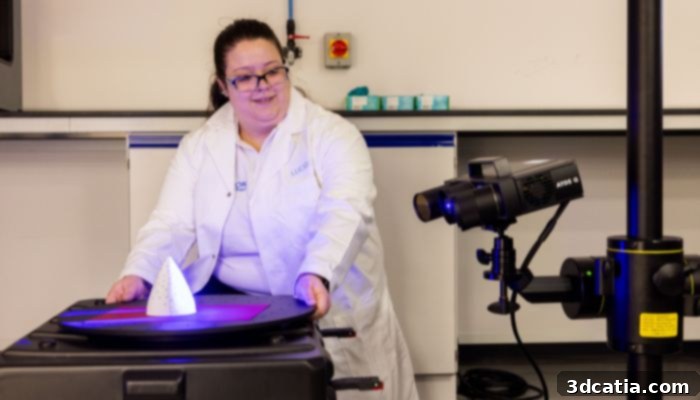
Analyzing a ceramic AM part
JB: Certification on the metal side is indeed very complicated, primarily due to the stringent requirements of various regulatory bodies. In the USA, we operate under three major certifying agencies: the FAA (Federal Aviation Administration) for atmospheric flight and ground-based aircraft components; the FDA (Food and Drug Administration) for all medical devices and human-contact applications; and NASA for anything operating above the atmosphere in space. Each of these agencies has incredibly rigorous and extensive certification processes, which have historically posed significant challenges for additive manufacturing due to the novelty of the technology and variability in processes. However, now that metal AM has matured considerably, obtaining certification for new components is becoming somewhat easier. This improvement is largely attributable to the accumulation of vast amounts of data from previous certification cases and extensive testing, which provides a solid evidentiary basis, although the process still remains a significant undertaking.
The complexity arises because even minor changes to a material, process parameter, or design necessitate a return to the certifying agency for re-evaluation. Historically, this often involved extensive NDT and even the destructive sacrifice of expensive prototype parts. Fortunately, we can now frequently leverage test data from standardized coupons and historical performance data, which streamlines the process considerably. A fascinating new development is the increasing implementation of machine learning (ML) and artificial intelligence (AI) to predict product performance based on build information and process parameters. This is becoming a highly sought-after capability, as companies realize its potential to save significant long-term costs and time in the validation and certification process. While I am not an expert in AI myself, this technological integration looks incredibly promising and will likely help propel the field of metal AM even further by creating more efficient and reliable certification pathways.
3DN: What key sectors are you primarily targeting with your 3D printing materials and services? Furthermore, how do Lucideon’s consulting services specifically assist clients in choosing the optimal material for their projects?
JB: That encapsulates precisely what we do here at Lucideon. When a customer approaches us with a problem or a requirement involving additive manufacturing, the initial and fundamental questions we address are always: What is the most suitable material for this specific application? What is the ideal manufacturing process to achieve the desired outcome? Which machine technology will best facilitate this? And, critically, what are the necessary post-processing steps? Our comprehensive approach means we work collaboratively with the client from the very first conceptual discussion all the way through to the final validated product.
Our team possesses such an in-depth and intimate understanding of the entire additive manufacturing process, from material science to machine operation, that we inherently know where potential problems and bottlenecks might arise. Clients specifically engage us to mitigate and alleviate these issues, often before they even begin to impact production. This preventative capability is built upon a vast foundation of accumulated experience and practical knowledge. We have cultivated strong relationships and an acute awareness of the leading equipment manufacturers, the most reliable material providers, and the correct heat treatment protocols necessary for various applications. Consequently, Lucideon is uniquely positioned to offer invaluable services and expert guidance at every single level of the AM value chain.
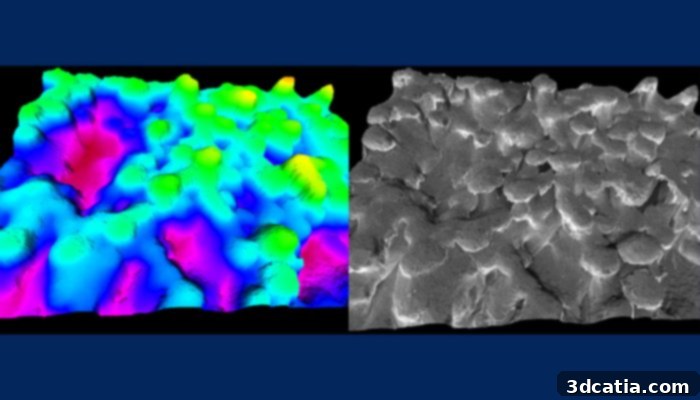
Metal AM surface analysis
RC: Lucideon offers a few distinct yet complementary services tailored to different client needs within ceramic AM. One significant offering is our service centered around trialing SLA technology. Through this service, we provide clients with the unique opportunity to trial the in-house production of their specific parts using one of these newer, high-resolution ceramic AM technologies. This is particularly beneficial for those exploring “off-the-shelf” materials or for companies simply “testing the waters.” They might have seen the potential of 3D printing and wish to ascertain its applicability to their products, allowing them to try it out without substantial upfront investment.
Another major element of our service portfolio is our robust consultancy offering, providing expert guidance on the selection of appropriate materials and general advice on which AM process best suits ceramic applications. Ceramics, as a material class, present a significant challenge to many engineers because they are often unfamiliar with their unique properties and proper handling. As a direct result, we dedicate considerable effort to advising on the correct and optimal use of ceramics, and this expertise translates powerfully into the realm of ceramic AM.
To provide a concrete example, in the aerospace industry, there’s a growing trend to transition from metallic components to ceramic ones to leverage ceramics’ superior high-temperature performance or lightweight characteristics. A frequent client question then becomes, “Should we integrate AM into this transition?” This creates an interesting conflict, as a design originally optimized for metallics will not perform identically in ceramics. We then embark on a collaborative journey to adapt and re-design that component specifically for ceramic AM, ensuring it meets all performance requirements while leveraging the unique advantages of additive manufacturing.
However, our greatest core expertise lies in material formulations and our profound understanding of materials’ inherent properties and how they behave under various processing conditions. We possess the capability to meticulously formulate materials to imbue them with the precise properties desired by our clients for their specific applications. As Julius accurately pointed out, there isn’t yet a fully established supply chain for ceramic AM materials. Nevertheless, Lucideon benefits from an extensive and mature network within conventional ceramic manufacturing. This existing network significantly eases the process of tracking down reliable suppliers and sourcing appropriate materials, because even if we cannot produce a specific material ourselves, we are intimately familiar with the key players in the industry who can. Ultimately, we are first and foremost material scientists, and our primary task is to engage in in-depth conversations with our clients about the critical properties they require, what their end-use needs are, and subsequently advise them on the optimal material and process pathways to achieve those goals.
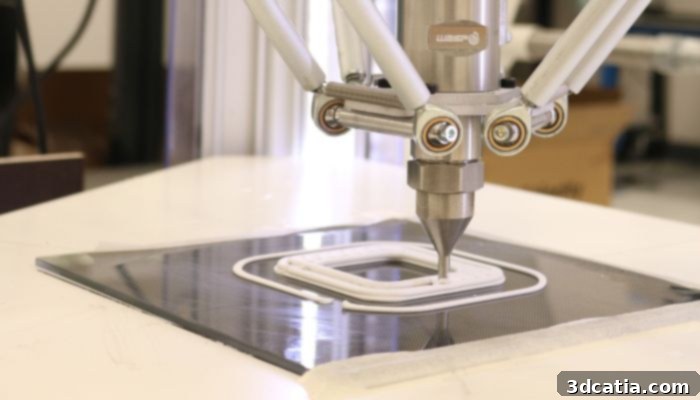
Ceramic AM robocasting is one method used by Lucideon to make parts
3DN: Do you have any final thoughts or a concluding message for our readers?
JB: I am particularly enthusiastic and genuinely excited about the future of hybrid manufacturing; I consider it our next significant challenge and frontier. What I mean by hybrid manufacturing is the intelligent combination of conventional manufacturing techniques with additive manufacturing processes. When these two worlds converge, something truly unique and powerful is formed, enabling design possibilities that effectively harness the very best attributes of both approaches. This synergistic combination allows for optimized performance, efficiency, and material utilization. Now is an incredibly opportune moment to explore the boundless potential that arises from opening up the design world, showcasing to an even wider audience the immense capabilities of this evolving technology. My excitement for this area is profound.
RC: For me, the key takeaway for readers regarding ceramic additive manufacturing is that it is fundamentally so much more than merely the 3D printing process itself. This holistic perspective is precisely what Lucideon brings to the table and where our unique value lies. Our expertise spans the entire lifecycle: we contribute significantly to the initial formulation of the material; we understand precisely how that material interacts and performs within the 3D printer; and crucially, we possess deep knowledge in how to effectively process the component *outside* of the printer—for instance, the critical steps of removing binders and subsequent sintering. All these stages represent areas where we have established profound, long-standing expertise, and this comprehensive understanding is absolutely essential for gaining a full and accurate picture of ceramic AM. While many in the industry are understandably focused on the rapid advancements in 3D printing technology itself, a vast amount of specialized expertise is also required for the vital post-processing steps. This is exactly where Lucideon excels and truly shines. We encourage readers to discover more about Lucideon’s extensive capabilities and services HERE.
What are your thoughts on Lucideon’s contributions to the field? How do you believe their specialized expertise can contribute to the wider and more sustainable adoption of both metal and ceramic additive manufacturing? We invite you to share your insights and opinions in the comments section below or connect with us on our LinkedIn, Facebook, and Twitter pages! Don’t forget to sign up for our free weekly Newsletter here to receive the latest 3D printing news directly in your inbox! You can also find all our engaging videos on our YouTube channel.