
Exploring the Cutting Edge: Robotic 3D Printing, Innovative Design, and Digital Manufacturing Breakthroughs
Welcome to the latest edition of #3DExpress, your weekly roundup of the most exciting developments in the world of additive manufacturing! This week, we dive deep into how large-format robotic 3D printing continues its relentless expansion, exemplified by Rapid Fusion’s unveiling of a cutting-edge demonstration center. We’ll also examine how 3D printing is revolutionizing sports equipment with COBRA Golf’s new clubs, and you can even discover how to see them in person at RAPID + TCT. Beyond sports, the automotive industry sees Daimler and 3D Systems collaborating to streamline spare parts production, while Nike’s digital studio, RTFKT, partners with Zellerfeld to push the boundaries of 3D printed footwear. And for a truly unique blend of tradition and innovation, don’t miss the world’s first 3D printed macaron, redefining gourmet patisserie. Prepare to be inspired by how 3D printing is shaping our future, from industrial manufacturing to our dessert plates!
Rapid Fusion’s New 3D Printing Robot Demonstration Center Signals Growth in Large-Format Additive Manufacturing
Robotic additive manufacturing is undoubtedly experiencing a golden age, with its applications expanding across diverse industries. The latest testament to this trend comes from UK-based Rapid Fusion, a company that has strategically positioned itself at the forefront of this evolution. Following an impressive 25% increase in revenue, Rapid Fusion recently announced the grand unveiling of its state-of-the-art 3D printing robot demonstration center. This significant expansion underscores the growing demand for large-format additive manufacturing (LFAM) solutions and the company’s commitment to meeting this demand with innovative technology.
Rapid Fusion, which evolved from the established British service provider Evo3D, has undergone a period of intense development over the past year. This included a successful £750,000 investment drive, which not only facilitated the creation of two new, advanced additive manufacturing platforms but also enabled the establishment of this cutting-edge facility in Exeter. The 5,000 sq ft unit is designed to showcase the immense benefits of LFAM robotic printing, featuring their acclaimed Apollo cell and the highly anticipated, soon-to-be-revealed ZEUS system. These robotic cells are engineered to tackle some of the most challenging manufacturing demands, from intricate geometries to the production of exceptionally large components.
Jake Hand, the visionary founder of Rapid Fusion, articulated the strategic rationale behind this expansion: “There is a definite move in the market towards larger printing and more complex geometries. We’re observing this shift not just in traditional sectors like automotive and aerospace, but increasingly in maritime and even construction. In fact, we’ve recently signed an exciting deal with the Italian business Nanoo, highlighting the diverse applicability of our technology in construction. With the rapidly escalating interest in our solutions, we recognized the critical need for a demonstration center. This facility allows potential clients to visit and witness our cells in action, firsthand. Crucially, we can also conduct ‘prototype’ trials, enabling businesses to directly experience and verify the unparalleled speed, accuracy, and reliability of our additive manufacturing solutions for their specific needs.” This hands-on approach aims to demystify complex robotic systems and provide tangible proof of their transformative capabilities, fostering greater adoption across various industries looking to leverage the advantages of advanced 3D printing.
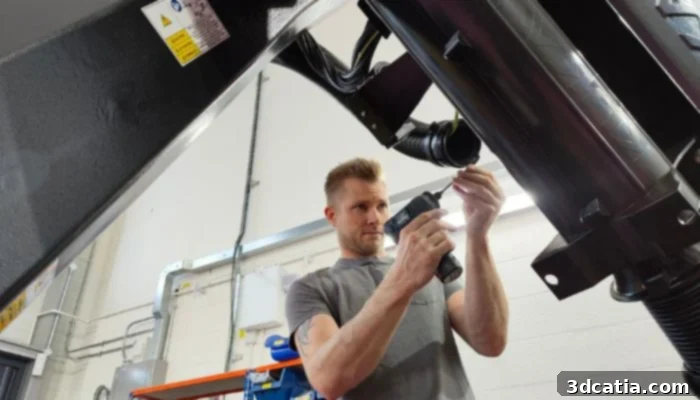
Photo Credits: Rapid Fusion
COBRA Golf Introduces New 3D Printed Clubs for Enhanced Performance
For golf enthusiasts, the name COBRA Golf has become synonymous with innovation, especially in the realm of additive manufacturing. Many will recall the excitement surrounding the introduction of their LIMIT3D clubs last year. These groundbreaking irons, meticulously designed on a powder-bed laser fusion machine, showcased the power of advanced design optimization facilitated by nTop software. The integration of complex lattice structures within the clubhead was a game-changer, resulting in a remarkable 33% reduction in weight while maintaining or even improving structural integrity and performance. This significant weight reduction allows for strategic redistribution of mass, leading to a lower center of gravity and higher moment of inertia, ultimately offering golfers more forgiveness and control on the course.
Building on this success, COBRA Golf recently unveiled plans for a new range of clubs, slated for launch next March. Christened COBRA TOUR, this forthcoming collection will feature several new clubs, all meticulously engineered using the Direct Metal Laser Sintering (DMLS) process. DMLS, a robust additive manufacturing technique, enables the creation of highly complex geometries and precise internal structures that are simply unachievable with traditional manufacturing methods. The primary objective behind the COBRA TOUR series is to further refine weight distribution, aiming to deliver even greater performance benefits. By leveraging the granular control offered by DMLS, COBRA can fine-tune the mass properties of each club, optimizing parameters like launch angle, spin rate, and ball speed to suit diverse player needs.
The continued adoption of additive manufacturing by leading brands like COBRA Golf highlights a broader trend within the sports equipment industry. 3D printing offers unparalleled opportunities for customization, rapid prototyping, and the creation of parts with optimized material properties and internal structures. This allows engineers to push the boundaries of design, moving beyond the constraints of conventional production. For golfers, this translates into clubs that are not only lighter and stronger but also precisely tailored to enhance their swing mechanics and overall game. We eagerly anticipate the full launch of the COBRA TOUR range and will be sure to keep you thoroughly informed about its features and performance breakthroughs. Golf innovation, driven by 3D printing, is undeniably on an upward trajectory, promising exciting developments for players of all skill levels.
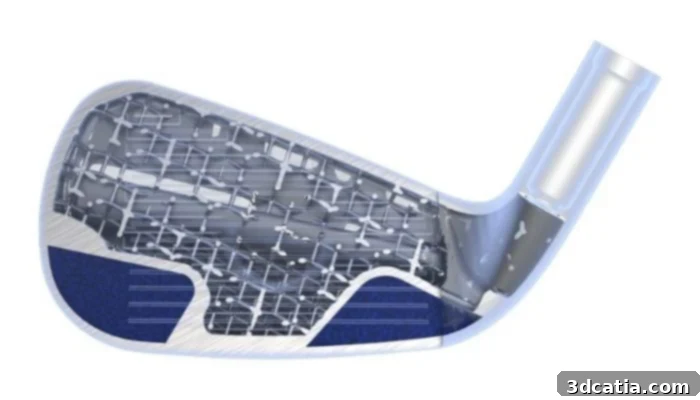
Inside the LIMIT3D clubhead (photo credits: COBRA Golf)
Daimler Truck and 3D Systems Pioneer Remote 3D Printing for Automotive Spare Parts
In a move set to significantly impact global supply chains and vehicle maintenance, a groundbreaking collaboration between 3D Systems, a pioneer in additive manufacturing, and Daimler Truck, a leading global manufacturer of commercial vehicles, was formally announced this week. This strategic partnership aims to revolutionize the procurement and production of spare parts by facilitating their remote 3D printing. The initiative ingeniously combines Daimler Buses’ extensive production and maintenance expertise, honed over years of manufacturing robust parts for trucks, buses, and coaches, with 3D Systems’ cutting-edge 3D printing technology and a diverse portfolio of high-performance materials.
The core objective of this collaboration is to empower Daimler Buses’ network of certified 3D printing partners to locally manufacture spare parts on demand. These parts, which include critical components such as specialized pins, protective covers, and intricate inserts, are essential for both in-engine and in-cab applications across various vehicle models. This distributed manufacturing model represents a paradigm shift from traditional centralized production and complex logistics. By enabling localized production, partners gain unprecedented flexibility and efficiency, drastically reducing the time required to procure necessary parts. Initial projections indicate that this solution could cut parts procurement time by an impressive 75%.
The implications of this accelerated procurement are far-reaching. Beyond the direct benefits of faster access to parts, this initiative will play a crucial role in reducing indirect costs for truck, bus, and coach transportation companies. Minimizing vehicle downtime due to maintenance and repairs directly translates into improved operational efficiency and profitability. Fleet operators can keep their vehicles on the road for longer, maximizing their asset utilization and revenue generation. Furthermore, this localized, on-demand manufacturing approach contributes significantly to sustainability efforts by reducing the need for long-distance shipping of parts, thereby lowering carbon emissions and minimizing inventory waste. This collaboration between Daimler Truck and 3D Systems is a powerful demonstration of how additive manufacturing can build more resilient, efficient, and sustainable supply chains within the critical transportation sector.
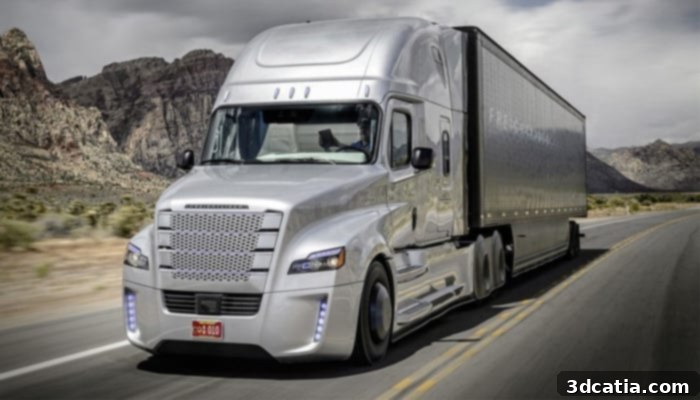
Photo Credits: Daimler
RTFKT and Zellerfeld Unveil Revolutionary 3D Printed Footwear Collection
RTFKT (pronounced “artifact”), Nike’s innovative digital studio renowned for merging cutting-edge technology with digital culture, has once again pushed the boundaries of fashion and footwear. In a highly anticipated collaboration with Zellerfeld, a pioneer in 3D printed shoe manufacturing, RTFKT has unleashed its latest collection: the MNLTH X Blade Drop. This visionary collection features six distinct sneaker models, including the highly sought-after RTFKT Dunk, the futuristic CodeX Dunk, and the robust CYBR Stomper, each a testament to the transformative power of additive manufacturing in fashion.
The launch mechanism for this exclusive collection is as innovative as the shoes themselves. Customers are able to leverage their unique MNLTH X tokens to purchase up to six pairs from the collection, creating an exclusive and digitally integrated purchasing experience that aligns with RTFKT’s Web3 ethos. This event also signifies a poignant moment for RTFKT, marking the closure of its initial chapter. Founded in 2019 and subsequently acquired by Nike in 2021, RTFKT has rapidly evolved into a powerhouse of digital fashion, setting new benchmarks for virtual collectibles and physical manifestations.
The partnership with Zellerfeld is particularly significant because it harnesses advanced 3D printing technology, building upon prior explorations such as the Nike Air Max 1000. Zellerfeld specializes in producing single-material, fully 3D printed footwear, eliminating traditional assembly processes and enabling unprecedented design freedom. Beyond this collection, Zellerfeld has also launched a groundbreaking platform designed to democratize shoe design and production. This platform allows aspiring and established designers to upload their own footwear designs, which can then be directly manufactured using Zellerfeld’s proprietary 3D printing technology. By removing significant financial and logistical barriers that traditionally plague the footwear industry, such as high minimum order quantities and complex supply chains, Zellerfeld is empowering creators to bring their innovative ideas to market with unprecedented speed and agility. This not only expands consumer options for unique and customized footwear but also fosters a more inclusive and dynamic landscape for design innovation in the global fashion industry.
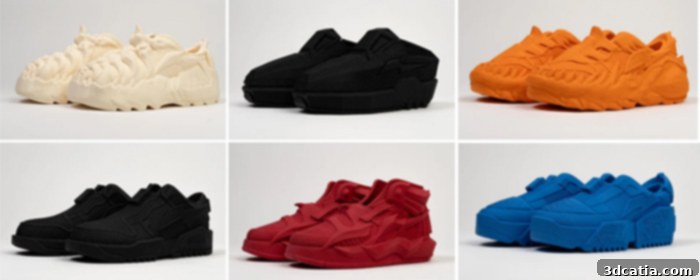
*Photo Credits: RTFKT / Zellerfeld
The World’s First 3D Printed Macaron: A Fusion of Gastronomy and Innovation
In a truly delectable first for the global gastronomic market, additive manufacturing has made its mark in the most charming way. French start-up La Pâtisserie Numérique (The Digital Patisserie) proudly presented the world’s first 3D-printed macaron at the prestigious Sirha trade show, captivating attendees until January 27th. This pioneering creation, designed and produced using their innovative Patiss3 food 3D printer, represents a sweet reinvention. It demonstrates the ability to craft macarons with complex, intricate, and previously unimaginable shapes, moving beyond the traditional circular form and opening up a new realm of artistic expression in patisserie.
Marine Coré-Baillais, the visionary founder of La Pâtisserie Numérique, articulated the profound significance of this culinary breakthrough. She explains, “This achievement ushers in a new era for patisserie, an era where cherished tradition and cutting-edge innovation harmoniously converge. Our aim is to create truly unique and memorable experiences centered around one of the most emblematic symbols of French gastronomy.” The Patiss3 food 3D printer, specifically engineered for precision and food safety, allows for layer-by-layer deposition of edible materials, ensuring both structural integrity and exquisite taste in these novel designs. This technology not only offers aesthetic versatility but also precise control over texture and form, potentially leading to entirely new sensory experiences for consumers.
Adding another layer of innovation, the 3D-printed macaron is crafted from a special powder. This powder is not just any ingredient; it is sustainably derived from the recycling of “macaron casses”—macaron shells that, due to minor defects in their traditional production, would otherwise be discarded as food waste. This ingenious approach addresses a critical issue in the food industry, turning waste into a valuable resource and reinforcing the principles of a circular economy. The combination of innovative design and a commitment to reducing food waste makes this 3D-printed macaron not only a culinary marvel but also a beacon of sustainable practices in modern gastronomy. It exemplifies how additive manufacturing can transform traditional crafts, making them more efficient, environmentally conscious, and creatively boundless. This sweet revolution suggests a future where our culinary delights are as technologically advanced as they are delicious.
What are your thoughts on Rapid Fusion’s new robotic 3D printing center, or perhaps the exquisite 3D printed macaron? We’d love to hear your insights! Share your comments below or engage with us on our LinkedIn, Facebook, and Twitter pages. Don’t forget to subscribe to our free weekly Newsletter here to receive the latest 3D printing news directly in your inbox. For more visual content, you can also find all our compelling videos on our YouTube channel. Stay connected for more groundbreaking stories from the dynamic world of 3D printing!