
Daimler Buses Revolutionizes Spare Parts: Empowering Customers with On-Demand 3D Printing Licenses
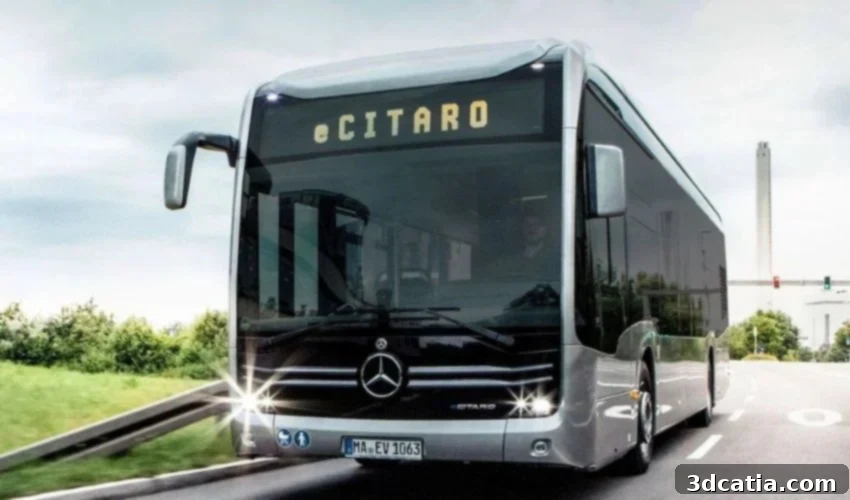
In a groundbreaking move set to redefine vehicle maintenance and supply chain logistics, leading bus manufacturers Mercedes-Benz and Setra, under the umbrella of Daimler Buses, are empowering their customers to independently 3D print spare parts for their extensive fleets. This pivotal announcement, directly from the component manufacturer Daimler Buses, signifies a bold step towards decentralized production and immediate availability. The initiative aims to dramatically reduce reliance on conventional, often time-consuming, and costly parts shipments, offering bus operators an unparalleled ability to produce necessary components quickly and affordably directly from their own facilities. This strategic shift is not an isolated experiment but rather an evolution of Daimler Buses’ long-standing engagement with additive manufacturing.
Daimler Buses has been at the forefront of leveraging 3D printing technology for several years. Since 2017, the company has actively utilized additive manufacturing to produce over 780 different replacement parts for its vehicles, demonstrating a deep commitment to the technology’s potential. Building on this solid foundation, last year saw the pioneering development of a mobile 3D printing center, ingeniously housed within a container. This innovation was designed specifically to facilitate easier and faster access to 3D printed parts for customers, particularly in remote locations or during urgent operational needs. The latest announcement, however, takes this commitment to a new level, transforming customers from passive recipients of parts into active participants in the manufacturing process, effectively decentralizing a significant portion of their spare parts supply.
This forward-thinking approach simplifies the process for transport companies operating Mercedes-Benz and Setra buses. To begin 3D printing their own spare parts, companies will only require a certified industrial 3D printer, a straightforward one-off registration process, and a digital license for the specific part needed in the desired quantity. This innovative model allows every company within the Daimler Buses ecosystem to establish its very own “mini parts factory” on-site, offering unprecedented autonomy and efficiency. To meticulously oversee and regulate this entire digital manufacturing ecosystem, Daimler Buses has strategically enlisted the expertise of its dedicated digital service brand, Omniplus. Omniplus will serve as the central hub for license management, quality assurance, and ongoing support, ensuring a seamless and reliable experience for all participating operators.
The implications of this initiative extend far beyond mere convenience. It represents a paradigm shift in how an established industry leader addresses global supply chain challenges, inventory management, and the increasing demand for sustainable practices. By enabling local, on-demand production, Daimler Buses is not only cutting down logistical complexities but also empowering its customers with greater operational flexibility. This move also highlights a growing trend across various industries: the transition from traditional, centralized manufacturing and distribution models to more agile, digital, and distributed production networks, with 3D printing acting as the primary catalyst for this transformation.
How to 3D Print Your Own Spare Parts Thanks to Daimler
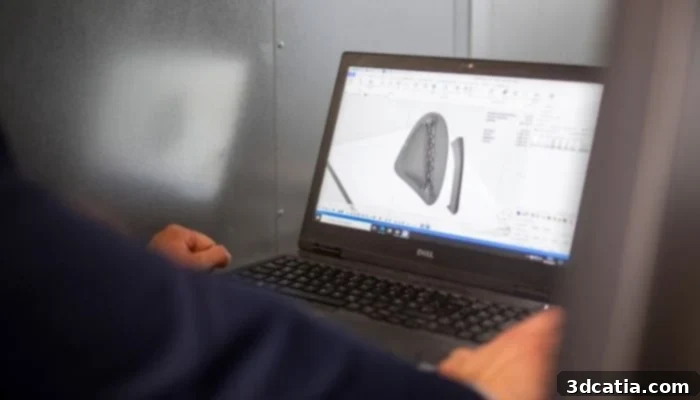
As detailed in the comprehensive press release, the innovative new service offered to customers bears a striking resemblance to modern digital streaming platforms. The core philosophy is straightforward: enabling access to content (in this case, digital part files) anytime, anywhere, and exactly when it’s needed. The process for bus companies is designed to be user-friendly and highly secure. The first step involves registering with the dedicated 3D Printing License eShop, where companies will also specify the certified 3D printers they own. This initial registration ensures compatibility and compliance with Daimler’s quality standards for additive manufacturing.
Once registered, obtaining a digital part becomes as simple as purchasing an encrypted 3D printing license. This license grants access to the digital file of the desired component. The encryption ensures the integrity and security of the design data, protecting Daimler’s intellectual property while providing customers with the necessary information for local production. Upon successful completion of the 3D printing process and the subsequent fabrication of the physical component, the purchased license automatically expires. Crucially, the digital data for the part is not saved or retained by the customer after the printing is finished, reinforcing the on-demand, single-use nature of the license and preventing unauthorized reproductions. This sophisticated system ensures a controlled and compliant manufacturing environment.
Daimler Buses also recognizes that not all transportation companies will possess the specific type of 3D printer required for every single part, or the expertise to operate highly specialized machines. To address this, Omniplus has established a robust network of qualified partners. Should a transportation company wish to produce a specific part that their in-house 3D printers cannot handle, or if they lack the necessary printing capabilities altogether, Omniplus’s extensive network of certified partners can be leveraged. These partners are equipped with a wider range of industrial 3D printers and the specialized knowledge to produce even the most complex or material-specific components, ensuring that every customer’s needs can be met through this flexible service model.
This extensive support system, combined with the intuitive eShop, makes the transition to in-house 3D printing accessible even for companies new to additive manufacturing. Omniplus’s role as the central orchestrator is paramount, providing technical support, ensuring quality control, and managing the licensing framework. This integrated approach not only simplifies the customer journey but also upholds the stringent quality and safety standards synonymous with the Mercedes-Benz and Setra brands. The ability to source parts through licensed digital files or via a trusted partner network provides unparalleled flexibility and robustness to the spare parts supply chain for bus operators worldwide.
According to Daimler Buses, the current catalog of available 3D printable parts is already impressive, featuring more than 100 distinct parts encompassing a total of 1,500 individual components. This number is not static; it is anticipated to grow significantly in the coming months as Daimler Buses continues to expand its digital inventory. Through this innovative application of 3D printing and digital licensing, the component manufacturer aims to fundamentally improve the availability of its parts, thereby mitigating the persistent challenges and disruptions often encountered in traditional global supply chains. This strategy directly addresses issues such as unforeseen delays, logistics bottlenecks, and the complexities of international shipping.
The benefits for bus companies embracing this new model are multifaceted and substantial. Foremost among them is the promise of significantly faster availability of parts. Instead of waiting days or weeks for a shipment to arrive, operators can print critical components on demand, drastically reducing vehicle downtime and improving fleet operational efficiency. This immediate availability translates directly into enhanced service continuity and customer satisfaction. Secondly, the initiative leads to demonstrably shorter supply chains. By eliminating multiple intermediaries and complex distribution networks, parts can move from digital file to physical component within hours, not days or weeks. This localized production capability also offers greater resilience against geopolitical events, natural disasters, or other disruptions that might impact global logistics. Finally, and crucially for operational budgets, significant cost savings are anticipated. These savings stem from reduced shipping expenses, lower warehousing costs due and the optimization of inventory levels, as parts can be produced only when needed rather than being held in large, costly stockpiles. Furthermore, the ability to rapidly replace parts prevents minor issues from escalating into major repairs, further saving on maintenance costs and extending vehicle lifespan. This holistic approach positions Daimler Buses and its customers at the forefront of digital transformation in the automotive spare parts sector, setting a new benchmark for efficiency and sustainability.
This revolutionary project by Daimler Buses is poised to reshape the landscape of vehicle maintenance and parts supply. It embodies a commitment to innovation, customer empowerment, and sustainable practices. The move not only leverages cutting-edge 3D printing technology but also demonstrates a forward-thinking vision for how traditional industries can adapt and thrive in an increasingly digital world. You can find out more about this exciting development HERE.
What are your thoughts on Daimler Buses’ bold new initiative? We invite you to share your insights in a comment below or join the conversation on our Linkedin, Facebook, and Twitter pages! Don’t miss out on the latest advancements in additive manufacturing—be sure to sign up for our free weekly Newsletter here, delivering the freshest 3D printing news directly to your inbox! For a visual dive into the world of 3D printing, you can also explore all our informative videos on our dedicated YouTube channel.