
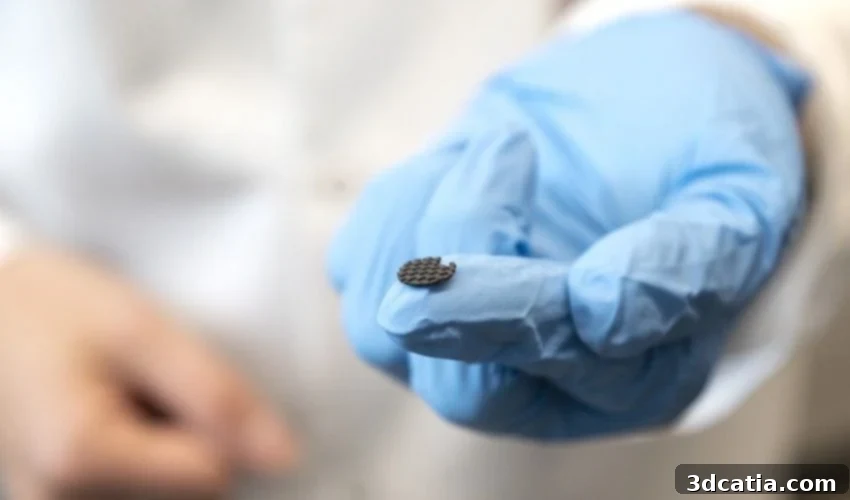
3D Printing the Future: Powering Sustainable Human Missions on the Moon and Mars with Regolith Batteries
Fifty years have passed since humanity last set foot on the Moon, yet the collective human spirit’s aspiration to explore the cosmos remains undimmed, if not intensified. In recent times, we have witnessed a profound resurgence in ambitious endeavors not only to reach distant corners of our Solar System but also to establish a lasting, self-sufficient presence there. At the forefront of these groundbreaking efforts is additive manufacturing, a revolutionary technology transforming possibilities into realities. This pivotal role was underscored just last week with the announcement that the University of Texas at El Paso (UTEP) has joined a monumental project. This initiative aims to significantly enhance the sustainability of future lunar and Martian missions for astronauts. UTEP received a substantial award of $615,000, specifically allocated to harness the power of advanced 3D printing techniques. Their mission: to master the art of manufacturing rechargeable batteries directly from the very lunar and Martian regolith, the loose surface material found on these extraterrestrial bodies.
As alluded to, this particular project is an integral component of a much broader, visionary undertaking. The overarching goal is not merely to facilitate our return to the Moon and venturing onto Mars, but crucially, to sustain human operations once we arrive. The cornerstone of achieving this unprecedented level of self-sufficiency lies in drastically reducing payload weight and minimizing dead volume carried from Earth – critical challenges for which 3D printing offers uniquely suited solutions, extending far beyond initial expectations. One of its most compelling advantages, particularly relevant to this endeavor, is its unparalleled ability to enable *in-situ* manufacturing. By leveraging local resources, 3D printing could unlock the potential to develop essential infrastructure on the Moon or Mars. This includes robust habitation modules, efficient power generation systems, and vital energy storage facilities. The current project meticulously focuses on power generation, tasking scientists with the formidable challenge of creating the necessary batteries. These power cells will be crucial for a diverse range of applications, from energizing small spacecraft and portable power devices to operating advanced robots and supporting large-scale power grids vital for sustained human presence on other planetary bodies. This innovative approach promises to drastically cut down on costly and complex resupply missions, paving the way for truly enduring off-world settlements.
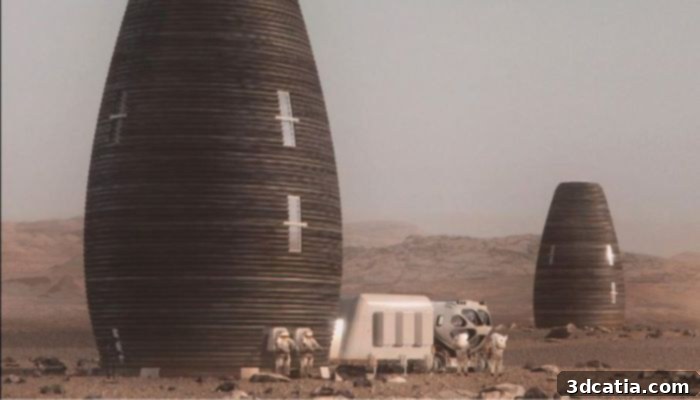
NASA is actively investigating how 3D printing can be integrated into various space exploration projects, including the development of these advanced batteries and the construction of 3D printed homes on the Moon and Mars, significantly advancing our capabilities for off-world habitation (photo credits: NASA)
Pioneering 3D Printed Batteries for Space Exploration
UTEP’s dedicated research and development efforts are woven into a larger, ambitious $2.5 million project, a collaborative powerhouse that also encompasses Youngstown State University (YSU), leading 3D printer manufacturer Formlabs, and construction technology company ICON. This formidable alliance signals a unified drive towards monumental advancements in space manufacturing. Impressively, significant strides have already been made by both UTEP and NASA researchers. These exciting developments were recently showcased and meticulously detailed in a compelling article published by the American Chemical Society, provocatively titled: “What Would Battery Manufacturing on the Moons and Mars Look Like?” The publication reveals that the team is specifically investigating two distinct, yet highly promising, 3D printing processes: material extrusion (ME) and vat photopolymerization (VPP). Both methods are being rigorously tested and optimized to produce revolutionary shape-conformable batteries. These aren’t just any batteries; they are complex, three-dimensional designs engineered to surpass the performance metrics of existing commercial batteries, making them ideal for the unique and demanding conditions encountered on lunar and Martian surfaces. Material extrusion, often likened to a high-precision hot glue gun, builds objects layer by layer by extruding molten material. Vat photopolymerization, on the other hand, utilizes a liquid resin cured by light, creating intricate details with exceptional accuracy. The ability to create batteries that can conform to irregular spaces within spacecraft or habitats, rather than being limited by rigid, standard shapes, offers unparalleled design freedom and efficiency gains for space missions.
Dr. Alexis Maurel, a distinguished French Fulbright Scholar within UTEP’s Department of Aerospace and Mechanical Engineering, eloquently articulates the profound significance of this collaborative effort: “This groundbreaking project with NASA presents an unparalleled opportunity to unequivocally demonstrate UTEP’s formidable expertise in both cutting-edge energy storage solutions and advanced 3D printing technologies. Additive manufacturing emerges as a truly unique and indispensable approach to fabricate shape-conformable batteries, which are absolutely essential for supporting and sustaining complex human operations in the harsh environments of space, and on the surfaces of the Moon or Mars. In these extreme off-world locales, the traditional luxury of readily available cargo resupply missions from Earth is severely limited, making local manufacturing capabilities not just advantageous, but absolutely critical for long-term survival and mission success. The ability to custom-print power sources on demand, tailored to specific needs and available spaces, will redefine how we envision and execute future deep-space missions, moving us from mere visitation to sustained habitation.”
Crucially, these pioneering batteries destined for lunar and Martian applications will represent a significant departure from the conventional power sources we are accustomed to on Earth. While lithium-ion batteries dominate our terrestrial devices due to their high energy density, their viability for off-world use is severely curtailed by the scarcity of lithium in the regolith of both the Moon and Mars. Recognizing this fundamental limitation, the dedicated researchers are strategically pivoting their focus towards the development of advanced sodium-ion batteries. This innovative shift is driven by a critical resource advantage: sodium is far more abundant in extraterrestrial soils, making it an ideal candidate for *in-situ* resource utilization (ISRU). One of the initial, yet most fundamental, steps of this ambitious project involves the meticulous extraction of battery materials and their precursors directly from lunar and Martian regolith. This process will be instrumental in achieving true self-sufficiency. Demonstrating remarkable foresight and progress, the combined UTEP and YSU team has already successfully developed sophisticated composite resin feedstocks specifically tailored for each essential component of a sodium-ion battery, optimized for vat photopolymerization (VPP). Concurrently, the brilliant minds at NASA’s Marshall Space Flight Center and Ames Research Center have been hard at work, developing advanced 3D printed composite inks. These specialized inks are designed for use in material extrusion (ME), providing another versatile pathway for fabricating these next-generation power cells. This dual-pronged approach ensures that various 3D printing technologies can be effectively utilized, maximizing the chances of successful, sustainable battery production in the challenging conditions of space.
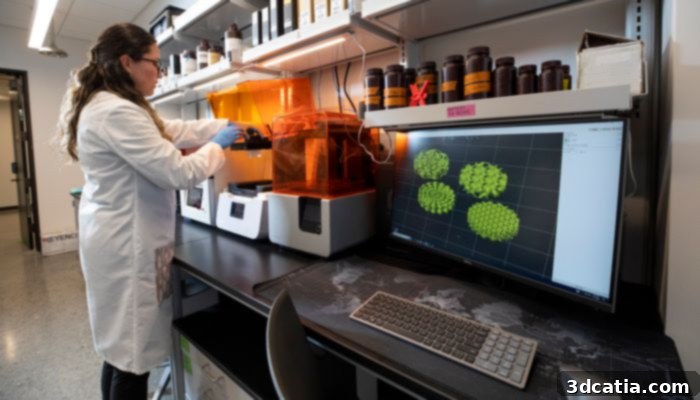
The University of Texas at El Paso (UTEP) is set to play a pivotal and innovative role in utilizing cutting-edge 3D printing technology to engineer and produce rechargeable batteries directly from lunar and Martian regolith, marking a significant leap towards sustainable off-world exploration and habitation (photo credits: The University of Texas at El Paso)
Observing the myriad inventive applications of 3D printing in advancing humanity’s quest to explore space is, without a doubt, profoundly compelling and inspiring. This technology is not just an incremental improvement; it represents a paradigm shift in how we approach space missions, enabling possibilities that were once confined to science fiction. Moreover, as UTEP itself highlights, the transformative potential of these regolith-derived batteries extends beyond the cosmos, offering significant and tangible benefits right here on Earth. Imagine, for instance, a future where these resilient power cells can be seamlessly embedded within 3D printed concrete walls. Connected to compact solar generation units, they could create entirely self-sustaining homes. Such innovative housing solutions would be invaluable for rapid disaster response, providing immediate and reliable shelter in emergencies. Furthermore, they could revolutionize housing in developing countries, offering sustainable, affordable, and energy-independent homes that drastically improve quality of life. The ability to manufacture these batteries using readily available materials, coupled with 3D printing’s efficiency, makes this vision a practical reality. For those eager to delve deeper into the scientific intricacies and technical methodologies employed by the teams in their pursuit to 3D print these innovative batteries using extraterrestrial regolith, the comprehensive details are available in the groundbreaking publication accessible HERE. This research underscores the interconnectedness of space exploration and terrestrial innovation, demonstrating how advancements made for the stars can profoundly impact lives on our home planet.
What are your thoughts on this significant grant empowering the 3D printing of batteries from lunar and Martian soil? We invite you to share your insights and predictions in a comment below or join the conversation on our LinkedIn, Facebook, and Twitter pages! Don’t miss out on the latest advancements and breaking news in additive manufacturing – remember to sign up for our free weekly Newsletter here, delivering the freshest 3D printing updates directly to your inbox! Additionally, explore a wealth of informative and engaging content by visiting our YouTube channel, where you can find all our videos detailing the incredible world of 3D printing and its diverse applications.
*Cover Photo Credits: JR Hernandez / UTEP Marketing and Communications – This image beautifully captures the spirit of innovation driving UTEP’s contributions to space technology.