
Additive Manufacturing Weekly: Global Innovations in Maritime, Medical, Software, High-Speed Drones & Dental 3D Printing
As the week draws to a close, we reflect on some of the most impactful developments shaping the landscape of additive manufacturing. The sector continues its dynamic evolution, demonstrating unparalleled potential across diverse industries. This week’s highlights showcase remarkable advancements, from leveraging 3D printing to revolutionize supply chains in Korea’s robust maritime sector to groundbreaking innovations in personalized healthcare with 3D-printed ocular prostheses. We’ll also delve into enhanced software capabilities for metal 3D printing, witness the incredible speed of an additive manufactured drone challenging Formula 1 cars, and explore new material breakthroughs pushing the boundaries of dental applications. Join us as we explore these five key news items that underscore the transformative power of 3D printing, paving the way for a future defined by efficiency, customization, and unprecedented innovation.
Pushing 3D Printing in Korea’s Maritime Sector
South Korea, a nation intrinsically linked to the sea, boasts one of the world’s most significant maritime industries. Despite its strength, the adoption of advanced manufacturing technologies like additive manufacturing (AM) within this sector has historically lagged. However, a significant new collaboration aims to change this trajectory, propelling Korea’s maritime and offshore industries into a new era of efficiency and resilience. Pelagus 3D, a strategic joint venture between industrial giants thyssenkrupp and Wilhelmsen, has announced a crucial memorandum of understanding (MOU) with Doosan Enerbility. This partnership is designed to dramatically accelerate the integration and widespread adoption of 3D printing across the Korean maritime landscape.
The maritime industry faces inherent challenges, particularly concerning spare parts and supply chain logistics. Traditional manufacturing methods often lead to long lead times, high inventory costs, and complex global supply chains that are vulnerable to disruptions. Additive manufacturing offers a compelling solution by enabling on-demand production of parts, significantly reducing lead times, minimizing inventory, and allowing for the creation of complex, optimized components closer to the point of need. This collaboration synergizes Pelagus 3D’s deep expertise in maritime additive manufacturing solutions with Doosan Enerbility’s extensive experience in engineering and manufacturing critical spare parts, thereby creating a robust framework to address existing supply chain inefficiencies within the country.
Knelip Ong, CEO of Pelagus 3D, emphasized the strategic importance of this alliance, stating, “The MOU signing with Doosan Enerbility marks a pivotal milestone in creating a more resilient and efficient spare parts supply chain. This collaboration will drive technological innovation and deliver enhanced value to our network in Korea. The Pelagus Platform will ensure seamless integration and accelerate adoption of AM among OEMs and end users.” This initiative is expected not only to streamline the procurement and production of essential components for ships and offshore platforms but also to foster a localized additive manufacturing ecosystem within Korea, potentially setting a precedent for other maritime nations globally. By enhancing flexibility and reducing reliance on conventional manufacturing cycles, this partnership is poised to establish new benchmarks for agility and sustainability in the maritime industry.
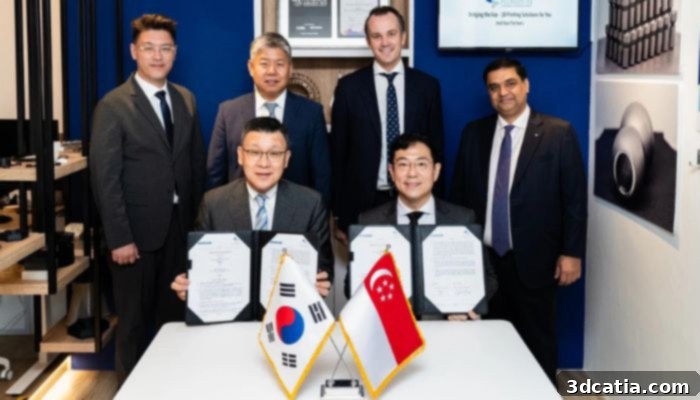
The signing of the MOU between Pelagus 3D and Doosan to promote 3D printing in the maritime sector in Korea (photo credits: Pelagus 3D)
Breakthroughs in Medical 3D Printing: Custom Ocular Prostheses
The medical field is continually transformed by the precision and customization capabilities of additive manufacturing, and the latest news from the Fraunhofer Institute exemplifies this revolution. A dedicated team of researchers has made significant strides in the design and production of customized ocular prostheses, combining advanced 3D printing technologies with cutting-edge artificial intelligence (AI). This innovative approach is dramatically improving the lives of patients requiring eye prosthetics, offering solutions that are more realistic, comfortable, and quicker to produce than ever before.
Traditionally, ocular prostheses are handcrafted by skilled ocularists, a process that is not only time-consuming but also highly reliant on individual expertise. This method can take weeks, involve multiple patient visits, and often results in prostheses that, while functional, may not perfectly match the patient’s remaining eye in terms of color, iris detail, and overall appearance. The Fraunhofer team’s breakthrough directly addresses these limitations. By integrating AI into the design process, they can rapidly analyze anatomical data and patient-specific requirements, automating and optimizing the intricate details needed for a truly personalized prosthesis. This synergy of AI and 3D printing is projected to slash manufacturing time by an astounding 80%, effectively overcoming long-standing production challenges and expanding access to high-quality care.
The prostheses themselves are crafted using PolyJet technology, a sophisticated 3D printing method known for its ability to produce multi-material, full-color models with exceptional detail and smooth surfaces. This technology allows for the creation of incredibly realistic prostheses that replicate the subtle nuances of a natural eye, including intricate iris patterns and scleral blood vessels. Manufactured in a mere 90 minutes, these prostheses can be installed in as little as 15 minutes, significantly reducing patient discomfort and waiting times. Beyond speed and aesthetics, the comfort factor is paramount; patients often need to replace traditional implants every 5 to 10 years, but the enhanced fit and durability of 3D-printed versions promise greater longevity and reduced necessity for frequent changes.
Following 10 successful clinical trials conducted at the prestigious Moorfields Eye Hospital, a further 200 adult patients have now been successfully fitted with these innovative 3D-printed ocular prostheses. This milestone signifies a major step towards broader clinical adoption, validating the technology’s effectiveness and patient benefits. This pioneering work not only offers hope for countless individuals worldwide but also highlights the immense potential of additive manufacturing in creating highly customized, life-changing medical devices, opening doors for similar advancements in other areas of prosthetic and implant design.
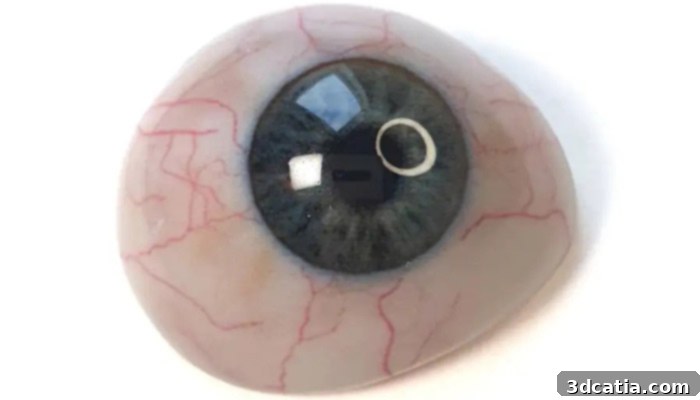
Photo Credits: Fraunhofer Institute
Advanced Control: Velo3D’s New ‘Developer’ Software Feature
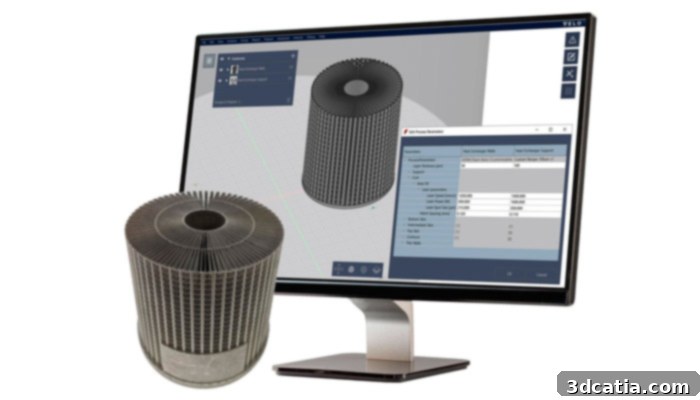
Velo3D, a leader in the metal 3D printing industry, continues to push the boundaries of what’s possible with additive manufacturing through its innovative hardware and software solutions. Known for its ability to print complex geometries without the need for support structures, Velo3D’s technology is critical for demanding applications in aerospace, energy, and defense. The company has recently unveiled a significant enhancement to its print preparation software, Flow, introducing a powerful new tool called ‘Developer’. This addition is set to provide users with unprecedented flexibility and granular control over the metal 3D printing process, catering especially to advanced engineers and researchers seeking to optimize outcomes for highly specific applications.
The success of any 3D printing operation hinges not just on the printer itself, but critically on the software that translates a digital design into a physical object. For advanced metal AM applications, where part integrity, material properties, and geometric accuracy are paramount, standard software settings often fall short. The ‘Developer’ feature within Flow addresses this by allowing users to delve deeper into print parameters at the software editor level. This means engineers can now access, modify, and fine-tune critical variables that influence the printing process, such as laser power, scan speed, layer thickness, and thermal management strategies, moving beyond predefined profiles to truly customize their builds.
Furthermore, ‘Developer’ facilitates the import of parameters already established and refined from previous projects, enabling users to leverage their accumulated expertise and accelerate new developments. This capability is invaluable for organizations iterating on designs or scaling production, ensuring consistency and predictability across different print jobs and machines. It also allows for the optimization of parameters tailored to specific materials, geometries, or performance requirements, unlocking new possibilities for innovation. Thomas Pomorski, Head of Additive Manufacturing at Ursa Major, highlighted the practical impact of this advancement: “It can be a challenge to produce repeatable results across different metal 3D printers—even when they’re the same model of printer—however, Velo3D’s solution can consistently produce parts within spec across any of its printers, which provides huge benefits for companies looking to scale production of their parts.” This statement underscores how ‘Developer’ contributes to Velo3D’s reputation for delivering repeatable, high-quality results, crucial for industrial adoption and scaling additive manufacturing operations in critical sectors.
Beyond Limits: A 3D Printed Drone Outpaces Formula 1
In a spectacular display of speed and advanced engineering, the Dutch company Dutch Drone Golds has captured global attention with a custom-designed drone capable of accelerating at an astonishing rate – reportedly twice as fast as a Formula 1 car. This technological marvel can reach speeds of 300 km/h (approximately 186 mph) in a mere four seconds, shattering conventional expectations for drone performance. The most exciting aspect for the additive manufacturing community is that this record-breaking drone was significantly developed and refined using 3D printing technologies.
Designing a drone that can achieve such extreme speeds involves overcoming immense aerodynamic and structural challenges. Every component must be meticulously crafted to minimize drag, maximize propulsion efficiency, and withstand intense forces. This is where 3D printing proved indispensable. Through multiple design iterations, Dutch Drone Golds leveraged additive manufacturing to rapidly prototype various components, testing different geometries and material configurations. This iterative design process, facilitated by the speed and flexibility of 3D printing, allowed engineers to quickly assess and optimize the device’s performance, ensuring it could endure the stresses of high-speed flight while achieving its ambitious velocity targets.
The use of 3D printing enabled the creation of lightweight yet robust parts with complex internal structures that would be impossible or prohibitively expensive to produce with traditional manufacturing methods. This capability was crucial for shedding weight without compromising structural integrity, a critical factor in achieving extraordinary acceleration and top speeds. While specific materials were not detailed in the original report, it’s highly probable that advanced composites or high-performance polymers compatible with 3D printing were employed to strike the ideal balance between strength, stiffness, and minimal mass.
The ultimate test of the drone’s capabilities was a jaw-dropping demonstration on a Formula 1 circuit. The drone was programmed to follow world-champion racer Max Verstappen for a full lap around the iconic Silverstone Grand Prix track. The resulting video, which truly speaks for itself, showcased the drone’s incredible agility and sustained speed, keeping pace with a finely tuned F1 machine. This feat is not just a testament to the drone’s engineering but also a powerful endorsement of 3D printing’s role in pushing the boundaries of what is mechanically possible. Such high-performance drones have vast implications, from revolutionizing logistics and surveillance to transforming sports broadcasting and potentially even laying the groundwork for future aerial mobility solutions, underscoring additive manufacturing’s critical role in shaping the next generation of high-speed aerial vehicles.
Innovations in Dental 3D Printing: New Resins from 3D Systems
The dental industry has been a pioneering adopter of additive manufacturing, leveraging its ability to produce highly precise, customized, and efficient solutions for a wide range of applications. From crowns, bridges, and aligners to surgical guides and dental models, 3D printing offers unparalleled benefits over traditional methods, including reduced lead times, enhanced accuracy, and personalized patient care. Among the various 3D printing processes, resin-based technologies are particularly popular in dentistry due to their capacity to achieve exceptionally high levels of detail, resolution, and surface finish, crucial for intricate dental work.
Recognizing the continually expanding needs of dental professionals, 3D Systems, a global leader in additive manufacturing solutions, has recently unveiled two innovative new resins designed specifically for dental applications: NextDent Jet Denture Teeth and NextDent Jet Denture Base. These materials represent a significant step forward in the digital workflow for denture fabrication, enabling dental laboratories and clinics to design and produce durable, aesthetically pleasing, and wear-resistant monolithic dental prostheses. The development of these specialized resins addresses key requirements for modern dentures, focusing on both patient comfort and long-term functional performance.
The first material, NextDent Jet Denture Teeth, has been meticulously engineered to replicate the natural rigidity, translucent aesthetics, and wear characteristics of human teeth. This ensures that the fabricated teeth not only look authentic but also perform effectively during chewing and speech, providing patients with confidence and comfort. Its robust composition is designed to resist the daily wear and tear associated with oral function, contributing to the longevity of the prosthesis. Complementing this, the NextDent Jet Denture Base resin is formulated with properties that allow it to absorb shocks and withstand the forces exerted during mastication. This resilience ensures a stable and comfortable fit, minimizing irritation and enhancing the overall patient experience. Furthermore, the ability to print monolithic dentures, meaning the entire prosthesis is created as a single, cohesive unit, streamlines the production process, potentially reducing manufacturing steps, labor costs, and opportunities for error compared to multi-component assembly.
These new resins from 3D Systems empower dental professionals to deliver superior patient outcomes with greater efficiency. By offering materials that meet rigorous clinical standards for strength, biocompatibility, and aesthetics, 3D Systems continues to solidify its position at the forefront of dental additive manufacturing. This innovation not only streamlines the production of dentures but also paves the way for wider adoption of digital dentistry, offering faster turnaround times and more predictable results for both dentists and their patients.
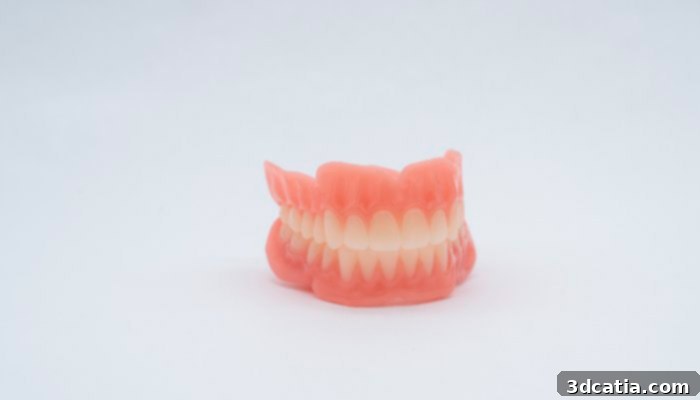
Photo Credits: 3D Systems
What are your thoughts on these groundbreaking advancements in additive manufacturing, from the strategic partnership between Pelagus 3D and Doosan Enerbility in Korea to the innovative dental resins by 3D Systems? We value your perspective! Let us know in a comment below or join the conversation on our LinkedIn, Facebook, and Twitter pages. Don’t forget to sign up for our free weekly newsletter here to get the latest 3D printing news delivered straight to your inbox! You can also find all our compelling videos and industry insights on our YouTube channel.