
Revolutionizing Urban Sports: The World’s First 3D Printed Skatepark for Paris 2024 Olympics
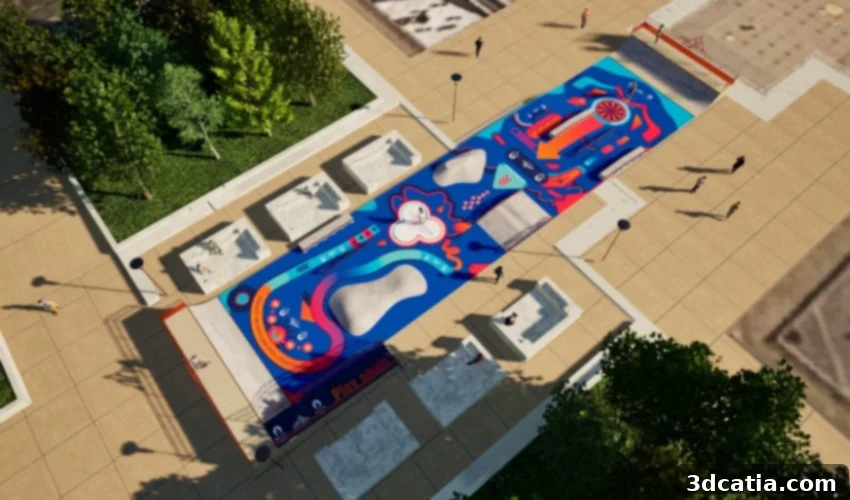
As anticipation builds for the Paris Olympic Games 2024, the city is set to unveil a groundbreaking architectural marvel: a state-of-the-art skatepark constructed using advanced 3D concrete printing technology. This innovative 400m² facility, scheduled to open its ramps and rails to the public on July 18, stands proudly near the picturesque Bassin de Takis in La Défense. More than just a temporary attraction, this pioneering project symbolizes a significant leap forward in sustainable construction and large-scale additive manufacturing, showcasing how cutting-edge technology can seamlessly integrate with urban development and sports infrastructure.
The ambitious endeavor is a collaborative masterpiece, conceptualized and brought to life by the renowned French industrial group Saint-Gobain, in partnership with its specialist subsidiary, Weber. Weber, a global leader in high-performance flooring products and systems, has leveraged its expertise in materials and concrete 3D printing to create a structure that is both functional and environmentally conscious. The skatepark itself is an assembly of 19 meticulously crafted modules, designed to challenge and delight skateboarders of all skill levels. These modules include a diverse range of features such as single and inclined benches, dynamic quarter-pipes, durable rails, an exciting volcano, and a double volcano, promising an unparalleled skating experience. This modular approach not only facilitates construction but also highlights the incredible versatility and precision afforded by 3D concrete printing, marking a new era for urban sporting facilities.
The manufacturing heart of this visionary project resides in one of Saint-Gobain’s advanced factories, located within the bustling Eindhoven industrial zone in the Netherlands. Here, a sophisticated, multi-meter-high machine orchestrates the precise deposition of concrete layers, bringing each skatepark module to life through the principles of additive manufacturing. This highly automated process unlocks unprecedented design freedom, allowing engineers and designers to move beyond the limitations of traditional construction methods. The ability to create complex geometries and organic shapes with such ease ensures that each element of the skatepark is perfectly optimized for both aesthetic appeal and rider functionality. This level of customization guarantees a unique and engaging environment, perfectly tailored to meet the exacting needs and creative demands of the skateboarding community.
A Paradigm Shift: Large-Scale 3D Printed Structures in Paris
While 3D printing has gained widespread recognition for its capability in producing intricate, smaller-scale objects across various industries, the La Défense skatepark decisively redefines its scope. This installation boldly demonstrates the applicability and immense potential of additive manufacturing for substantial concrete constructions, pushing the boundaries of what is conventionally thought possible. Rather than being an unwieldy, monolithic block, the new skatepark exemplifies the elegance of modular construction, comprising several distinct yet interconnected components. This strategic approach to design and assembly significantly streamlines the construction timeline and enhances structural integrity.
This isn’t Weber’s first foray into pioneering large-scale concrete 3D printing. The company previously made headlines with the construction of an impressive 29-meter bridge in the Netherlands two years prior, a structure that has since become an integral part of daily life for countless pedestrians and cyclists. Such projects underscore the reliability and long-term viability of 3D printed infrastructure. Beyond its structural advantages, 3D printing in concrete also offers substantial ecological benefits, a critical consideration in today’s environmentally conscious construction industry. By minimizing material waste through precise deposition, optimizing structural designs to reduce overall material usage, and potentially enabling the use of localized or recycled aggregates, this technology significantly reduces the carbon footprint associated with traditional concrete production and construction. This commitment to sustainability aligns perfectly with modern urban development goals, aiming to create greener, more resilient cities.
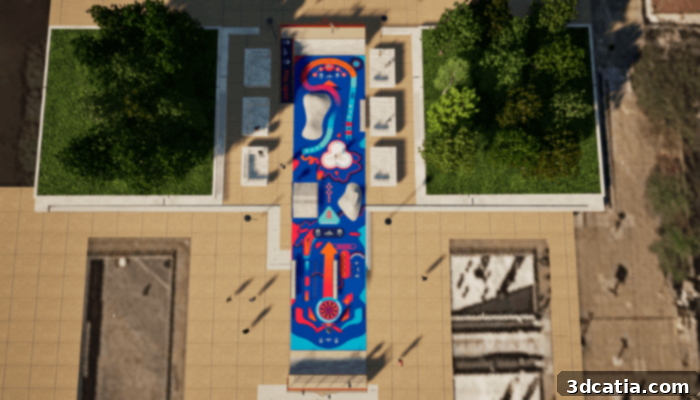
Each module of the Paris skatepark, weighing approximately 750 kg, represents an achievement in efficient manufacturing. According to Jakub Pawlowicz, Operations Manager 3D at Weber, the production time for each module typically ranges between one and two hours. This remarkable efficiency is a testament to the speed and automation inherent in concrete 3D printing. Pawlowicz proudly stated, “The whole process saves time: just two weeks from design to delivery.” This expedited timeline drastically reduces project durations compared to conventional methods, allowing for rapid deployment of critical infrastructure. Furthermore, the robust nature of the materials and the precision of the manufacturing process ensure enduring quality. “It’s a structure that will remain reliable for the next 10 to 15 years, without any worries,” he added, providing confidence in its longevity and minimal maintenance requirements. To guarantee that the skatepark not only met but exceeded expectations in terms of quality and functionality, Weber engaged directly with its primary users: skateboarders. Through rigorous testing and invaluable feedback, these modules were meticulously refined and validated, ensuring they offered an authentic and exhilarating experience for the community.
The collaborative design and testing process with professional skateboarders were pivotal to the success of this project. By integrating user experience feedback directly into the module design and validation phases, Weber ensured that the skatepark would be perfectly adapted to the dynamic and demanding nature of skateboarding. This hands-on approach allowed for fine-tuning of angles, curves, and surface textures, translating into an optimal flow and feel for riders. This commitment to user-centric design not only enhances the performance and enjoyment of the skatepark but also establishes a new benchmark for how sports facilities can be developed in conjunction with the athletic communities they serve. It underscores the importance of practical validation in the realm of innovative construction, moving beyond theoretical models to real-world performance.
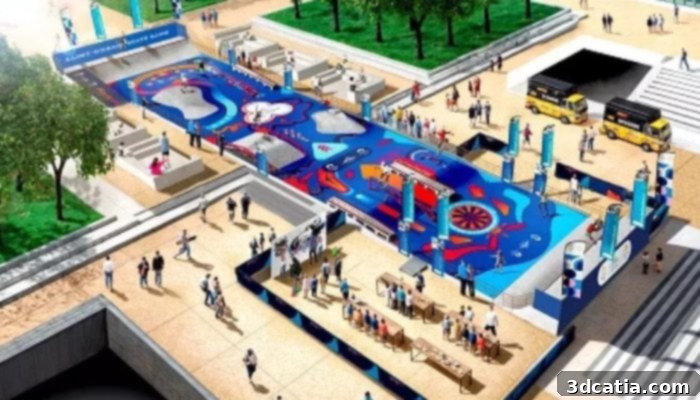
Although more intricate specifics regarding the exact manufacturing parameters and material compositions are not yet publicly detailed, the tangible progress of the project speaks volumes. The assembly of these cutting-edge skatepark modules is scheduled to commence on July 9, transforming the pre-fabricated components into a cohesive, ready-to-use facility. The official inauguration ceremony is eagerly anticipated for July 18, a mere few days before the grand opening of the Paris Olympic Games, setting an exciting tone for the global event. Following its unveiling, the skatepark will be accessible to the general public from July 19 until August 11, 2024, offering residents and visitors a unique opportunity to experience this innovative structure. However, its journey does not end there; post-Olympics, the modular design allows for its strategic dismantling and relocation to a commune within the Hauts-de-Seine department by the end of the year. This planned relocation not only extends the lifecycle of the skatepark but also ensures that the benefits of this advanced infrastructure reach a broader community, serving as a lasting legacy of innovation beyond the Olympic spectacle. For those keen to delve deeper into the specifics of this project and Saint-Gobain’s broader vision, additional information is available here.
This 3D printed skatepark in Paris stands as a testament to the transformative power of additive manufacturing in the construction sector. It highlights how digital fabrication can deliver not only speed and efficiency but also environmental benefits and unparalleled design flexibility. The project serves as a compelling case study for future urban development, demonstrating how advanced technologies can create dynamic, sustainable, and user-centric public spaces. The successful deployment of such a complex, large-scale structure in a prominent location like La Défense, coinciding with an event of global significance like the Olympic Games, elevates the profile of 3D concrete printing as a viable and preferred method for modern infrastructure.
The implications of this project extend beyond mere construction. It embodies a forward-thinking approach to urban design, where temporary installations can be repurposed, fostering a sense of community and providing access to high-quality sporting facilities in various locations. By inspiring a new generation of architects, engineers, and athletes, this 3D printed skatepark contributes to the enduring legacy of the Paris Olympics 2024, showcasing French innovation and a commitment to a more sustainable future. It’s a vivid illustration of how technology can enhance public spaces, promote sports, and address environmental challenges simultaneously, paving the way for similar ventures worldwide.
Ultimately, the creation of this cutting-edge skatepark by Saint-Gobain and Weber for the Paris 2024 Olympic Games is a landmark achievement. It represents the successful convergence of architectural innovation, material science, and digital fabrication to produce a facility that is both a symbol of progress and a functional urban asset. Its modular design, rapid manufacturing, ecological advantages, and user-validated functionality set a new standard for the creation of public sports infrastructure. As the world turns its eyes to Paris, this 3D printed skatepark will undoubtedly capture imaginations and inspire further exploration into the boundless possibilities of additive construction.
*Cover Photo Credits: Photo Credits: Saint-Gobain / Design: Playgones