
Revolutionizing Museum Exhibitions: How 3D Printing Creates Immersive Displays at the Amber Museum in Gdańsk
The convergence of art, history, and cutting-edge technology is reshaping how we experience cultural institutions. In the realm of contemporary art and design, 3D printing, also known as additive manufacturing, has emerged as a powerful tool for artists and creatives to transform abstract ideas into tangible, groundbreaking art objects. This innovative technology empowers designers to push boundaries, visualize complex concepts, and produce intricate forms with unprecedented precision and efficiency. We’ve previously explored how artists leverage additive manufacturing to craft diverse items, from lamps that illuminate with unique aesthetics, to furniture pieces that blend functionality with sculptural beauty, and even acoustic elements that redefine soundscapes. Beyond individual artists, the profound potential of 3D printing has also been recognized and embraced by prestigious museums worldwide, offering new avenues for exhibition design, conservation, and visitor engagement.
A compelling contemporary example illustrating this transformative impact is the renowned Amber Museum in Gdańsk, Poland. This institution, dedicated to showcasing the rich history and artistic applications of amber, is leveraging advanced 3D printing technologies to enhance its displays significantly. Soon, visitors to the newly refurbished museum will encounter a series of captivating objects designed by the emerging industrial designer Jakub Pastuszak. While these remarkable creations are not made from actual amber, they draw profound inspiration from this ancient material’s intrinsic beauty and historical significance. Furthermore, they serve as meticulously crafted, high-fidelity models of celebrated amber art, offering an unparalleled glimpse into centuries of craftsmanship and natural wonder. This strategic integration of 3D printing underscores the museum’s commitment to innovation, providing a fresh perspective on historical artifacts and enabling a deeper, more interactive understanding of amber’s multifaceted role in art and culture.
The Dawn of a New Era: 3D Printing at the Amber Museum Gdańsk
The Amber Museum in Gdańsk is embarking on an exciting new chapter, relocating to a magnificent, newly restored venue. Scheduled to open its doors to the public on July 24, 2021, the museum’s comprehensive exhibitions on amber will now be housed within the historic walls of the Grand Mill, a stunning architectural masterpiece dating back to the 14th century. This move represents more than just a change of address; it signifies a bold vision to create a dynamic space where historical amber pieces can harmoniously coexist with cutting-edge contemporary art. This progressive approach allows the museum to bridge the past and the present, offering a richer, more diverse narrative of amber’s enduring allure.
Central to this modern vision is the integration of innovative technologies, with 3D printing playing a pivotal role. The museum has commissioned Jakub Pastuszak, a talented local industrial designer, to create and install four distinct additively manufactured installations. Pastuszak, who has been honing his design skills for three years and is set to graduate in 2022 with a degree in industrial design from the prestigious Academy of Fine Arts in Gdańsk, brings a unique perspective to this collaboration. His work primarily explores the intricate interaction between people and objects, a philosophy that resonates deeply with the museum’s goal of fostering engaging visitor experiences. Pastuszak himself articulates the profound value of 3D printing in his creative process, stating, “The lack of contact with living matter creates a cognitive dissonance, which is not good for the implementation of the design. 3D printing can help avoid the risk of the projects remaining only in the sphere of three-dimensional concepts.” This insight highlights how additive manufacturing serves as an indispensable bridge between theoretical concepts and tangible realities, allowing designers to move beyond mere visualizations to create physical objects that can be directly experienced and interacted with. For artists like Pastuszak, 3D printing is not merely a production method but a versatile and powerful tool that significantly reduces the time and cost associated with producing complex objects, often eliminating the need for additional specialized labor that would otherwise be required for traditional fabrication techniques. This efficiency enables greater creative freedom and allows for the rapid iteration and refinement of designs, pushing artistic boundaries further.
Precision and Efficiency: 3D Printing vs. Traditional Craftsmanship
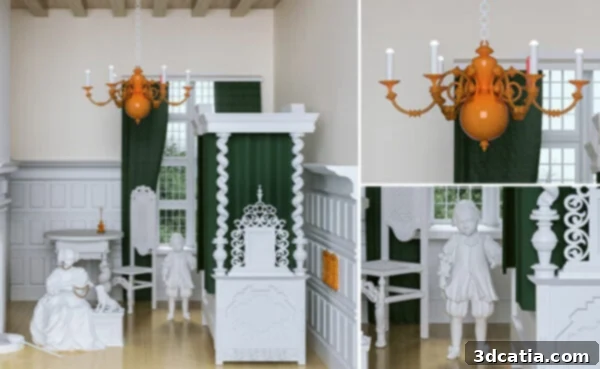
One of the standout additively manufactured objects featured in the exhibition is a meticulously crafted 1:6 scale model of a 17th-century craftsman’s room. This intricate model exemplifies the unparalleled detail and accuracy achievable with 3D printing. If the Amber Museum had pursued traditional methods for such a display, it would have faced significant challenges. Commissioning miniaturists for such a specialized task would not only be exceptionally difficult due to the scarcity of skilled artisans in this niche field but also incredibly time-consuming, potentially taking several years to complete, and prohibitively expensive. In contrast, 3D printing offered a streamlined and highly efficient solution, allowing for the rapid production of complex, historically accurate models with exceptional fidelity. This technological leap dramatically reduces both the financial burden and the lead time, making ambitious exhibition concepts far more attainable for cultural institutions.
Beyond the advantages of speed and cost-effectiveness, 3D printing also presents a considerably more environmentally friendly alternative to many traditional manufacturing processes. The inherent nature of additive manufacturing, which builds objects layer by layer, results in significantly less material waste compared to subtractive methods that cut away from a larger block of material. This waste reduction is crucial in an era where sustainability is paramount. Furthermore, the ability to produce replicas and models on demand minimizes the need for mass production and storage, further contributing to a more sustainable exhibition strategy. The technology also allows for the use of various materials, including some derived from recycled sources or those that are biodegradable, expanding the ecological benefits. This reduced waste footprint contributes to a more sustainable production cycle, aligning with modern ecological principles and making 3D printing an increasingly responsible choice for cultural institutions looking to minimize their environmental impact. The ability to produce intricate replicas and detailed models with precision, speed, and minimal waste solidifies 3D printing’s position as a revolutionary technology for museum exhibitions, allowing for the creation of stunning displays that are both economically viable and ecologically conscious.
Jakub Pastuszak’s Toolkit: Harnessing Zortrax Technology
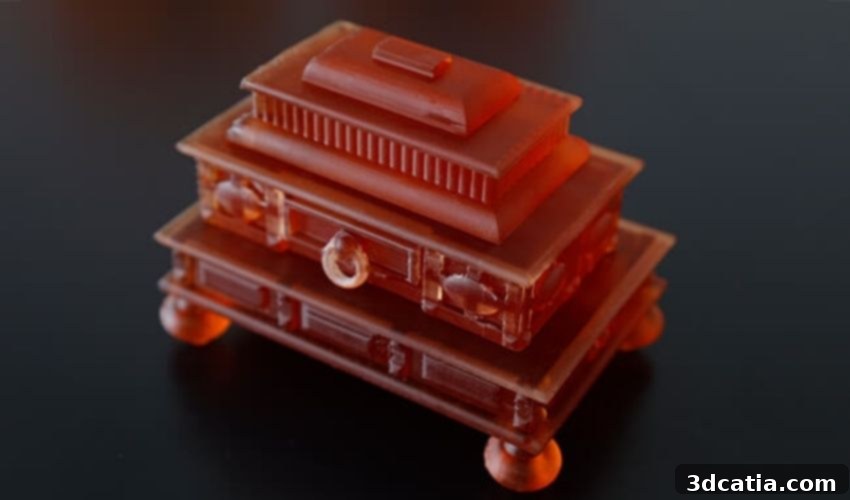
Jakub Pastuszak’s ambitious commissions for the Amber Museum extended beyond the captivating 1:6 scale model of the craftsman’s room. His portfolio for the museum also includes a highly detailed 3D model of an exquisite amber cabinet of curiosities, a historical Amber Craftsman’s House, and a truly remarkable representation of the famous 40-million-year-old lizard famously found encased in amber. These projects demanded a blend of artistic vision, historical accuracy, and advanced technological execution. Pastuszak meticulously realized these complex commissions through a collaborative effort with dedicated museum staff and expert 3D designers, ensuring every detail was faithfully recreated and brought to life. This multidisciplinary approach leveraged both historical knowledge and cutting-edge digital design expertise to achieve unparalleled results.
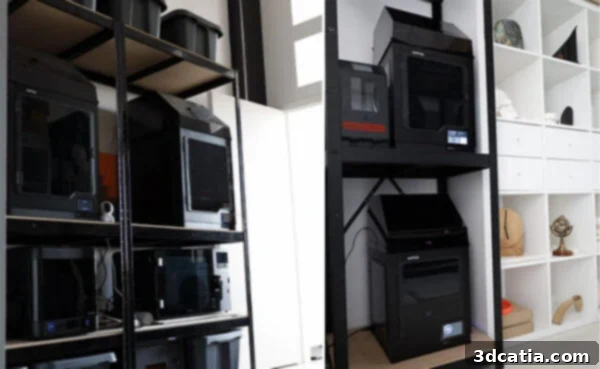
Fortuitously, Jakub Pastuszak’s personal workshop was exceptionally well-equipped with a comprehensive suite of Zortrax 3D printing equipment, providing him with the perfect ecosystem to tackle these diverse requirements. Zortrax, a prominent name in the additive manufacturing industry, offers a range of printers tailored for various applications, which proved instrumental in this project. For the larger-scale models, such as intricate furniture pieces and more substantial figures, the robust and reliable Zortrax LPD (Layer Plastic Deposition) and LPD Plus machines proved invaluable. These FDM (Fused Deposition Modeling) printers are renowned for their ability to produce durable parts with excellent mechanical properties, making them ideal for objects that require structural integrity and a significant build volume. Their reliability ensures consistent quality even for extended print jobs, crucial for museum-grade exhibits. In contrast, for objects demanding exceptional resolution and fine, intricate details – such as delicate sculptures, nuanced facial expressions, realistic hands, or the elaborate filigree of a chandelier – a Zortrax UV LCD printer was employed. This type of resin-based printer utilizes a high-resolution LCD screen to cure liquid resin layer by layer, enabling the creation of extraordinarily smooth surfaces and capturing the minutest features with stunning precision, essential for conveying the artistic nuance of the historical amber pieces. The careful selection of the right printer for each specific task maximized both efficiency and the aesthetic quality of the final output.
The entire creative process was a testament to meticulous planning and execution, reflecting a seamless blend of historical scholarship and modern engineering. The team embarked on an intensive study of the original 17th and 18th-century artifacts, meticulously examining historical documents, photographs, and, where possible, the actual pieces to capture every subtle detail and nuance of their design and construction. Following this rigorous research phase, expert 3D designers meticulously created precise digital models, translating the historical forms into a virtual environment with exact measurements and intricate textures. These digital blueprints then served as the foundation for the additive manufacturing process, where the Zortrax machines brought these virtual designs into physical existence. Once the parts were successfully printed using the specialized Zortrax machines, a crucial post-processing stage commenced. This involved careful removal of support structures, which are temporary elements printed to support overhangs and intricate geometries, followed by surface refinement using a Zortrax Apoller. The Apoller is a highly efficient device designed for chemical smoothing, which effectively polishes and smooths the surface of FDM 3D printed models. This advanced technique eliminates visible layer lines, creating a remarkably smooth and uniform finish that is often comparable to injection-molded parts. This multi-step workflow, from meticulous research and digital modeling to precise additive manufacturing and advanced post-processing, ensured that the final museum exhibits were not only historically accurate but also visually stunning and tactilely appealing, truly embodying the spirit of the original amber art.
The Broader Impact: How 3D Printing Transforms Museum Experiences
The successful integration of 3D printing at the Amber Museum in Gdańsk highlights a growing trend within cultural institutions globally. Beyond merely creating attractive displays, additive manufacturing offers a myriad of benefits that are fundamentally transforming how museums preserve, educate, and engage with their audiences. One of the most significant advantages lies in **conservation**. By creating high-fidelity replicas of fragile or invaluable artifacts, museums can protect original pieces from the wear and tear of continuous display and handling. These 3D printed copies allow visitors, researchers, and educators to interact physically with historically significant objects without risking damage to the irreplaceable originals, thereby extending the lifespan of precious heritage items for future generations. This is particularly vital for delicate amber pieces that are susceptible to environmental degradation or accidental damage.
Furthermore, 3D printing greatly enhances **accessibility**. For visitors with visual impairments, tactile 3D models provide an invaluable means of experiencing exhibits that would otherwise be inaccessible. These models can replicate textures, shapes, and sizes with incredible accuracy, offering a multi-sensory engagement that enriches the museum visit for a diverse audience, fostering a more inclusive environment. In the realm of **education**, 3D printed models serve as powerful pedagogical tools. Students can study and manipulate accurate replicas of historical tools, artifacts, or even complex biological specimens, fostering a deeper, more hands-on understanding of subjects. Educators can design interactive learning programs around these models, making history and science come alive in classrooms and museum workshops, moving beyond two-dimensional images or purely visual displays.
The **sustainability** aspect of 3D printing, as previously touched upon, is also a critical consideration for modern museums striving for ecological responsibility. The ability to produce items with minimal material waste, coupled with the potential to use recycled or biodegradable filaments, positions additive manufacturing as an environmentally conscious choice. This contrasts sharply with traditional fabrication methods that often involve significant material offcuts, substantial energy consumption, and the use of potentially harmful chemicals. By embracing 3D printing, museums not only innovate their exhibition design but also demonstrate a tangible commitment to ecological responsibility, resonating with a growing global awareness of environmental issues.
Finally, the use of such advanced technology positions museums like the Amber Museum as dynamic, forward-thinking institutions. It showcases their willingness to embrace innovation, blend historical narratives with contemporary tools, and continuously seek new ways to tell stories and inspire awe. This progressive approach helps attract younger generations and positions cultural institutions at the forefront of technological adoption. The collaboration between a visionary industrial designer like Jakub Pastuszak and a culturally rich institution, supported by leading 3D printing technology, demonstrates a powerful synergy that promises to redefine the landscape of museum exhibitions for years to come, setting a new standard for engaging and educational cultural experiences.
For more detailed insights into the intricate workflow and creative process of how 3D printing was employed by Jakub Pastuszak for the museum’s stunning installations, further information can be found by clicking HERE.
What are your thoughts on Jakub Pastuszak’s innovative use of 3D printing to breathe new life into museum exhibits? We invite you to share your perspectives and engage in the conversation! Let us know in a comment below or connect with us on our Facebook and Twitter pages. Don’t forget to sign up for our free weekly newsletter to receive all the latest news and developments in the world of 3D printing directly in your inbox!