
Cutting-Edge 3D Printing Innovations: A Dive into Aviation, Software, and Robotics
The world of additive manufacturing continues to evolve at an astonishing pace, pushing the boundaries of what’s possible across numerous industries. This week, we bring you a compelling collection of the top five videos showcasing groundbreaking advancements from leading companies and innovative researchers. From optimizing aircraft maintenance with lightweight components to revolutionizing industrial production workflows and even deploying drone armies for humanitarian aid, these developments underscore the transformative power of 3D printing. Each video offers a unique glimpse into the future of manufacturing, highlighting new processes, materials, and applications that promise to reshape our technological landscape. Prepare to explore the latest trends and discover how these pioneers are leveraging 3D printing to create more efficient, sustainable, and impactful solutions. Don’t forget to check back every Sunday for a fresh installment of our Top 5 Videos, keeping you informed on the dynamic world of 3D printing innovation.
1 – Emirates Pioneers 3D Printing for Enhanced Aircraft Components
Emirates, a globally recognized and influential airline particularly prominent in the Middle East but operating worldwide, is making significant strides in integrating advanced manufacturing techniques into its operations. This featured video provides an insightful look into how Emirates is strategically employing 3D printing to produce an increasing number of aircraft parts. Their journey began with smaller, non-critical components, such as air grills, utilizing Selective Laser Sintering (SLS) technology. SLS is an additive manufacturing process that uses a high-powered laser to selectively fuse small particles of polymer powder into a desired 3D structure. This method is ideal for producing durable and complex parts, perfectly suited for the rigorous demands of aviation. The initial success with these smaller parts has paved the way for ambitious plans: Emirates intends to expand its 3D printing capabilities to manufacture virtually every part of the plane’s cabin. This strategic adoption of additive manufacturing offers a multitude of benefits, including significant weight reduction for fuel efficiency, rapid prototyping and production of customized parts, streamlined supply chains, and the ability to quickly replace components as needed. By bringing manufacturing in-house or closer to their maintenance hubs, Emirates can reduce lead times, minimize inventory, and ultimately enhance operational efficiency and passenger safety. This move positions Emirates at the forefront of aviation innovation, demonstrating a strong commitment to leveraging cutting-edge technology for future air travel.
2 – Sculpteo Introduces Fabpilot: Cloud-Based 3D Printing Workflow Management
Sculpteo, a prominent name in the additive manufacturing service sector, has unveiled Fabpilot, its revolutionary new cloud-based 3D printing software designed to streamline and optimize production workflows. Fabpilot represents a significant leap forward in managing complex additive manufacturing operations, specifically tailored for use in production centers, laboratories, and bustling 3D printing bureaus. The software addresses critical pain points in the additive manufacturing process, starting from the initial design phase all the way to final production. It empowers users with advanced tools for effortlessly uploading and repairing CAD files, ensuring print-readiness and minimizing errors. Furthermore, Fabpilot offers robust capabilities for analyzing and optimizing projects, allowing for smarter material usage, improved print quality, and enhanced efficiency. One of its standout features is its comprehensive compatibility across all major 3D manufacturing technologies, providing a unified platform regardless of the specific printing method or machine being used. Beyond technical optimization, Fabpilot fosters a collaborative environment, enabling multiple users to work concurrently on projects, make real-time edits, and share insights seamlessly. This collaborative functionality is crucial for large teams and distributed operations, enhancing communication and accelerating project completion. By centralizing data and processes in the cloud, Fabpilot offers unparalleled accessibility, scalability, and data security, making it an indispensable tool for any organization looking to maximize the potential of its 3D printing production.
3 – GE Aviation’s Commitment to Additive Manufacturing Innovation
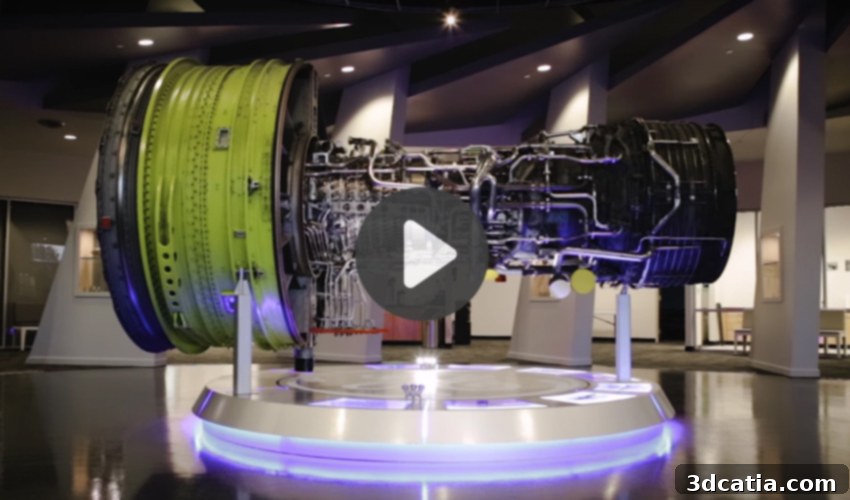
This captivating video from GE, while devoid of spoken narration or overt advertising, powerfully showcases the sophisticated world of GE Aviation’s additive technologies laboratory. It’s a visual symphony of precision engineering and groundbreaking innovation, offering a rare glimpse into the complex manufacturing processes that are redefining aerospace components. Viewers are treated to a montage of intricate operations, where advanced 3D printers meticulously build highly complex parts layer by layer. The video emphasizes the precision, control, and intricate geometries achievable through additive manufacturing, which are often impossible with traditional methods. These parts, ranging from fuel nozzles to turbine blades, are designed to be lighter, stronger, and more fuel-efficient, directly contributing to advancements in aircraft performance and sustainability. GE has been a trailblazer in the 3D printing arena, particularly within the aerospace sector, investing heavily in research, development, and the scaling of additive production. Their commitment extends beyond just creating parts; it encompasses developing new materials, optimizing processes, and fostering an ecosystem of additive expertise. The visual narrative of the video highlights the incredible detail and robust nature of the components being fabricated, demonstrating the transformative impact of additive manufacturing on critical aerospace applications. Given their relentless pursuit of innovation, we anticipate even more remarkable breakthroughs from GE Aviation in the coming years, further solidifying their position as a leader in industrial 3D printing.
4 – Renishaw’s Quad Laser System Revolutionizes Metal 3D Printing Speed
Renishaw, a distinguished UK-based engineering and scientific technology company, has introduced a significant innovation in metal additive manufacturing with its new Quad Laser system. This groundbreaking technology is integrated into their state-of-the-art 500Q printer, setting new benchmarks for speed and productivity in the metal 3D printing sector. The core of this system lies in its ability to utilize four high-powered lasers that operate concurrently. Unlike traditional metal 3D printers that typically use one or two lasers, the 500Q’s four lasers work simultaneously to fuse metal powder, dramatically accelerating the build process. This multi-laser approach means that larger or multiple parts can be printed in a fraction of the time, making industrial-scale production more viable and cost-effective. The simultaneous operation of the lasers not only boosts speed but also ensures consistent quality across the build platform, which is crucial for manufacturing critical components. This enhanced capability allows for the rapid creation of large, complex models with intricate geometries, opening up new possibilities for industries requiring high-performance metal parts, such as aerospace, automotive, and medical. Furthermore, Renishaw claims that the 500Q machine is designed for superior powder efficiency, reducing waste and contributing to lower operational costs. This focus on both speed and material efficiency positions Renishaw’s Quad Laser system as a game-changer, addressing key barriers to the wider adoption of metal additive manufacturing for high-volume production.
5 – Drones That 3D Print Mid-Flight: A Vision for Rapid Humanitarian Aid
Talib Alhinai, a remarkable innovator recognized by MIT Technology Review’s ‘Innovators Under 35’ list, is spearheading a truly revolutionary project: developing drones capable of 3D printing structures while airborne. This isn’t just about creating sophisticated unmanned aerial vehicles; it’s about deploying a transformative technology for critical humanitarian applications. Alhinai’s ambitious vision with these specialized drones is to swiftly construct temporary shelters for individuals and communities devastated by natural disasters. Imagine a scenario where traditional construction is impossible or too slow; these aerial builders could arrive on the scene and rapidly deploy essential infrastructure. His company, Buildrone, is diligently working to realize this concept, aiming to create swarms of these autonomous drones that can collaborate to build functional shelters in an exceptionally short timeframe. The technical challenges are immense, involving precise navigation, stable printing platforms, effective material delivery systems, and sophisticated swarm intelligence. However, the potential impact is profound. By providing immediate, temporary housing, these 3D printing drones could significantly improve post-disaster response, offering safety and dignity to those in dire need. Beyond disaster relief, this innovative technology could find applications in remote construction, infrastructure repair, and even exploration in hazardous environments, showcasing the boundless potential when cutting-edge robotics meets additive manufacturing for the greater good.
The innovations highlighted in this week’s Top 5 Videos underscore the dynamic and ever-expanding capabilities of 3D printing technology. From enhancing the safety and efficiency of global airlines to optimizing industrial production lines and even revolutionizing humanitarian response with autonomous drones, additive manufacturing is proving to be a cornerstone of modern technological advancement. These developments are not just incremental improvements; they represent paradigm shifts that promise to unlock new possibilities and address some of the world’s most pressing challenges. Stay connected with the rapid evolution of this exciting field by following our Facebook and Twitter pages! For an even deeper dive into the latest news, expert analyses, and exclusive insights in the world of 3D printing, make sure to sign up for our free weekly Newsletter. Get all the essential updates delivered straight to your inbox and stay ahead of the curve in additive manufacturing!