
Revolutionizing Classical Music: The Ottawa Symphony Orchestra’s Journey with 3D Printed Instruments
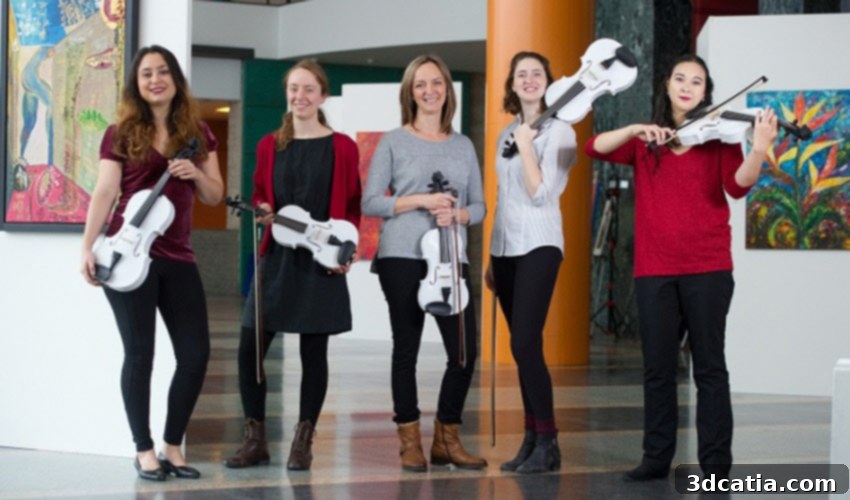
In a groundbreaking move that resonates deeply within the world of classical music and technological innovation, the Ottawa Symphony Orchestra (OSO) has officially incorporated 3D printed string instruments into its ensemble. This bold initiative is not merely a novelty; it represents a forward-thinking project designed to explore and demonstrate how cutting-edge technologies like additive manufacturing can unlock new sonic landscapes and instrument designs. While acknowledging that these plastic-based, 3D printed instruments may not replicate the exact resonance and rich acoustic qualities of their traditional wooden counterparts, they have nonetheless delivered remarkably promising and satisfying results for the musicians, opening up a compelling dialogue about the future of orchestral performance.
This exciting application further solidifies the increasingly intertwined relationship between music and 3D technologies. We’ve witnessed pioneering advancements in this space previously, such as the innovative 3DVarius, celebrated as the world’s first electric 3D printed violin, and the strikingly impressive, avant-garde designs of MONAD Studio’s instruments. Additive manufacturing offers musicians an unparalleled degree of personalization, allowing for instruments that are not only highly complex and aesthetically unique but also maintain a commendable level of sound quality. While the sound profile is distinct and may be perceived as slightly different from established traditional expectations, it introduces a fresh sonic palette that challenges conventional norms and invites artistic exploration.
The Harmonious Fusion of Technology and Tradition
The Ottawa Symphony Orchestra’s decision to embrace 3D printed instruments marks a significant moment in the evolution of classical music. It challenges the long-held traditions of instrument craftsmanship while simultaneously pushing the boundaries of what is acoustically and aesthetically possible. This venture highlights a growing trend where classical arts are actively seeking ways to integrate modern technologies, not just for convenience, but as a means to foster creativity, expand accessibility, and engage new audiences. The project serves as a powerful testament to the idea that innovation doesn’t have to replace tradition but can instead augment and enrich it, creating a vibrant future for musical expression.
The versatility of 3D printing allows for the creation of intricate internal structures and external geometries that would be exceedingly difficult, if not impossible, to achieve through traditional woodworking methods. This design freedom opens up avenues for acoustic experimentation, potentially leading to instruments with unique tonal characteristics. Beyond the purely functional aspects, the aesthetic possibilities are boundless, enabling designers and musicians to collaborate on instruments that are visually as captivating as they are sonically. This blend of form and function, driven by technology, is a cornerstone of the OSO’s innovative spirit.
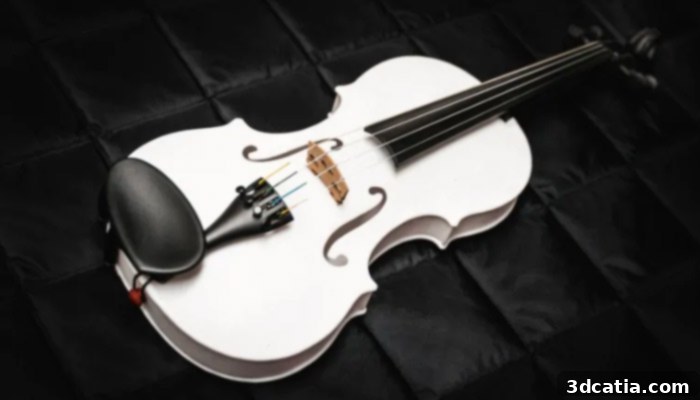
Photo credits: Shawn Peters
From Digital Blueprint to Tangible Sound: The Creation Process
The specific 3D printed instruments integrated by the Ottawa Symphony Orchestra include a diverse selection of string instruments: two violas, four violins, and two da spalla cellos. This ambitious project was brought to life through a collaborative effort with Creadditive, a Gatineau-based 3D printing service renowned for its specialization in heritage restoration and additive manufacturing expertise. The intricate process of transforming an existing wooden instrument into a printable 3D model was spearheaded by Laurent Lacombe, co-founder of Creadditive, who meticulously detailed their methodology.
Lacombe explained that the journey began with a precise CT scan of an original Charline Dequincey violin. This advanced imaging technique allowed for the capture of highly detailed internal and external geometries, providing a comprehensive two-dimensional rendition of the instrument. This 2D data then served as the foundation for conversion into a sophisticated printable 3D model, a crucial step that bridges the gap between traditional craftsmanship and digital manufacturing. The digital model was then optimized for additive manufacturing, taking into account the specific properties of the chosen plastic material and the capabilities of the 3D printers.
The instruments were not printed as single, monolithic objects but rather in multiple distinct pieces. This modular approach facilitated the printing process, allowing for greater detail, fewer support structures, and the ability to print larger components than a single-build volume might allow. Following the successful printing of all components, a meticulous assembly phase commenced. This was not the final step, however; significant post-processing and refinement were necessary. For instance, the body of the violin had to undergo modifications to ensure it was lightweight enough to avoid fatiguing the arms of the players during extended performances, demonstrating a practical consideration for ergonomics alongside acoustic performance.
A Nuanced Difference in Sound: Innovation Over Imitation
Laurent Lacombe candidly acknowledged the discernible difference in sound quality between the time-honored traditional wooden versions and their 3D printed plastic alternatives. However, he emphasized that the fundamental objective of this pioneering experiment was never to perfectly mimic the acoustic output of wooden instruments. Instead, the core purpose was to explore the uncharted capabilities that new technologies could introduce to traditional musical practices. This philosophical approach underscores a commitment to innovation rather than mere replication, seeking to understand what new sonic textures and expressive potentials could emerge from this technological marriage.
Lacombe remains realistically skeptical that 3D printing can fully replace the artisanal care, intricate skill, and deep-seated tradition embedded in centuries of instrument craftsmanship. The unique characteristics of wood, its cellular structure, and its aging process contribute to a depth and complexity of sound that is difficult to replicate with synthetic materials. Nevertheless, he firmly believes that this additive manufacturing technique could serve as an invaluable starting point for aspiring musicians. For those eager to embark on the journey of learning to play the violin or other string instruments, 3D printed versions could offer a more accessible and affordable entry point, democratizing access to musical education and performance.
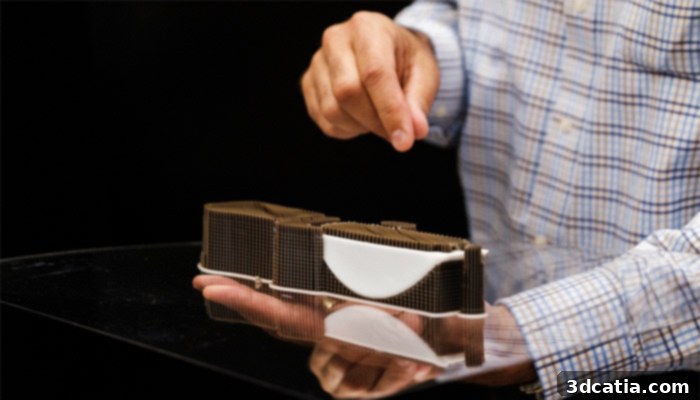
One of the pieces of a violin printed in 3D with print media (photo credits: Ottawa Symphony Orchestra)
Unlocking Unprecedented Customization and Accessibility
Beyond the immediate implications for sound and construction, 3D technologies provide an unparalleled level of customization, a feat largely unattainable with conventional manufacturing methods. This transformative capability was eloquently highlighted by Franck Defalco, Manager of Canada Makes, a prominent Canadian additive manufacturing network. Defalco articulated the profound impact of this personalized approach: “Instead of making just small, medium and large, you can make it exactly the size a person needs. In the same way, a larger person could have a violin made that’s slightly larger.”
This ability to tailor instruments precisely to an individual’s physical dimensions is revolutionary. It addresses ergonomic challenges, particularly for younger players or those with unique physical requirements, potentially reducing discomfort and enhancing playability. Imagine a child learning the violin with an instrument perfectly scaled to their arm length, or an adult with specific hand dimensions receiving a custom-fit cello neck. Such precision can significantly improve posture, reduce strain, and ultimately foster a more enjoyable and effective learning experience, removing physical barriers that might otherwise discourage aspiring musicians.
The “3D String Theory” Concert: A Historic Debut
The culmination of this innovative project will be a historic concert where the Ottawa Symphony Orchestra will perform for the very first time with its new suite of 3D printed instruments. This landmark event is scheduled to take place on November 4th, at the City Hall of Ottawa. Aptly named “3D String Theory,” the concert promises to be more than just a musical performance; it will be a public demonstration of the fusion between classical artistry and modern technological prowess. Attendees will have the unique opportunity to witness and hear firsthand the distinctive sounds produced by these cutting-edge instruments.
This concert represents a significant milestone, not only for the Ottawa Symphony Orchestra but for the global music community. It showcases a forward-thinking approach that embraces experimentation and dialogue, pushing the boundaries of orchestral performance. The “3D String Theory” concert will undoubtedly spark further conversations about the role of technology in music, the definition of an instrument, and the potential for new artistic expressions. It invites audiences to consider how tradition can be respectfully challenged and creatively expanded through innovation. More information about this extraordinary event can be found on the official website of the orchestra HERE.
Looking Ahead: The Future Resonates with Innovation
The integration of 3D printed instruments by the Ottawa Symphony Orchestra is more than just a fleeting experiment; it is a profound statement about the future trajectory of music. This initiative opens up countless possibilities for music education, instrument design, and performance practices. Imagine music schools utilizing durable, customizable 3D printed instruments to make learning more accessible and affordable for a wider demographic. Consider the potential for composers to write pieces specifically designed to harness the unique sonic characteristics of these new instruments, leading to entirely new genres and expressions.
Furthermore, the project highlights the ongoing evolution of additive manufacturing itself, demonstrating its increasing viability for producing functional, high-performance objects in fields previously dominated by traditional craftsmanship. The collaboration between the OSO and Creadditive sets a precedent for how artistic institutions and technological companies can work together to foster innovation and enrich cultural experiences. As technology continues to advance, we can anticipate even more sophisticated materials and printing techniques that will further bridge the gap between traditional and digitally fabricated instruments, promising an exciting and harmonious future for music lovers and creators alike.
What are your thoughts on the Ottawa Symphony Orchestra’s pioneering venture with 3D printed instruments? Do you envision a future where such technologies become commonplace in classical ensembles, or do you believe traditional craftsmanship will always hold an irreplaceable position? We invite you to share your perspectives and engage in the conversation by leaving a comment below, or by connecting with us on our Facebook and Twitter pages! Don’t forget to sign up for our free weekly Newsletter, ensuring you receive all the latest news and insights in the world of 3D printing delivered directly to your inbox!