Digital Gastronomy: Revolutionizing Cuisine with 3D Printing and Advanced Culinary Technology
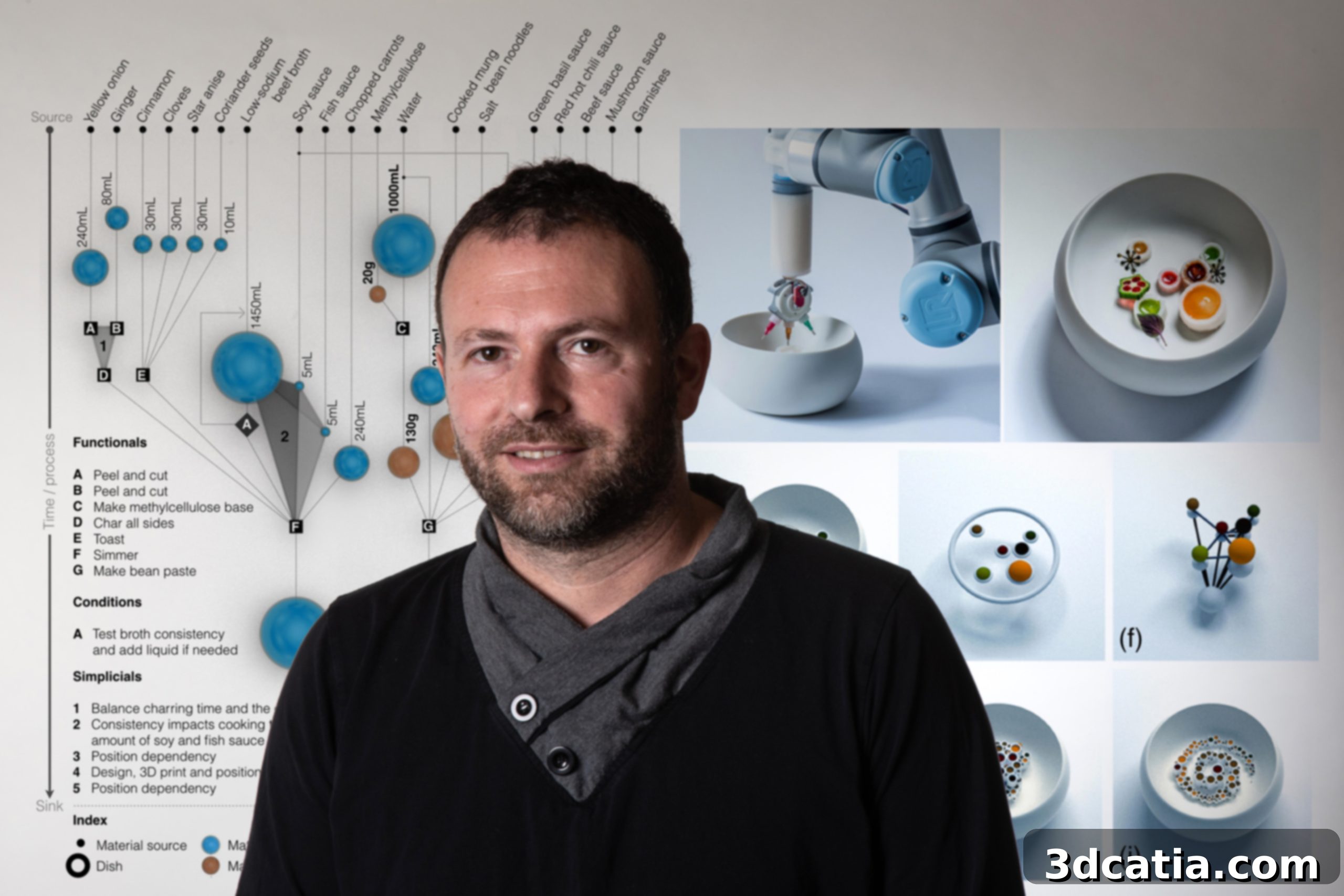
In an era where technology constantly reshapes our lives, the culinary world is no exception. Digital Gastronomy emerges as a pioneering culinary vision, dedicated to crafting innovative hybrid solutions by seamlessly blending traditional cooking methodologies with cutting-edge computational capabilities. At the forefront of this exciting field is researcher Amit Zoran, a pivotal figure in the Digital Gastronomy project. Zoran, leading the esteemed Hybrid Lab at the Hebrew University of Jerusalem, shared invaluable insights into his groundbreaking research. His work primarily focuses on the ingenious deployment of digital fabrication instruments within conventional kitchens, paving the way for the creation of these revolutionary hybrid recipes. We were granted the unique opportunity to engage with him, delving deeper into his profound vision and exploring his perspectives on where and how this transformative technology is poised for widespread adoption in the coming years.
3DN: Could you present yourself and your link with 3D printing?

“I am a Senior Lecturer at the School of Engineering and Computer Science at The Hebrew University of Jerusalem (HUJI), and I have the privilege of directing the Hybrid Lab at HUJI. In my lab, my students and I dedicate our efforts to advanced research in
digital design, craft, fabrication, and Human-Computer Interaction (HCI). My academic journey has been quite interdisciplinary, commencing with a B.Sc. in Communication System Engineering from Ben-Gurion University, Israel, followed by a M.Des. in product design from Bezalel. I then pursued and obtained both a Ph.D. and a M.S. in Media Arts and Science from the renowned MIT Media Lab. This diverse educational background has uniquely prepared me to explore the convergence of technology, design, and human experience, which is at the heart of Digital Gastronomy.
In the Hybrid Lab, our core mission revolves around studying the design and practical implementation of hybrid solutions. This involves a fascinating merger of contemporary digital design and advanced fabrication capabilities with established, traditional disciplines. Beyond the technological aspects, we also immerse ourselves in the ethnographic dimension of making and creativity. We keenly investigate how time-honored craft practices, with their inherent wisdom and techniques, can significantly inform and contribute to novel design and fabrication research. The ultimate goal is to empower today’s creative practices, giving them new tools and perspectives. Our lab is comprehensively equipped with state-of-the-art digital design and fabrication tools and materials, alongside a dedicated craft studio, sophisticated tracking devices, and a fully operational electronic prototyping workshop. Given this setup and our research focus, it’s clear that 3D printing and digital fabrication, in their broadest sense, are not just components but central, indispensable technologies within my research endeavors.”
3DN: How did your culinary vision of merging digital fabrication instruments and traditional cooking come about?
“My culinary vision stems from a deep concern for the critical challenges facing global food systems today. The urgent need to feed an ever-growing world population under increasingly unstable environmental conditions represents one of humanity’s most pressing issues. Many experts, myself included, firmly believe that future food systems will inevitably have to lean heavily on computational technologies to ensure efficiency, enhance control, optimize processes, minimize food waste, and allow for the precise tailoring of personal diets. The implications for sustainability and personalized nutrition are immense, and digital solutions offer a powerful pathway forward.
Having worked extensively in the field of hybrid craft—which fundamentally involves merging digital and traditional making practices across various domains—I have always found myself profoundly attracted to cooking. I view cooking not just as a necessity, but as a unique and intricate form of craft, rich in tradition, creativity, and sensory experience. Therefore, it was a very natural progression for me to shift my research interest towards the captivating domain of Digital Gastronomy. Within this field, we pose a fundamental question: how can a chef fully leverage and enjoy the immense creative potential that digital technologies can introduce to the established art of traditional cooking? It’s about empowering culinary artists with new expressive capabilities, enabling them to explore textures, shapes, and flavors in ways previously unimaginable, pushing the boundaries of what food can be.”
Photo Credits: Ariel Bezaleli Mizrahi, Alexander (Zoonder) Lachnish and Sivan Moloko Roshianu
3DN: What are you able to do with digital fabrication in the kitchen?
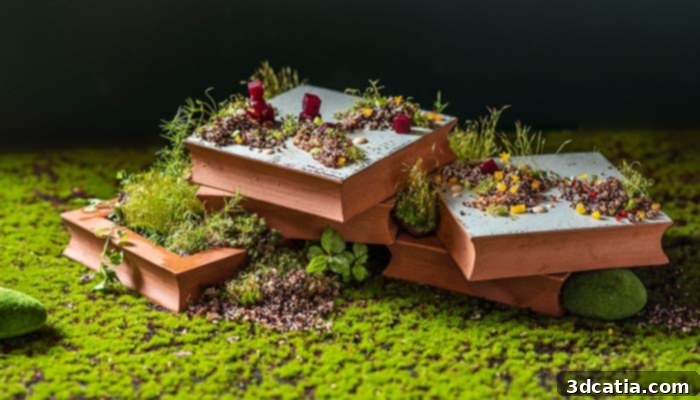
“Currently, our research is keenly focused on a very specific and impactful contribution: the development of innovative tools—comprising both sophisticated software and advanced hardware—along with novel recipes that compellingly demonstrate the creative power computers can bring to the act of cooking. Our primary aim is to equip cooks with unprecedented capabilities to control flavor in a discrete, local, and incredibly precise manner. Imagine being able to place specific flavor profiles exactly where you want them, or to create complex flavor gradients within a single bite.
To draw an analogy, think about the revolution that Computer-Generated Imagery (CGI) and advanced image processing introduced to traditional photography. When we transitioned from the analog medium to the digital realm with digital cameras, the concept of pixels, and powerful editing software, photographers gained an unparalleled level of control over every aspect of an image. They could manipulate light, color, and composition with exactitude. Digital Gastronomy seeks to achieve a similar paradigm shift for food. By integrating digital fabrication, we are moving beyond traditional methods that often offer only macroscopic control, towards a future where chefs can sculpt flavor, texture, and nutritional content at a microscopic level, opening up a boundless spectrum of culinary innovation and personalized eating experiences.”
3DN: Can you tell us more about the technology and software you use?
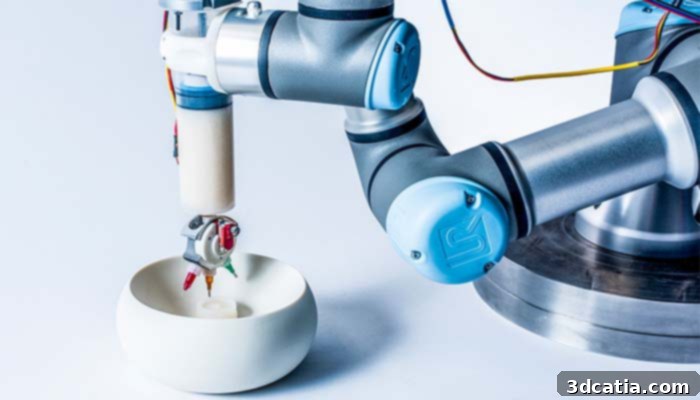
“Our technological journey in the lab has evolved significantly. Initially, we started our experiments with a modified version of a Printrbot 3D printer, which we adapted with a specialized paste extruder. This allowed us to print with various food-grade pastes and explore basic shape creation. However, to achieve greater precision, versatility, and scalability, we have since transitioned to utilizing a state-of-the-art Universal robot-arm. This robotic system works in conjunction with a custom-developed extruder that features a changeable nozzle diameter, providing unparalleled control over deposition and material flow, crucial for intricate food designs.
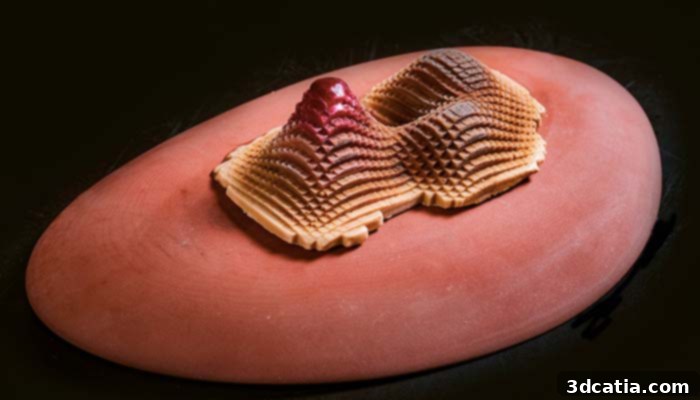
Beyond 3D printing, our lab employs a suite of other advanced digital fabrication techniques tailored for culinary applications. We actively work with a laser cutting machine, which we harness for precise laser-induced heating. This capability allows us to achieve controlled browning, caramelization, or even localized cooking effects with incredible accuracy, opening up new possibilities for texture and flavor development. We also integrate CNC milling into our processes, primarily for creating highly customized and complex molds. A particularly exciting development is our custom-designed ‘programmable’ mold technology, which allows us to dynamically change the shape of the casting mold. This feature is especially beneficial for crafting innovative and visually stunning desserts, offering chefs the ability to rapidly iterate on design and create bespoke culinary forms.
On the software front, we are actively developing proprietary control software and a specialized Graphical User Interface (GUI). This bespoke software is designed to be intuitive and powerful, enabling chefs to digitally generate and customize the intricate shapes of 3D printed noodles, for instance, or other complex food structures. The goal is to provide a user-friendly interface that translates complex digital design parameters into tangible culinary creations, making advanced fabrication accessible to those without extensive engineering backgrounds.”
Photo Credits: Ariel Bezaleli Mizrahi, Alexander (Zoonder) Lachnish and Sivan Moloko Roshianu
3DN: Where do you think this technology would likely be integrated?
“Our initial projections envision the seamless integration of this advanced culinary technology into the realm of elite cuisine and specialized restaurants. These establishments, often characterized by their innovative spirit, willingness to experiment, and pursuit of unique dining experiences, are ideal environments for pioneering such sophisticated tools. High-end chefs and restaurateurs are typically at the forefront of adopting new techniques that can elevate their artistry, provide a competitive edge, and create memorable sensory journeys for their patrons. The precision, customization, and novel aesthetic possibilities offered by digital gastronomy align perfectly with the demands and ambitions of fine dining.
However, our long-term aspiration extends far beyond the confines of exclusive dining. We are actively aiming for a much broader integration of digital gastronomy into domestic kitchens, albeit this will likely occur at a later stage. For this widespread adoption to happen, factors such as cost reduction, simplification of interfaces, development of user-friendly recipes, and increased awareness of its benefits will be crucial. Imagine a future where home cooks can effortlessly personalize meals for dietary needs, explore creative food designs, and minimize waste using intuitive digital culinary tools. This shift from haute cuisine to everyday cooking is where the true revolution of digital gastronomy will ultimately unfold, making precision cooking and culinary innovation accessible to everyone.”
3DN: What are the biggest challenges of trying to integrate digital fabrication instruments in cooking?
“Integrating digital fabrication instruments into the kitchen environment presents several significant hurdles that we are actively working to address. Firstly, there is currently an insufficient supply of digital cooking tools that are simultaneously flexible, reliable, and fast enough to meet the dynamic demands of a professional or even a home kitchen. Traditional cooking often involves rapid changes and intuitive adjustments; digital tools need to match this agility while also offering robust and consistent performance.
Secondly, the cost factor is a substantial barrier. Advanced robotic arms, for example, which offer the precision and dexterity required for intricate food manipulation, are currently quite expensive. For widespread adoption, especially in domestic settings, these costs will need to decrease significantly to become economically viable for the average consumer or even many smaller restaurants.
Thirdly, the existing software landscape poses a major challenge. Current CAD (computer-aided design) tools, while powerful for engineering and industrial design, are simply not sufficient or intuitive enough for the unique requirements of culinary design. Food materials have complex properties – they are often viscoelastic, temperature-sensitive, and undergo chemical changes during cooking. An ideal ‘culinary CAD’ software would need to account for these nuances, allowing chefs to design not just shapes, but also textures, flavor profiles, and even nutritional compositions, with an interface tailored to culinary thinking rather than mechanical engineering.
Finally, and perhaps most crucially, there is the challenge related to gastronomy culture itself. Food is deeply rooted in tradition, sensory experience, and human connection. If we fail to develop truly meaningful methods, innovative recipes, and appealing dishes that resonate with both chefs and consumers, this technology, no matter how advanced, will simply not be adopted. The integration must feel natural, enhance the culinary experience, and offer clear, tangible benefits that go beyond mere novelty. It’s not just about what technology can do, but what it can create that people genuinely desire to eat and experience. This cultural aspect is paramount to the success of Digital Gastronomy.”
Photo Credits: Ariel Bezaleli Mizrahi, Alexander (Zoonder) Lachnish and Sivan Moloko Roshianu
3DN: Where is your research headed now?
“Hopefully, our research is headed towards achieving broader exposure for Digital Gastronomy. We aspire to ignite curiosity and enthusiasm within both the culinary world and the wider public. A significant milestone we’re working towards is the creation of a comprehensive digital gastronomy cooking book. This book would serve as a practical guide and an inspirational resource, showcasing the capabilities of these new technologies, sharing innovative recipes, and illustrating the immense creative possibilities that emerge when digital fabrication meets the art of cooking. It’s about democratizing this knowledge and inviting more people to explore this exciting frontier of food.”
3DN: Any last words for our readers?
“Bon-appetit!”
The world of Digital Gastronomy, as presented by Amit Zoran, promises a future where culinary artistry and technological innovation converge to create unprecedented dining experiences. From revolutionizing food production efficiency to enabling highly personalized diets and pushing the boundaries of flavor and texture, the potential is vast. This evolving field challenges traditional notions of cooking and eating, inviting us to imagine a more sustainable, creative, and customized approach to food. You can find more comprehensive information about Digital Gastronomy and the groundbreaking work of Amit Zoran’s Hybrid Lab HERE. This exploration of food innovation is not an isolated phenomenon; we have frequently discussed the exciting possibilities of 3D printing being combined in the kitchen in our dedicated guide to 3D printed food.
What are your thoughts on Digital Gastronomy and the future of food? We invite you to share your perspectives and engage in the conversation! Let us know your opinions in a comment below or join the discussion on our Facebook and Twitter pages. To stay informed about all the latest advancements in 3D printing and the exciting world of culinary technology, don’t forget to sign up for our free weekly Newsletter, delivering fresh insights straight to your inbox!