
Nike FlyWeb: Revolutionizing Athletic Apparel with Cutting-Edge 3D Printing Innovation
On June 12, Nike unveiled a groundbreaking innovation set to redefine high-performance sportswear: FlyWeb, a pioneering 3D-printed material. This cutting-edge development is not just another product; it represents a significant leap forward in athletic apparel design, born from three years of intensive research and development by Nike’s esteemed Innovation team. Their mission was clear: to craft a material that seamlessly integrates superior support, unparalleled lightness, and exceptional breathability, crucial elements for elite athletes pushing the boundaries of human performance. The world will get its first glimpse of FlyWeb in action when Faith Kipyegon, the three-time Olympic champion and 1,500-meter world record holder, dons it during her historic attempt to become the first woman to break the elusive 4-minute mile barrier. This moment will not only be a testament to Kipyegon’s athletic prowess but also to Nike’s relentless pursuit of innovation through advanced manufacturing techniques.
While 3D printing might seem like a futuristic concept for apparel, it is by no means new territory for Nike. The athletic giant has long harnessed the power of additive manufacturing, primarily utilizing it as an invaluable footwear customization tool. From prototyping intricate sole designs to creating personalized fits for individual athletes, 3D printing has been instrumental in refining Nike’s shoe offerings. However, with FlyWeb, Nike is venturing into entirely new territory, applying this advanced technology to an article of clothing for the very first time. This marks a pivotal moment, as FlyWeb heralds the dawn of 3D-printed materials and technology for high-performance sportswear within the brand, fundamentally altering how athletic garments are conceived, designed, and manufactured.

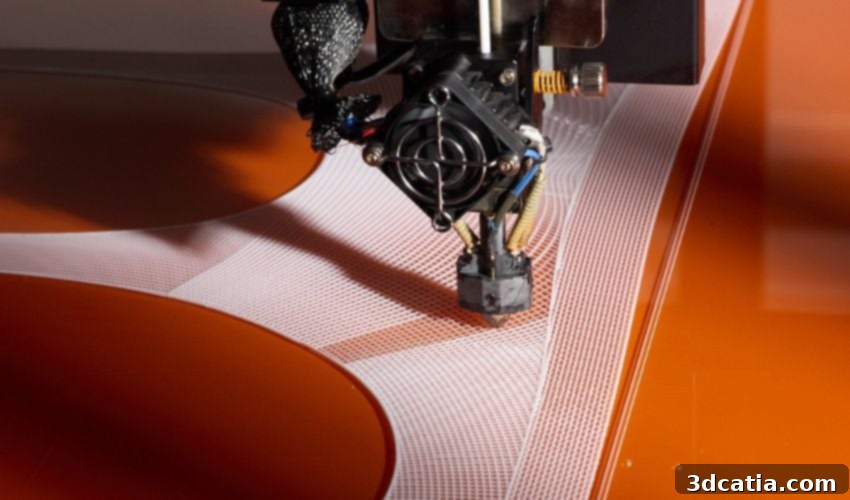
Nike’s new material, FlyWeb, is innovatively made of TPU, showcasing advanced 3D printing capabilities.
The Science Behind FlyWeb: How 3D Printing Elevates Nike’s New Material
At the heart of FlyWeb’s revolutionary design lies TPU (Thermoplastic Polyurethane), a highly versatile polymer renowned for its exceptional elastic properties. Through a sophisticated extrusion 3D printing process, this material is meticulously molded into intricate, seamless structures, allowing for an unprecedented level of control over garment construction. The decision to debut FlyWeb in a sports bra was a strategic one, highlighting the product’s potential to address long-standing challenges in athletic apparel. Despite its ubiquitous presence in a woman’s wardrobe, the fundamental design and material science of bras have seen surprisingly little evolution over decades. Traditional bras often rely on multiple fabric layers, seams, and rigid components, which can restrict movement, trap heat, and cause discomfort during high-intensity activities.
Nike’s approach with FlyWeb leverages advanced computational design to transcend these limitations. This powerful design methodology enables the creation of a dynamic 3D pattern where density and elasticity are precisely varied across different areas of the body. Imagine a digital blueprint that maps out the exact requirements for support in key zones, such as under the bust, and increased flexibility and breathability in others, like the chest or back. This data-driven approach ensures an exact, adaptive fit and targeted support precisely where an athlete needs it most, eliminating guesswork and providing personalized comfort. Furthermore, the resulting FlyWeb fabric is incredibly thin yet robust, engineered to offer an unmatched level of breathability. Janett Nichol, Nike’s Vice President of Innovation, eloquently captures this experience: “You can actually feel the air on your chest. Most women have never experienced that while running. We don’t even think about it because it’s just not something we’ve ever expected to feel.” This sensation signifies a paradigm shift in performance wear, moving beyond mere functionality to enhance the athlete’s sensory experience and overall comfort.
Faith Kipyegon and the 4-Minute Mile: A Historic Debut for FlyWeb
The global stage for FlyWeb’s debut couldn’t be more fitting. Kenyan athlete Faith Kipyegon, a titan in middle-distance running, will wear a customized version of the FlyWeb bra during her monumental attempt to become the first woman in history to run a mile in under 4 minutes. This audacious feat, scheduled for June 26 in Paris, represents the pinnacle of athletic ambition and endurance. For such a high-stakes event, every fraction of a second, every ounce of comfort, and every element of performance enhancement counts. The FlyWeb bra is part of a meticulously curated ensemble crafted specifically for Kipyegon and this historic occasion. While the Nike Research Lab’s design team has also developed an aerodynamic Nike Fly Suit and ultralight Nike Victory Elite FK running shoes, the FlyWeb bra stands out as the sole garment where advanced 3D printing technology is directly applied, underscoring its unique contribution to her performance. This integrated approach demonstrates Nike’s commitment to holistic athlete support, where material science, biomechanics, and cutting-edge manufacturing converge.
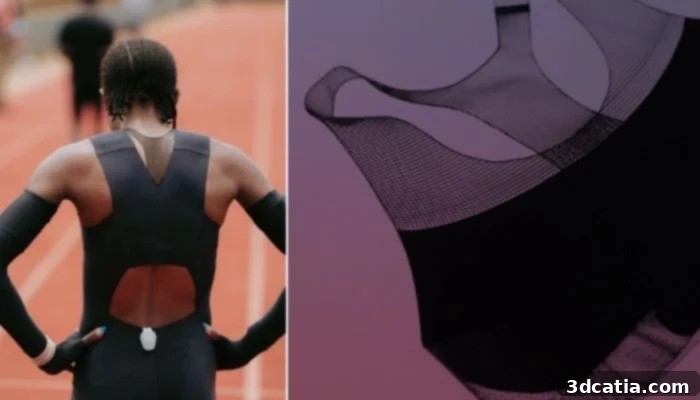
Athlete Faith Kipyegon will make history in her attempt to run a 4-minute mile, supported by Nike’s innovative 3D-printed FlyWeb bra.
Beyond Kipyegon: The Future of Sportswear with FlyWeb and 3D Printing
In the context of Kipyegon’s record attempt, the FlyWeb bra plays a pivotal role. Its inherent ability to minimize moisture accumulation, coupled with its extraordinarily light weight, makes it an indispensable component for optimizing performance, even in a race as short yet intense as a one-mile run. Preventing sweat buildup ensures consistent comfort and reduces chafing, while minimal weight reduces energy expenditure, allowing Kipyegon to dedicate every ounce of her effort to speed and endurance. However, the significance of FlyWeb extends far beyond this single event or garment. This innovative material and the underlying 3D printing methodology open the floodgates to a new generation of high-performance sportswear, promising to reshape the athletic apparel landscape for years to come.
The possibilities unlocked by FlyWeb are vast and transformative. The elimination of traditional seams, for instance, means no more chafing, enhanced comfort, and a smoother, more aerodynamic profile for athletes. The precise control over zone-specific design allows for hyper-localized support and ventilation, creating garments that adapt flawlessly to the athlete’s body and movement patterns. Imagine a running top with integrated cooling channels in high-sweat areas and targeted compression zones to support muscles, all seamlessly integrated into a single, cohesive structure. Furthermore, 3D printing facilitates on-demand manufacturing, presenting significant opportunities for personalization, waste reduction, and a more agile supply chain. This could lead to a future where athletic apparel is not only mass-produced but also custom-made to an athlete’s exact biometric data and performance needs, offering a truly bespoke experience.
Janett Nichol emphasizes the profound impact of this innovation: “This is a true unlock, not just for bras but for how we design and build high-performance apparel going forward. It opens the door to entirely new ideas for how athletes experience sport through what they wear.” FlyWeb represents a significant philosophical shift for Nike – from designing for generic body types to creating apparel that works in harmony with an individual athlete’s unique physiology. This precision engineering promises to enhance performance, reduce injury risk, and elevate the overall athletic experience, empowering athletes to reach new heights. As Nike continues to push the boundaries of materials science and additive manufacturing, the future of sportswear looks increasingly personalized, efficient, and performance-driven. Learn more about the material directly from Nike HERE.
What are your thoughts on Nike’s groundbreaking venture into 3D-printed sportswear? We invite you to share your insights and comments below, or join the conversation on our LinkedIn or Facebook pages! To stay ahead of the curve and receive the very latest 3D printing news directly in your inbox, don’t forget to subscribe to our free weekly Newsletter. You can also discover more about innovative 3D printing applications by exploring all our videos on our YouTube channel.
*All Photo Credits: Dan Vernon and Sofieke van Bilsen by Nike