
Navigating the Future of Manufacturing: A Deep Dive into the Pre-Sales Engineer Role in 3D Printing with Siemens’ Emilien Goetz
The additive manufacturing market is a vibrant and rapidly expanding ecosystem, offering a wide array of diverse job roles and professional profiles. From skilled CAD designers crafting intricate models to meticulous 3D printing technicians managing advanced machinery, and from strategic sales representatives to dedicated after-sales managers, the entire 3D printing value chain is rich with opportunity. Each stage of this innovative process demands a unique blend of specific skills, technical knowledge, and an adaptive mindset. Recognizing this intricate landscape, we are launching a dedicated series of articles designed to illuminate the various careers within additive manufacturing. Through insightful interviews with leading experts in the field, we aim to uncover the specifics of their roles, understand their day-to-day responsibilities, and gather invaluable advice for aspiring talents looking to enter this exciting market. To kick off this series, we had the distinct pleasure of speaking with Emilien Goetz, a Pre-Sales Engineer at Siemens. His position is particularly pivotal within the company, as he acts as the essential bridge between customer needs and the internal development teams, ensuring that solutions are perfectly tailored to address real-world challenges.
3DN : Could you introduce yourself?
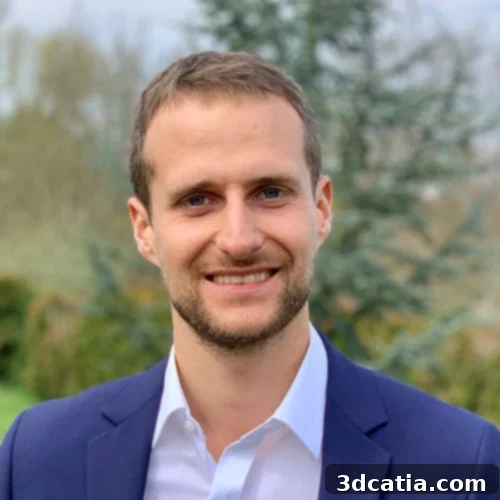
Emilien Goetz
Hello everyone, my name is Emilien Goetz, and I am currently serving as a Pre-Sales Engineer at Siemens Digital Industries Software. For context, this division represents the specialized software branch of the larger Siemens group, focusing on digital transformation in industrial processes.
Siemens, as an industrial powerhouse, is widely recognized as a global leader across various critical sectors, including railway systems, energy solutions, and sophisticated building management technologies. Within this expansive conglomerate, the Digital Industries division plays a crucial role. It encompasses both the hardware components, such as advanced automatons and controllers that are indispensable for managing complex production lines and machine tools, and the comprehensive suite of software solutions. These software tools are designed to support our customers throughout their entire product lifecycle, from the initial design phase all the way through to final manufacturing. My particular focus within this branch is on ensuring our customers can leverage these digital tools effectively for their additive manufacturing initiatives.
3DN: How did you discover additive manufacturing?
My academic journey led me to study mechanical engineering at ENIM, the esteemed national engineering school located in Metz, France. As is common with many general engineering programs, additive manufacturing was not a core component of the curriculum back when I was a student. After successfully graduating in 2010, I embarked on my professional career at Altair Engineering, a company renowned for its pioneering work in digital simulation tools. It was in my capacity as an application engineer, specializing in advanced topological optimization, that I first encountered the transformative power of 3D printing in 2015. This happened when I was assigned to a challenging project focused on optimizing an aeronautical part specifically for additive manufacturing. This experience proved to be a revelation.
I was immediately captivated by the technology’s immense potential and found it incredibly exciting. For the first time, we had the capability to manufacture the complex, organic shapes that topological optimization algorithms suggested, without the need to compromise or ‘degrade’ the part’s performance due to the inherent constraints of traditional manufacturing methods. This breakthrough was a game-changer. Following this initial discovery, I quickly recognized the burgeoning demand for this technology and dedicated myself to specializing in it. The requests for 3D printing solutions grew exponentially, reinforcing my decision to deepen my expertise. Consequently, I transitioned to Siemens, joining as a Pre-Sales Engineer with a specialized focus on 3D printing. I have proudly held this stimulating position for four years now, continuing to witness and contribute to the evolution of this incredible field.
3DN: What is your current role at Siemens? What is a typical day like for you?
To properly address this, let me first clarify the multifaceted role of a Pre-Sales Engineer, particularly within Siemens Digital Industries Software. Our division is responsible for bringing to market a comprehensive suite of software solutions that cover everything from product design and sophisticated manufacturing processes to efficient production management and robust Product Lifecycle Management (PLM) solutions. My specific contribution is within the branch that develops and supports cutting-edge tools for design, simulation, and programming for production. As a Pre-Sales Engineer, a significant part of my work involves guiding and supporting our diverse customer base in their evaluation of our solutions, primarily leveraging the powerful NX platform. These solutions are designed to help them innovate, develop, and significantly enhance their additive manufacturing activities.
The NX platform (photo credits: Siemens)
Our customer portfolio is incredibly varied, spanning across major industries such as automotive, aerospace, medical devices, and energy. This diversity means that their challenges and requirements are often unique and complex. A typical day for me is dynamic and engaging. It frequently involves crafting bespoke demonstrations for our software tools, meticulously designed to directly address the specific challenges and pain points of our various customers. I also dedicate time to actively participating in prominent trade shows and conferences dedicated to 3D printing, which are invaluable for networking and staying abreast of industry trends. Crucially, a significant portion of my day is spent monitoring the latest news, advancements, and emerging methodologies within the 3D printing sector. This vigilance is paramount because our customers are constantly pushing boundaries, challenging us daily with inquiries about new technologies or innovative approaches that are emerging in the market.
Beyond customer-facing activities, I also allocate considerable time to engaging with our in-house development teams. Being in direct and frequent contact with the end-users of 3D printing technology provides me with unique, first-hand field experience. I make it a priority to share these valuable insights and feedback with our developers. This direct line of communication is essential for them to continuously refine and develop solutions that are precisely adapted to real, pressing industry needs. While my travel schedule has seen a slight reduction since the onset of COVID, honesty compels me to say that extensive travel remains an essential component of my role. Meeting our customers face-to-face is indispensable for truly understanding their intricate working methods, their specific use cases for additive manufacturing, and how our solutions can best integrate into their unique workflows.
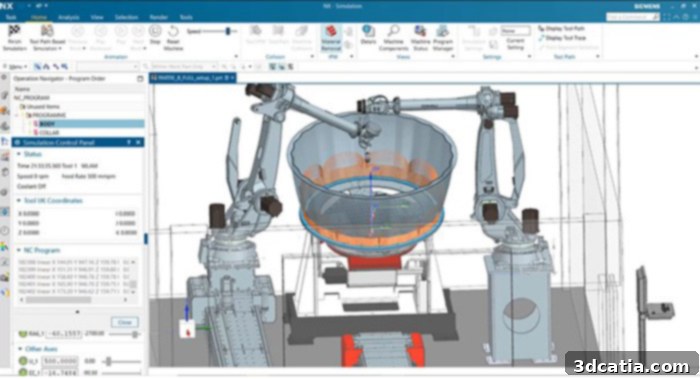
A simulation performed on the NX platform (photo credits: Siemens)
3DN: What are the required qualifications to be a pre-sales engineer?
When considering the necessary educational background for a Pre-Sales Engineer in this field, I would strongly advocate for an engineering degree, ideally with a specialized focus on mechanical engineering. The good news is that the landscape of academic institutions has significantly evolved; many engineering schools today have proactively integrated modern 3D printing technologies and additive manufacturing principles into their core curricula, preparing students directly for these roles.
However, formal education is just one piece of the puzzle. The world of 3D printing technologies is characterized by incredibly rapid evolution, making continuous learning and innate curiosity absolutely vital. A successful Pre-Sales Engineer must be perpetually curious, proactively seeking out the latest innovations on the market, understanding emerging trends, and critically, staying informed about what our competitors are developing. You must possess an inherent open-mindedness, as you cannot shy away from exploring uncharted territories and unconventional approaches. Generally speaking, 3D printing often pushes the boundaries of the digital chain and, consequently, 3D software itself, to its absolute limits. This naturally leads us to discover previously unexplored concepts, rigorously test them, and then propose groundbreaking new methodologies and ways of working.
In terms of soft skills, while a Pre-Sales Engineer might not be a traditional salesperson in the purest sense, our role is undeniably intertwined with the sales process. Therefore, it is absolutely essential to possess excellent interpersonal skills, be comfortable and engaging when interacting with diverse groups of people, and demonstrate a strong social aptitude. The ability to effectively communicate complex technical concepts in an understandable way, build rapport, and empathize with customer needs is paramount.
3DN: What are the biggest challenges in being a pre-sales engineer?
Undoubtedly, the paramount challenge in this role is adaptability. A Pre-Sales Engineer must possess an extraordinary capacity to quickly grasp and analyze needs that can be vastly different, depending entirely on the industry and the specific client. To illustrate, when you engage in discussions with major automotive manufacturers, their primary challenges – such as high-volume production, cost efficiency, and materials optimization for lightweighting – are fundamentally distinct from the priorities of the aerospace industry, which might focus more on stringent certification processes, critical performance under extreme conditions, and material traceability. Similarly, the medical sector emphasizes biocompatibility, regulatory compliance, and patient-specific solutions. This immense diversity of situations is not only a significant challenge but also an incredibly stimulating aspect of the job, pushing us to continuously learn and innovate.
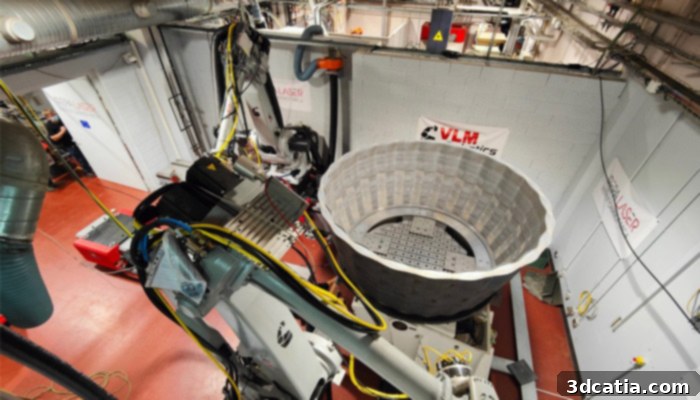
The 3D printed part (photo credits: IREPA LASER Institut Carnot Mica)
Another significant challenge stems from the relentless pace of technological advancement within additive manufacturing. New materials, processes, and software features emerge constantly, requiring pre-sales engineers to not only stay current but also anticipate future trends. This means continuously updating our knowledge base, learning new software capabilities, and understanding how these innovations can translate into tangible benefits for our clients across different industries. The ability to articulate the value proposition of a cutting-edge, sometimes experimental, technology in a way that resonates with a client’s specific business model is a core challenge that makes the role both demanding and deeply rewarding. Ultimately, solving these varied and complex problems for customers is what makes the job so engaging and contributes significantly to the advancement of manufacturing itself.
3DN: What advice would you give to someone who wants to work in the 3D printing industry?
For anyone aspiring to forge a career in the dynamic and rapidly evolving 3D printing industry, I believe it is absolutely essential to cultivate and maintain an insatiable sense of curiosity. Always strive to learn, question, and explore, because additive manufacturing is an exciting field that is in a constant state of transformation and innovation. The learning never truly stops. For individuals like myself, who may not have had the opportunity to delve into additive manufacturing during their foundational academic studies, there is fantastic news: the educational landscape has matured considerably. Today, there are numerous high-quality training courses available, particularly in countries like France, that provide comprehensive coverage of all critical aspects of additive manufacturing. These programs typically encompass everything from advanced design methodologies tailored for AM, through sophisticated simulation techniques for process optimization, to the practicalities of manufacturing and post-processing.
Beyond formal education, I would also strongly recommend gaining practical experience through internships or entry-level positions. Hands-on exposure to different 3D printing technologies – be it FDM, SLA, SLS, DMLS, or others – will provide invaluable insight. Networking within the industry is also crucial; attending webinars, local meetups, and conferences can open doors to mentorship and future opportunities. The additive manufacturing sector is still relatively young but is growing exponentially, meaning there is ample room for passionate and dedicated professionals to make a significant impact. Embrace the challenges, stay adaptable, and consistently seek to expand your knowledge base, and you will find a rewarding path in this revolutionary field.
Did you know about the diverse and critical role of a 3D printing pre-sales engineer? We’d love to hear your thoughts and insights! Share your comments below or connect with us on our LinkedIn, Facebook, and Twitter pages! And don’t miss out on the latest advancements and news in the industry – remember to sign up for our free weekly Newsletter here, delivered straight to your inbox! You can also explore all our engaging videos and content on our dedicated YouTube channel.