
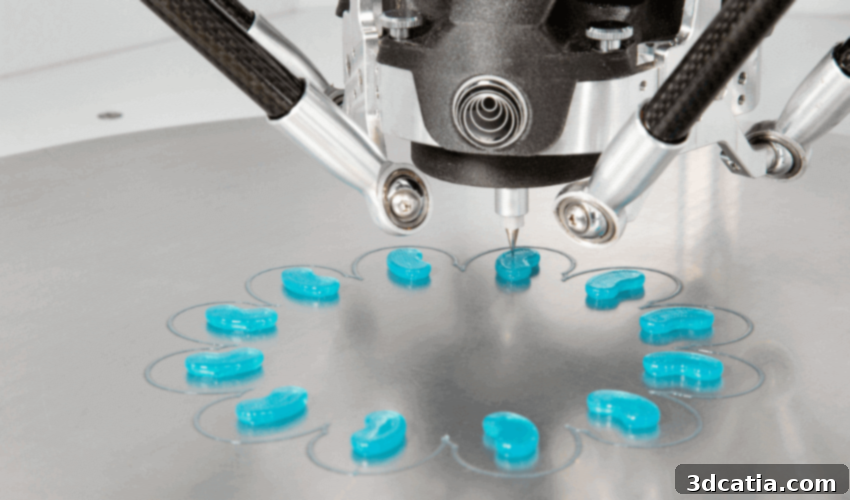
Revolutionizing Healthcare: How 3D Printing is Powering Personalized Medicine with MB-Therapeutics’ MED-U Modular
In the rapidly evolving landscape of personalized medicine, a transformative technology is pushing boundaries far beyond its initial applications in prosthetics and implants. Three-dimensional (3D) printing is now venturing into a groundbreaking new frontier: the creation of custom medications. This profound technological leap holds immense promise, offering simplified treatments and precisely tailored dosages designed to meet the unique physiological profiles and specific needs of individual patients. While this innovative approach is still in its nascent stages globally, one ambitious French startup, MB-Therapeutics, has proactively taken the initiative to develop a pioneering solution, positioning itself at the forefront of this medical revolution.
Headquartered within the prestigious Faculty of Pharmacy in Montpellier, France, MB-Therapeutics has proudly unveiled its innovative process for crafting personalized medicines using advanced 3D printing technology. This sophisticated system, aptly named “Med-U Modular,” is the culmination of eight years of intensive research, development, and invaluable experience. What truly sets Med-U Modular apart is its unwavering patient-centric focus, with an initial and profound dedication to addressing the often-overlooked needs of pediatric patients. Co-founders Stéphane Roulon and Ian Soulairol share a common vision: to significantly simplify the lives of young patients by harnessing the unprecedented degree of customization and flexibility that 3D printing offers. Their work aims to resolve long-standing challenges associated with conventional drug administration, paving the way for a more compassionate and effective healthcare future.
This cutting-edge 3D printing technology empowers MB-Therapeutics to design and manufacture medications with individually adapted dosages, bespoke shapes, and the remarkable ability to combine several active pharmaceutical ingredients within a single, convenient tablet. The overarching goal of this innovation is to effectively overcome the numerous constraints and complexities often associated with taking multiple medications, particularly for those with chronic conditions or complex treatment regimens. We had the distinct pleasure of connecting with Stéphane Roulon, CEO and co-founder of MB-Therapeutics, to delve deeper into these revolutionary personalized medicines, explore the intricate workings of their technology, and understand the ambitious future plans of the company that promises to redefine pharmaceutical manufacturing and patient care.
3DN: Could you introduce MB-Therapeutics and elaborate on your connection with 3D printing technology?
MB-Therapeutics was founded on a robust foundation of eight years of comprehensive experience spanning various sectors of the pharmaceutical industry, hospital pharmacy, and academia, all specifically focused on the burgeoning field of pharmaceutical 3D printing. My journey within the pharmaceutical sector began in 2016, ignited by a profound passion for the transformative potential of additive manufacturing in drug development. Our primary objective was to discover a flexible and agile method that could catalyze the development of new drugs, moving beyond the rigidities of traditional manufacturing. It was during this exploration that 3D printing emerged as our ideal ally, offering an inherently innovative and exceptionally effective approach to drug formulation and delivery.
In 2019, this vision truly began to materialize when I initiated a pivotal collaboration with Ian Soulairol, a distinguished hospital pharmacist. Through our discussions, it became glaringly apparent that there was a critical void in automated processes for producing truly personalized medicines. Furthermore, the existing solutions provided to children were far from optimal, often leading to challenges in administration, dosage accuracy, and patient adherence. Recognizing these significant unmet needs, and driven by a broader ambition to offer highly personalized medicines to all patients regardless of age or condition, we formally established MB-Therapeutics. Our mission is clear: to leverage the precision and flexibility of 3D printing to create a new paradigm in pharmaceutical care, ensuring that every patient receives medication perfectly suited to their individual requirements.
3DN: How did the innovative idea of combining 3D printing and pharmaceuticals to create personalized medicines first come about?
The genesis of our innovative approach dates back to 2016, when we embarked on a dedicated quest to identify flexible, adaptable, and efficient processes for drug development and manufacturing. It was during this extensive research that 3D printing compellingly presented itself as a viable and promising avenue. Initially, we commenced by rigorously testing standard, off-the-shelf 3D printers to validate our core concept of using additive manufacturing for pharmaceutical applications. However, through this exploratory phase, we quickly encountered significant limitations. The commercially available printing materials and existing hardware designs were simply not engineered to meet the stringent specific needs and regulatory requirements inherent in pharmaceutical production. This critical realization prompted a strategic shift: rather than adapting our vision to existing technology, we committed ourselves to developing specialized pharmaceutical 3D printing capabilities from the ground up.
This journey of development involved overcoming numerous technical hurdles, from ensuring biocompatibility and sterility of materials to achieving precise control over active ingredient distribution. Our dedicated research and development efforts culminated in the practical application of this pioneering idea with the creation of the MED-U Modular – our proprietary, purpose-built pharmaceutical 3D printer. This machine represents a significant milestone, embodying years of dedicated effort to transform a promising concept into a tangible, functional solution that can reliably produce customized medications to the highest pharmaceutical standards. It’s a testament to our belief that technology should serve patient needs, not constrain them, in the quest for truly personalized healthcare.
Stéphane Roulon (left) and Ian Soulairol (right)
3DN: How does MB-Therapeutics’ MED-U Modular 3D printer operate, and what makes it unique?
The MED-U Modular stands as a landmark achievement in pharmaceutical manufacturing: it is the first industrial-grade pharmaceutical 3D printer specifically engineered to meet and exceed the rigorous demands of the healthcare industry. What sets this printer apart is its absolute compliance with comprehensive pharmaceutical standards, backed by extensive qualification files that attest to its reliability, precision, and safety. This meticulous adherence to regulations is paramount, ensuring that every medicine produced is of the highest quality and efficacy, a non-negotiable aspect in patient care.
A key innovative feature of the MED-U Modular is its remarkable versatility, integrating three distinct types of 3D printing technologies within a single platform. These technologies can be quickly and easily interchanged, offering unparalleled flexibility to pharmacists and researchers in developing and manufacturing a wide array of drug formulations. One of these core technologies is advanced gel/paste extrusion, which utilizes volumetric dosing to guarantee optimal precision and exceptional reproducibility during material deposition. This method is critical for accurately dispensing active pharmaceutical ingredients, ensuring consistent dosage in every printed medication.
Beyond extrusion, MB-Therapeutics’ MED-U Modular also incorporates a highly specialized Fused Deposition Modeling (FDM) technology. This FDM system has been meticulously adapted to cater to the unique requirements of pharmaceutical filaments, which are often characterized by their technical complexity, inherent fragility, or high flexibility. To address these specific material challenges, we have developed an innovative print head designed for rapid dismantling and cleaning, while strictly adhering to all pharmaceutical sanitation and regulatory standards. This ensures sterile operations and ease of maintenance, crucial factors in a controlled pharmaceutical environment.
Furthermore, the integrated software suite powering the MED-U Modular is a testament to our commitment to pharmaceutical excellence. It is meticulously designed to meet all the exacting requirements of the pharmaceutical industry, offering robust features such as comprehensive traceability of every step of the manufacturing process, secure electronic signatures for enhanced accountability, advanced security protocols to protect sensitive data and formulations, and seamless interconnection capabilities with other essential software systems. This interconnectedness allows for efficient data exchange and integration into existing healthcare infrastructures, adapting to the diverse needs of various healthcare stakeholders, from hospitals to compounding pharmacies.
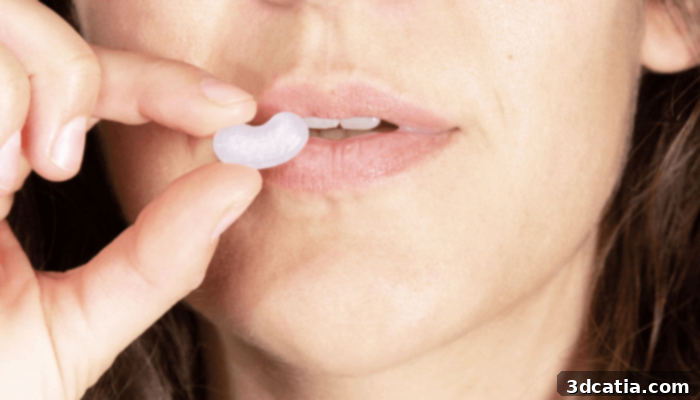
These 3D-manufactured drugs have a bean-like appearance
3DN: What are the primary advantages of utilizing 3D printing technology for medical treatments, especially when considering sick children?
Regrettably, for various illnesses and patient demographics, particularly children, the traditional pharmaceutical industry often falls short in adequately addressing specific patient needs. Conventional drug forms like standard capsules and tablets frequently present significant practical difficulties for young patients. These solid forms carry inherent risks, such as choking or difficulty swallowing, which can be distressing for both the child and their caregivers. While liquid suspensions are often offered as an alternative, they come with their own set of challenges. These suspensions may contain excipients – inert pharmaceutical ingredients – which, despite being non-active, can have known effects, potential allergens, or even be contraindicated for certain age groups. Moreover, liquid formulations are generally less stable than solid forms, leading to shorter shelf lives and requiring specific storage conditions. A critical issue with liquid suspensions is the heightened risk of administration errors due to imprecise dosing with pipettes, a common problem in a home setting.
In response to these pervasive issues, MB-Therapeutics offers a revolutionary new solution. Our technology empowers pharmacists to automatically produce medicines in personalized doses and forms, effectively combining the distinct advantages of both tablets and liquid suspensions while mitigating their respective drawbacks. These next-generation medicines are meticulously designed to be highly suitable for children, as they can be easily dispersed in a very small volume of water, making them simple to administer and significantly reducing the risk of choking or refusal. Crucially, our formulations are developed without excipients known to have adverse effects or contraindications, thereby enhancing patient safety and tolerability. By precisely controlling the dosage and form, our 3D printed medications dramatically reduce the incidence of dose administration errors, giving parents and caregivers peace of mind.
We take immense pride in being the only company in France, and indeed one of the very few worldwide, to possess an industrial-grade 3D printer that is fully compliant with the stringent and comprehensive pharmaceutical standards. This unique position underscores our commitment to not just innovation, but also to safety, quality, and regulatory excellence in the burgeoning field of personalized medicine.
3DN: How does pharmaceutical 3D printing specifically contribute to reducing the critical risk of dosing errors in medication administration?
Dosing errors represent a significant and pervasive challenge in medication administration, particularly when dealing with vulnerable populations such as children. Traditional methods often inadvertently contribute to these errors. For instance, when a capsule, designed for an adult, is opened to administer a partial dose to a child – a common practice due to the lack of appropriate pediatric formulations – the actual dose received can vary by as much as 30%. This alarming variability can lead to suboptimal therapeutic outcomes, ranging from ineffective treatment to potential toxicity. Similarly, liquid suspensions, while seemingly more child-friendly, are prone to human error; studies indicate that approximately 30% of parents make dosing errors when administering these medications at home, often due to misreading measurement lines, spillage, or incorrect pipette usage.
Customized medicines manufactured using precise 3D printing technology offer a profound solution to these critical issues. By enabling the creation of exact, patient-specific dosages, 3D printing inherently secures and significantly reduces the risk of such errors. Our formulations are designed to be either dispersible in a very small, manageable volume of water or directly orodispersible (dissolving rapidly in the mouth). This eliminates the need for manual dose division from adult capsules or imprecise measurements from liquid bottles. Each 3D printed medication is a discrete unit containing the exact prescribed dose, ensuring that what is given is precisely what was intended.
This level of precision instills immense confidence in parents and caregivers, assuring them that they can administer the prescribed dose to their children with complete accuracy and peace of mind. On the pharmacist’s side, the production of these personalized drugs through 3D printing represents a paradigm shift. It automates the compounding process with industrial manufacturing quality and consistency, a significant upgrade from traditional manual compounding which can be labor-intensive and susceptible to human variability. Yet, crucially, this automation preserves the invaluable flexibility of manual compounding, allowing for the rapid production of highly customized drugs on demand without the need for large-scale industrial batch production. This blend of industrial quality and bespoke flexibility is what makes our pharmaceutical 3D printing solution truly revolutionary for patient safety and pharmaceutical efficiency.
3DN: What are the upcoming projects and strategic objectives for MB-Therapeutics in the near future?
MB-Therapeutics has outlined an ambitious and strategic roadmap for the coming years, focused on expanding the reach and impact of personalized medicine. Between 2023 and 2026, our primary objective is to forge robust collaborations with a diverse range of hospitals, universities, and industrial establishments. We aim to partner with any institution that shares our vision and wishes to develop new, patient-centric solutions utilizing the transformative power of our MED-U Modular pharmaceutical 3D printer. These collaborations will facilitate cutting-edge research, clinical trials, and the integration of our technology into various healthcare settings, demonstrating its versatility and effectiveness across different applications and patient populations.
Looking ahead to 2026, we are particularly excited about a significant milestone: the launch of a comprehensive, turnkey solution designed specifically for dispensing pharmacies and hospitals. This innovative offering will provide everything necessary for the automated, personalized manufacture of medicines, from the sophisticated MED-U Modular printer itself to the pharmaceutical cartridges containing the printable drug formulations. This end-to-end solution is engineered to streamline the entire process, making personalized drug production accessible and efficient for healthcare providers. Initially, this turnkey system will specifically target the unique pharmaceutical needs of children, ensuring they receive medications tailored precisely to their individual weight, metabolism, and therapeutic requirements. This strategic rollout represents a critical step towards our overarching goal of making personalized medicine a standard of care, ensuring that every patient can benefit from treatments optimized for their specific health profile.
3DN: Do you have any final words or a message you’d like to share with our readers?
Absolutely. Our core philosophy at MB-Therapeutics is encapsulated in a simple yet profound truth: Every person is unique! Given this fundamental individuality, the question naturally arises – why shouldn’t our medicines reflect this uniqueness? At MB-Therapeutics, we are not just convinced; we are driven by the certainty that in the very near future, the vast majority of medicines will be readily available in precisely personalized dosages and forms. This is not merely a technological advancement; it is a fundamental shift towards a more effective, safer, and truly patient-centric healthcare paradigm. We believe that this revolution will lead to better treatment outcomes, reduced side effects, and an overall enhancement of patient quality of life. We invite everyone interested in learning more about our groundbreaking work and the future of pharmaceutical 3D printing to visit our website. You can find out more HERE, and join us on this exciting journey towards a truly personalized medical future.
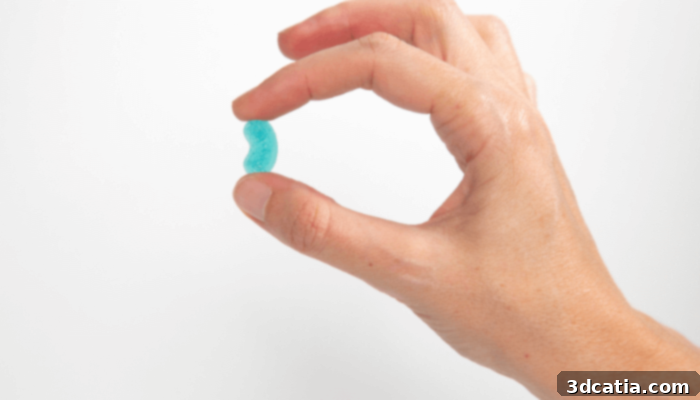
The startup has teamed up with Lynxter, experts in the development and manufacture of industrial 3D printers
What are your thoughts on MB-Therapeutics’ groundbreaking work in personalized medicine? Do you believe that customized medication, enabled by advanced 3D printing, represents the undeniable future of healthcare? We’d love to hear your perspectives! Please share your insights and comments below or engage with us on our LinkedIn, Facebook, and Twitter pages! To stay completely up-to-date with all the latest advancements and news in the world of 3D printing, don’t forget to sign up for our free weekly Newsletter here, delivered straight to your inbox. You can also explore all our insightful videos and demonstrations on our dedicated YouTube channel.
*All Photo Credits: Stéphane Roulon