
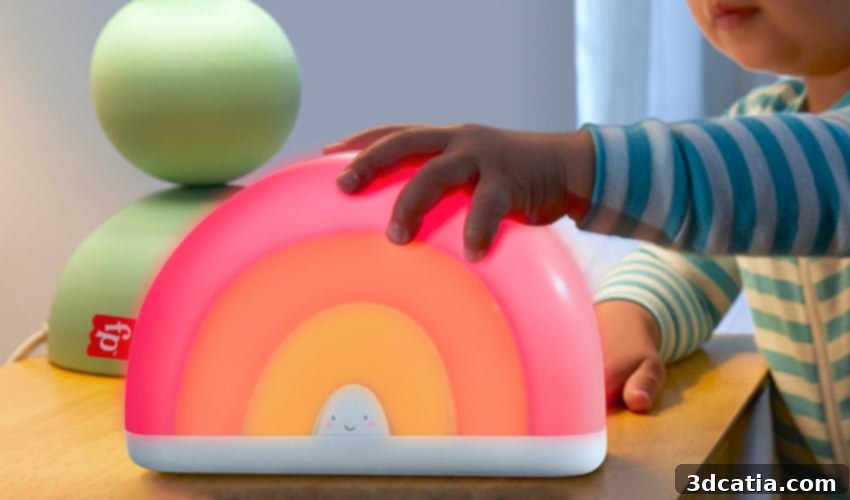
Mattel’s Innovation Engine: Revolutionizing Toy Development with Advanced 3D Printing
In the dynamic world of toy manufacturing, embracing cutting-edge technology is paramount for staying ahead. Additive manufacturing, commonly known as 3D printing, has emerged as an indispensable tool across diverse industries, significantly streamlining design, prototyping, and production processes. Leading the charge in the toy sector, giants like LEGO have successfully integrated AM for creating novel parts and optimizing resource utilization by eliminating excess waste. Similarly, Mattel, a global powerhouse responsible for many of the world’s most beloved children’s toys, has also achieved remarkable success by harnessing the power of 3D printing. Driven by an unwavering mission to foster continuous innovation, Mattel aims to develop new and more advanced toys that significantly contribute to the development of future generations. To achieve this ambitious goal, the company strategically deployed the Method line of industrial-grade 3D printers from MakerBot, enabling them to bring what they affectionately call the “toys of tomorrow” to life.
Mattel’s steadfast commitment to innovative design is embodied by a dedicated team focused on the research and development of groundbreaking toys. This pivotal team is expertly led by Jack Peach, Mattel’s chief innovation engineer and product design team leader. Peach and his highly skilled team provide essential support to Mattel’s immense portfolio of iconic brands, which includes household names like Barbie, Hot Wheels, Fisher-Price, Uno, Monster High, and many others. With these legendary brands shaping childhoods globally, the innovation team plays a crucial role in translating consumer tastes and market trends into tangible product visions. Their work encompasses rigorous testing of mechanical features, in-depth research, and the iterative prototyping of specific toy concepts. This proactive approach allows Mattel to continually push the boundaries of toy design, leveraging the capabilities of additive manufacturing to enable unprecedented growth and accelerate production cycles.
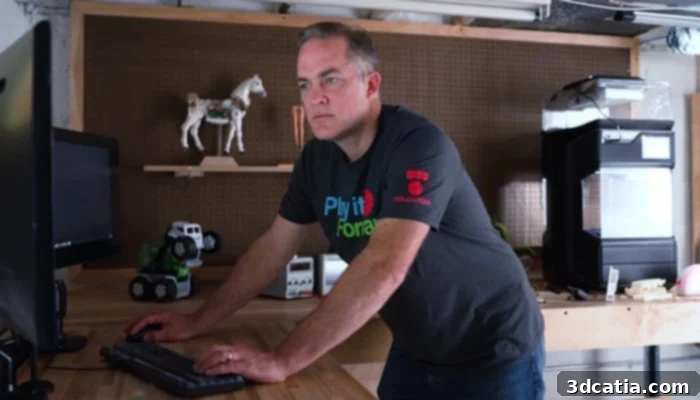
Photo Credits: Mattel
Streamlining Toy Prototyping: The Power of 3D Printing at Mattel
To effectively realize their vision of creating truly innovative toys, Mattel’s technology team strategically adopted Fused Filament Fabrication (FFF), a widely utilized 3D printing method. This choice proved instrumental in facilitating rapid design modifications and the swift creation of new iterations, empowering the team to experiment freely with a vast array of shapes, materials, and complex mechanical features. Jack Peach elaborates on the profound impact of this technology: “Our team’s primary focus is to introduce innovative product features to our brand teams and then assist in bringing those products to market with speed and precision. When physical models are required for evaluation, our team places great reliance on industrial-grade 3D printing materials such as ABS-R or Nylon Carbon Fiber. These materials are not only robust but also durable enough to rigorously prove out both the form and critical function of a new toy component, ensuring it meets our high standards before moving further down the development pipeline.”
Prototyping stands as an absolutely paramount stage within the toy industry’s product development cycle. Beyond merely visualizing a concept, prototypes serve as critical tools for a multitude of essential functions. They are indispensable for uncovering potential design defects, thoroughly testing specific features under realistic conditions, and even unveiling new, unforeseen potentials that could significantly elevate the final product. The traditional methods of prototyping often involved time-consuming and labor-intensive manual fabrication or expensive tooling. However, 3D printing has radically transformed this landscape. Peach further clarifies the immense advantage: “With a 3D printer, the need to re-fabricate an entire prototype by hand for every single adjustment is completely eliminated. Designers can make a few precise adjustments digitally, send the updated file directly to the printer, and have a brand new, modified part printed quickly and efficiently. This streamlined process makes modifications, subsequent testing, and comprehensive reviewing far easier and significantly quicker than ever before.” Consequently, Mattel’s experts can iteratively refine designs as needed, swiftly reacting to test results and implementing improvements with unparalleled agility. This accelerated, highly efficient process drastically reduces lead times, ensuring that the final, perfected toy can be released to the eager market much faster.
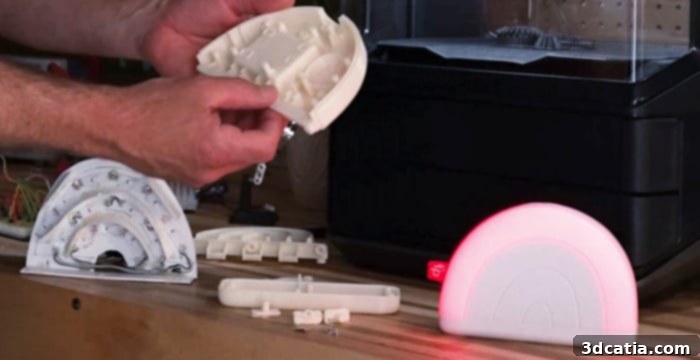
The use of 3D printing has helped reduce lead times and decrease the number of errors during manufacturing (photo credits: Mattel)
By seamlessly integrating 3D printing into its core business operations, the Mattel team has achieved an unprecedented level of control over their entire production process and, crucially, their final product timelines. The ability to engage in on-demand manufacturing of high-quality, customized parts has been a game-changer. This capability has empowered the design and engineering teams to rapidly create more efficient and remarkably accurate models that closely mimic the properties and assemblies of injection-molded components. This level of precision is vital for conducting realistic and exhaustive tests of a toy’s features, ensuring a higher success rate in initial evaluations. The improved efficiency and accuracy mean that more innovative and thoughtfully designed products have a genuine opportunity to transition from concept to reality, ultimately making their way into the hands of the millions of children who adore playing with Mattel’s creations. The strategic adoption of 3D printing not only enhances Mattel’s internal capabilities but also reinforces its position as a leader in toy innovation, consistently delivering joy and fostering development through play. For further insights into Mattel’s pioneering use of 3D printing, you can explore more details HERE.
What are your thoughts on Mattel’s strategic implementation of 3D printing to create the next generation of toys? We invite you to share your perspective in a comment below or join the conversation on our LinkedIn, Facebook, and Twitter pages! Don’t forget to sign up for our free weekly Newsletter here to receive the latest 3D printing news directly in your inbox. You can also discover all our engaging videos on our YouTube channel.
*Cover Photo Credit: Mattel