
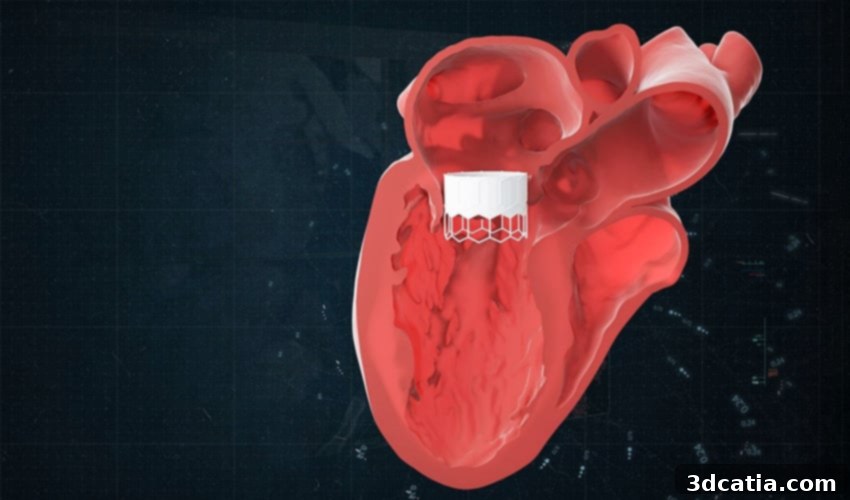
Materialise Drives Future of Cardiovascular Medicine: Acquires FEops for AI-Powered 3D Printing Simulation
Materialise, a globally recognized pioneer and leading provider of 3D printing software and services, has taken a significant leap forward in advancing medical technology. The Belgian firm recently announced the strategic acquisition of FEops, another innovative Belgian company renowned for its sophisticated AI (artificial intelligence)-driven simulation technology. While the financial details of this pivotal transaction remain undisclosed, its implications for the future of cardiovascular medicine are profound. FEops’ proprietary solutions are expertly designed to dramatically enhance the capacity, improve efficiency, and ultimately, elevate the clinical outcomes for complex structural cardiac interventions. This acquisition is poised to be a game-changer for Materialise, enabling the company to substantially augment its existing cardiovascular solutions portfolio. By seamlessly integrating FEops’ cutting-edge predictive simulation capabilities, Materialise is set to propel the healthcare industry towards a new era of truly personalized treatment for individuals suffering from heart disease, offering unprecedented precision and safety in patient care. This union underscores the growing convergence of advanced AI, sophisticated simulation, and transformative 3D printing technologies in addressing some of the most pressing challenges in modern medicine.
Revolutionizing Healthcare with 3D Technologies and Personalized Medicine
The landscape of healthcare is undergoing a profound transformation, largely driven by the adoption of advanced 3D technologies, including additive manufacturing (3D printing) and sophisticated simulation software. These innovations are revolutionizing patient care by enabling the mass customization of treatment plans and medical interventions, moving beyond a “one-size-fits-all” approach to tailor solutions precisely to the unique anatomy and specific needs of each individual patient. This level of personalization is particularly critical in complex and life-saving fields like cardiology, where anatomical variations can significantly impact treatment success.
Structural heart disease, encompassing a broad range of conditions such as valvular heart disease, congenital heart defects, and disorders affecting the heart muscle or major blood vessels, represents an immense medical and economic challenge globally. It remains one of the leading causes of cardiovascular mortality worldwide, affecting millions and imposing a staggering burden on healthcare systems. Consider the alarming statistics: currently, approximately 47 million people across the globe grapple with valvular heart disease alone. Projections indicate that by 2030, the annual global costs directly associated with these pervasive heart problems are expected to skyrocket to an astonishing $70 billion. This escalating crisis demands innovative, scalable, and highly effective solutions that can improve patient outcomes while simultaneously managing costs.
It is precisely this critical need that Materialise aims to address head-on through its latest strategic acquisition. By synergistically combining the power of advanced simulation software, sophisticated artificial intelligence, and cutting-edge 3D planning technologies, Materialise is now poised to significantly expand its capabilities in the cardiovascular domain. This integrated approach offers a robust pathway to not only mitigate the growing challenges posed by structural heart disease but also to dramatically improve diagnostic accuracy, enhance treatment efficacy, reduce procedural risks, and ultimately lead to better long-term patient outcomes. The future of cardiovascular intervention will increasingly rely on these convergent technologies to deliver precision medicine on a broader, more accessible scale.
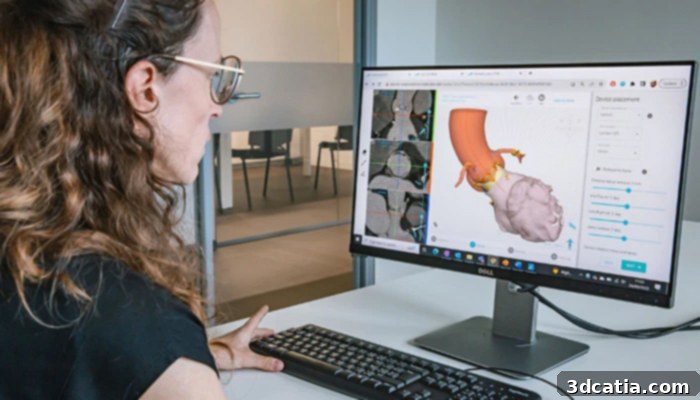
Materialise notes that this AI-driven simulation software will help improve cardiovascular outcomes
Materialise’s Strategic Turn to AI: Enhancing Precision in Cardiac Interventions
Materialise has long been at the forefront of enabling personalized healthcare through the creation of highly detailed 3D virtual models. These models, meticulously constructed from individual patient medical images (such as CT or MRI scans), serve as invaluable tools for pre-procedure planning, allowing medical professionals to visualize, measure, and prepare for complex surgeries with unprecedented clarity and precision. This commitment to mass customization in healthcare forms the bedrock of Materialise’s mission, ensuring that every patient receives care uniquely suited to their anatomy.
The acquisition of FEops marks a pivotal moment in this journey, as it allows for the seamless integration of FEops’ groundbreaking technology with Materialise’s flagship software, Mimics Planner. Mimics Planner is widely recognized for its robust capabilities in converting medical image data into accurate, patient-specific 3D models, facilitating detailed anatomical analysis and surgical planning. The synergy created by this integration is powerful and truly transformative: it will now offer clinicians an unparalleled, comprehensive solution that combines anatomy-based 3D planning with sophisticated AI-driven simulation. This means that physicians will not only be able to visualize a patient’s unique cardiac structure in three dimensions but also simulate the potential interactions of various medical devices (e.g., heart valves, stents) within that specific anatomy before ever entering an operating room. This proactive approach allows for informed decision-making and optimal preparation.
Brigitte de Vet, CEO of Materialise Medical, eloquently articulated the profound transformative potential of this strategic union. She emphasized, “By integrating FEops’ advanced predictive simulation technology with our Mimics Planner, we are significantly expanding our cardiovascular solutions. This empowers clinicians with truly comprehensive insights into patient anatomy and the anticipated behavior of devices within it. This integration is designed to do more than just enhance the accuracy and efficiency of structural heart interventions; it is poised to dramatically improve overall clinical outcomes and elevate patient safety to new heights.” This advanced capability promises a multitude of benefits, including the reduction of procedural complications, optimization of device selection, and ultimately, leading to better, more predictable and reproducible results for patients undergoing critical cardiac procedures.
The Power of Predictive Simulation in Transcatheter Procedures
At the core of FEops’ innovation lies its advanced predictive simulation technology, a sophisticated tool specifically designed to empower physicians with a critical advantage: the ability to accurately foresee and analyze the intricate interaction of cardiac devices with a patient’s unique and complex anatomy. This capability is not merely beneficial; it is absolutely crucial for ensuring the success and safety of modern transcatheter procedures. These minimally invasive interventions, which involve threading catheters through blood vessels to perform repairs or implant devices within the heart, have witnessed an exponential increase in popularity and application in recent years. Their appeal stems from reduced invasiveness, smaller incisions, and significantly faster patient recovery times compared to traditional open-heart surgery, making them a preferred option for many patients and clinicians.
Despite their growing adoption and inherent advantages, transcatheter procedures inherently present a unique set of challenges that demand exceptional precision. Chief among these is the complex task of accurately assessing individual patient suitability for a specific device, precisely sizing and positioning the device within a dynamic and variable anatomy, and foreseeing potential risks and complications that might arise from the intricate interplay between the implanted device and the patient’s specific cardiac structure. Factors such as the degree of calcification, the precise geometry of heart valve leaflets, and the dimensions of the aortic root can significantly impact device deployment, stability, and long-term function. Historically, these critical assessments relied heavily on static 2D imaging and the invaluable experience of the physician, which, while highly valuable, often left a degree of uncertainty regarding optimal outcomes.
This is precisely where FEops’ predictive simulation technology truly shines. By generating a digital “twin” of the patient’s heart and meticulously simulating the deployment and function of various devices within that virtual environment, physicians can proactively evaluate different treatment strategies. They can anticipate potential issues such as paravalvular leakage, device migration, or hemodynamic challenges, and consequently select the optimal device size, type, and deployment trajectory for that specific patient. This unprecedented level of advanced visualization and simulation profoundly impacts the clinical workflow, transforming it from a reactive process into a highly proactive, informed, and optimized one. It allows for meticulous pre-operative planning, enabling surgical teams to prepare for contingencies, refine their approach, and even practice complex maneuvers virtually before the actual procedure.
The ultimate benefit of this technology extends far beyond the operating room. By mitigating risks, improving procedural precision, and optimizing patient-specific outcomes, these advanced technologies are making transcatheter procedures accessible to a wider variety of patients. This includes individuals who might have previously been deemed too high-risk for intervention due to complex anatomies, severe comorbidities, or age. This expansion of treatable populations, coupled with the improved precision and safety, leads to significantly better overall patient outcomes, shorter hospital stays, reduced re-interventions, and an enhanced quality of life for individuals suffering from severe structural heart conditions. The public can delve deeper into the specifics of this acquisition and its far-reaching implications by visiting the Materialise website directly through the provided link.
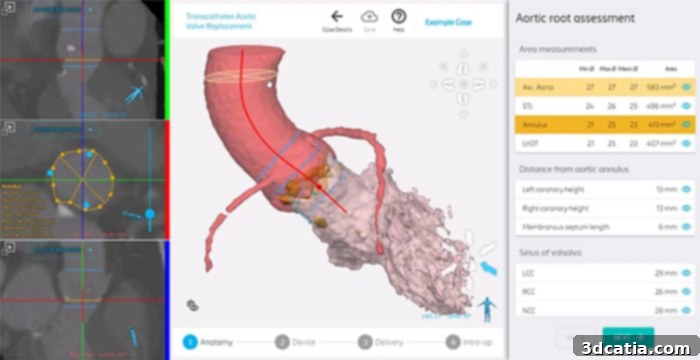
A closer look at how the simulation works
Future Implications: Paving the Way for Advanced Personalized Cardiovascular Care
The integration of FEops into Materialise’s ecosystem represents far more than just a corporate acquisition; it signifies a strategic acceleration towards the definitive future of personalized medicine in cardiology. This powerful synergy positions Materialise as an undeniable leader in the rapidly evolving and critically important field of medical 3D printing and simulation for cardiovascular care. The combined expertise and technological prowess of both companies will undoubtedly foster further innovation, leading to the development of even more sophisticated tools and solutions that continually push the boundaries of what is medically possible. This partnership establishes a robust platform for continuous development and advancement in patient-specific medical solutions.
Looking ahead, this acquisition promises to redefine the standards of care in cardiology across the globe. It will likely enable the development of highly individualized treatment pathways that minimize patient risk, maximize procedural success rates, and significantly improve recovery trajectories. The vision is clear: to empower clinicians with an unprecedented level of predictive capability, allowing them to make critical, life-altering decisions with greater confidence and deliver superior, tailored care that truly addresses the unique needs of each patient. This strategic move also highlights a broader industry trend towards embracing advanced digital technologies, artificial intelligence, and sophisticated simulation as indispensable components of modern medical practice, particularly in complex and high-stakes specialties like interventional cardiology. Materialise’s substantial investment in this cutting-edge technology is a testament to its unwavering commitment to advancing healthcare through digital innovation, ultimately ensuring that patients worldwide receive the most precise, safe, and effective treatments available, thereby enhancing their quality of life and long-term health outcomes.
The acquisition of FEops by Materialise marks a pivotal moment in the advancement of personalized cardiovascular medicine. This strategic union of Materialise’s leading 3D printing software expertise with FEops’ cutting-edge AI-driven simulation technology promises to revolutionize how structural heart diseases are diagnosed, planned, and treated. By offering unparalleled predictive capabilities for complex cardiac interventions, this partnership is set to enhance procedural accuracy, boost efficiency, and most importantly, deliver significantly improved clinical outcomes and patient safety for millions of patients worldwide.
We are eager to hear your thoughts on this transformative development. What are your impressions of this groundbreaking AI simulation software now integrated under the Materialise umbrella? Do you believe it holds the key to unlocking new frontiers in cardiovascular applications and personalized patient care? Share your insights and join the conversation by leaving a comment below, or engage with us on our vibrant social media platforms, including LinkedIn, Facebook, and Twitter. Stay informed with the very latest in 3D printing news and innovations by signing up for our free weekly newsletter here, delivered directly to your inbox. For a visual dive into the world of additive manufacturing and its medical applications, explore all our compelling videos on our YouTube channel.
*All Photo Credits: Materialise