
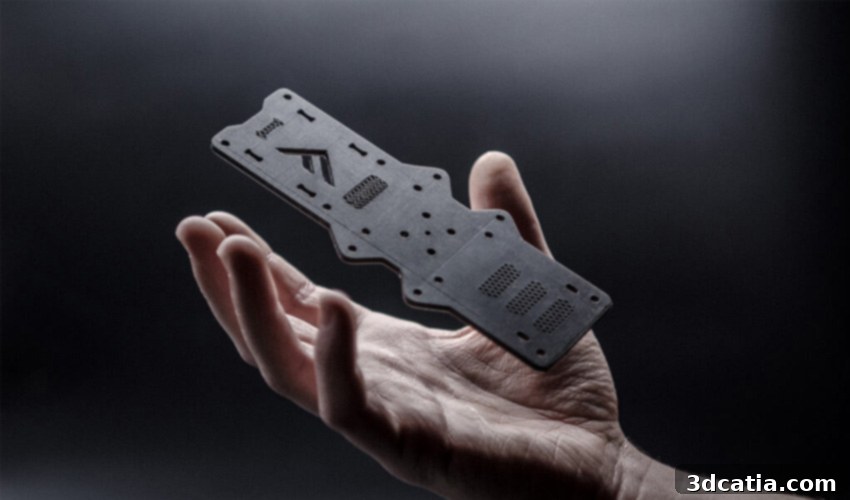
Fortify’s Fluxprint: Revolutionizing Composite 3D Printing with Magnetic Field Technology
In the rapidly evolving landscape of advanced manufacturing, a young and innovative company named Fortify is making significant strides, aiming to fundamentally change the traditional paradigm of long delivery cycles and often subpar material quality. Born from pioneering research in composite 3D printing conducted by Randall Erb and Joshua Martin at Northeastern University, Fortify’s core mission is to enable the swift, transparent, and precise manufacturing of composite materials featuring optimized microstructures. This ambitious goal is realized through their proprietary 3D magnetic printing process, aptly named Fluxprint™. This cutting-edge technology uniquely combines the precision of Digital Light Processing (DLP) with the power of magnetics, promising not only rapid production but also fluid processing and exceptional material quality. While its potential applications span numerous sectors, Fluxprint™ is primarily poised to revolutionize demanding fields such as the automotive and aerospace industries. To gain a deeper understanding of Fortify’s transformative process and their exciting future developments, we recently had the privilege of speaking with Joshua Martin, the accomplished CEO and co-founder of what is fast becoming one of the most recognized startups in additive manufacturing today.
Meet Fortify’s Visionary Co-founder: Joshua Martin
“My name is Josh Martin, and I am the co-founder and CEO of Fortify,” he began, introducing himself with a clear passion for the company’s mission. Dr. Martin holds a PhD in materials science, a field in which his research delved deeply into understanding the intricate relationship between the structure and properties of biological compounds. This specialized focus involved dissecting how biocomposites, such as bones, despite being composed of relatively weak constituent materials, are ingeniously designed by nature to exhibit remarkably impressive mechanical properties. This fundamental insight — that superior performance can be engineered through precise structural organization at a micro-level — forms the bedrock of Fortify’s philosophy. “Fortify is dedicated to applying these very principles of biomimicry and materials science to engineer robust, high-performance composite materials,” Dr. Martin elaborated, highlighting the scientific foundation of their innovative approach to advanced manufacturing. His background provides a unique perspective, bridging the gap between natural structural efficiency and engineered material excellence, which is central to Fortify’s success in creating next-generation composites.

Unveiling Fluxprint Technology: Precision Through Magnetic Fields
At the heart of Fortify’s revolutionary capabilities lies its proprietary technology suite. “Our overarching additive manufacturing platform is known as Digital Composite Manufacturing™ (DCM),” explained Dr. Martin. “This platform leverages technical resins, specifically engineered and reinforced with special additives, to produce high-resolution parts with unparalleled precision.” While DCM provides the framework for high-resolution printing, the true innovation that sets Fortify apart is Fluxprint™. Dr. Martin continued, “Fluxprint™ is our patented technology that precisely controls the microstructure of printed parts through the strategic application of magnetic fields.”
This ability to manipulate microstructure magnetically is a game-changer in additive manufacturing. Traditional 3D printing often results in randomly oriented internal structures, which can limit the mechanical performance of the final part. Fluxprint™, however, enables engineers to print objects with meticulously reinforced and optimized internal structures, tailored specifically for each unique geometry and application. By aligning reinforcing fibers or particles within the resin during the printing process, Fortify can create anisotropic materials – meaning their properties can be stronger in specific directions – leading to parts with superior strength-to-weight ratios, enhanced stiffness, and improved durability. This level of control opens up a vast array of possibilities for creating parts with truly customized performance characteristics, moving beyond the limitations of isotropic materials common in many other 3D printing techniques. It represents a significant leap forward in materials engineering, allowing for functional parts that perform optimally under specific load conditions.
Advantages and Overcoming Technical Challenges with DCM
The advantages offered by Fortify’s Digital Composite Manufacturing (DCM) platform are compelling, particularly for industries that demand the utmost in material performance. “DCM provides the distinct advantage of delivering high-resolution surface finishes alongside robust strength and rigidity,” Dr. Martin highlighted. This combination is especially crucial for components requiring precise dimensions and excellent cosmetic appeal, without compromising on structural integrity. Furthermore, the technology excels in producing parts that maintain these superior mechanical properties even when exposed to high temperatures, a critical requirement for applications in extreme environments where many other polymers would deform or fail. This thermal stability, coupled with high strength, positions Fortify’s technology uniquely in the additive manufacturing space.
However, pioneering advanced manufacturing processes like DCM is not without its hurdles. “One of our primary challenges stems from working with solid resins,” Dr. Martin admitted. Unlike the lower-viscosity, unfilled photopolymers typically used in many resin-based 3D printing systems, Fortify’s technical resins are often highly viscous and densely packed with reinforcing additives, making them “more complicated to treat.” These challenges include difficulties in material flow, uniform mixing, precise dispensing, and ensuring consistent print quality across complex geometries. The presence of reinforcing fillers, while crucial for performance, can introduce complexities in the photopolymerization process and subsequent handling. Fortify is proactively addressing these obstacles by adopting a two-pronged approach: “We are overcoming these challenges by meticulously combining cutting-edge materials science with the simultaneous development of appropriate, custom-designed hardware,” Dr. Martin explained. This synergistic approach involves formulating new resin chemistries that optimize printability while maximizing composite performance, alongside developing specialized printer hardware capable of precisely handling and processing these advanced, filled materials, including the application of controlled magnetic fields. This integrated strategy ensures that the technological advancements in materials are matched by innovations in the printing system itself, enabling consistent and reliable high-quality output.
Primary Applications: Injection Molding and Beyond
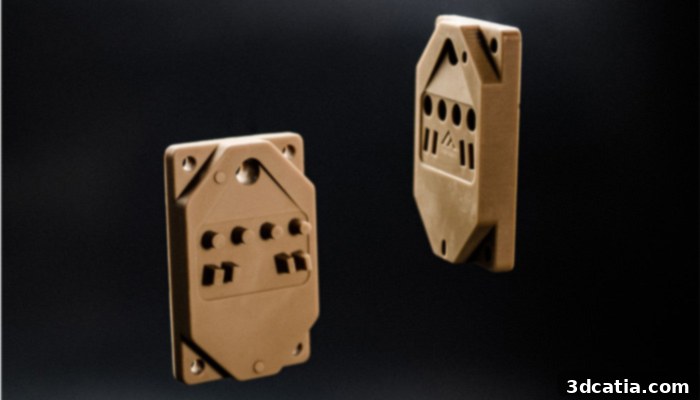
When asked about the most prevalent applications for 3D magnetic printing, Dr. Martin pointed to a particularly demanding niche. “Fortify is currently focusing significantly on the injection molding sector,” he stated. This emphasis is not coincidental; injection molding tooling represents an incredibly challenging application for additive manufacturing, precisely because of the extreme conditions involved. Injection molded parts must withstand immense pressures, frequently exceeding 1500 pounds per square inch (psi), and endure high temperatures ranging from 50 to 240°C, all while maintaining exceptionally tight tolerances throughout repeated cycles. Traditional tooling for injection molding, typically made from machined metal, involves long lead times and high costs, particularly for prototypes or short production runs. Existing 3D printed tooling often falls short in terms of durability and temperature resistance.
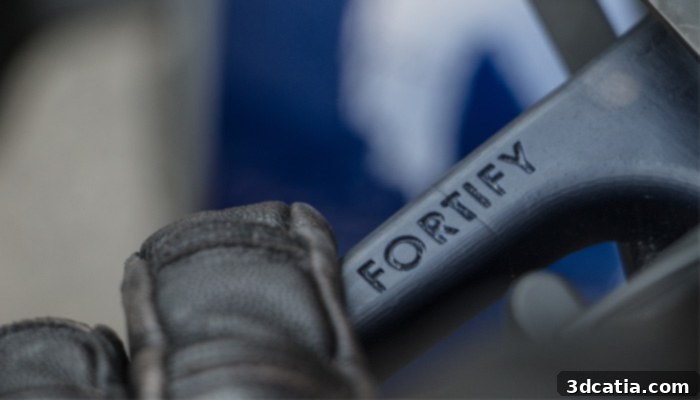
Fortify’s Fluxprint technology offers a compelling solution to these long-standing challenges. By producing highly durable, high-temperature-resistant composite tools in a fraction of the time, manufacturers can significantly accelerate product development cycles, reduce costs associated with traditional tooling, and enable rapid iteration of designs. This capability is invaluable for industries that require quick prototyping and agile manufacturing strategies, allowing them to bring new products to market faster and more efficiently. The ability to create injection molds that can withstand such harsh operating conditions with additive manufacturing is a testament to the superior mechanical and thermal properties achievable with Fortify’s optimized composite materials.
Fortify’s Future: Aerospace, Automotive, and Beyond
Looking ahead, Fortify is not content to rest on its current achievements. The company has a clear vision for expanding the reach and impact of its Digital Composite Manufacturing (DCM) technology. “Currently, DCM technology is being actively utilized to manufacture components for drones, specifically those requiring an exceptionally high weight-to-strength ratio,” Dr. Martin revealed. This is a critical factor for drones, where every gram saved can translate into longer flight times, increased payload capacity, and enhanced operational efficiency.
Beyond drones, Fortify is deeply committed to developing high-performance parts for the broader automotive and aerospace industries – sectors that inherently demand materials with outstanding mechanical properties and excellent temperature stability. The ability to produce lightweight yet incredibly strong components that can withstand extreme thermal conditions is paramount in these fields. Dr. Martin provided concrete examples: “For instance, propeller blades or various complex assembly components for drones and other aerospace vehicles can be precisely printed using our technology.” In the automotive sector, this could extend to custom jigs and fixtures for manufacturing, lightweight brackets, or even functional end-use parts where specific mechanical performance and thermal resistance are key. Fortify’s technology opens doors to creating parts with complex geometries and integrated functionalities that are difficult or impossible to achieve with traditional manufacturing methods, driving innovation in vehicle performance, fuel efficiency, and overall design freedom. The company envisions a future where its technology empowers these industries to achieve new levels of performance and efficiency through advanced material solutions.
A Final Word on the Future of Additive Manufacturing
As our conversation drew to a close, Dr. Martin offered a compelling summary of Fortify’s unique position in the additive manufacturing landscape. “It is widely acknowledged that additive manufacturing processes based on photopolymerization, while excelling in surface rendering and resolution, often fall short when it comes to delivering optimal mechanical properties,” he observed. This has been a long-standing trade-off in the industry: achieve fine detail or achieve high strength, but rarely both at the peak level.
“Fortify directly addresses and solves this fundamental material problem,” Dr. Martin asserted confidently. They achieve this by harmoniously combining “a new generation of photochemistry with advanced additives and our unique Fluxprint process.” This powerful synergy allows Fortify to overcome the inherent limitations of traditional photopolymerization, producing parts that not only boast exceptional surface quality and intricate detail but also possess robust, engineered mechanical performance. Their innovative approach represents a significant paradigm shift, enabling industries to leverage the design freedom and speed of additive manufacturing without compromising on critical material characteristics like strength, stiffness, and thermal stability. Fortify is thus pioneering a new era of high-performance composite 3D printing, setting new benchmarks for what is achievable in advanced additive manufacturing.
For readers eager to delve deeper into Fortify’s groundbreaking technology, materials, and applications, Dr. Martin encourages a visit to their official website: Explore Fortify’s Process and Materials HERE.
We welcome your thoughts on this insightful article! Feel free to share your comments below or connect with us on our Facebook and Twitter pages! Don’t miss out on the latest advancements in 3D printing; sign up for our free weekly Newsletter to have all the news delivered directly to your inbox.