
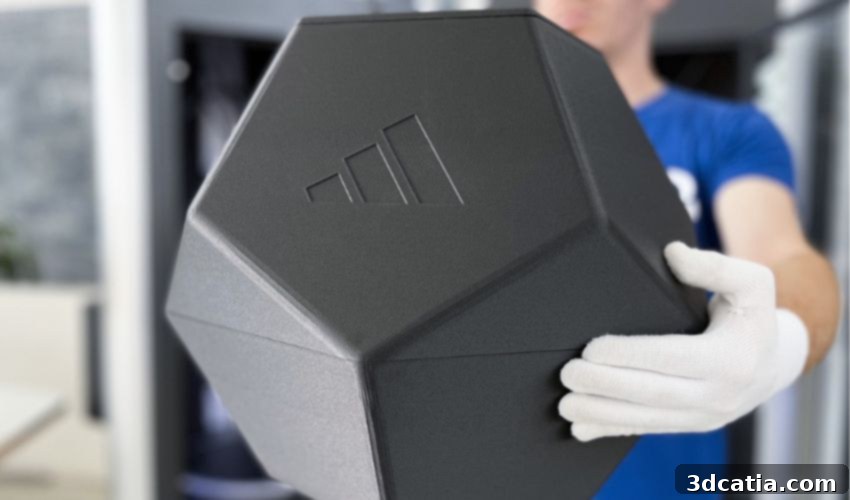
Adidas and WASP Craft Messi’s Commemorative 3D Printed Shoebox: A Fusion of Luxury and Innovation
The world of footwear has recently witnessed a fascinating revolution, driven by the transformative power of 3D printing. From high-performance running shoes designed for peak athletic prowess to specialized golf shoes offering enhanced stability, and even stylish, casual sandals, additive manufacturing has consistently pushed the boundaries of design, functionality, and customization. These innovations often focus on the shoes themselves, reimagining midsoles, uppers, and even entire structures with previously impossible geometries. However, what has typically remained an afterthought in this wave of technological advancement is the humble shoebox. Historically, shoeboxes have served a purely utilitarian purpose: a simple, often rectangular container made of cardboard. That paradigm was shattered at the close of 2023 when sports giant Adidas joined forces with Italian 3D printing innovator WASP to create an extraordinary, luxury 3D printed commemorative shoebox. This exceptional creation was dedicated to none other than the legendary footballer Lionel Messi, celebrating an unparalleled milestone in his career: his eighth Ballon d’Or win.
This groundbreaking project represents more than just a packaging solution; it signifies a convergence of elite athletic achievement, luxury design, and cutting-edge additive manufacturing. It highlights how 3D printing, a technology synonymous with rapid prototyping and industrial production, is increasingly finding its place in bespoke, high-value consumer goods. The collaboration between Adidas, a global leader in sportswear known for its relentless pursuit of innovation, and WASP, a pioneer in large-scale and industrial 3D printing solutions, was a natural fit. Both companies bring a wealth of experience and a forward-thinking approach to the table, making them ideal partners for such an ambitious and symbolic undertaking.
The Evolution of 3D Printing in Footwear and Beyond
Before delving into the intricacies of Messi’s exclusive shoebox, it’s essential to understand the broader context of 3D printing’s impact on the footwear industry. For years, manufacturers like Adidas have explored how additive manufacturing can revolutionize shoe design and production. Adidas, in particular, has been a trailblazer, having developed its innovative 4DFWD line of 3D printed footwear. These shoes utilize intricate lattice structures in their midsoles, precisely engineered to provide optimal cushioning, energy return, and stability tailored to specific athletic demands. This level of customization and performance enhancement is virtually impossible to achieve with traditional injection molding techniques.
The benefits of additive manufacturing, or additive manufacturing, in footwear extend beyond just performance. It allows for unprecedented design freedom, enabling the creation of complex geometries and personalized fits that can significantly improve comfort and reduce the risk of injury. Furthermore, 3D printing often contributes to more sustainable manufacturing processes by minimizing material waste and enabling on-demand production, reducing inventory and transport emissions. While the focus has largely been on the shoes themselves, the idea of extending this innovation to the packaging represents a logical, albeit less explored, next step. It elevates the entire product experience, turning a mere container into an integral part of the luxury item.
A Synergistic Partnership: Adidas and WASP
The collaboration between Adidas and WASP for Messi’s shoebox was not a random pairing but a strategic alliance leveraging each company’s unique strengths. Adidas, with its global brand presence and commitment to innovation, sought a partner capable of executing a complex, high-quality 3D printing project that matched the prestige of Messi’s achievement. WASP, renowned for its large-format 3D printers and expertise in industrial and architectural additive manufacturing, was the perfect fit. WASP has an impressive track record of pushing the boundaries of 3D printing, having previously collaborated on diverse projects ranging from stunning retail spaces with Dior to sustainable mobility solutions with Honda, and even entire eco-friendly homes. Their proficiency in handling complex geometries and working with advanced materials made them an ideal partner for this unique luxury packaging project.
This partnership underscores a growing trend where leading brands are increasingly turning to specialized additive manufacturing companies to realize ambitious design visions that conventional production methods simply cannot accommodate. It highlights how the combined expertise of a visionary brand and a technologically advanced manufacturer can result in truly iconic and memorable creations, blurring the lines between product, packaging, and commemorative art.

The 36-year-old footballer won his 8th Ballon d’Or award in October 2023 (Photo credits: Getty Images)
More Than Just a Box: The Commemorative Masterpiece
The shoebox created for Lionel Messi was far from a mere container; it was a testament to his enduring legacy and an artifact of design ingenuity. While the one-of-a-kind pair of handmade Adidas shoes nestled inside were not 3D printed, the box itself was the star of the additive manufacturing show. This decision speaks volumes: the packaging was deemed worthy of the same innovative treatment typically reserved for the product itself, transforming it into a luxurious, commemorative piece. The concept was to create something truly exceptional, a worthy vessel for a gift celebrating an achievement as monumental as an eighth Ballon d’Or, an unprecedented feat in football history.
What truly sets this shoebox apart from any standard four-cornered, cardboard rectangle is its unique shape and design. Traditional manufacturing techniques, limited by their tooling and material constraints, would have been unable to produce such an intricate and flowing form. This is precisely where 3D printing demonstrated its unparalleled advantage. The ability to create complex geometries directly from digital models gave designers the complete freedom to conceptualize a structure that was both visually striking and functionally precise. This bespoke approach ensured that the commemorative box was as unique and distinguished as the occasion it celebrated.
Architectural Artistry: The Dodecahedron Design
The aesthetic design of Messi’s shoebox is as meticulously conceived as its construction. Its distinctive form takes on the shape of a dodecahedron, a twelve-sided polyhedron. This choice is not arbitrary; it beautifully mirrors the black pentagons found on traditional soccer balls, creating a subtle yet powerful connection to the sport that defines Messi’s career. The dodecahedron’s complex geometry evokes a sense of premium craftsmanship and exclusivity, instantly signaling that this is no ordinary packaging. The intricate facets and angles offer a multi-dimensional visual appeal that traditional molded or folded boxes simply cannot replicate. This geometric elegance, made possible by 3D printing, transforms the box into a sculptural piece of art in its own right.
Inside this stunning exterior, a custom-fitted platform sits proudly at the front and center. This platform was specifically designed to cradle and display the unique pair of Adidas footwear, ensuring they are presented impeccably upon opening. The thoughtful interior design further elevates the unboxing experience, turning it into a moment of discovery and appreciation. Every element, from the external form that pays homage to football’s iconic symbol to the internal arrangement that showcases the precious contents, speaks to a meticulous design philosophy aimed at celebrating greatness with an equally great piece of design and engineering.
Precision Engineering: The WASP 4070 ZX and Nylon-CF
The technical execution of this luxury shoebox relied heavily on WASP’s advanced 3D printing capabilities. The company utilized its super-precise 4070 ZX dual-extrusion printer, a machine renowned for its industrial-grade accuracy and ability to handle high-performance materials. The choice of material was equally critical: the box was printed using Nylon-CF, a Nylon composite reinforced with carbon fiber. This material offers a superior blend of properties essential for a high-end, durable product. Nylon-CF provides exceptional strength, rigidity, and dimensional stability, ensuring the complex dodecahedron shape maintains its integrity over time. Furthermore, the carbon fiber reinforcement contributes to a lightweight yet robust structure, alongside a sleek, high-quality finish that exudes luxury. This material choice not only serves functional purposes but also enhances the premium aesthetic of the commemorative item.
The manufacturing process for the shoebox was an intricate undertaking. The entire structure was printed in four distinct pieces over an intensive period of 200 hours. Each piece was designed with microscopic precision, ensuring they would fit together seamlessly upon final assembly. The only additional components required were the discreet hinges connecting the top and bottom sections, allowing the box to open smoothly and elegantly. The WASP 4070 ZX printer was specifically selected for this project due to its large format capacity, which facilitated the printing of significant sections of the box, and its high level of precision, typically reserved for demanding industrial applications and intricate prototyping. This precision was paramount to achieve the desired level of detail and the perfect alignment of the multi-part assembly, ensuring the finished product felt cohesive and flawlessly crafted.
Crucially, WASP incorporated its patented Vacuum Active Control (VAC) system during the printing process. This innovative technology plays a vital role in maintaining the highest print quality by actively eliminating any risk of micro-movements during layer deposition. Such microscopic vibrations or shifts, even imperceptible to the naked eye, can lead to imperfections, layer delamination, or reduced accuracy in the final print. The VAC system proactively counteracts these potential issues, guaranteeing superior adhesion between layers, exceptional surface finish, and the precise dimensional accuracy required for such a high-stakes, luxury item. This meticulous attention to detail at every stage of the manufacturing process ensured that the end product was not only visually stunning but also structurally flawless.
After the extensive construction and meticulous assembly were completed at WASP headquarters in Italy, the exquisite 3D printed box was carefully handed off to Adidas. It was here that the final “enshoeing” took place, placing the unique handmade shoes inside their custom-designed home. The completed masterpiece was then presented to Lionel Messi, a fitting tribute to celebrate his historic achievement. This entire process, from conceptualization and design to advanced material selection and precision manufacturing, underscores a new era in luxury consumer goods, where bespoke additive manufacturing can create truly unparalleled items. You can explore more details about this incredible 3D printed box directly from WASP HERE.
A Symbol of Achievement and Future Innovation
The Lionel Messi 3D printed shoebox is more than just a celebratory gift; it’s a powerful statement about the capabilities and future direction of additive manufacturing. It symbolizes the fusion of unparalleled athletic achievement with cutting-edge technological innovation and luxury design. For Adidas, it reinforces their reputation as a brand that not only embraces but actively drives forward the future of sports and consumer goods. For WASP, it showcases their advanced technical prowess and their ability to deliver bespoke, high-quality solutions for demanding clients and unique projects. This collaboration sets a new benchmark for luxury packaging, demonstrating how 3D printing can elevate the presentation and perceived value of any premium product.
This project also hints at broader implications for the luxury market. Imagine entirely personalized packaging for high-value items, offering an unrivaled unboxing experience. The ability to create custom, intricate, and robust containers from advanced materials opens up new avenues for brands looking to differentiate themselves and provide truly unique offerings. It highlights the potential for 3D printing to move beyond mere prototyping and into mainstream, high-end production where design freedom, customization, and precision are paramount. As material science and printer technologies continue to advance, we can expect to see even more sophisticated and innovative applications of additive manufacturing in luxury goods and personalized consumer experiences.
What are your thoughts on Lionel Messi’s exclusive 3D printed shoebox, a result of the innovative partnership between Adidas and WASP? Share your opinions in a comment below or join the conversation on our LinkedIn, Facebook, and Twitter pages! Don’t miss out on the latest advancements in additive manufacturing—sign up for our free weekly Newsletter here, delivering the most important 3D printing news directly to your inbox! You can also discover all our insightful videos and interviews on our YouTube channel.
*Cover photo credits: WASP