
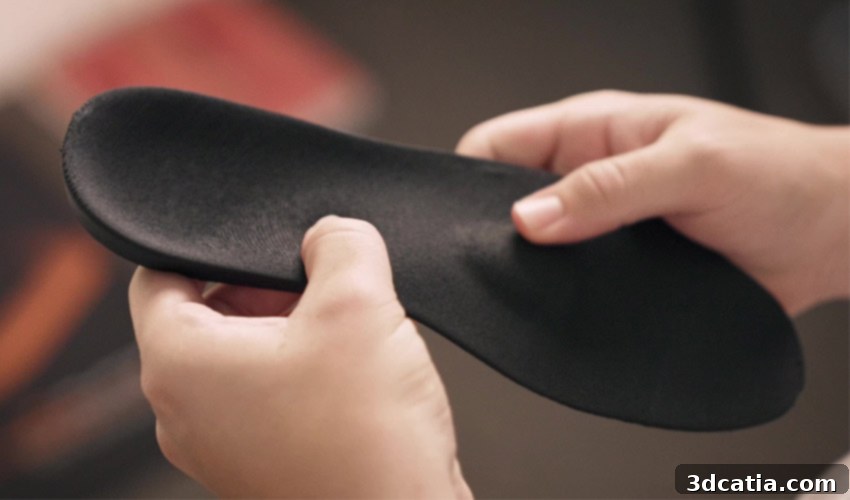
Revolutionizing Orthopedic Care: Rodin4D’s Arkad Digital 3D Printing Solution for Custom Insoles
In the dynamic world of orthopedic care, the demand for highly personalized and efficient solutions is constantly growing. Rodin4D, a recognized global leader in computer-aided design and manufacturing (CAD/CAM) within the orthopedic sector, is at the forefront of this evolution. They have recently unveiled their groundbreaking new solution specifically tailored for orthopedic insoles, aptly named Arkad. This innovative platform represents a significant leap forward, streamlining the entire process from patient assessment to the final product. Arkad is built upon a sophisticated, yet user-friendly, 3-step digital workflow: precise data acquisition via 3D scanning, intuitive insole design using dedicated software, and finally, advanced manufacturing through 3D printing. This comprehensive digital ecosystem is specifically engineered for orthopedic professionals, enabling them to create highly customized, personalized insoles in a matter of hours, directly from their practice. Rodin4D’s vision was to deliver a complete, turnkey solution that is not only highly accessible but also perfectly adapted to the intricate and evolving needs of the orthopedic profession, setting a new standard for patient care and practitioner efficiency.
The development of the Arkad solution was a testament to Rodin4D’s commitment to innovation driven by real-world needs. For two intensive years, the French company engaged deeply with various specialists in the orthopedic and podiatric fields, diligently listening to and meticulously identifying their expectations, challenges, and unaddressed needs. These extensive and collaborative exchanges were instrumental in shaping Arkad into a solution that directly addresses the daily problems encountered by practitioners. Such issues included the complexities and limitations of traditional at-home production methods, the difficulty in achieving consistent quality, and critically, the near impossibility of precisely incorporating multiple densities into a single insole – a key factor for truly effective biomechanical support. Arkad was thus conceived as a direct answer to these pain points, promising enhanced precision, greater flexibility, and ultimately, superior outcomes for patients.
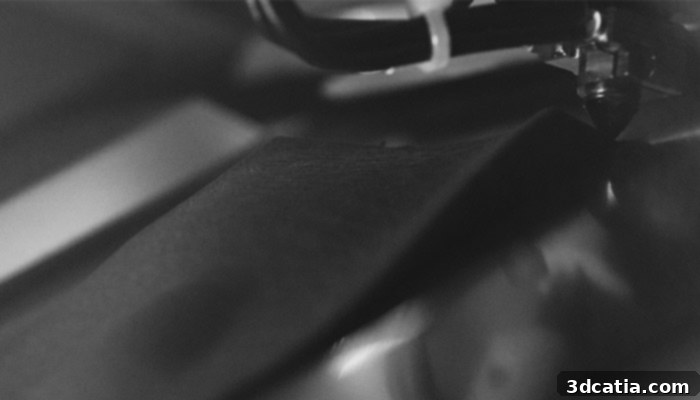
Arkad has developed a 3D printing solution for custom-made orthopedic insoles (photo credits: Rodin4D)
Arkad: A Tailored Digital Solution for Every Orthopedic Practitioner
The journey to a perfectly customized insole with Arkad begins with the crucial data acquisition step. Understanding the diverse preferences and methodologies of practitioners, Rodin4D meticulously designed a 3D scanning solution that offers unparalleled freedom and flexibility. The goal was to remove any constraints for the user, allowing them to choose their preferred method for capturing a precise foot imprint. This new digital 3D solution empowers practitioners to conduct various types of scans, adapting to specific diagnostic requirements. Whether it’s a full-weight bearing scan to assess the foot under natural load, a semi-weight bearing scan for nuanced biomechanical analysis, or a non-weight bearing scan for anatomical precision, Arkad accommodates it all. This versatility ensures that the practitioner can gather the most relevant and accurate data for each unique patient condition. The heart of this acquisition system is Arkad Scan, an intuitive and powerful application readily available on iPad and iPhone devices. This accessibility means that a professional can effortlessly and quickly scan the feet of their patients, laying the foundation for designing incredibly precise and perfectly adapted insoles. The move from traditional plaster casts to digital 3D scanning not only eliminates mess and storage issues but also significantly enhances the accuracy and repeatability of the impression, ensuring a better starting point for customized treatment.
Following the successful completion of the data capture, the practitioner transitions to the modeling phase using the sophisticated Arkad Soft software. Rodin4D has engineered this software with versatility in mind, ensuring it can seamlessly integrate with and even enhance existing traditional methods, such as thermoforming or element-by-element manufacturing. This forward-thinking approach means practitioners aren’t forced to abandon their tried-and-true techniques but can instead augment them with digital precision. Arkad Soft is equipped with a comprehensive suite of specialized business tools, offering advanced functionalities for design, analysis, and optimization tailored for orthopedic professionals. Crucially, the software boasts broad compatibility with various manufacturing processes, including cutting-edge 3D printing and conventional milling, providing practitioners with maximum flexibility in how they bring their designs to life. This adaptability ensures that Arkad Soft is not just a design tool, but a central hub for diverse fabrication strategies.
Beyond its technical capabilities, Arkad Soft distinguishes itself as an exceptionally ergonomic platform, designed for intuitive use and deep customization. Practitioners can personalize elements and templates to perfectly match their specific workflows and patient requirements. Rodin4D proudly asserts that, once mastered, the combined process of scanning and designing an insole requires no more than 10 minutes of dedicated work. This remarkable efficiency is further amplified when addressing recurring patient needs or identical pathologies. The software’s intelligent design allows practitioners to easily access and review a patient’s historical work data, enabling rapid adaptation and precise adjustments from one year to the next. This feature significantly reduces redesign time and enhances continuity of care, solidifying Arkad Soft’s position as a powerful tool for modern podiatric and orthopedic practices seeking to optimize their workflow without compromising on the quality or personalization of their custom insoles.
The solution is ergonomic and easy to use (photo credits: Rodin4D)
Finally, after the meticulous stages of digital acquisition and design, the Arkad workflow culminates in the innovative manufacturing phase. Rodin4D introduces the Arkad Printer, a state-of-the-art multi-density 3D printer specifically optimized for orthopedic applications. This cutting-edge technology leverages filament spools, primarily utilizing high-performance TPU (Thermoplastic Polyurethane), to meticulously fabricate custom orthopedic insoles. TPU is an ideal material for insoles due to its exceptional flexibility, durability, shock absorption, and patient comfort, ensuring the longevity and effectiveness of the orthotic device. A standout feature of the Arkad Printer is its remarkable capacity for continuous printing – it can produce up to 100 pairs of insoles with minimal human intervention, dramatically boosting productivity for busy practices. Rodin4D estimates that a practitioner can comfortably print 10 pairs of insoles per day, demonstrating the solution’s potential to meet high demand efficiently.
The true innovation at the core of the Arkad Printer lies in its pioneering multi-density 3D printing capability. This feature represents a paradigm shift in insole manufacturing, allowing practitioners an unprecedented level of control over the physical properties of the orthotic. Through the Arkad Soft software, practitioners can select from a diverse panel of 17 distinct densities. This extensive range enables them to precisely define areas of varying firmness and flexibility within a single insole, tailoring the biomechanical support to the exact needs of the patient. For instance, an insole can feature firmer support under the arch for stability, softer cushioning for pressure relief in specific areas, and medium density for overall comfort. This level of granular control was previously unattainable with traditional manufacturing methods, providing a truly bespoke solution that significantly enhances the therapeutic effectiveness and patient comfort of custom orthopedic insoles. The precision offered by multi-density 3D printing ensures that each insole is a perfectly optimized blend of support and comfort, designed to address specific pathologies and improve patient mobility and well-being.
An Adapted Digital Chain: Facilitating the Future of Orthopedic Insole Manufacturing
With the introduction of Arkad, Rodin4D successfully addresses and overcomes several critical constraints faced by professionals across the orthopedic sector. Foremost among these is the provision of a truly global and integrated solution that can be seamlessly incorporated directly into any practice, encompassing the entire workflow from initial digitization and precise software design to the final manufacturing stage. Rodin4D’s primary objective was to ensure this digital flow was as fluid, intuitive, and efficient as possible. Consequently, Arkad’s three foundational pillars – data acquisition, design software, and 3D printing – are inherently simple to use and ergonomically designed. The overarching goal is to achieve significant gains in both precision and productivity, allowing practitioners to deliver superior patient outcomes with greater efficiency. Furthermore, a crucial aspect of the Arkad development was the commitment to offering an affordable solution, making this advanced technology accessible to a broader range of practices and ensuring a viable return on investment for professionals.
Delving deeper into the economic aspects, Rodin4D provides compelling data regarding the cost-effectiveness of the Arkad solution. They state that, on average, a pair of custom insoles produced with Arkad costs approximately 15 euros. This figure includes an estimated 7 euros for raw materials and factors in the amortization of the entire solution over a realistic 5-year period. This transparent cost breakdown highlights the economic viability for practitioners. Moreover, Rodin4D understands that not every practice may be ready or able to invest in an in-house 3D printer immediately. To address this, they offer practitioners the flexibility to outsource the manufacturing component, allowing them to leverage the Arkad design capabilities and then subcontract the printing to a specialized facility. This adaptable investment model lowers the barrier to entry, enabling more professionals to adopt this advanced digital workflow. The comprehensive nature of the Arkad solution, coupled with its innovative multi-density printing capabilities and flexible investment options, truly positions it as a transformative tool for modern orthopedic and podiatric practices worldwide, promising to elevate the standard of patient care.
The Arkad solution has already garnered significant attention and has been successfully integrated into the daily practices of orthopedic professionals, both in France and internationally. A podiatrist from Bordeaux, a testament to the solution’s efficacy, shared their enthusiastic feedback: “Thanks to digital technology, I no longer have to start from scratch when renewing my orthopedic insoles. Taking care of my patients is made easier and the 3D technology is much appreciated.” This direct feedback underscores the tangible benefits of Arkad: enhanced efficiency, improved patient experience, and the undeniable appeal of cutting-edge 3D technology in clinical settings. The ability to access a patient’s historical data and quickly adapt designs for renewal or identical pathologies not only saves invaluable time but also ensures consistent, high-quality care. This digital transformation empowers practitioners to focus more on patient interaction and clinical assessment, confident that the manufacturing process is precise and reliable. We encourage all interested professionals to reach out to the dedicated Rodin4D teams to explore further details about the transformative Arkad solution and discover how it can revolutionize their practice.
What are your thoughts on the innovative Arkad solution and its potential impact on orthopedic care? We invite you to share your insights in a comment below or join the conversation on our LinkedIn, Facebook, and Twitter pages! For the latest advancements and breaking news in the world of additive manufacturing, don’t forget to sign up for our free weekly Newsletter here, delivering the most pertinent 3D printing news directly to your inbox. You can also explore all our informative videos and demonstrations on our dedicated YouTube channel, where you can see the future of orthopedic innovation in action.