
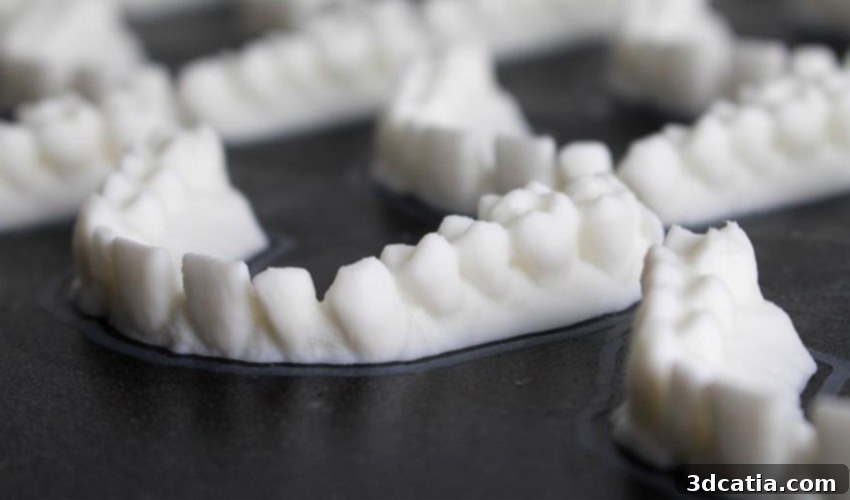
The Future of Digital Dentistry: 3D Printing Market Projected to Reach $9.5 Billion by 2027
The landscape of dentistry is undergoing a profound transformation, largely driven by the rapid advancements in additive manufacturing. SmarTech Publishing, a leading authority in additive manufacturing market intelligence, recently unveiled its comprehensive report on the 3D printing dental market. This highly anticipated analysis paints a vivid picture of exponential growth, forecasting an astounding increase in market size to $9.5 billion by 2027. This projection underscores the immense potential and growing integration of 3D printing technologies within dental practices and laboratories worldwide. The report further highlights the sector’s robust performance, noting an impressive year-on-year growth exceeding 35% in both 2016 and 2017. These compelling figures not only demonstrate the significant opportunities available within the dental 3D printing sector but also reflect the continuous evolution and improvement of additive manufacturing processes, materials, and equipment. The findings also predict substantial enhancements in 3D printers, specialized materials, and shifts in market shares across the industry value chain.
3D Printing in Dentistry: Experiencing Unprecedented Growth
The impressive annual growth rates of 35% are a direct consequence of the escalating adoption of advanced 3D technologies across the entire dental market. A growing number of stakeholders, including prostheticians, general dentists, and specialized dental laboratories, are actively integrating 3D printing into their workflows to fabricate a wide array of dental solutions. This widespread embrace signals a fundamental shift in how dental devices are designed and manufactured. SmarTech’s report eloquently captures this paradigm change, stating that “today, in a laboratory environment, it is common to have both subtractive and additive solutions that coexist in a digital workflow strategy.” This observation perfectly illustrates the increasingly symbiotic relationship between traditional and cutting-edge manufacturing methods, showcasing the heightened confidence and increased adoption of 3D printing as an indispensable tool in modern dental practice. The advantages offered by this technology, such as unparalleled customization, enhanced precision, and expedited production times, are proving irresistible to dental professionals seeking to optimize patient care and operational efficiency.
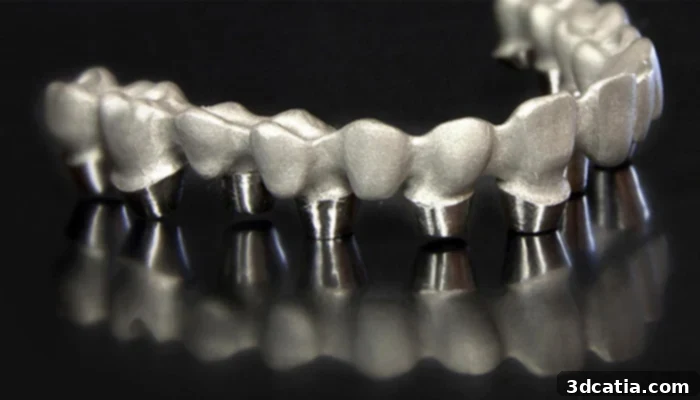
A metal 3D printed dental implant, demonstrating the remarkable ability of 3D printing to create highly complex and precise anatomical structures.
For many years, dentists and dental specialists across the globe have unanimously recognized that digital dentistry represents the undeniable future of the industry. In this digital revolution, 3D printing is uniquely positioned to become the premier digital dental manufacturing process. Its inherent flexibility in production, coupled with exceptional efficiency and unparalleled accuracy, makes it ideally suited for manufacturing a diverse range of dental products. Whether it’s the creation of custom orthodontic aligners, intricate dental prostheses, durable dental crowns, precision surgical guides, or highly accurate models for diagnostics and planning, 3D printing delivers consistent, high-quality results. The ability to produce bespoke, patient-specific devices on demand, often within hours, dramatically reduces turnaround times and enhances the overall patient experience. This shift towards digital fabrication not only streamlines the entire workflow from impression to final product but also opens up new possibilities for advanced treatments and personalized care that were previously unattainable with conventional manufacturing methods.
Driving Innovation: Key 3D Printing Technologies in Dental
SmarTech Publishing’s report delves deeper into the technological forces shaping this rapid expansion, projecting that over the next decade, 3D technologies primarily based on metal and resin will emerge as the dominant production methods for virtually all dental solutions. This monumental shift is ultimately forecasted to encompass the entire spectrum of dental prostheses, from temporary crowns to full dentures and sophisticated implant-supported restorations. The report meticulously details how desktop 3D resin printing solutions, in particular, are poised to play a pivotal role in accelerating the growth of dental 3D printing due to their affordability, precision, and ease of integration into existing lab environments. These accessible yet powerful machines are democratizing digital dentistry, making advanced additive manufacturing capabilities available to a broader range of dental practices and laboratories.
Resin-Based 3D Printing: Precision and Accessibility for Dental Applications
Within the resin-based 3D printing segment, technologies like Stereolithography (SLA) and Digital Light Processing (DLP) are revolutionizing the production of dental models, surgical guides, aligner molds, and even some direct restorative components. These technologies are renowned for their exceptional resolution and surface finish, which are critical for the intricate details required in dental applications. SmarTech’s analysis specifically highlights the remarkable trajectory of Formlabs, a leading manufacturer of resin 3D printers, which has seen its market share increase by an astonishing twenty-fold in just the last two years. This incredible growth is largely attributable to the widespread adoption of their flagship Form 2 SLA 3D printer, and more recent iterations, coupled with their expansive portfolio of certified dental resins. Formlabs has not only made professional-grade 3D printing more accessible but has also developed a comprehensive ecosystem of biocompatible, castable, and model-specific resins that meet stringent dental standards, thereby enabling a vast array of in-house dental applications. This combination of reliable hardware and specialized materials has empowered countless dental professionals to bring previously outsourced processes in-house, leading to faster production, greater control over quality, and ultimately, improved patient outcomes.
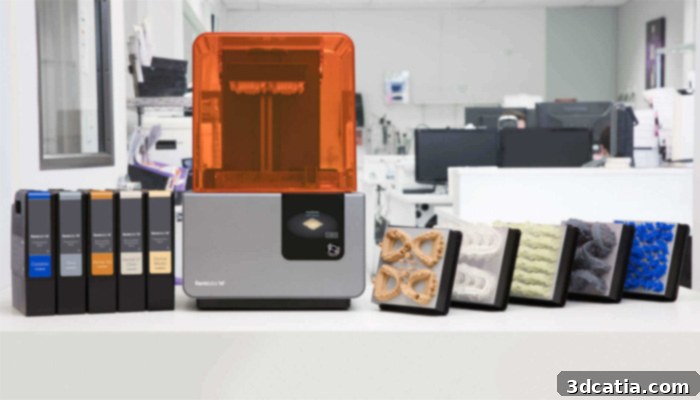
The Formlabs Form 2, an acclaimed SLA 3D printer that has significantly impacted the dental sector with its reliability and precision.
The Strength of Metal 3D Printing for Advanced Dental Implants and Frameworks
Beyond resin-based systems, additive manufacturing is anticipated to play an increasingly critical role in the dental sector, particularly in the sophisticated production of metal implants and frameworks. Technologies such as Selective Laser Melting (SLM) and Electron Beam Melting (EBM) are capable of creating incredibly strong, durable, and biocompatible metal components with complex internal structures that are impossible to achieve with traditional subtractive methods. These advanced metal 3D printing techniques offer unparalleled advantages for dental implants, allowing for patient-specific designs that optimize integration with bone and surrounding tissues. The ability to precisely control the porosity and microstructure of the metal can also enhance osseointegration, leading to more successful and long-lasting implant solutions. The SmarTech report powerfully underscores this trend, estimating that by 2024, the market for 3D metal printing specifically for dental applications will surge to manufacture over $1 billion worth of implants alone. This impressive forecast highlights the growing confidence in metal additive manufacturing as a cornerstone for future dental implantology and restorative dentistry, providing superior materials and designs for both patients and practitioners.
The Broader Impact and Future Outlook for Digital Dentistry
The transformative impact of 3D printing on the dental industry extends far beyond mere technological advancement; it signifies a fundamental shift towards a more precise, personalized, and efficient model of dental care. As the market continues its upward trajectory toward the projected $9.5 billion valuation, we can anticipate further innovations in materials, a wider range of accessible 3D printing systems, and even more streamlined digital workflows. The ability to fabricate everything from temporary restorations to complex full-arch prostheses with unparalleled accuracy is not only improving clinical outcomes but also making advanced dental care more accessible and affordable. This evolution benefits patients through better-fitting devices, reduced chair time, and faster treatment completion, while practitioners gain enhanced control over their manufacturing processes, reduced material waste, and the ability to offer cutting-edge solutions to their clientele.
The ongoing research and development in dental 3D printing are continuously pushing the boundaries of what is possible, exploring new applications such as direct printing of dental fillings, advanced ceramic materials for aesthetics and strength, and even bio-printed tissues for regenerative dentistry. This dynamic field promises a future where dental treatments are not only highly customized but also seamlessly integrated into a fully digital ecosystem, from initial diagnosis and treatment planning to final fabrication and follow-up. The collaboration between dental professionals, material scientists, and additive manufacturing engineers will undoubtedly lead to groundbreaking solutions that redefine oral healthcare in the coming decades.
Are you excited for the remarkable future of 3D printed dental solutions and digital dentistry? We invite you to share your thoughts and insights in a comment below or join the conversation on our Facebook and Twitter pages! Don’t miss out on the latest advancements and industry news; sign up for our free weekly Newsletter to get all the essential updates in 3D printing delivered straight to your inbox!