
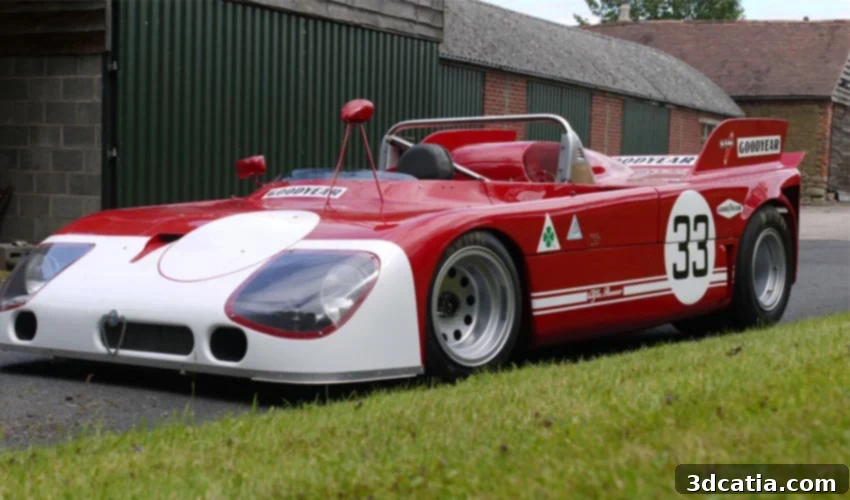
Revolutionizing Classic Car Restoration: How KW Heritage Uses 3D Technologies for Iconic Vehicles Like the Alfa Romeo Tipo 33/3
The world of classic car restoration has long grappled with the significant challenges of obsolescence and sourcing authentic, high-quality replacement parts. Preserving the legacy of automotive masterpieces often means overcoming hurdles related to rare components, prohibitively expensive manufacturing processes, and the sheer unavailability of original specifications. However, a new era is dawning, spearheaded by innovative companies leveraging cutting-edge 3D technologies to breathe new life into cherished vintage vehicles. At the forefront of this revolution is KW Heritage, an affiliate of the esteemed UK group KW Special Projects, which recently captivated the automotive world with its remarkable restoration of the legendary 1967 Alfa Romeo Tipo 33/3.
Unveiled earlier this month at the prestigious Goodwood Revival automobile festival, the meticulously restored Alfa Romeo Tipo 33/3 stands as a testament to what is possible when modern engineering meets automotive heritage. This particular vehicle holds immense historical significance, being one of only twelve ever created, making its preservation not just a technical challenge but a cultural imperative. The successful restoration by KW Heritage, heavily reliant on advanced 3D technologies, demonstrates a pioneering approach that promises to reshape the landscape of classic vehicle maintenance and preservation for decades to come.
The Indispensable Role of 3D Technologies in Heritage Automotive
There is little doubt that digital manufacturing processes, including 3D scanning, CAD modeling, and additive manufacturing (3D printing), are playing an increasingly pivotal role in the restoration of vintage cars. This trend isn’t isolated; it’s a growing movement within the heritage automotive sector. We’ve previously observed this transformative impact, for instance, in conversations with the French startup GRYP, which utilizes 3D printing to repair old components, offering collectors a more affordable and sustainable alternative to traditional methods. KW Heritage has firmly embraced this innovative market, applying these sophisticated techniques to a truly iconic subject: the Alfa Romeo Tipo 33/3, a vehicle now over 50 years old and requiring specialized attention.
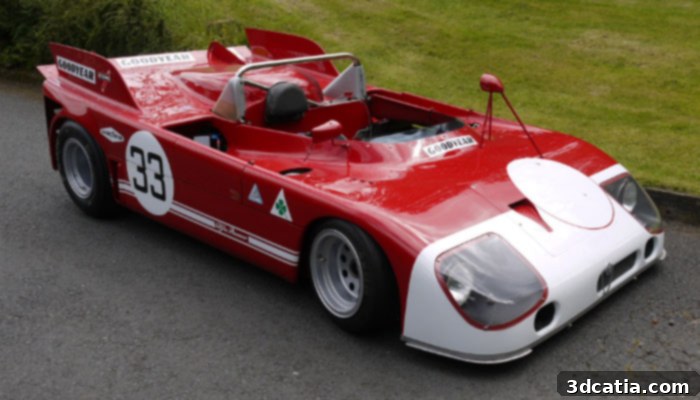
Photo credits: KW Heritage
Edward Smith, Heritage Engineering Manager at KW Heritage, eloquently summarizes the core challenge and their innovative solution: “Obsolescence is a major issue in the classic and historic vehicle market, but modern engineering techniques offer a timely and effective solution. At KW Heritage, we provide modern engineering and manufacturing solutions to the heritage market, from components through to full vehicles. By working closely with teams, restorers, collectors, and vehicle owners, we are helping enthusiasts strike the perfect balance between old and new, with modern engineering techniques keeping the cars of yesteryear on the road for longer.” This philosophy underpins their approach, demonstrating a deep understanding of the classic car community’s needs and the potential of advanced manufacturing to meet them.
The Genesis of a Groundbreaking Project: Restoring the Alfa Romeo Tipo 33/3
The specific restoration project for the Alfa Romeo Tipo 33/3 originated from a direct need identified by the English racing driver Martin Stretton. His treasured vehicle suffered from a damaged hood, a seemingly minor issue that nevertheless caused significant start-up problems and threatened its operational integrity. The fundamental hurdle was that the original components required to rectify this defect were no longer available, having long since become obsolete. Faced with this common dilemma in classic car ownership, Stretton sought the expertise of KW Heritage.
KW Heritage’s solution was both ingenious and effective, leveraging a suite of modern digital fabrication tools. Their process began with meticulously 3D scanning the damaged hood component. This digital capture created a precise geometric model, allowing the team to generate accurate Computer-Aided Design (CAD) files. With these digital blueprints, KW Heritage engineers were able to redesign the specific part. Crucially, this redesign wasn’t merely a replication; it involved addressing and eliminating previous design flaws that might have contributed to the original component’s failure, all while rigorously adhering to the stringent certification requirements of the International Federation of the Automobile (FIA). This ensures that any remanufactured part not only functions perfectly but also meets the necessary safety and performance standards for competitive or public use.
Following the digital redesign phase, the next critical step involved physical validation. The team at KW Heritage 3D printed a prototype of the newly designed component. This tangible prototype allowed for rigorous testing and fitment checks, enabling them to validate their approach and ensure the design was flawless before committing to final production. Once validated, the component transitioned from a digital file and plastic prototype to a high-performance metal part, cast in durable aluminum. This multi-stage process—from scan to CAD, prototype to final casting—exemplifies the power and versatility of 3D technologies in overcoming the challenges inherent in classic vehicle restoration.
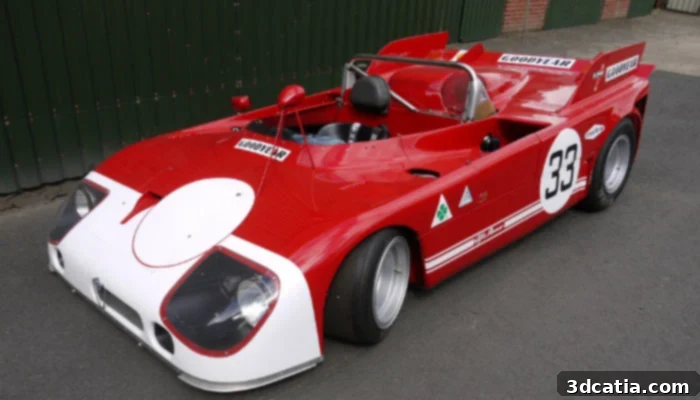
Photo credits: KW Heritage
The Unparalleled Benefits: Cost-Effectiveness, Sustainability, and Future-Proofing
The advantages of this modern restoration process, as highlighted by KW Heritage, extend far beyond simply recreating a part. One of the most compelling benefits is the dramatic reduction in cost. The company reports that their digital manufacturing approach can be less than a third of the price of traditional, handcrafted piece-work. This significant cost saving is achieved through several factors: minimizing the need for expensive traditional tooling, reducing labor time for complex geometries, and accelerating the design-to-production cycle. For classic car owners and enthusiasts, this translates into making restorations more accessible and economically viable.
Beyond immediate financial savings, this approach also offers significant long-term benefits. By leveraging 3D scanning and CAD modeling, KW Heritage creates and retains precise digital files of all remanufactured parts. This digital archive is invaluable; it means that if the component ever needs replacing again, or if another Tipo 33/3 owner requires the same part, it can be produced rapidly and cost-effectively without repeating the initial reverse-engineering process. This effectively future-proofs the vehicle, ensuring its longevity and ease of maintenance for generations to come. It also aligns with principles of sustainability, as parts can be produced on demand, reducing waste associated with mass production or the search for dwindling original stock.
This method of digital spare parts creation is becoming increasingly prevalent across various industries, a trend underscored by a comprehensive study from the Finnish MTB center. Their research indicates that as much as 5% of all spare parts can now be efficiently scanned and 3D printed. This statistic highlights a fundamental shift in manufacturing paradigms, where additive technologies are moving from niche applications to mainstream industrial solutions for intricate and low-volume production needs, perfectly suiting the demands of the heritage automotive sector.
The pioneering work by KW Heritage on the Alfa Romeo Tipo 33/3 is not just a success story for one car; it’s a blueprint for the future of classic vehicle restoration. It demonstrates how embracing digital manufacturing can solve critical challenges like part obsolescence, reduce costs, increase precision, and ultimately, preserve automotive history with unparalleled efficiency and quality. For those interested in diving deeper into the technical details and broader implications of this remarkable project, all pertinent information can be found on the official website of KW Heritage.
The Future of 3D Technologies in the Automotive Sector
The successful restoration of the Alfa Romeo Tipo 33/3 with 3D technologies serves as a compelling case study, illustrating the immense potential of additive manufacturing within the broader automotive sector. From prototyping new designs to creating custom components for modern vehicles, and now, to authentically restoring irreplaceable classics, 3D printing is continuously expanding its footprint. It offers car manufacturers, aftermarket suppliers, and restoration specialists unprecedented flexibility, speed, and cost-efficiency. As materials science advances and 3D printing technologies become even more sophisticated and scalable, we can anticipate an even wider adoption of these methods, fundamentally changing how vehicles are designed, built, maintained, and preserved.
This intersection of cutting-edge technology and automotive heritage creates exciting possibilities for enthusiasts and professionals alike, ensuring that the passion for classic cars remains vibrant and sustainable. The work of KW Heritage is a shining example of this synergy, pushing the boundaries of what’s achievable in the realm of classic car preservation. What are your thoughts on the future of 3D technologies in the automotive sector, particularly in the context of restoration and customisation? We invite you to share your perspectives in a comment below or join the conversation on our Facebook and Twitter pages! And remember to sign up for our free weekly Newsletter, to get all the latest news in 3D printing sent straight to your inbox and stay ahead of the curve!