Applications
A 3D Printed Electric Tricycle Made From Recycled Waste
The Austrian design studio, EOOS, has developed a zero-emissions utility vehicle (ZUV), created using 3D printing and recycled materials. The 3D printed electric tricycle was made from 70kg of waste collected from various supermarkets in the Austrian capital. Its particularity&he
- 3 min read
- Applications
- Six more stories
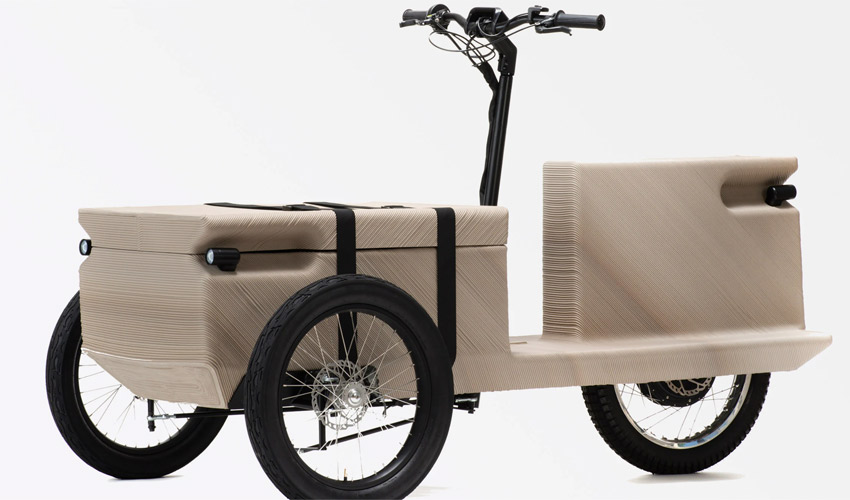
The Austrian design studio, EOOS, has developed a zero-emissions utility vehicle (ZUV), created using 3D printing and recycled materials. The 3D printed electric tricycle was made from 70kg of waste collected from various supermarkets in the Austrian capital. Its particularity also lies in the absence of pedals and chain: the bike moves forward thanks to a rear wheel hub motor. The objective is to allow everyone to 3D print the frame in a fablab near their home and to equip the bike in a suitable store (wheels, brakes, handlebars, motor). This concept of local production has become more popular as it aims to reduce our ecological impact.
The Austrian studio worked with the association The New Raw to carry out this project. If the name rings a bell, it’s probably because of the Print Your City project, which started with 3D printing street furniture from recycled waste in Amsterdam. The association surfs on this idea of circular economy by giving a second life to everything we can throw away. An impossible idea without the use of additive manufacturing.
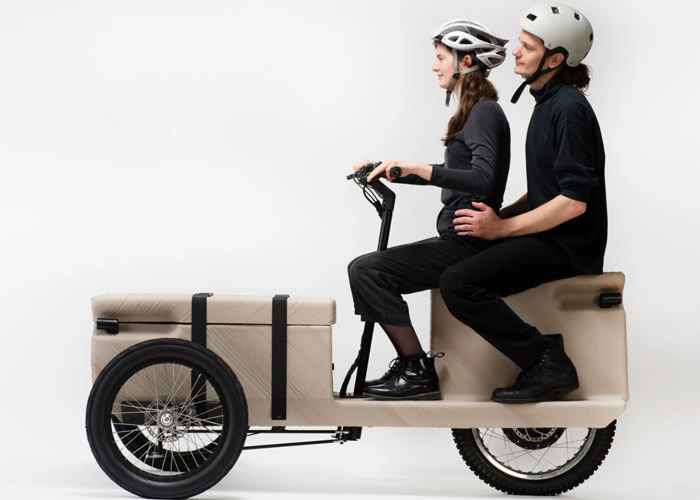
Photo Credits: EOOS
ZUV, a bicycle that is local and more sustainable
The bike project started with the desire to design an affordable vehicle that could be produced locally. 3D printing offered this possibility, so the EOOS studio imagined a polypropylene frame, printable on a large format machine – most likely a robotic arm. The material used would come from the waste of Vienna’s supermarkets. Harald Gründl of the EOOS studio explains: “When supermarket plastic in Vienna goes to recycling, they’re just burning it. And this creates another three tonnes of CO2 emissions, which we could avoid. The reuse of post-consumer plastics is a big step towards net-zero carbon emissions. Every new vehicle will be, in a way, carbon neutral as long as the 3D printer is operated with energy coming from renewables.”
More from the desk
Six other notes from the rest of the bench.
 ApplicationsFast Hydrogel Stereolithography Printing to Revolutionise Organ TransplantsResearchers from the University at Buffalo in New York have developed a way to create large‐scale biocompatible hydrogel models using a fast hydrogel stereolithography printing (FLOAT) method. This method is said to be suitable for printing cells with embedded blood…
 NewsOrbex unveiled largest 3D printed rocket engine in the worldThe British aerospace company Orbex regularly launches small, micro and nano satellites into accurate low Earth orbits. Until now, the company had not drawn much attention to its additive manufacturing activities or developments. However, they recently revealed that they have&hel
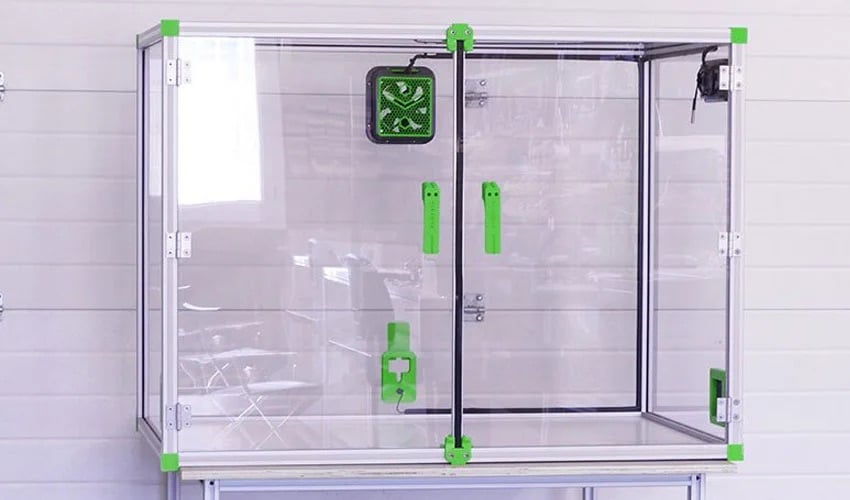 PrintersWhy Should You Invest in a 3D Printer Enclosure?As extrusion-based 3D printing continues to gain popularity, so too do concerns about its potential health risks, particularly related to the release of ultrafine particles and volatile organic compounds. Numerous research teams have examined this issue, and the findings are&hell
 NewsInfographic: The Role of 3D Printing in Sports and the OlympicsAdditive manufacturing has gained in popularity in many sectors, including the world of sports. More and more companies are experimenting with 3D printing to design more comfortable and safe equipment, or to improve athletes’ performance. Furthermore, with the upcoming 2024
 NewsManufacturing May Be Possible on Mars Thanks to 3D PrintingWhat if living on Mars was possible by using 3D printing? That’s the question researchers at Washington State University (WSU) have asked themselves. Recently, they succeeded in making a solid, high-performance material that could be used to 3D print tools…
 ApplicationsMicroalgae Ink Could Be Used for Environmentally-Friendly 3D Printing in HealthcareMicroalgae are a diverse group of microorganisms that photosynthesize and are estimated to produce around 50% of the world’s oxygen. As a renewable raw material, they already have numerous applications, for example in food production or energy generation. But now…