Applications
Microalgae Ink Could Be Used for Environmentally-Friendly 3D Printing in Healthcare
Microalgae are a diverse group of microorganisms that photosynthesize and are estimated to produce around 50% of the world’s oxygen. As a renewable raw material, they already have numerous applications, for example in food production or energy generation. But now…
- 3 min read
- Applications
- Six more stories

Microalgae are a diverse group of microorganisms that photosynthesize and are estimated to produce around 50% of the world’s oxygen. As a renewable raw material, they already have numerous applications, for example in food production or energy generation. But now another exciting field of application is opening up for microalgae, as they could play a key role in medicine thanks to the use of 3D printing.
An international research team led by Prof. Dr. Eva Blasco from the Institute for Molecular Systems Engineering and Advanced Materials at Heidelberg University has developed the first microalgae ink for laser 3D printing of complex, biocompatible microstructures. Prof. Dr. Blasco emphasizes that petrochemical-based polymers have mainly been used so far, especially in the two-photon polymerization required for the production of microstructures. These polymers contribute to the depletion of fossil fuels, the release of greenhouse gases and often the use of toxic components. In contrast, the novel microalgae ink represents an environmentally friendly alternative.
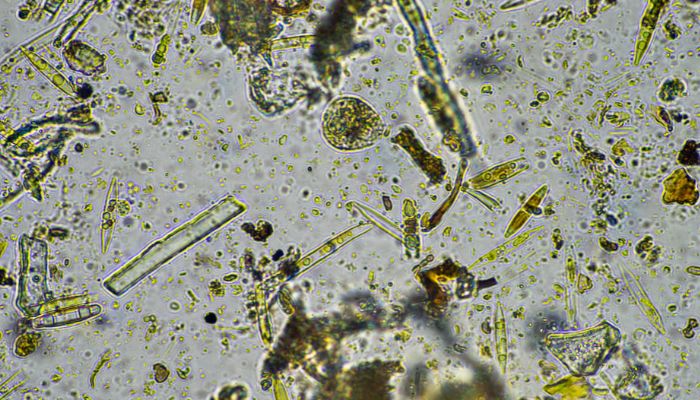
Diatoms and aquatic microorganisms
Two types of algae were used that are particularly rich in fats in the form of triglycerides and are therefore ideal as “biofactories” for the production of sustainable materials: the diatom Odontella aurita and the green algae Tetraselmis striata. To produce the microalgae ink, the triglycerides are extracted from the algae and functionalized with acrylates to enable rapid curing. When exposed to light, the photoactive green dyes trigger a chemical reaction that hardens the microalgae ink. “In this way we avoid using potentially toxic additives like the photoinitiators used in conventional inks,” explains Clara Vazquez-Martel, PhD student in Eva Blasco’s research group at IMSEAM.
More from the desk
Six other notes from the rest of the bench.
 NewsPure gold 3D printed in microstructuresWhat if you could make 3D printed microstructures of pure gold? This is the goal of research conducted by a group of scientists at the University of Twente in the Netherlands. Using a technology based on the use of a laser, researchers…
 MaterialsComposite AM Market to Grow by 21% in 2023Last week, VoxelMatters Research published its market report on composite additive manufacturing in 2023. The market research and consultancy arm aims, with its regularly published reports, to provide important insights into additive manufacturing and identify industry trends. Fo
 NewsTailored by Industry: PioCreat’s Blueprint for Smarter 3D PrintingIn a market filled with “all-purpose” 3D printers, the Chinese 3D printing solution provider PioCreat is taking a different approach. Its machines are tailored to the specific needs of an industry, from compact dental systems to large-format industrial printers. The result is a p
 NewsPost-Processing Techniques That Allow Color in 3D Printed PartsTwo key benefits of additive manufacturing are the greater design freedom and customization that are possible when creating parts. However, not all 3D printers have the capability to create multicolor parts or parts with special finishes. For this, post-processing systems…
 NewsCaltech Progresses Research Into Nanoscale 3D Printed MetalsWhen it comes to 3D printing even the largest structures, understanding the smallest details or imperfections can prove the difference between success and failure. In order to better understand how 3D printed objects perform in the nanoscale, researchers from the…
 MaterialsImpossible Objects and Owens Corning Join Forces to Develop Stronger, Cheaper 3D Printing MaterialsEarlier this week, Impossible Objects announced that it would be joining a development agreement with Owens Corning targeted at developing new materials for Impossible Objects’ revolutionary composite-based additive manufacturing (CBAM) process. While Impossible Objects is both a