Applications
XYZprinting’s SLS Technology: An Ideal Choice for Drone Manufacturing
TEKEVER is a Portuguese company that designs and manufactures maritime surveillance drones for the defense and security sectors. Since 2001, it has been developing unmanned aerial systems (UAS), offering more precisely a range of three products, the AR3, AR4 and…
- 3 min read
- Applications
- Six more stories
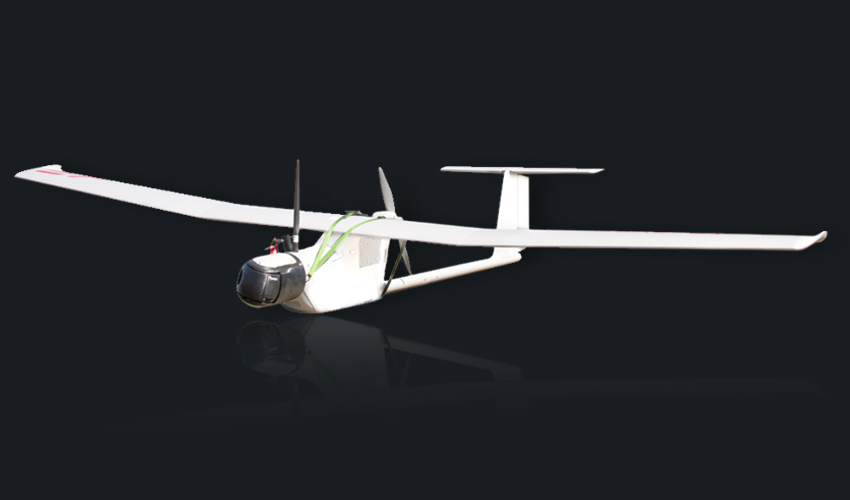
TEKEVER is a Portuguese company that designs and manufactures maritime surveillance drones for the defense and security sectors. Since 2001, it has been developing unmanned aerial systems (UAS), offering more precisely a range of three products, the AR3, AR4 and AR5. The one drone we are particularly interested in is the AR4 because it integrates a 3D printed component made with an SLS machine from XYZprinting. By using the MfgPro230 xS 3D printer, the company was able to design the body of its drone’s turret while reducing its costs and lead times. All while respecting the mechanical requirements and properties of the part.
The development of UASs involves a number of constraints: its components must be strong and impact resistant, but also light and rigid in order to ensure better performance. Using additive manufacturing to produce these parts can meet these expectations – the technology is indeed already widely proven in the aerospace field. By using only the necessary material and the right material, it is possible to optimize the weight/strength ratio of a part while reducing manufacturing time. This is one of the reasons why TEKEVER has taken a closer look at 3D technologies. It first turned to fused deposition modeling (FDM), but the process had some limitations, which led it to test other technologies. The company finally opted for a selective laser sintering (SLS) solution from XYZprinting, among other reasons due to the superior mechanical properties that SLS technology offer compared to FDM.
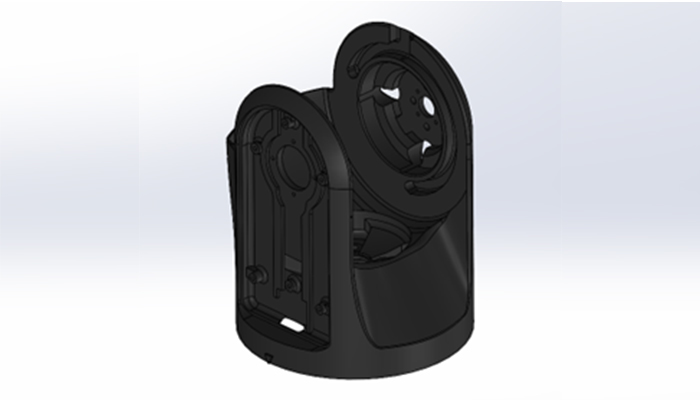
The body of the drone’s turret (photo credits: XYZprinting)
From FDM to SLS for Drones
TEKEVER’s goal was to evaluate the relevance of SLS in terms of surface quality and resistance. To do so, it decided to manufacture the turret body of its AR4 drone. This is a component with a very complex shape, with both thin and thick walls, small holes and rounded edges. The company first 3D printed it on an FDM machine, using ULTEM, a high-performance thermoplastic known for its high weight-to-strength ratio. One of the constraints of this process is the necessity of supports, which adds more material consumption and also impacts the final quality of the part. Since SLS does not require supports, it was a good alternative to FDM.
More from the desk
Six other notes from the rest of the bench.
 MaterialsAll About Lattice Structures in 3D PrintingIn automotive parts, medical implants, running shoes, and hiking backpacks, we’re seeing more and more 3D-printed components featuring lattice or honeycomb patterns. You might think these lattice structures are the latest innovation in 3D printing and design for additive manufact
 NewsTop 5 Videos of the Week: 3D printed Star Wars HelmetThis week’s Top 5 Videos on Christmas Eve is one of the most varied we’ve had. This ranking ranges from 3D printing in the Star Wars games, to 3D printed planes, and 3D printed military drones! Remember, a new Top…
 ApplicationsGroundbreaking First Arena Test on 3D Printed Bombs Shows PromiseFor much of his career, Russ Maines has been dedicated to designing bombs with cast, forged or pressed metals. However, these bombs were expensive and not scalable. So, as a Test and Evaluation Division Director at the Naval Surface Warfare…
 NewsH (Earring); the 3D printed hearing aid jewelleryWhen it comes to relieving the daily lives of people with disabilities, 3D technologies can be useful. It offer the possibility of creating products adapted to each individual and sometimes to completely unpack the person concerned. In any case, this is the feeling…
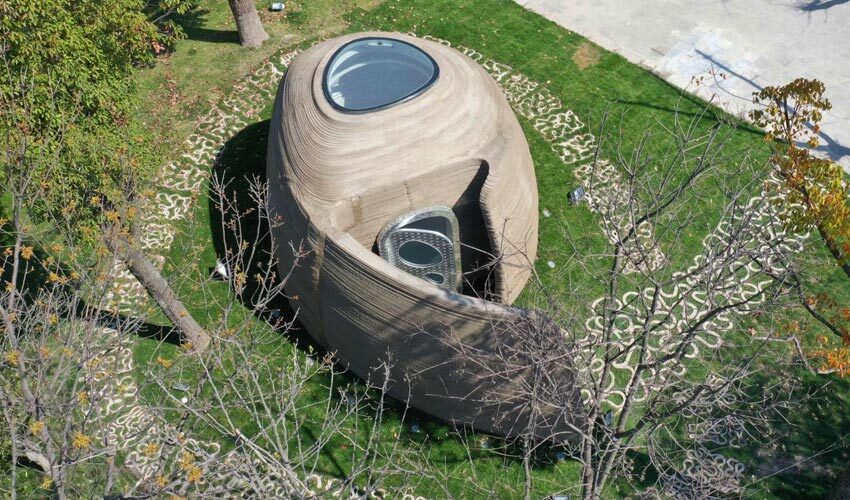 NewsA 3D Printed Book Cabin Has Been Placed in a Shanghai ParkA book cabin that has been 3D printed from concrete has been placed in Shanghai’s Baoshan Wisdom Bay Science and Technology Park. Designed by Professor Xu Weiguo of Tsinghua University’s School of Architecture, the curved structure is part of the…
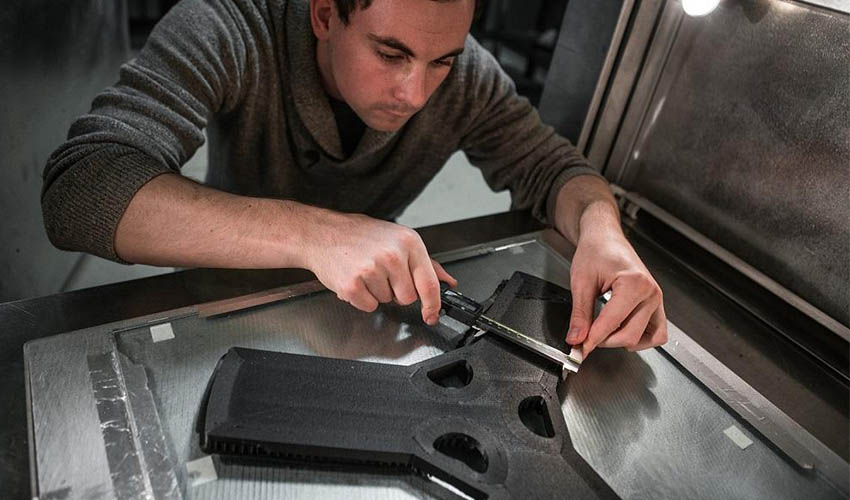 PrintersEssentium announced business expansion initiativesEssentium Inc. has announced a series of business expansion initiatives in response to growing market demand for the company’s platform of industrial-scale additive manufacturing solutions. The company’s High Speed Extrusion (HSE) 180 S 3D printing platform is designed to enable&