Materials
#Working3D: Six Questions for a Additive Manufacturing Materials Engineer
It’s time once again for a new article in the #Working3D series, wherein we present the various professions in the additive manufacturing industry. But no material, no print – that’s why this time we’re taking a closer look at the…
- 3 min read
- Materials
- Six more stories
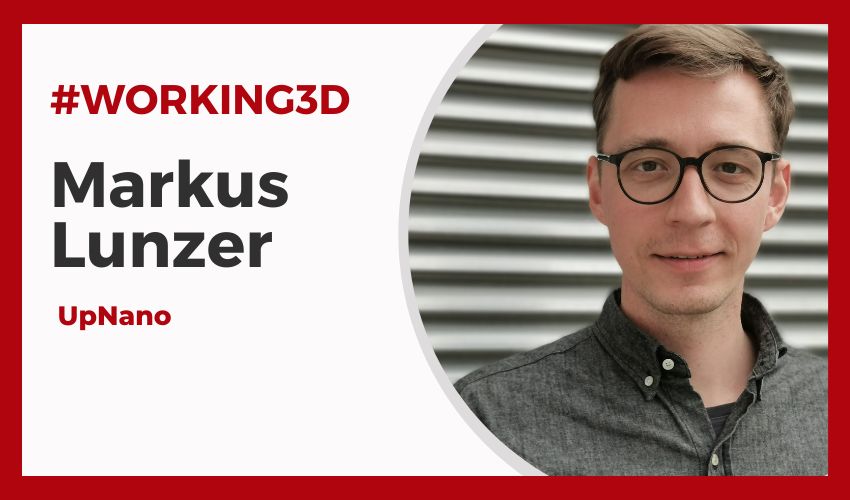
It’s time once again for a new article in the #Working3D series, wherein we present the various professions in the additive manufacturing industry. But no material, no print – that’s why this time we’re taking a closer look at the jobs of the people behind the material and who develop it. What exactly do engineers who are responsible for materials do? What skills and experience do they bring to the table so that 3D printing materials can be created and used for additive manufacturing in a wide variety of areas? We explored these questions in conversation with Markus Lunzer, Team Leader for Materials & Application at the Viennese company UpNano GmbH. He explained what a materials engineer needs to bring to the table and what his day-to-day work looks like.
3DN: Could you introduce yourself?

My name is Markus Lunzer. I studied technical chemistry at the Vienna University of Technology (TU Wien), with a special focus on synthetic chemistry. As part of my dissertation, I worked on photopolymerization and light-cleavable hydrogels. After completing my studies, I started working in materials development at the then newly founded 2-photon 3D printing company UpNano GmbH in 2019, where I have been leading the materials and applications team for four years.
3DN: How did you discover additive manufacturing?
During my master’s thesis, I synthesized molecules that were particularly suitable as photoinitiators for 2-photon polymerization (2PP) due to their structure. This is a particularly high-resolution 3D printing technology that uses a pulsed laser and makes it possible to produce components with resolutions in the sub-micrometer range. While testing these molecules on machines at the university that were still experimental at the time, I realized how exciting this technology is and how much potential it has as a manufacturing technology. So I decided to take a closer look at the application of the technology in my dissertation, while retaining the material development aspect. I then worked on hydrogels for biomedical research, which can be cleaved at a very high resolution using 2PP, for example to create microchannels or locally expose reactive chemical groups.
More from the desk
Six other notes from the rest of the bench.
 NewsStratasys Commits to Sustainable ManufacturingSustainability is one of the most pressing issues for many businesses across industries. So it’s no wonder a leading additive manufacturing company like Stratasys has decided to put forward its action plan for creating a sustainable future. The Israel-based 3D…
 NewsWhat Are the Highlights So Far From RAPID + TCT 2022?RAPID + TCT 2022 has officially started. Already before the event, a number of exciting launches and announcements generated buzz and it is safe to safe that the atmosphere here in Detroit is reflecting that. Over the course of the…
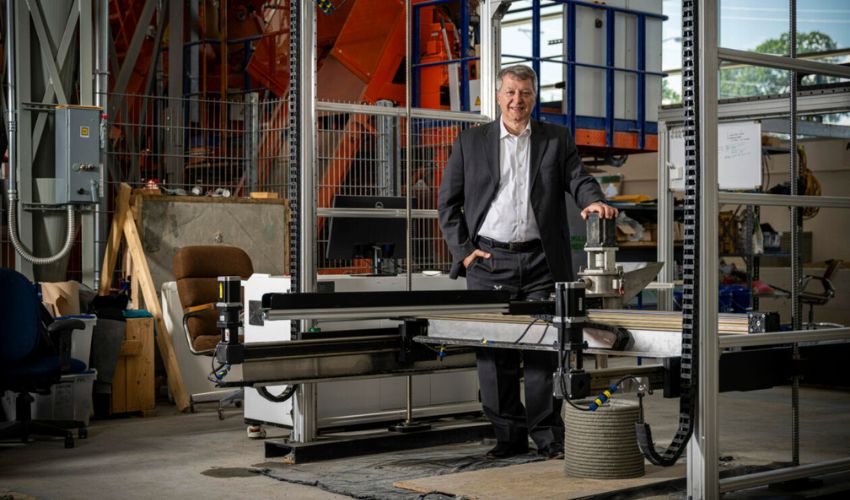 NewsUSACE Funds Research Into AI-Assisted, 3D Printed ConcreteAs much as additive manufacturing has benefitted the general public, the defense sector has also made great gains with 3D printing. So much so that additive manufacturing in the military is expected to be worth $1.7 billion in just a…
 ApplicationsPershing GTX116 Luxury Yacht Includes 3D Printed Air GrillesWho, lying comfortably on the beach and watching the boats on the horizon, has never dreamed of plying the seas aboard in their own luxury yacht? Know that you are not the only one. In fact, the luxury yacht market…
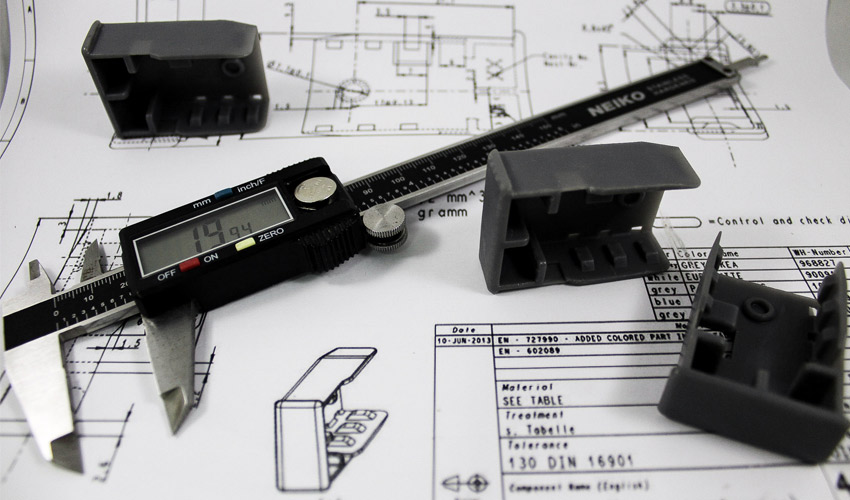 Software#3DStartup: Spare Parts 3D on their 3D Software to Digitalise Spare Parts EasilyOver the last two years, Spare Parts 3D has worked at developing a 3D software to digitalise spare parts and establish a qualified network of production in over 70 countries across the world, therefore building a strong notoriety in the…
 GuidesHow is ACCIONA using AM to support sustainability?ACCIONA, founded back in 1931, is a Spanish conglomerate group dedicated to the development and management of infrastructure and renewable energy. The sectors with which ACCIONA works include energy and infrastructure, which is why, not long ago, they began to integrate…