Guides
#Working3D: Six Questions for an Additive Manufacturing Innovation Engineer
We are back with the #Working3D series in which we get to know first-hand the different professions in the 3D printing sector. On this occasion, we will learn about the day-to-day life of an additive manufacturing innovation engineer. Closely related…
- 3 min read
- Guides
- Six more stories

We are back with the #Working3D series in which we get to know first-hand the different professions in the 3D printing sector. On this occasion, we will learn about the day-to-day life of an additive manufacturing innovation engineer. Closely related to product design and development, this job consists of identifying opportunities and creating integrated technology-based solutions, in an innovative and sustainable way, in this case applied to 3D printing. To learn more, we met Drew Whited, innovation engineer at Cobra Puma Golf, who works in the world of additive manufacturing in the world of sports, specifically the development of golf equipment. We caught up with him to find out more about the position, the qualifications required and what his routine is like at work.
3DN: Could you introduce yourself?
My name is Drew Whited and I currently work at Cobra Puma Golf as an Innovation Engineer within our Innovation team. I graduated from Eastern Washington University with a B.S in Mechanical Engineering followed by an M.S in Sports Product Design from the University of Oregon. While attending UO I specialized in equipment design with my thesis project focusing on designing and building a set of golf clubs for the niche world of Urban Golf (golfing on the street). This eventually led to my introduction into the golf industry and my career at Cobra Puma Golf where I am helping to build new design and manufacturing workflows that utilize computational design techniques blended with traditional and additive manufacturing methods to build innovative and high performing golf equipment.
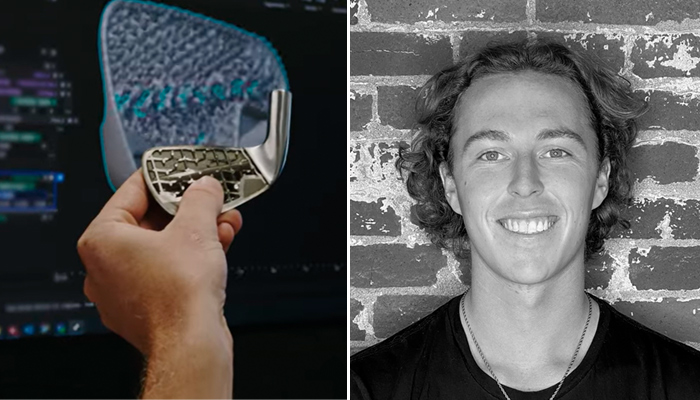
On the right Drew Whited, innovation engineer at Cobra Puma Golf.
3DN: How did you discover additive manufacturing?
My undergraduate capstone project was my first introduction to additive manufacturing. My team and I were tasked with designing and manufacturing a hydraulically controlled prosthetic foot for a fellow teammate. Throughout the design process we quickly learned the advantages of the rapid iteration capabilities additive offers where we were able to quickly print components for both shape validation and tolerance verification. As well, for our final design additive played a key role in helping to reduce weight savings and manufacturing cost through the use of a continuous carbon fiber reinforced nylon printed via FDM which helped to reduce weight, save on manufacturing costs, and offer strength comparable to some metals.
More from the desk
Six other notes from the rest of the bench.
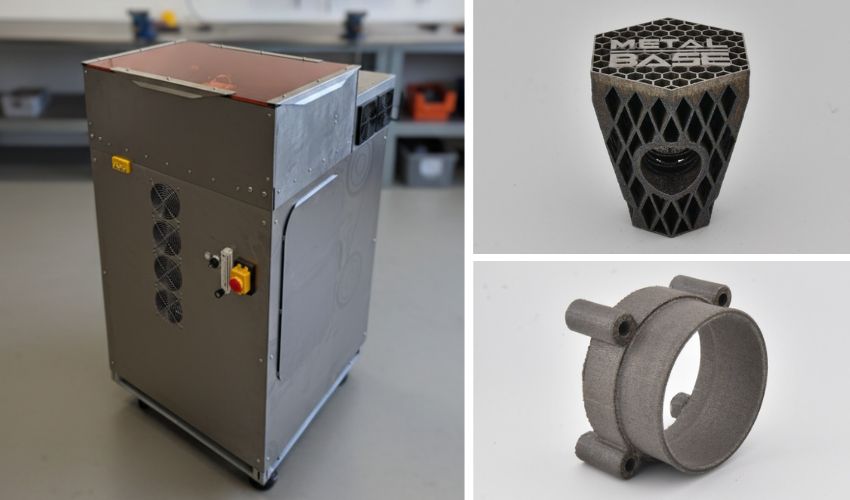 PrintersMetal 1.0 Doubles Kickstarter Goal, Hoping to Pave the Way for Sub-€10k Metal 3D PrintingA metal 3D printer for under €10,000 might sound like a pipe dream, but one Dutch engineer is turning it into a reality. Thomas Martinus Gerardus Bakker, a specialist in mechatronics engineering and system design, has developed the Metal 1.0.…
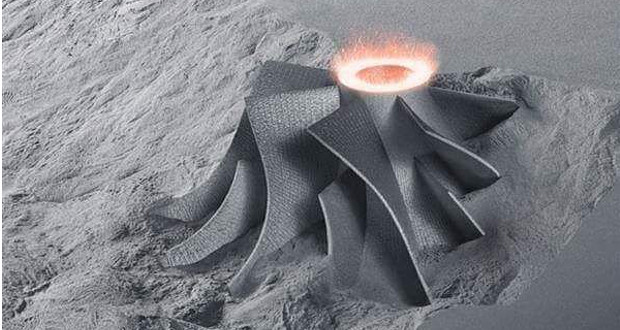 NewsGE and ATI form partnership to create a meltless metal for AMMetal 3D printing is a staple in the 3D printing industry; bringing new innovations and a newfound home in sectors such as aerospace and defense or marine and boating. Continuing in this trend of pushing the seemingly limitless boundaries of 3D printing…
 NewsLuminous, Self-Powered 3D Skins for Underwater CommunicationA team of researchers at the National University of Singapore has successfully 3D printed an elastic “photonic skin” capable of generating light without the need for batteries or cables. Thanks to an auxetic design, meaning it expands when stretched rather…
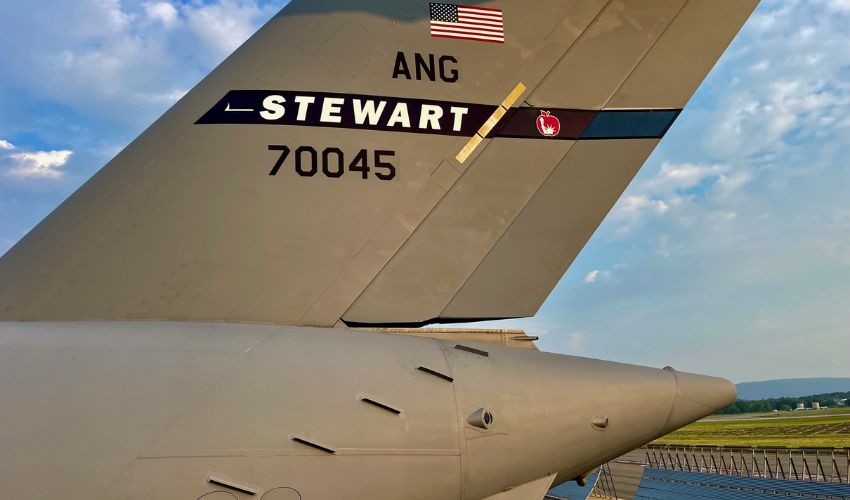 ApplicationsUSAF Installs 3D Printed Drag Reducers on C-17, Helping to Save Over $14M AnnuallyDrag reduction is a priority for airplanes as it helps to reduce fuel consumption, increase operational range and increase the speed of the craft. Now it seems that additive manufacturing could play a role. The Air Force Operational Energy and…
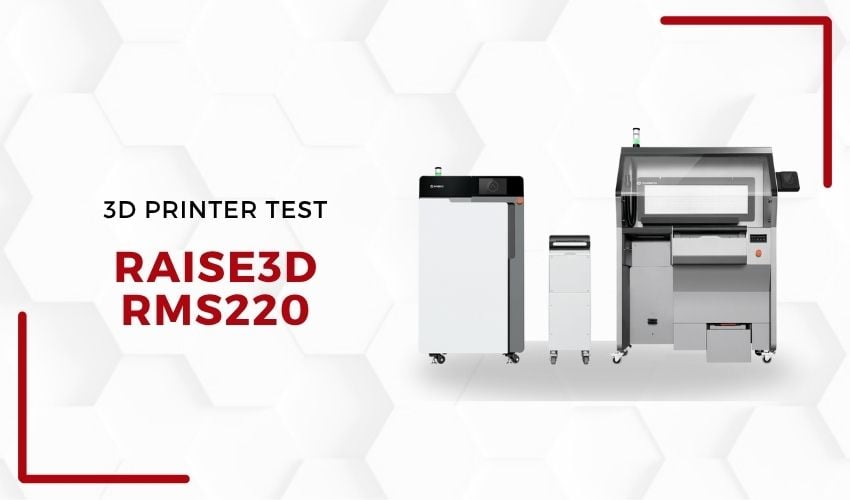 Printers3Dnatives Lab: Testing the Raise3D RMS220, The First SLS Printer from Raise3DRaise3D is celebrating its tenth anniversary this year. Known for its professional FDM printers, particularly the Pro3 and E2 series, and more recently for its DF2 and DF2+ resin systems, the brand is taking another major step forward with the…
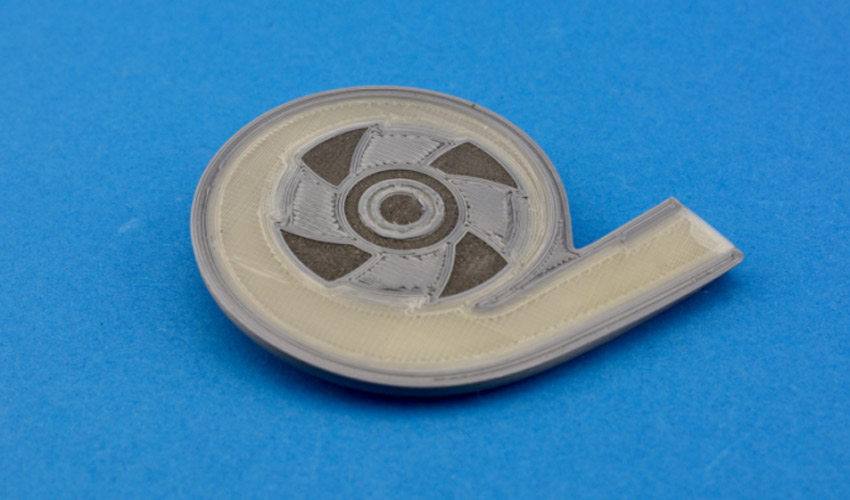 MaterialsA researcher invented a magnetic 3D printing processAt the Zurich University of Applied Sciences (ETH), a doctoral student in the process engineering and mechanics department developed an additive manufacturing technique to create objects containing magnets in one go. Kai von Petersdorff-Campen dubbed his process ” Embedded