Materials
A researcher invented a magnetic 3D printing process
At the Zurich University of Applied Sciences (ETH), a doctoral student in the process engineering and mechanics department developed an additive manufacturing technique to create objects containing magnets in one go. Kai von Petersdorff-Campen dubbed his process ” Embedded
- 3 min read
- Materials
- Six more stories
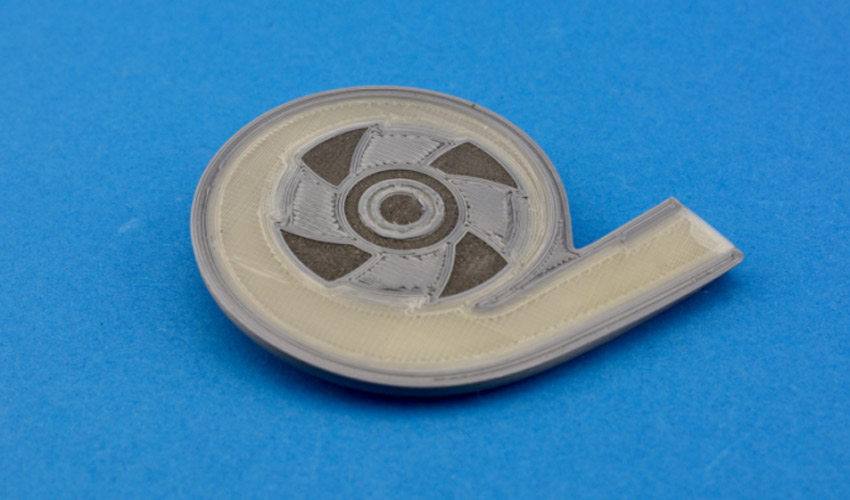
At the Zurich University of Applied Sciences (ETH), a doctoral student in the process engineering and mechanics department developed an additive manufacturing technique to create objects containing magnets in one go. Kai von Petersdorff-Campen dubbed his process ” Embedded magnet printing ” and made a prototype heart pump to demonstrate his progress. A magnetic 3D printing process that could change the way engineers develop and test their designs.
Magnetic 3D printing is still rather limited today, although researchers are looking into the issue. We know that certain initiatives have made it possible to develop hybrid materials, or even directly electronics. The Swiss PhD student wanted to look into the development of a magnetically charged plastic filament. A process that has been widely talked about around the world.
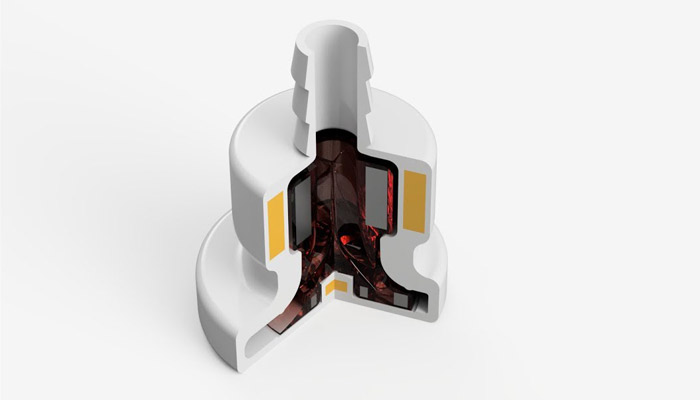
The prototype of the heart pump
A magnetic 3D printing process
The ” Embedded magnet printing ” process would consist of mixing a magnetic powder with the plastic to form a 3D printing filament. Using the technology of Fused Deposition Modeling and Prusa i3 3D printer these filaments are extracted layer by layer and form the desired part. This one would then be magnetised in an external field. Petersdorff-Campen explains that the main difficulty in the development of the magnetic filament was to find the right proportions to mix. He discovered that the stronger the magnetic powder added to the plastic pellets, the more the magnetic force increased which weakened the filament. The researcher finally managed to find a good balance between power (in terms of magnetism) and flexibility. “We tested various plastics and mixes until the filaments were flexible enough for printing but still had enough magnetic force,” Petersdorff-Campen added.
More from the desk
Six other notes from the rest of the bench.
 News3D Metalforge Starts Trading on the Australian Securities Exchange (ASX)3D Metalforge (3MF) has begun trading on the Australian Securities Exchange (ASX). Founded in 2015, the leading additive manufacturing company specializes in 3D metal printing. After having seen 3 years of consecutive revenue growth, securing AUS$1.3 million in the fiscal…
 News3D printed art installation installed at the iLight Marina Bay Festival in Singapore3D printing is now taking on the art world with this new mesh-like art installation that was erected for the iLight Marina bay festival in Singapore. Designed by professors Felix Raspall and Carlos Bañón from the Singapore University of Technology…
 PrintersSHINING 3D releases the EinScan H series, making industrial scanners accessibleSHINING 3D, a leading company covering the 3D digital workflow from 3D Digitizing, through Intelligent Design, to Additive Manufacturing has been a pioneer in the industry since 2004, the year it was founded. Covering the entire AM workflow from 3D…
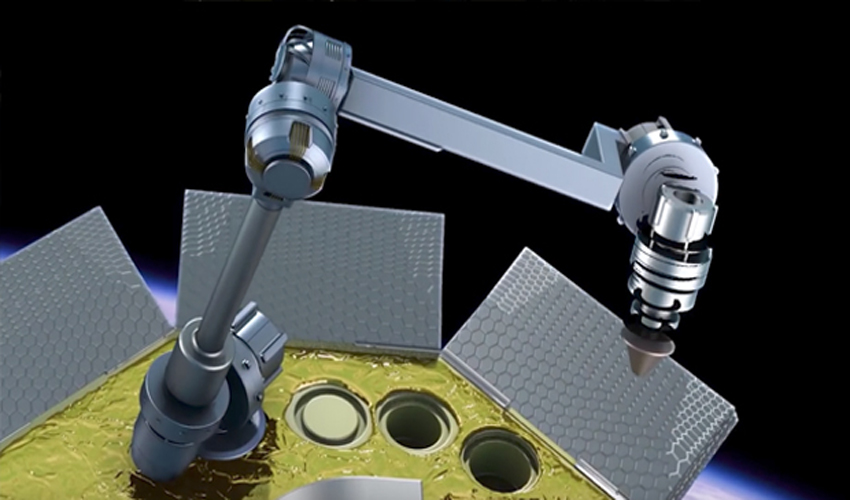 NewsMade In Space introduces latest project for 3D printing large structures in space3D printing is a technological trend that is not only designed to continue its developments on Earth, but to also span out to the vast spaces of space. Helping to do this is Made In Space, a Californian company and…
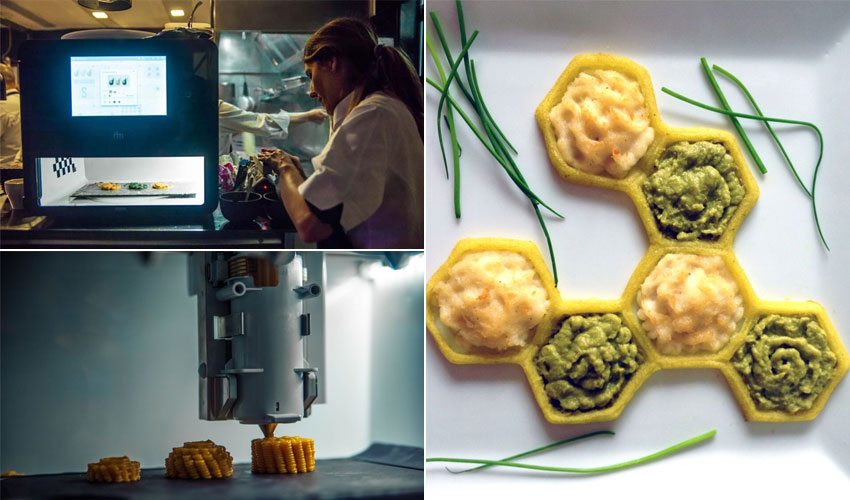 NewsA guide to 3D Printed Food – revolution in the kitchen?We all remember the Replicator, the Star Trek food manufacturer, able to turn any molecule into edible food and whole dishes. 3D food printing is able to make dishes from different pastes and materials, so it seems we are getting…
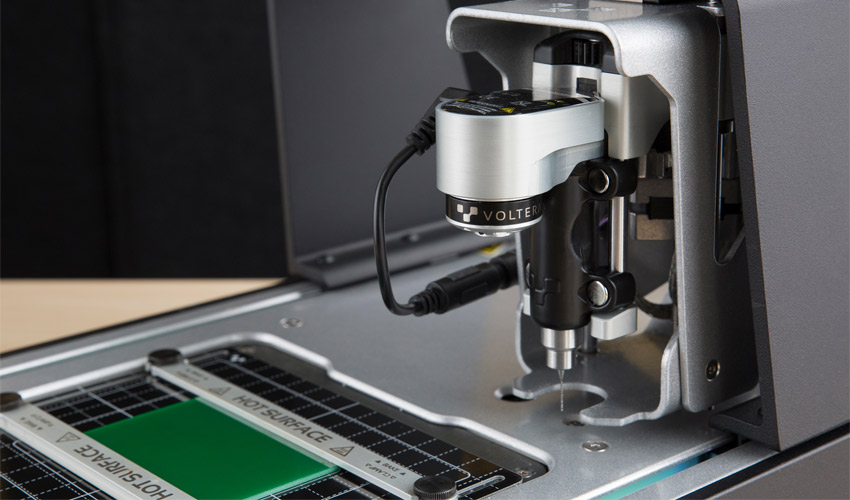 Guides#3Dstartup: Voltera designs printed circuit boards thanks to additive manufacturingLess often discussed, additive manufacturing also has its place in the electronics sector, where it enables the design of smaller, finer and more precise components than conventional production methods. Known as micro 3D printing, this technique can improve the performance,&helli