Materials
Why Are Manufacturers Betting on Ceramic FFF 3D Printing?
Since its arrival on the additive manufacturing market in 2018, Nanoe has been working to democratize the use of ceramic and metal FFF 3D printing with an accessible and easy-to-implement process. While its filaments have made their way into laboratories…
- 3 min read
- Materials
- Six more stories
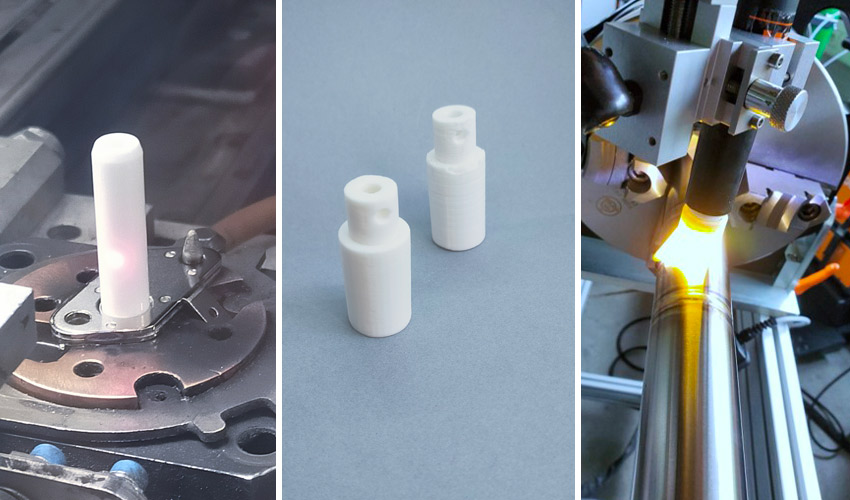
Since its arrival on the additive manufacturing market in 2018, Nanoe has been working to democratize the use of ceramic and metal FFF 3D printing with an accessible and easy-to-implement process. While its filaments have made their way into laboratories and research centers in France and internationally, they are gaining more and more ground among manufacturers who are banking on integrating additive manufacturing in-house. The French manufacturer’s ceramic materials offer several interesting thermal, chemical and mechanical properties for demanding activities such as orbital welding, the production of parts for boilers or the manufacture of turned parts. Thanks to Zetamix filaments, several international manufacturers have been able to increase their agility by reducing production lead times and machine downtime, as well as reducing costs.
Among the users of Zetamix ceramic additive manufacturing solutions are three manufacturers: MGB, SAPCO and Orbital Service. 3D technologies have offered them many advantages and notably all three have been seduced by the thermal capabilities of ceramic filaments, including zirconia and alumina. These three manufacturers had very specific problems that were difficult to solve via subtractive manufacturing, or at least at much higher costs and times.
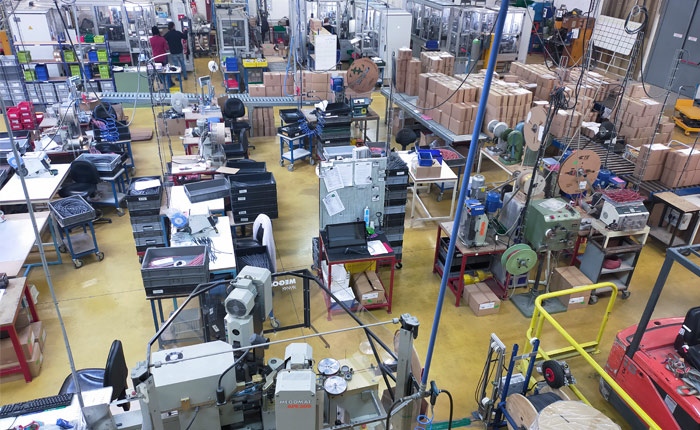
More and more manufacturers are integrating additive manufacturing (photo credits: SAPCO)
Alumina, a 3D printing material resistant to high temperatures
MGB is a French company created in 1956, specialized in the manufacture of turned parts for the connector industry. It works mainly with players in the medical, aerospace and electronics industries, players who need custom-made screws. These screws have different levels of hardness, with generally the bottom of the screw being less resistant than the top. To produce this type of custom screw, MGB has developed a specific machine that anneals the top part via induction to provide the necessary hardness.
More from the desk
Six other notes from the rest of the bench.
 NewsThe Best Generative Design Software for 3D Printing in 2023Designing is the first step in any 3D printing process and plays a critical role in ensuring that the final part will come out correctly. However, this stage can be difficult even for those accustomed to design for additive manufacturing…
 PrintersVormVrij unveils their ceramic 3D printer, the LUTUM v43D ceramic printing is becoming more accessible in the additive manufacturing market with the arrival of players who are developing affordable and innovative machines. The Dutch manufacturer VormVrij is now making their introduction into it following the launch of their…
 ApplicationsDaimler Buses is Allowing its Customers to 3D Print Spare PartsBefore long, bus companies Mercedes-Benz and Setra will be able to 3D print parts for their vehicles themselves. The news comes directly from an announcement by the component manufacturer Daimler Buses in a press release. With this initiative, the manufacturer…
 SoftwareThe Best Photogrammetry Software For All LevelsWhen it comes to 3D printing, one of the most critical steps is obviously having a 3D model to print. There are a number of different ways these can be obtained including CAD and other modeling software and scanners, but…
 NewsGerman manufacturer EOS acquires Vulcan LabsThe German manufacturer, EOS, producer of systems for the additive manufacturing of components in metal and polymers has announced the acquisition of Vulcan Labs. Vulcan Labs spun out of Stratasys last year. The spin-off from Stratasys specialises in powder bed…
 MaterialsSoft Motors: The 3D Material That Changes Shape On Its OwnA team of researchers at Oregon State University, led by Devin Roach, has developed a revolutionary technique for 3D printing materials that can change shape. The material is programmed and once printed, it moves like muscles. These materials, known as…