Materials
Soft Motors: The 3D Material That Changes Shape On Its Own
A team of researchers at Oregon State University, led by Devin Roach, has developed a revolutionary technique for 3D printing materials that can change shape. The material is programmed and once printed, it moves like muscles. These materials, known as…
- 3 min read
- Materials
- Six more stories
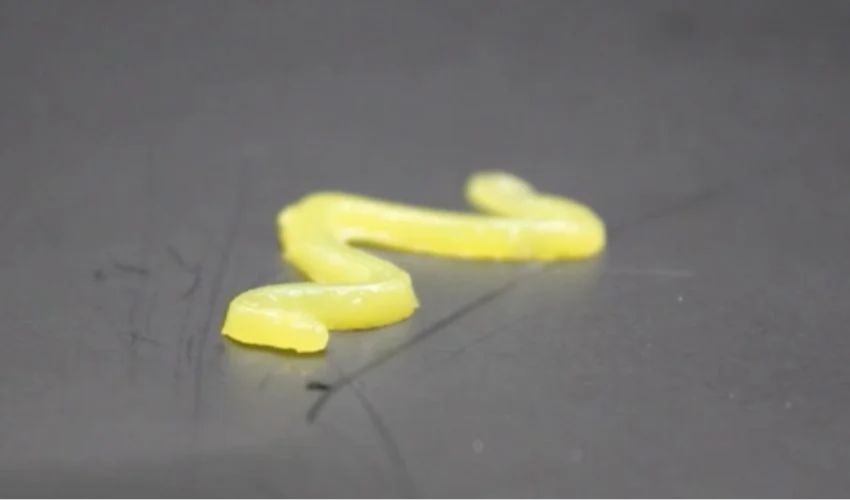
A team of researchers at Oregon State University, led by Devin Roach, has developed a revolutionary technique for 3D printing materials that can change shape. The material is programmed and once printed, it moves like muscles. These materials, known as liquid crystalline elastomers (LCEs), can transform key areas such as medicine, robotics and energy.
LCEs are polymers with a unique molecular structure that allows them to respond to external stimuli, such as heat, to transform into specific shapes. This behavior opens up new possibilities for devices that convert thermal energy into mechanical energy, which could be useful in advanced energy systems. For example, a device made of LCEs could capture energy from the sun and store it as mechanical energy for use on demand. In addition, LCEs offer solutions in the field of soft robotics. They can be used to create flexible machines capable of exploring environments that are dangerous or inaccessible to humans.
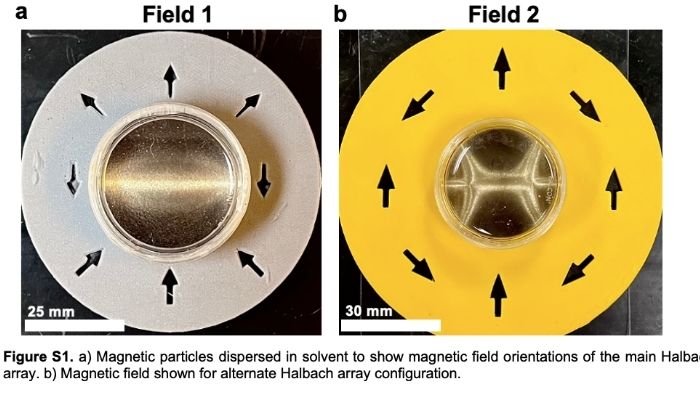
According to Roach, LCEs function as “soft motors,” making them ideal for applications in implantable medical devices. An example of their use would be the creation of stents capable of dynamically adapting to the body to release drugs in specific areas or to treat conditions such as incontinence using urethral implants. “Since they’re soft, unlike regular motors, they work great with our inherently soft bodies. So they can be used as implantable medical devices,” Roach explains.
More from the desk
Six other notes from the rest of the bench.
 NewsStudy Suggests Benefits of 3D Bioprinting In Plant Cell ResearchA recent study from North Carolina State University experimented using 3D bioprinting to produce plant cells in order to assess the use of the method in biological research. They produced Arabidopsis- (thale cress; often used in genetic research) and soybean…
 NewsThe best 2019 videos about 3D printing!2019 has been a year full of exciting developments for the additive manufacturing industry across all sectors. New machines have been introduced to the market, many applications have broken records, better performing materials have been developed, etc. Fortunately, most of&hellip
 NewsAtome3D Is Opening a Franchise Network to Promote the Development of 3D Printing in FranceThe French distributor Atome3D is accelerating its development in France and wishes to reinforce its presence on the territory thanks to a new franchise concept. The company’s objective is to open a number of Atome3D showrooms, i.e. stores that will…
 NewsMeet France’s Newest 3D Printed AI StudentStudents at ECE (École centrale d’électronique) in France, a renowned engineering school specializing in artificial intelligence, were recently greeted by a new classmate. Her name is Milo, and she is the first autonomous AI student in the country. She can…
 GuidesCellule design studio places 3D printing at the heart of scientific innovationCellule is a UK-based design studio that uses new technologies to better understand the healthcare industry and to offer a personalized care system tailored to each patient’s reality. They use 3D printing, including Fused Deposition Modeling (FDM) technology, to design very
 NewsCarbon Makes a 3D Printed Baseball GloveIn the sports world, Carbon has proven time and again that it can provide valuable services to this industry. For example, in partnership with Adidas, the American company helped create more than 100,000 pairs of FutureCraft 4D, a sneaker from…