News
What were the 3D printing trends of 2019?
Are you wondering about the state of 3D printing in 2019? What to expect for 2020? Today, we look back on the trends that shaped the AM industry in 2019! Underlying all these trends is the fact that additive manufacturing…
- 3 min read
- News
- Six more stories
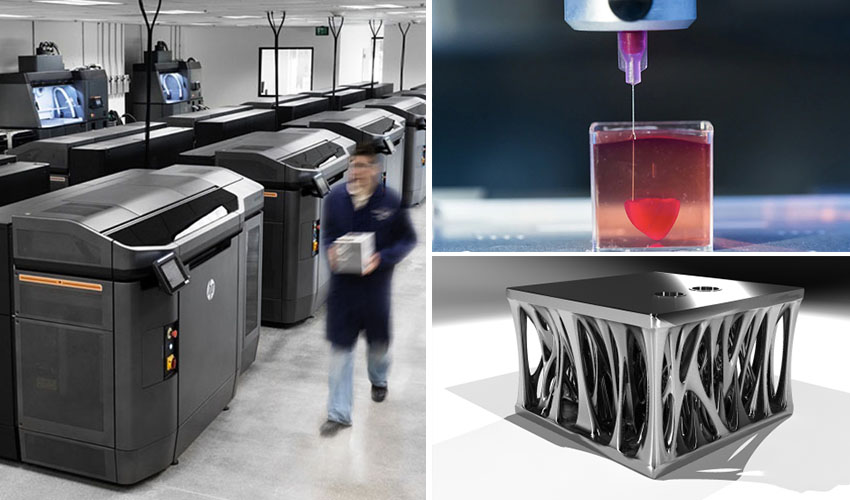
Are you wondering about the state of 3D printing in 2019? What to expect for 2020? Today, we look back on the trends that shaped the AM industry in 2019! Underlying all these trends is the fact that additive manufacturing is becoming a production-ready process, which means that the involvement of companies and players in the industry is growing. We identified 5 3D printing trends in 2019, which we present to you below!
Industrial Scale 3D Printing
3D printing will not substitute traditional manufacturing methods, nevertheless in complementing these methods, it can transform manufacturing across industries. In Essentium’s survey, the number of manufacturers who’ve incorporated additive manufacturing for full-scale production doubled compared to 2018. Over the course of 2019, we’ve observed a wider adoption across sectors and an increased number of industrial solutions brought to market by manufacturers – just consider the number of industrial solutions unveiled at Formnext 2019! 3D printing technologies have always had this potential but in the past, barriers to entry have limited their use. Another interesting fact from the Essentium-commissioned study reveals that 47% of companies surveyed are using additive manufacturing for runs of thousands of parts in 2019, compared to 17% in 2018. For example, HP is working with Volkswagen to 3D print parts at scale. This year, the car manufacturer installed 90 HP printers in its factories and produced 10,000 parts in just a few weeks. Volkswagen’s goal is to print 50,000 to 100,000 functional parts the size of a football per year.
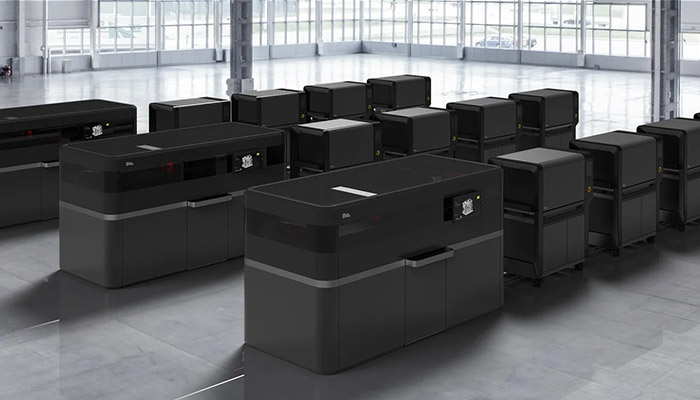
Desktop Metal’s Production System | Credits: Desktop Metal
As for the machines themselves, larger and more industrial systems are now available. In a study by CONTEXT, shipment of industrial machines, experienced a year-on-year growth rate of 18%. Take Carbon’s launch of the L1 for example, used by multiple leading companies such as adidas, Riddell or Specialized for their production. Additionally, artificial intelligence, as well as machine learning is enabling 3D printers to operate by themselves for larger, more efficient production and automation. For example, the MIT-developed 3D printer, Inkbit, aims to be a solution for industrial production by using machine-learning and machine-vision technologies in order to correct 3D printing errors in real-time. Moreover, specialized software such as 3YOURMIND or AMFG’s allows for companies to automate their additive manufacturing production seamlessly. Finally, post-processing, one of the key steps in the additive manufacturing workflow is also experiencing a revolution. Automatization of post-treatment is advancing rapidly, as seen by solutions like PostProcess Technologies’.
More from the desk
Six other notes from the rest of the bench.
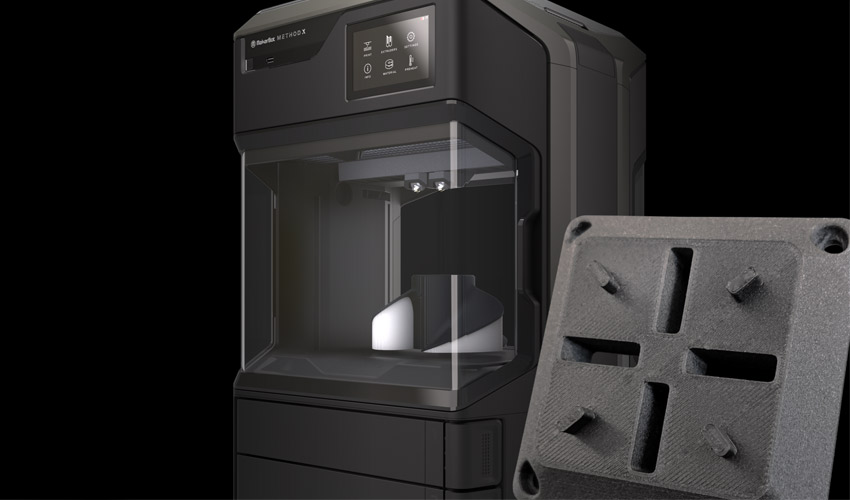 PrintersMETHOD Carbon Fiber Edition, the carbon fiber 3D printer from MakerBotThe manufacturer MakerBot has just launched a new professional machine capable of printing carbon fiber reinforced nylon, also developed by the manufacturer. Named METHOD Carbon Fiber Edition, this solution is based on the METHOD platform developed in December 2018 but…
 MaterialsGravity Industries & Ricoh 3D Partner On Human Flight ProjectRicoh 3D has announced they are partnering once again with Gravity Industries, this time with the goal of producing Gravity’s latest human flight project, the Electric Jet Suit. Having experienced great success with Gravity’s Jet Suit over the past four…
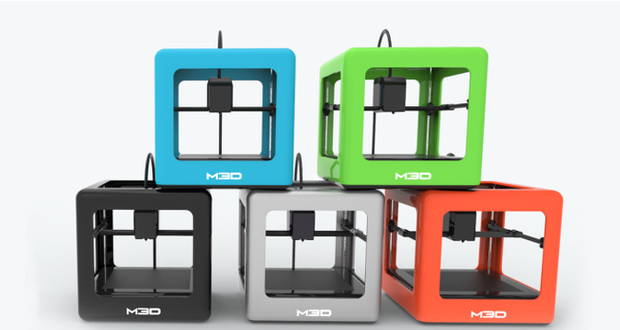 Printers3Dnatives Lab: Our Test of the Micro 3D Printer by M3DIf you’ve been watching the 3D printing market for some time, you’ve heard about the Micro from M3D. The Micro 3D printer is a compact printer that was launched through a Kickstarter campaign in April 2014, and was advertised as one…
 NewsFor the first time, a 3D printed house is listed on AirbnbFor several years now, Airbnb has been one of the preferred choices for tourists when they go on vacation. The platform, which allows individuals to rent out their apartment or house, has been so successful that it is now considered…
 GuidesThe Personalities Who Shaped the Additive Manufacturing Market in 2023As we approach the end of the year, it’s time for us to take a look back at the market, and at the personalities who have shaped the 3D printing sector in 2023. Whether they work in major corporations, startups…
 ApplicationsCornell Revolutionizes Realistic Ear Grafts With 3D Printed Ear3D printing has rapidly conquered the medical field, opening up a host of new possibilities. The technology enables the creation of complex structures with unrivaled precision, paving the way for new approaches in surgery, prosthetics, and tissue engineering. In this…