News
What Were the 3D Printing Trends in 2021?
And with that, another year has passed. 2021 was certainly an interesting one in the world of additive manufacturing, not the least because we started to see the light at the end of the tunnel when it comes to the…
- 3 min read
- News
- Six more stories
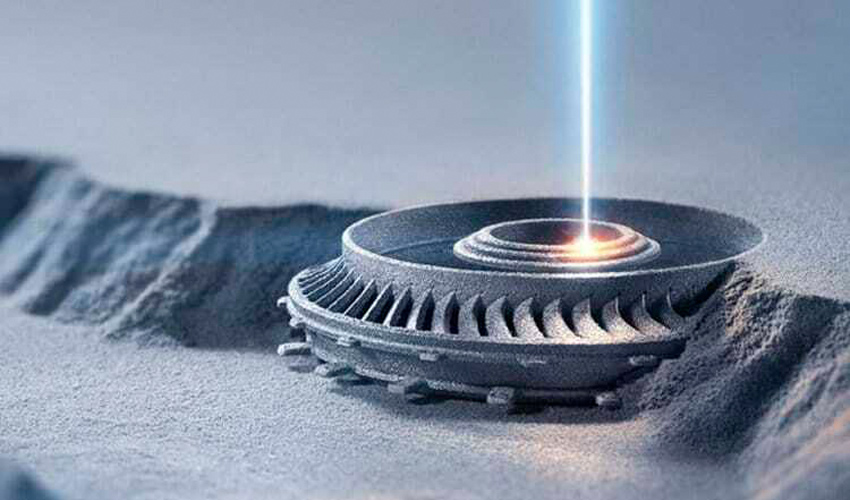
And with that, another year has passed. 2021 was certainly an interesting one in the world of additive manufacturing, not the least because we started to see the light at the end of the tunnel when it comes to the ongoing global pandemic. This year, events started to return with great success. At Formnext, there were 17,859 attendees from 75 nations as well as more than 600 exhibitors from 36 countries. However, coupled with this, we saw an astonishing number that continued to hold hybrid events like Formnext which held the Formnext Digital Days after the physical event. Meaning that though the option for physical events was there, digital events continued to be important, showing that they are probably here to stay. For 3Dnatives’ own ADDITIV brand, we saw firsthand the continued demand for virtual events, despite a loosening on restrictions, in events like ADDITIV Aerospace which took place in March of this year. We also saw for the first time the true impact of COVID-19 on the industry. For example, in the Wohlers Report 2021, it was shown that though the industry still grew even over 2020, it was significantly lower than previous years, 7.5% compared to an average of 27.4% Furthermore, a survey on 3D printer shipment growth showed that while it has increased, especially for industrial 3D printers, sales are still lagging even in 2021 compared to 2019, though they have recovered from last year.
This is understandable as many of the verticals served by 3D printing were also affected by the pandemic. The aerospace sector and especially commercial aviation was understandably hard hit as air travel was shut down. This in turn had an impact on the metal additive manufacturing market which was harder hit than polymers. This year, as travel has resumed, these sectors have started to recover and so has metal additive manufacturing. Though as we will see it is starting to take a slightly different form. But what exactly were the 3D printing trends in 2021? And how is the additive manufacturing changing (or staying the same)? We decided to take a closer look at some of the trends that defined the industry in 2021, including a maturing business environment with consolidation and companies going public, more of a focus on sustainability, increasing FDM solutions for non-polymer materials and a growing market for 3D printing in construction.

This year, we saw a return to events, including Formnext 2021 (photo credits: Formnext)
A More Mature Business Environment for Additive Manufacturing
One evident trend throughout 2021 was the consolidation of 3D printing manufacturers as well as more companies going public. Corresponding with an increasing industrialization of the technologies, business was certainly booming in the additive manufacturing world this year. Possibly the most notable example is Desktop Metal who went from a start-up just a few years ago to one of the major players on the AM market today. Starting in February, they acquired leading DLP 3D printing technology company, EnvisionTEC, showing their determination to move into the polymer market as well as metals. They continued with acquisitions throughout the year, including Aerosint in July. This particular move showed their intention to move also into the multi-material market as Aerosint’s powder bed fusion technology was developed to offer a multi-material process at a reasonable cost and with minimal material waste. They topped it off with a surprise announcement in August when they entered a definitive agreement to acquire their competitor, the leading binder jetting 3D printer manufacturer on the market, ExOne.
More from the desk
Six other notes from the rest of the bench.
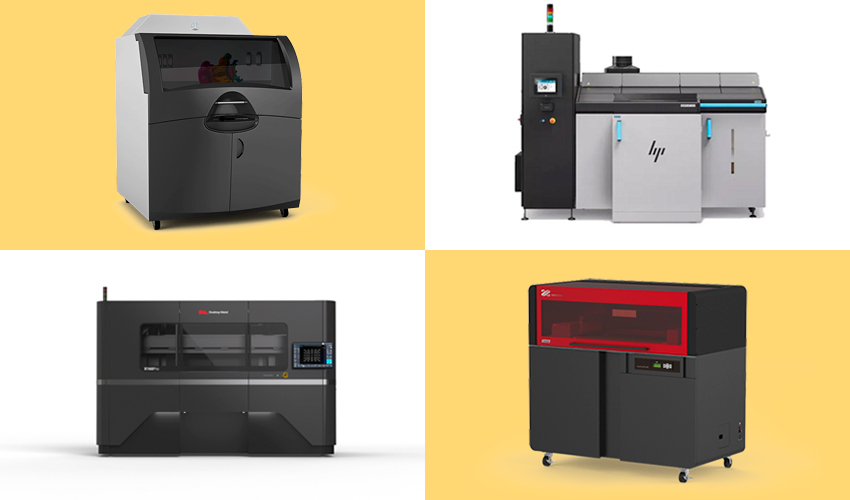 PrintersThe Top Binder Jetting SolutionsBinder jetting is one of the major additive manufacturing processes available on the market. In the process, a thin layer of powder is coated with a liquid binder (jetted via inkjet technology) to create the part layer by layer. Depending…
 NewsThe Industrial 3D Printing Market is Maintaining its GrowthThe consulting firm CONTEXT publishes a quarterly study on the additive manufacturing market, focusing on machine shipments across all product lines. This time around, the news from the report is positive, showing growth in orders and shipments, particularly in the…
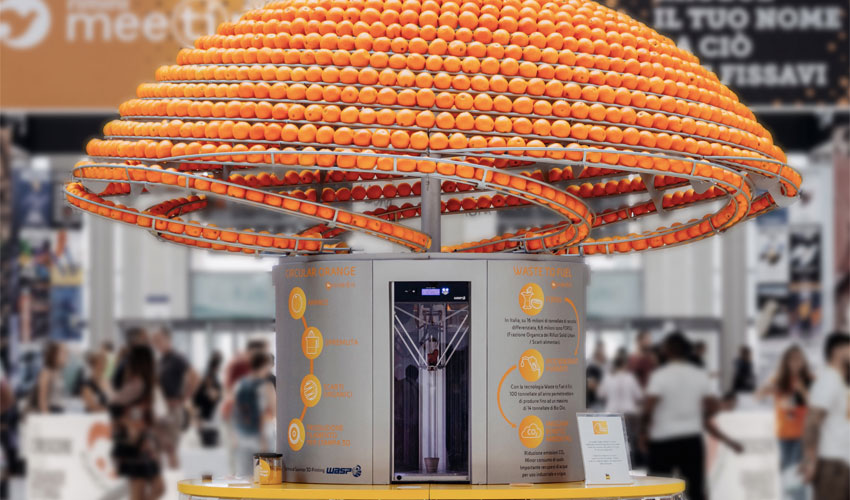 MaterialsA juice bar transforms orange peels into 3D printed cupsWould you like an orange juice squeezed into a 3D printed cup? This is the project imagined by the architect Carlo Ratti who developed a rather special juice bar, this one allows for orange peels to be transformed into 3D…
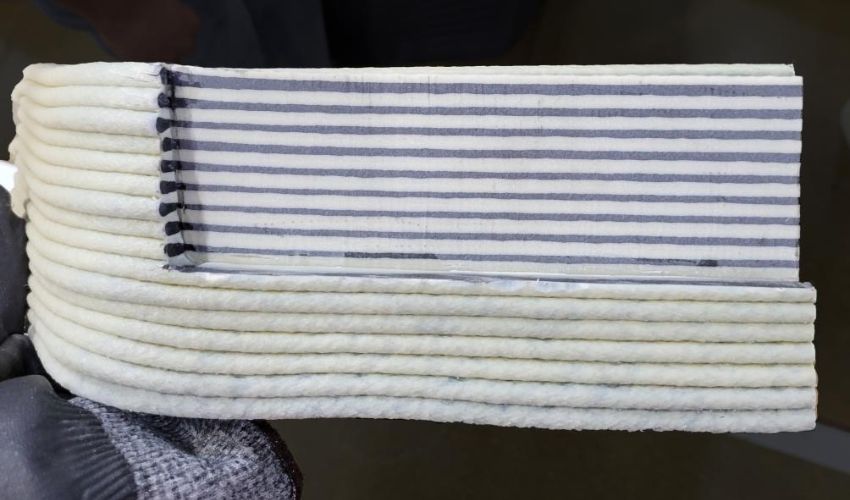 NewsORNL Develops Novel Extrusion System for Single-Stream, Multi-Material 3D PrintingWe’ve been talking a lot about multi-material printing lately, and for good reason. The technology is advancing rapidly on both the maker and professional sides, from Bambu Lab’s and Prusa’s latest multi-material desktop systems to more experimental approaches. Now, researchers&h
 ApplicationsFord and Red Bull Powertrains Use 3D Printing to Optimize Vehicles for F1In 2023, Ford Motor Company partnered with Red Bull Powertrains to race at Formula 1. It had been more than two decades since Ford has been on racetracks, and now, Ford and Red Bull Powertrains will develop the next-generation hybrid…
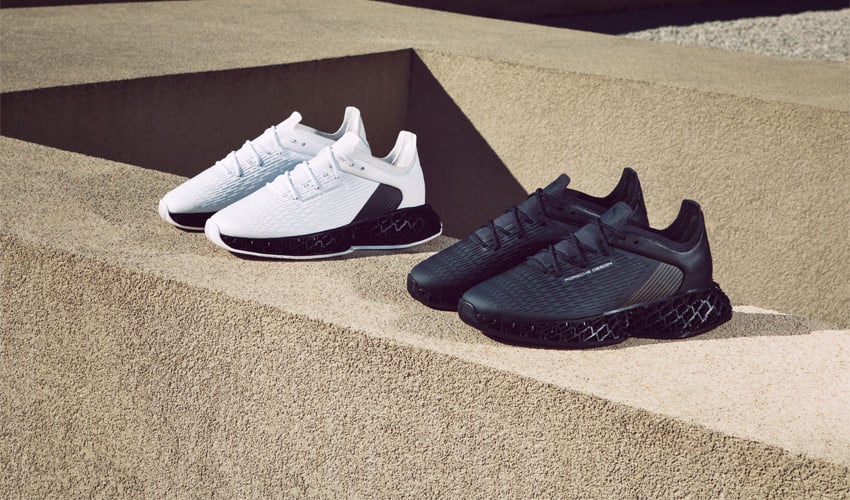 NewsPorsche and Puma Unveil New 3D Printed Sneakers, 3D MTRXPuma and Porsche Design, a brand dedicated to sportswear and accessories from the famous car brand, have partnered to design the 3D MTRX sneaker, whose midsole was 3D printed. The midsole has a lattice structure, but is inspired by the…