Printers
What Are the Pellet 3D Printers on the Market?
When it comes to extrusion printing processes, what comes to mind most often is FDM using filaments. But this is not the only material form available. Increasingly, printers adapted to print using pellets are coming to the market. Pellets or…
- 3 min read
- Printers
- Six more stories
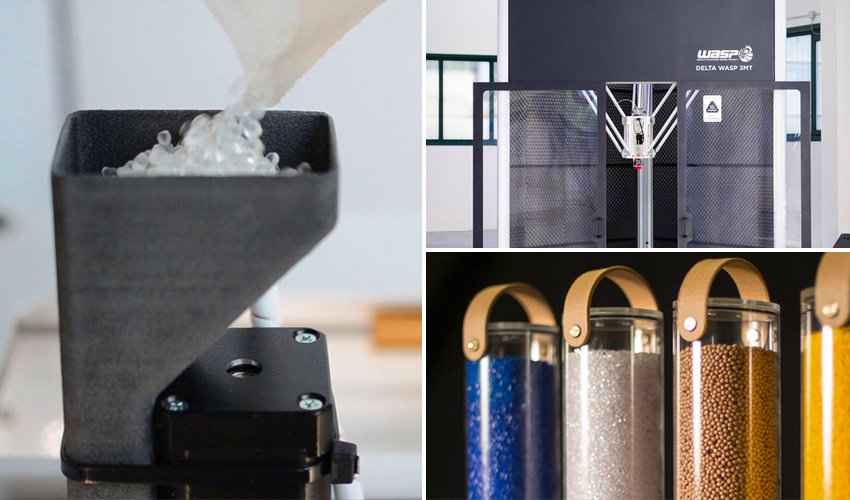
When it comes to extrusion printing processes, what comes to mind most often is FDM using filaments. But this is not the only material form available. Increasingly, printers adapted to print using pellets are coming to the market. Pellets or granules are the materials that are often used most for injection molding and are becoming more popular in 3D printing thanks to the fact that they help to save costs and also allow for a wider range of materials than filaments. These printers are either full solutions dedicated to pellet 3D printing, or a pellet extrusion head add-ons. In our latest ranking, we took a closer look at the currently available pellet 3D printers and hybrid printers to get a better idea of the market for pellets in 3D printing.
Pollen AM P Series
Pollen AM is probably one of the first manufacturers to use pellet 3D printing technology. The Pollen AM P Series is a machine with 4 extruders and a printing volume of Ø 300 x H 300 mm. It can thus design parts with different materials, whether standard thermoplastics or elastomers. Its resolution is 40 microns on the Z axis and 5 microns on the X and Y axes. Finally, with this 3D printer, the French manufacturer meets a wide range of applications for sectors such as automotive, aerospace or consumer goods.
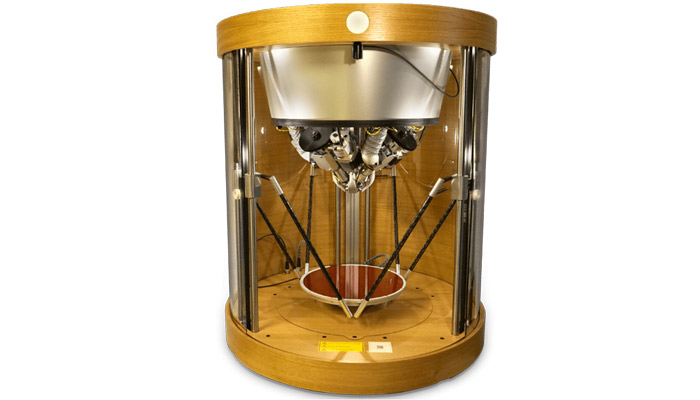
The machine has four extruders (photo credits: Pollen AM)
A Hybrid Pellet 3D Printer from Titan Robotics
One hybrid machine is the Atlas from Titan Robotics, the company’s flagship industrial 3D printer. It is available with pellet extrusion, filament extrusion or hybrid pellet/filament extrusion and allows for faster printing, decreased material costs and parts are end-use manufacturing ready. In terms of pellets extrusion, the company notes that uses would be able to print with high temperature materials including CF-PEI, GF-PEKK and GFPC thanks to the pellet extrusion system and industrial heated closure. According to. Titan Robotics, printing with pellets allows for a wider use of materials while still reducing material cost by 10X and with 10X high deposition rates compared to filament 3D printing.
More from the desk
Six other notes from the rest of the bench.
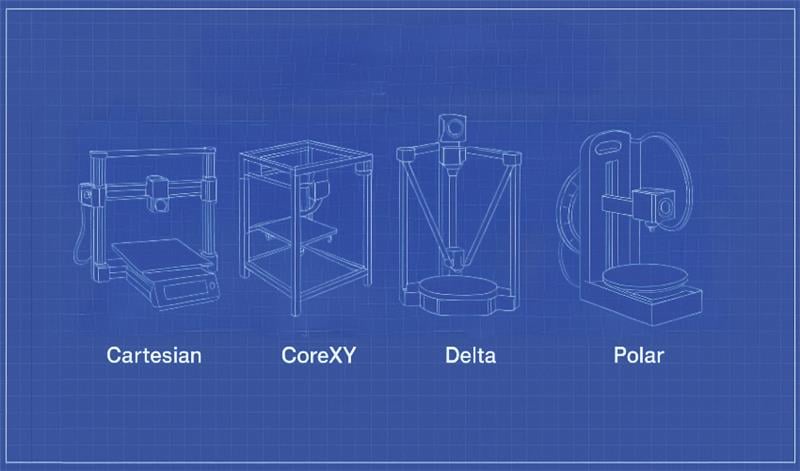 PrintersCartesian vs. Core XY, Delta & Polar: Comparing FDM Motion Systems3D printers can produce a wide range of three-dimensional objects using various materials. Depending on the technology, this may involve curing a liquid resin with a light source (SLA, DLP, LCD) or sintering powdered material (SLS, LPBF). In extrusion-based processes,…
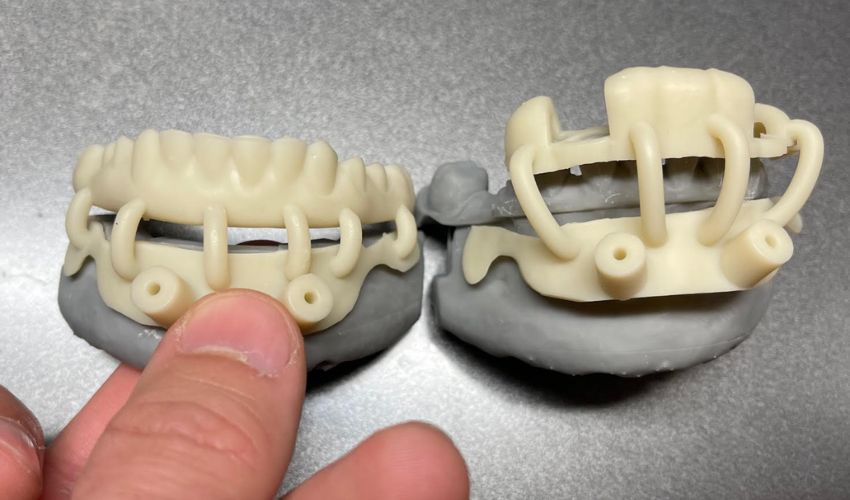 ApplicationsNavy Sailors Receive 3D Printed Dental ProstheticsRecently, two Sailors of the United States Navy received emergency dental prosthetics thanks to 3D printing. The procedure made military medical history for being the first of its kind to ever be performed on Navy sailors during a career assignment.…
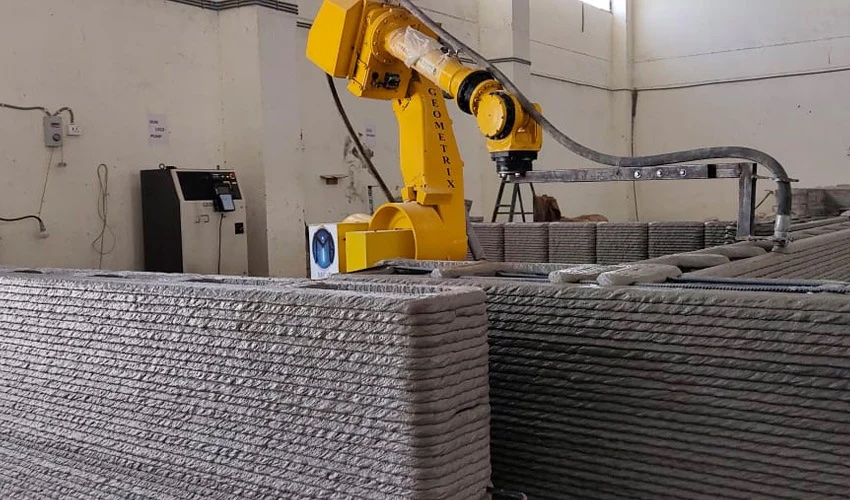 GuidesMiCob and Its Concrete 3D Printing Technology for Civilian and Military UseContinuing advances in additive concrete manufacturing are leading to the adoption of this technology in multiple industries. Companies around the world are seeking to take advantage of the benefits offered by this innovative method of production. One such company is…
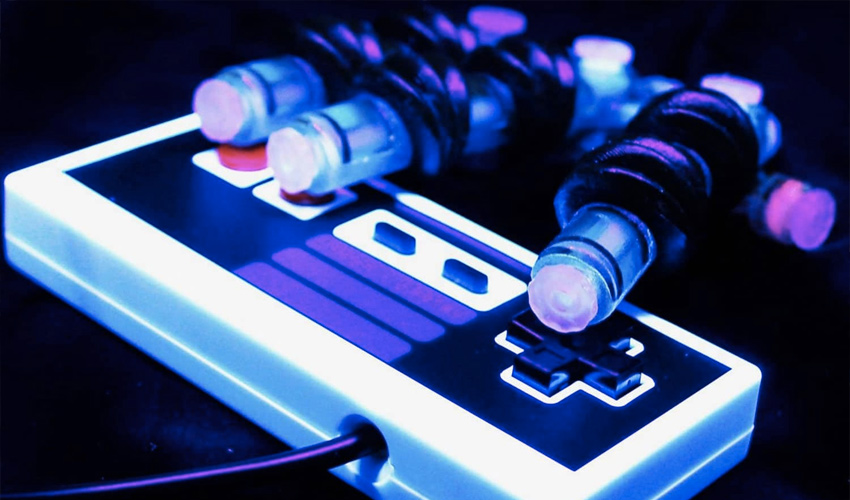 NewsA 3D-Printed Robot Hand Capable of Playing Famous Video Game Super Mario Bros from NintendoEngineers from the University of Maryland have used additive manufacturing to develop a 3D-printed robot hand capable of playing one of the most famous video games from Nintendo. Although it may seem like science fiction, the project is already a…
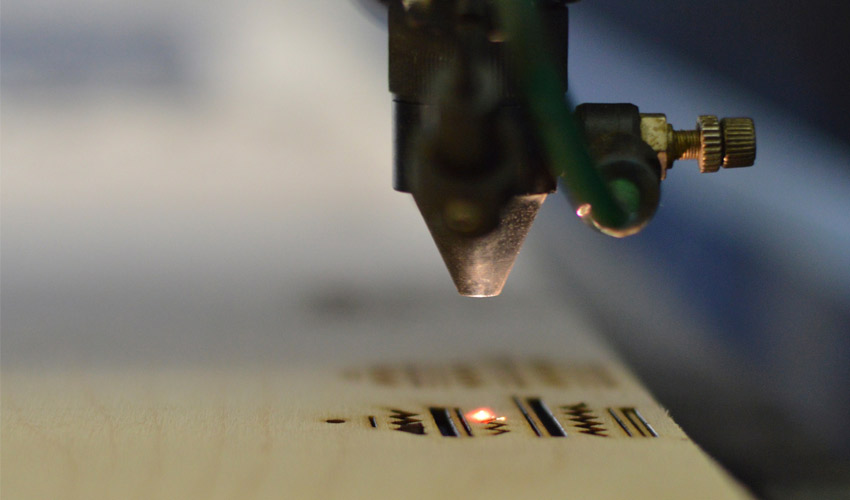 GuidesThe Top Laser Engravers Available on the MarketA laser engraver is a machine that reproduces a shape (symbol, photo, logo, etc.) on a variety of materials using a heat source – a laser in this case. In concrete terms, the laser heats up wood, metal, leather or…
 NewsNarbon 3D prints using the ashes of your loved onesEver thought of 3D printing using human ashes? It sounds a bit crazy, but Narbon, a funeral home located in Madrid, Spain, is doing just this. Using 3D printing’s versatility, Narbon is seizing the moment so to speak, in order…