News
A New 3D Printed Device is Capable of Transforming Air into Drinking Water
Imagine a device capable of extracting drinking water from the atmosphere, providing a feasible remedy to the global water crisis we are experiencing. Indeed, more than 2 billion people worldwide do not have access to clean drinking water, and 14…
- 3 min read
- News
- Six more stories
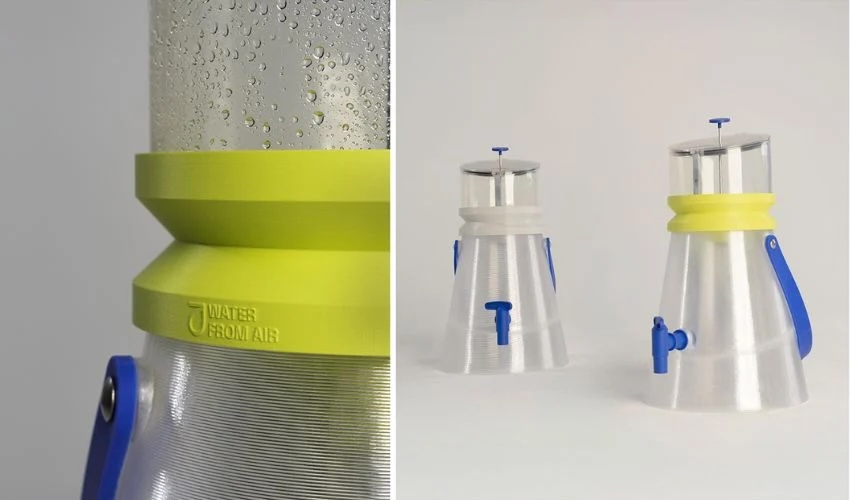
Imagine a device capable of extracting drinking water from the atmosphere, providing a feasible remedy to the global water crisis we are experiencing. Indeed, more than 2 billion people worldwide do not have access to clean drinking water, and 14 people die every day from diseases caused by this lack. This is the ambition of Louisa Graupe and Julika Schwarz with their “Water from Air” solution. It is a mobile device that can collect water from the air and transform it into drinking water, all thanks to the concept of metal-organic networks, which uses materials made of metal ions that act like a sponge. The reason we’re talking about this new device is that the casing for this innovative system has been 3D printed, resulting in a custom-made, modular component.
The process of recovering water from the atmosphere is not new, but it has given rise to complex and technical systems. Louisa and Julika want to develop a more accessible concept that can be used in any home, by anyone. They explain their vision: “Water from Air is designed as a mobile water producer and storage unit that can be used flexibly in private households, regardless of geographical and social circumstances – a practical solution and application option for people all over the world. The concept initially enables the production of 6 litres of drinking water per day and is scalable for the future. The prototype was largely produced using 3D printing.”
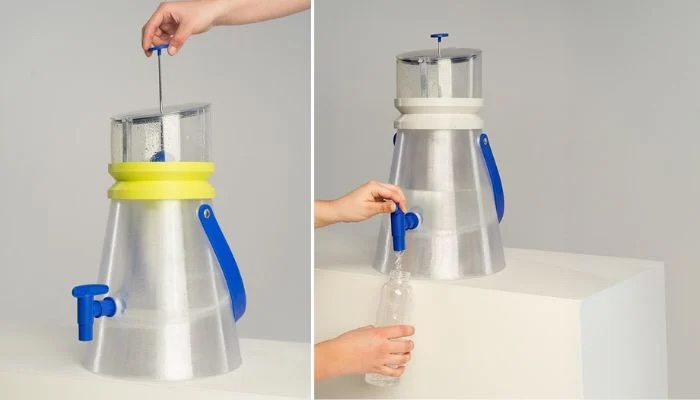
The Water from Air Device
How 3D Printing is Used Within the Device
Water from Air is divided into several components, many of which were 3D printed using different processes and materials. Let’s start with the water tank, the part found at the base of the device. Here, fused deposition modeling was used with transparent PETG. Above the tank is an intermediate part that was also designed using an FDM machine and PETG. Finally, the upper part with the lid was produced using an SLA 3D printer; it was 3D printed in four different parts, which then required post-processing steps.
More from the desk
Six other notes from the rest of the bench.
 ApplicationsScientists develop oxygen-releasing bioink for bioprintingThe field of bioprinting has experienced multiple breakthroughs in recent years, one of which is the possibility to generate tissue structures using bioinks and 3D bioprinters. One of the main hurdles in this field is keeping these tissues alive. As…
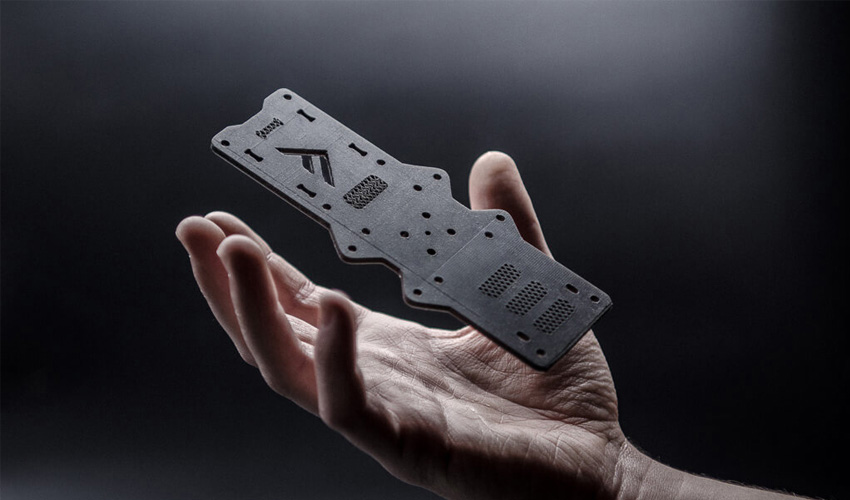 MaterialsFortify combining magnetics and DLP technology for 3D printingFortify is a young company that seeks to revolutionise the long delivery cycle and the often poor material quality of traditional manufacturing processes.The company was founded on research on composite 3D printing by Randall Erb and Joshua Martin at Northeastern…
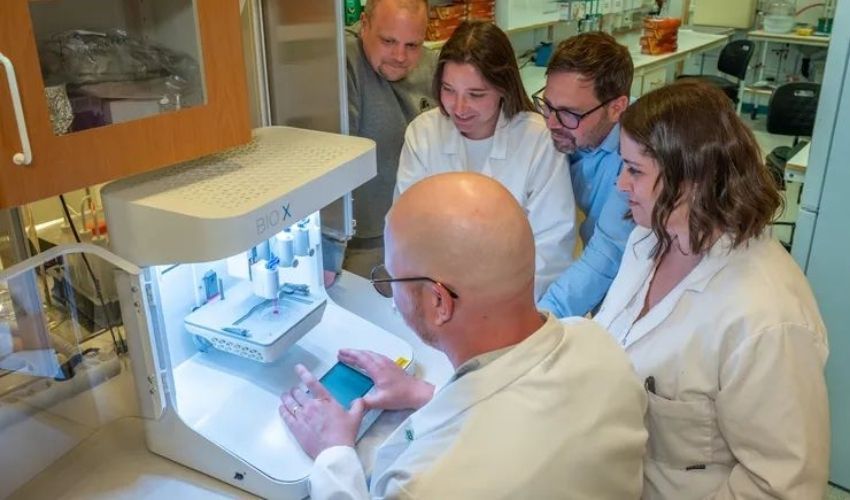 Applications3D Printable “Skin in a Syringe” for Healing BurnsSkin is the body’s first line of defense against the outside world, and when it suffers severe burns, repairing it can be a matter of life and death. Current treatments often involve transplanting a thin layer of the epidermis, the…
 ApplicationsHow is Additive Manufacturing Being Adopted in Defense?When it comes to the military, flexibility and innovation are key in ensuring the success of operations in all corners of the globe. Indeed, when we think of military personnel one of the underlying characteristics of their actions is rapidity,…
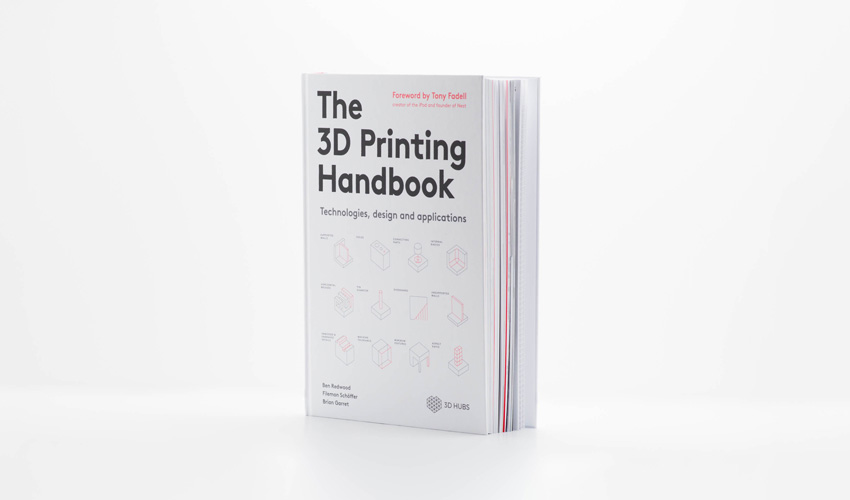 GuidesGiveaway: The 3D Printing Handbook by 3D Hubs & Interview!3D Hubs are a big name in the 3D printing industry, linking thousands of local 3D printing services together to provide a huge variety of 3D technologies and materials. Expanding beyond just being a 3D printing service, 3D Hubs have…
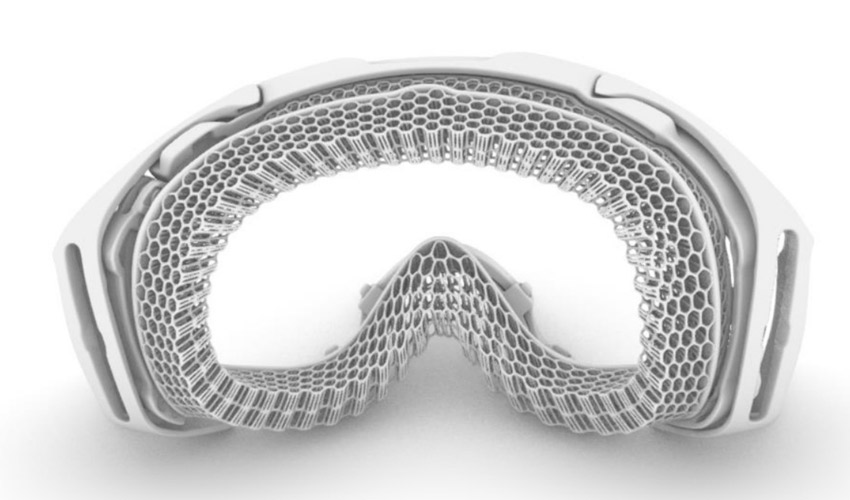 NewsOECHSLER Rethinks Ski Mask Design with 3D printingIncreasingly, companies are seeing the benefits of using 3D printing in sports. Another company has entered the ring. German company OECHSLER, which specializes in the development and manufacture of high-tech products and systems, recently turned its attention to the design&helli