News
Meet adidas 4DFWD: The All New 3D Printed Shoe from adidas
After years of combining athlete data with unique 3D printing technology, adidas has arrived at the “next step in data driven 3D printed midsole innovation,” with an all new running experience – adidas 4DFWD. Partnering with Carbon, development of the 3D…
- 3 min read
- News
- Six more stories
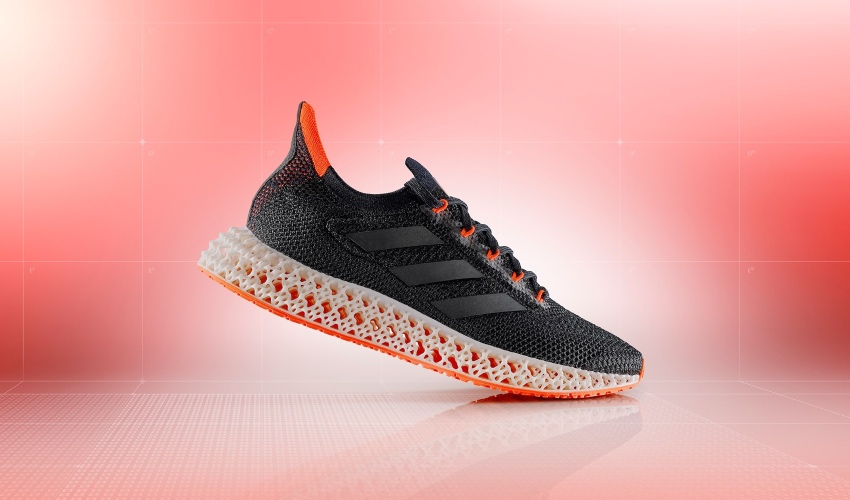
After years of combining athlete data with unique 3D printing technology, adidas has arrived at the “next step in data driven 3D printed midsole innovation,” with an all new running experience – adidas 4DFWD. Partnering with Carbon, development of the 3D lattice midsole technology took four years. This combination of athlete data and Carbon’s Digital Light SynthesisTM technology has enabled the companies to produce precision tuned 3D printed midsoles.
adidas 4D footwear is one of the world’s first to use this cutting-edge technology. Thanks to which, the team were able to fine tune the shoe’s midsoles to specific patterns of movement, meaning that athletes can enjoy precision performance with every step. Sam Handy, VP Design, adidas Running comments, “4D technology provides us with the opportunity to design in a way that conventional foam midsoles do not allow. We took inspiration from the first generation 4D lattice midsole and set ourselves the challenge to take it to the next level. Coding millions of potential lattice structures to see if we could specifically design to counter negative mechanical forces experienced during running.”

adidas 4DFWD lattice midsole resulted from this process. The bowtie-shaped FWD CELL was identified from one of five million possible lattice structures and made of 40% bio-based material. It was specifically coded to compress forward upon vertical impact. adidas 4DFWD generates three times as much forward motion under vertical loading in mechanical testing conditions, in comparison to previous generations of the shoe. Accordingly, the athlete experiences a peak braking force reduced by 15%. This is because the midsole redirects these vertical impact forces into horizontal forward motion, thus delivering a running economy matching the level of the Ultraboost midsoles in lab conditions.
More from the desk
Six other notes from the rest of the bench.
 NewsTOP 5 VIDEOS: 3D printed food ingredients, middle ear prosthesis and much more!We found the TOP 5 VIDEOS of the week about 3D printing and the way additive manufacturing is shaping and changing our society. This week we touch on 3D printed food ingredients, middle ear prosthesis and much more! If you enjoy…
 ApplicationsSTAMP and 3D Printing Used to Create Artificial Muscles for Medicine and RoboticsArtificial skeletal muscles are particularly important for the development of in vitro models for disease research or for use in biohybrid robots. However, there are some difficulties in the traditional production of these muscles, as 2D muscle monolayers often peel…
 NewsBigRep and Etihad Airways, conquering aerospace with additive manufacturingGerman large-format 3D printer manufacturer BigRep has unveiled its collaboration with Etihad Airways Engineering to develop the next 3D printed solutions for the aerospace industry. A collaboration that should allow for the creation of parts for aircraft cabins, but also…
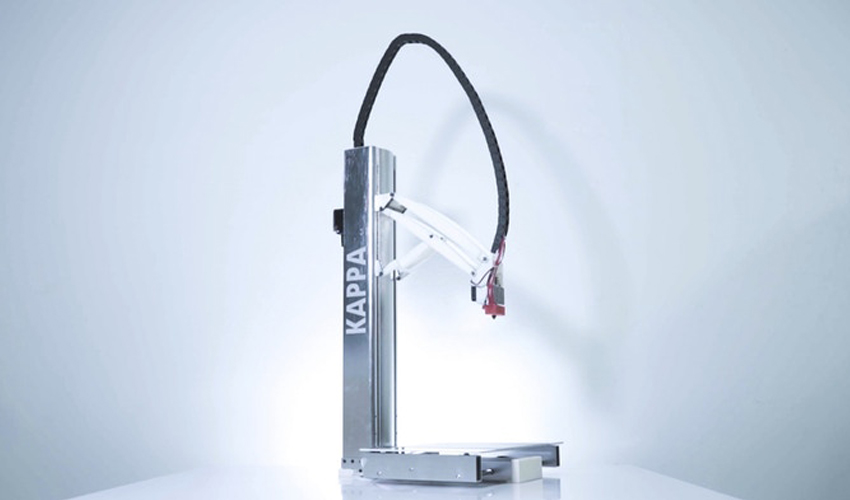 PrintersKappa, the first 3D printer to use a straight line mechanismThis very affordable new 3D printer, Kappa, uses a linear mechanism and is currently pre-orderable for just $245. Ionic3DP, the company behind Kappa, have just launched their Kickstarter campaign to raise $50,000 to market the first 3D printer to feature…
 Applications3D-Printed Car “Robo-EV” Uses AI to Detect the Driver’s Mood and Provide Targeted AssistanceAI technologies are in almost all industries and are playing an increasingly important role in our lives. In the automotive sector in particular, artificial intelligence is driving progress, accelerating processes, improving safety and enabling the development of intelligent vehi
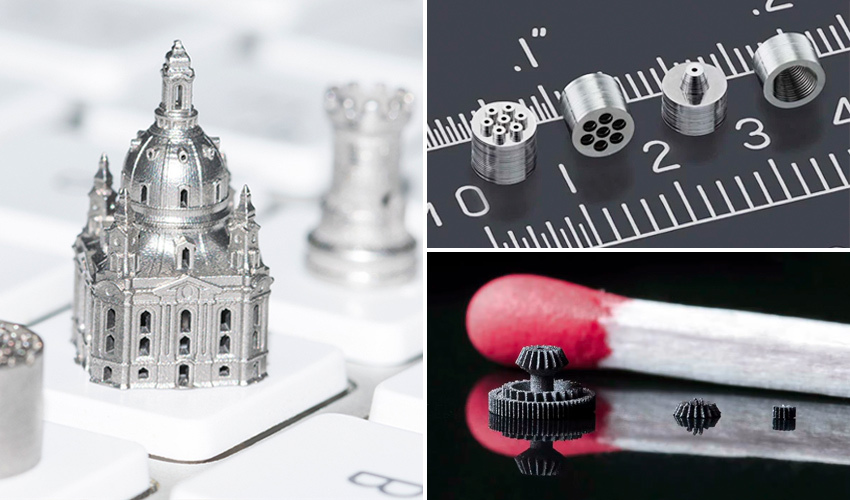 GuidesThe Best Micro 3D Printing Solutions On the Market3D microprinting, also known as micro-scale printing, is a micro-fabrication technique that allows the design of very small sizes, at the micrometer scale and below. Particularly popular in the electronics industry, it is growing steadily, with more solutions available on…