Guides
How Siemens Energy and GEFERTEC are Bringing WAAM to Serial Production: A WAAMathon Preview
On June 11, 2026, the Estrel Hotel in Berlin will host the third edition of WAAMathon, the only conference dedicated exclusively to Wire Arc Additive Manufacturing. Organized by Berlin.Industrial.Group., the event brings together engineers and industry leaders to discuss the&hell
- 3 min read
- Guides
- Six more stories
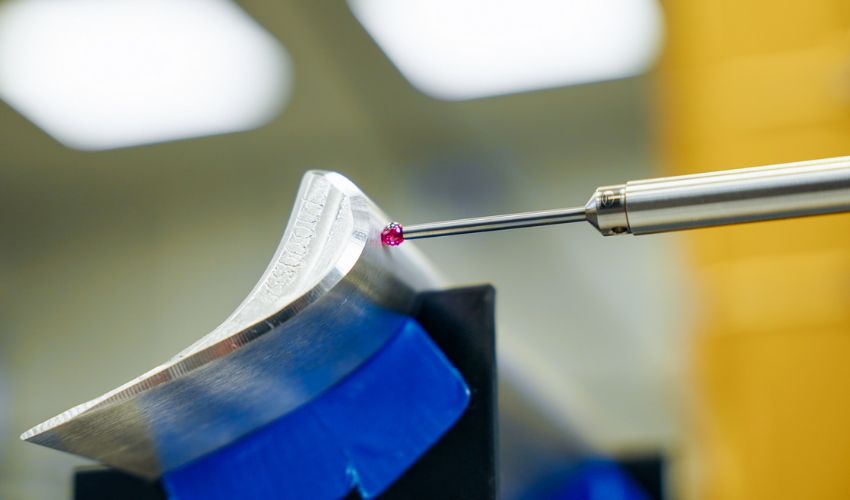
On June 11, 2026, the Estrel Hotel in Berlin will host the third edition of WAAMathon, the only conference dedicated exclusively to Wire Arc Additive Manufacturing. Organized by Berlin.Industrial.Group., the event brings together engineers and industry leaders to discuss the practical realities of process optimization and material handling. While WAAM is a relatively young technology, it has reached a level of maturity that allows for a focus on real-world applications and the integration of these systems into established industrial workflows.
One highlight of this year’s program is a presentation by Sebastian Recke (Senior Key Account Manager at GEFERTEC) and René Liers (WAAM Project Manager at Siemens Energy) titled “Significant advantages of 3D printing for service parts and serial production.” Using steam turbine vanes as a central case study, they will trace the journey of a component from its initial CAD/CAM design through to final serial production. Their insights offer a clear look at how WAAM is being used to rethink spare parts strategies and improve manufacturing efficiency. We interviewed both experts to dig deeper into their findings ahead of the event. You can read the interview below and register for WAAMathon HERE to join the discussion in Berlin.

Sebastian Recke (Left) and René Liers (right)
3DN: WAAM is often chosen for its deposition rates. What specific limitations of traditional casting or forging for steam turbine vanes led Siemens Energy and GEFERTEC to settle on WAAM as the superior alternative?
René Liers: Traditional manufacturing of steam turbine vanes is heavily constrained by material procurement and material efficiency. The flat stock used for milling the twisted stator vanes has to be sourced internationally, with lead times stretching to several months due to supply chain dependencies. At the same time, the complex geometry of the vanes results in machining volumes of up to 70 percent, leading to high material waste, long machine times, and significant tool wear.
More from the desk
Six other notes from the rest of the bench.
 MaterialsNew glass 3D printing technique developed at ETH ZurichToday, additive manufacturing works with multiple different materials, yet glass is one of those materials that remains difficult to work with. Only a few groups of researchers around the world have attempted to produce glass objects using 3D printing technologies.…
 NewsVirgin Islands Turn to 3D Printing to Revive Coral ReefsOver the past few decades, we have increasingly seen the impact that climate change is having on our world. One of the first and clearest signs was the destruction of coral reefs worldwide, including the Great Barrier Reef, as NASA…
 MaterialsWEBINAR: How can a 3D printing service bureau address Polypropylene needs?On the 10th of December, 3Dnatives hoted a webinar with Prodways, Sculpteo and BASF Forward AM to talk about Polypropylene (PP) applications in Additive Manufacturing. Widely used in the plastic injection industry, Polypropylene offers interesting characteristics for industrial a
 MaterialsRIZIUM GF, new composite material for color 3D printingA few days ago, the American manufacturer RIZE unveiled a new glass fiber reinforced filament compatible with its full-color printing solutions. This is a first for the company, which aims to offer its customers more applications, relying on the rigidity…
 NewsThe Biggest 3D Printers at Formnext 2025The halls of Formnext are filled with exciting machines and eye-catching 3D-printed objects. Yet among the many innovations on display, it’s the giant 3D printers that inevitably command attention. These large-format additive manufacturing systems offer massive build volumes, sup
 NewsWEBINAR: “Progress & Current Challenges in Online Process Control for L-PBF”Process control in Laser Powder bed Fusion (L-PBF) is often referred to as the holy grail for for industrial metal 3D printing. Though only offered by certain companies and machines, process control significantly reduces errors in printing which in turn…