Applications
Venus Aerospace Secures $91M Series B to Scale 3D-Printed Rocket Engines
The additive manufacturing industry has received further validation from the aerospace sector. Houston, Texas-based hypersonic startup Venus Aerospace has officially closed a $91 million Series B financing round. Led by the venture capital firm Mercury Fund, the round saw partici
- 3 min read
- Applications
- Six more stories
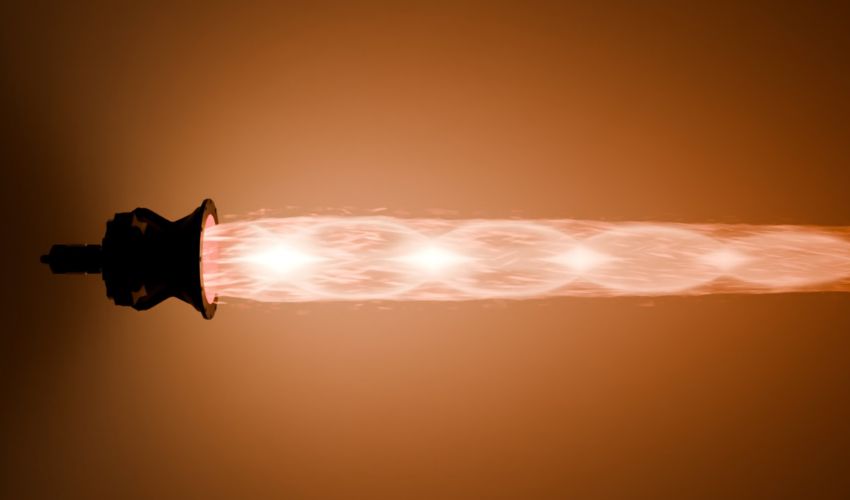
The additive manufacturing industry has received further validation from the aerospace sector. Houston, Texas-based hypersonic startup Venus Aerospace has officially closed a $91 million Series B financing round. Led by the venture capital firm Mercury Fund, the round saw participation from Lockheed Martin Ventures, MESH, PEAK6, Draper Associates, Starboard Star Venture Capital, and Green Sands Equity, among other strategic and institutional investors. Venus Aerospace, which is also backed by existing investors such as Airbus Ventures, Trousdale Ventures, Prime Movers Lab, and America’s Frontier Fund, plans to use the capital to scale its development and production. Specifically, the funds will transition its flight-proven, high-thrust Rotating Detonation Rocket Engine (RDRE) propulsion system from a successful demonstration toward deployment for near-term defense and space applications.
For the 3D printing community, the real interest is how Venus Aerospace is leveraging additive manufacturing to solve complex propulsion challenges. The company builds its RDRE using components made via laser powder bed fusion. This 3D printing process enables the integration of complex internal structures, including custom coolant channels and injector orifices, that are impossible to fabricate using traditional machining. At the technical core of the RDRE is a circular combustion chamber that generates thrust through continuous, spinning supersonic detonation waves. To withstand the extreme heat and pressure-gain combustion of detonative waves, the propulsion system leverages specialized NASA alloys, incorporating GRCop-42 for high thermal conductivity and GRX-810 for extreme temperature resilience.
This mechanism yields a 15 percent increase in efficiency over conventional rocket engines, making it the most efficient rocket engine architecture ever flown. This efficiency gain translates into extended range and enhanced payload flexibility.
More from the desk
Six other notes from the rest of the bench.
 ApplicationsWill 3D Printing Be Used for the First Commercial Mission to Mars?If you have been following along for a while, you certainly know that additive manufacturing is playing an important role in the aerospace sector and especially in space travel. Already it is being used for applications in missions to both…
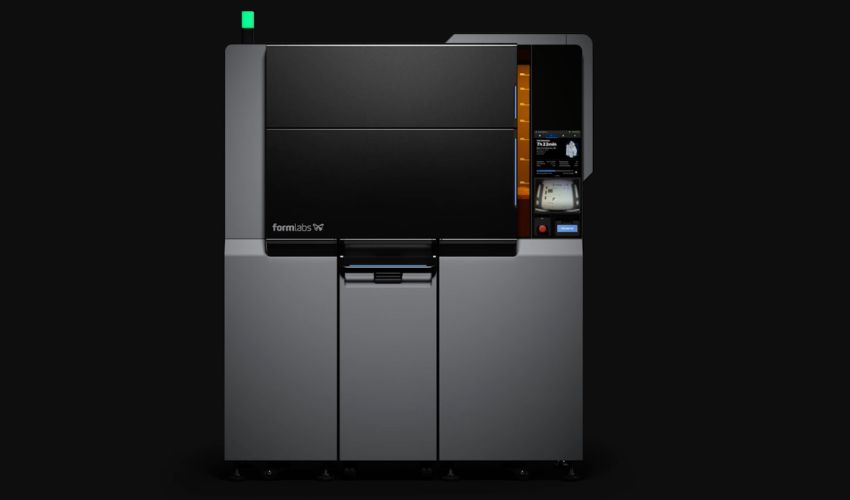 PrintersFormlabs Releases the Fuse X1: Low-Cost, Industrial Large-Format SLS 3D PrintingToday, Formlabs announced the release of a new large-format SLS ecosystem that delivers same-day production-quality parts at 50% lower cost and 3x the throughput of competing systems. The ecosystems are being sold starting at $84,999, and are currently available for…
 NewsTOP 10 STL Files of 2019!This upcoming year-end is an opportunity to look back and remember the successful 3D models of 2019. As the years go by, choosing becomes trickier as the offer of STL files that can be perfectly 3D printed becomes overwhelming. This…
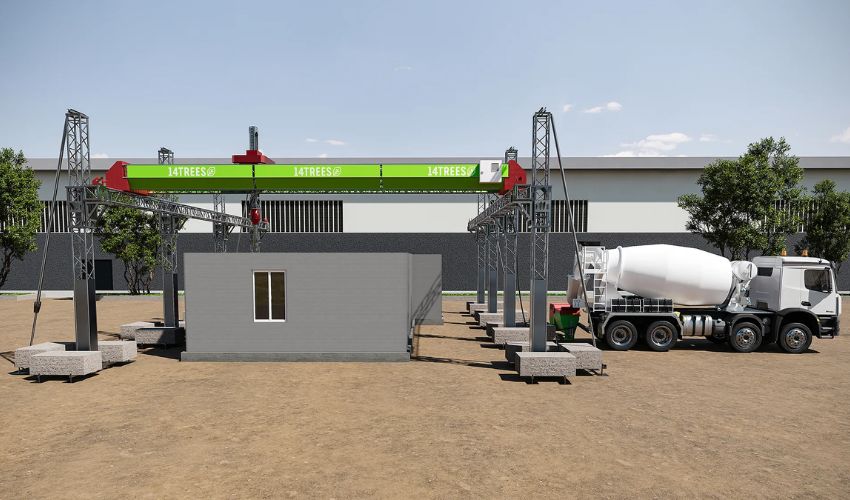 NewsAmazon Invests in 3D Printing Construction Company 14Trees3D printing has already made huge waves in the construction industry—there are 3D printed houses and buildings all over the world, an abundance of research on 3D printing materials for construction, and a growing number of 3D printing construction companies…
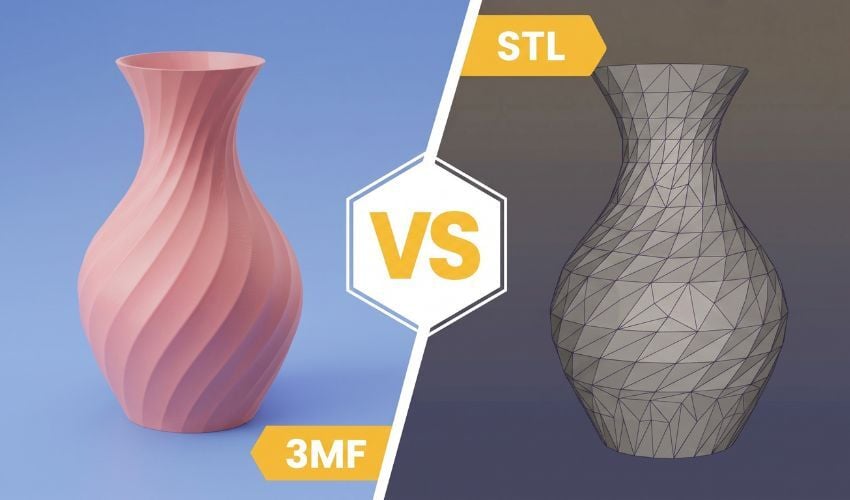 SoftwareSTL vs. 3MF: Which Format to Choose for a 3D Model?STL and 3MF are the two most commonly used file formats in 3D printing. The STL format stores only the part’s geometry using triangles, while the 3MF format also stores color, materials, orientation, and print parameters in a single file.…
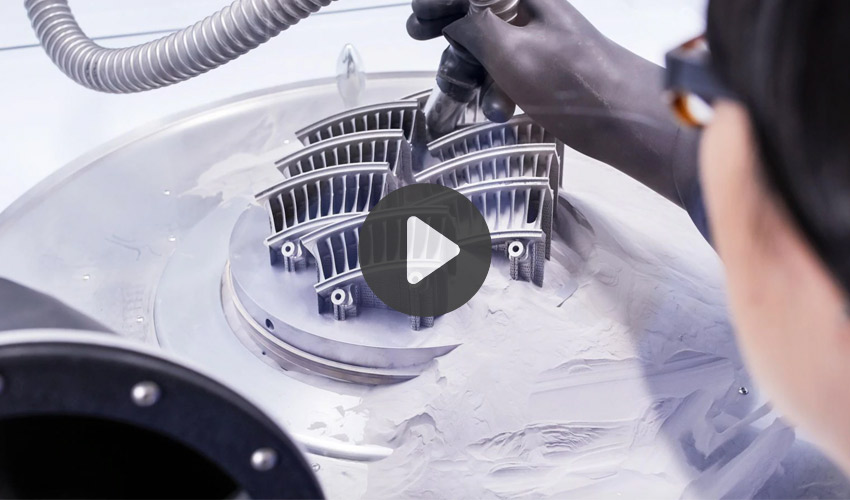 NewsTOP 5 Videos: Trumpf and metal additive manufacturing …This week, Trumpf talks to us about metal additive manufacturing and more particularly about its TruPrint 5000 solution which incorporates particularly interesting features for the aerospace industry. Thanks to a reduced residual stress, the parts produced benefit from better geo