Applications
USS San Diego Has Successfully Implemented Metal 3D Printing While Afloat
It would not be hyperbole to say that the U.S. Navy has quickly become one of the main adopters of additive manufacturing in the defense sector. We have heard time and time again about successful uses of 3D printing for…
- 3 min read
- Applications
- Six more stories
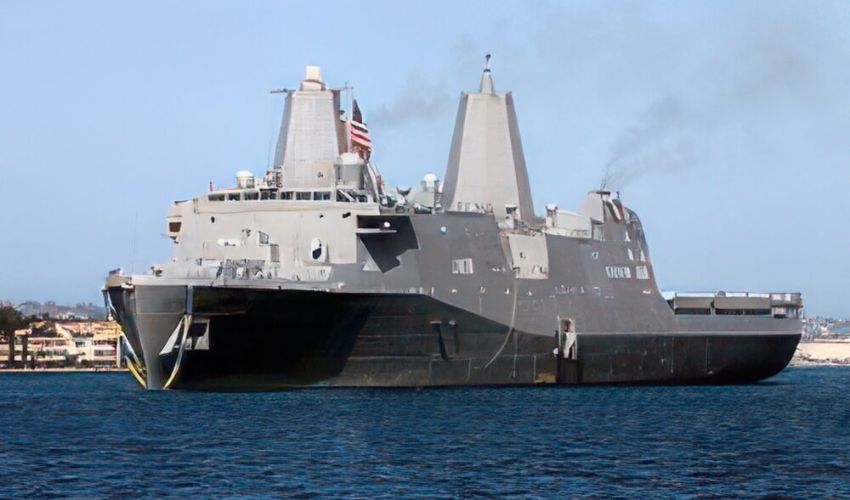
It would not be hyperbole to say that the U.S. Navy has quickly become one of the main adopters of additive manufacturing in the defense sector. We have heard time and time again about successful uses of 3D printing for both boats and submarines, whether as a way to overcome supply chain breakdowns or to ensure that even while at sea it will be possible to access parts. Now there yet another milestone has been achieved. ADDiTEC has announced that the Navy has successfully implemented liquid metal jetting (LMJ) while afloat, printing a high-strength aluminum alloy part.
You may have heard of liquid metal jetting before. The metal 3D printing technology was originally used in Xerox solutions and the U.S. Navy was an early adopter. However, after Xerox announced the end of its additive manufacturing activities, ADDiTEC was the one to save the technology, acquiring the 3D printing business of Xerox as well as the machines. And it is on a containerized ElemX 3D printer using LMJ that parts were made.
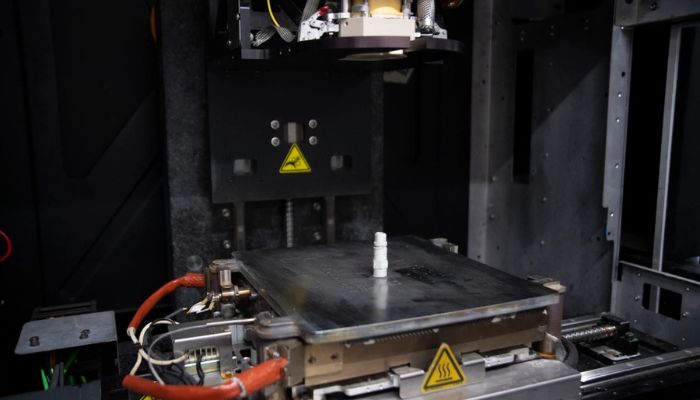
The ElemX 3D printer on the USS San Diego (photo credits: Mass Communication Specialist 1st Class Brandon Woods/U.S. Navy)
Using Metal 3D Printing on the USS San Diego
The U.S. Navy was able to successfully use the 3D printer to produce functional parts afloat while home ported in San Diego. Even more exceptionally, they managed to achieve a milestone by using high-strength aluminum alloys, such as Al-6061. Not only was the process efficient, but it seems that the essential printed parts were evaluated afterwards for quality and performance, and the results showed that they were acceptable and functional for the intended application.
More from the desk
Six other notes from the rest of the bench.
 Guides#3DStartup: 3D Spark Helps Companies Cut Costs and Waste in ProductionThe adoption of additive manufacturing in companies is steadily increasing. More and more companies are interested in taking advantage of 3D printing, but there is often uncertainty about choosing the right technology, materials and software. Spark 3D, a startup based…
 GuidesMiranda Marquez and her original vision of 3D printed clothingThe use of additive manufacturing in fashion is becoming increasingly popular. Many are the projects that use this technology to design unique pieces, from footwear to entire collections. In the world of fashion and design, 3D printing technology offers a great…
 NewsTwo Weeks Until ADDITIV’s New Virtual Event on AM in AerospaceAfter the success of previous events, including ADDITIV medical France and ADDITIV digital World, ADDITIV is organizing a new 100% virtual event, this time dedicated to additive manufacturing in Aerospace. Over the course of one day, participants will be able…
 News3YOURMIND receives €1.3 million to integrate AI in its software solutionsGerman company 3YOURMIND, which specialises in the development of software to automate additive manufacturing processes, has received €1.3 million in funding to integrate machine learning and artificial intelligence solutions into its software. This should further accelerate the
  NewsDetecting Keyhole Pores in Laser Powder Bed FusionScientists from the University of Virginia, Carnegie Mellon University and the University of Wisconsin-Madison have developed a method to detect and prevent the formation of structural defects known as ‘keyhole pores’ which can result in additively manufactured parts with poor&he
 NewsSavorEat Partners With Sodexo to Distribute its 3D Printed Meat Alternative in American UniversitiesIsraeli startup SavorEat, which specializes in developing alternatives to meat via 3D printing, has announced a partnership with Sodexo to offer gluten-free, kosher and vegan products to American universities. To be more precise, the American subsidiary of the multinational, Sode