Applications
Upcoming Trial to Use 3D Bioprinting in Improving the Treatment of Extensive Burns
Burns are the cause of death of around 180,000 people each year, according to the WHO. Severe burns, especially those affecting a large part of the body, are still a major challenge for modern medicine. Current treatments consist of skin…
- 3 min read
- Applications
- Six more stories
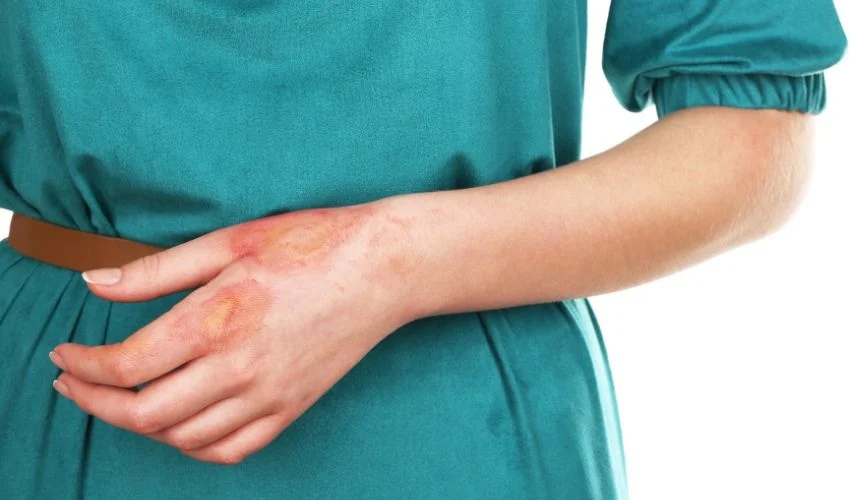
Burns are the cause of death of around 180,000 people each year, according to the WHO. Severe burns, especially those affecting a large part of the body, are still a major challenge for modern medicine. Current treatments consist of skin grafting, using the patient’s own healthy tissue to cover the wounds. However, in cases where the burned area is very large, finding enough healthy skin is practically impossible. This is compounded by scarring, chronic pain and other side effects, which significantly impact the quality of life of the survivors. In this context, an innovative technique based on 3D bioprinting and stem cell culture could be the solution for the treatment of extensive burns.
In early 2025, the Centre for Burn Research at the Hamilton Health Sciences (HHS) hospital network in Canada will begin a clinical trial that will evaluate the safety and effectiveness of using stem cells extracted from patients’ burned skin. This method promises to regenerate tissue without relying exclusively on healthy skin, something that they hope will completely change the landscape in the treatment of extensive burns. These stem cells from the burned tissue will be used to compose a biological ink to make new skin.
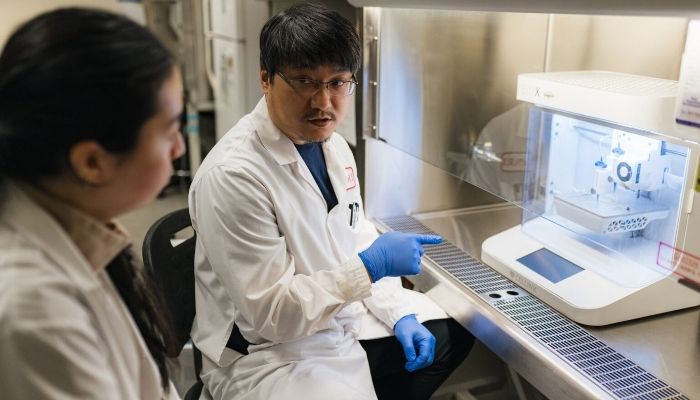
The study will use bio-inks composed of stem cells to obtain new skin (photo credits: Hamilton Health Sciences)
The path to this innovation began in an unexpected way. A few years ago, during a surgical intervention in a Toronto hospital, a technician mistook burned skin samples for healthy skin, tried to extract stem cells from them, and it worked. This mistake proved that the burned tissue contained viable stem cells. This mistake inspired research led by Dr. Jeschke, published in 2018. In that research, the cells were shown to be not only usable, but also effective in promoting healing in animals, such as mice and pigs. This finding broke paradigms, as burned tissue was previously considered “disposable” material.
More from the desk
Six other notes from the rest of the bench.
 GuidesHow to integrate 3D printing in your company: Experts give their advice!Today, 3D printing technologies are changing the way companies manufacture some parts. In fact, by integrating additive manufacturing into a company, it is possible to rethink the production process of various parts – from prototypes to end-use parts – in…
 ApplicationsOver 90 3D Printed Bus Shelters Installed in the Indian City of ChennaiThe Indian city of Chennai currently has around 1,420 bus shelters. Many of them are in poor condition, and their usage is limited, if not abandoned. However, thanks to additive manufacturing, this is set to change! In the future, Chennai…
 NewsWhat does the future hold for AM events?Events are key for the additive manufacturing sector – they allow AM players and users to discover and share about the latest trends and developments in 3D printing. Of course, as a result of the COVID-19 pandemic, 3D printing events…
 MaterialsHow Concrete Formwork Filament Can Push the Limits of ArchitectureAs art imitates life, and life, art, architecture as a typically large scale and public art form, has the capacity to both represent and influence cultural eras. It is through architecture that creators, transforming its design language, are able to…
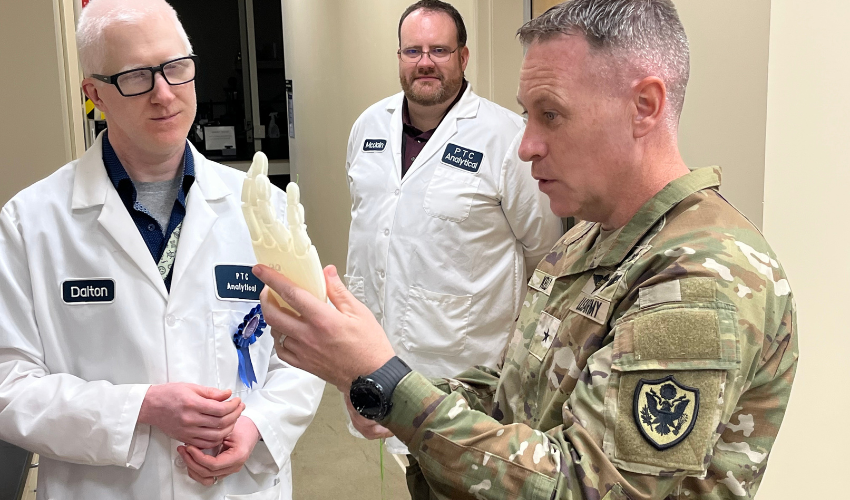 ApplicationsU.S. Defense Is Using a 3D Printed Hand for Safer TestingThe United States Defense Logistics Agency (DLA) recently announced its new 3D printed solution to help improve safety during hazardous glove testing. The engineers at the DLA Analytical Product Test Center in Philadelphia have developed an artificial hand that can…
 News3D Hubs Report: Key Market Findings and Trends for 20193D Hubs has released its traditional quarterly trends report. 3D Hubs is the world’s largest network of manufacturing services. Looking back on 2018, the company admits that the most significant change was the evolution of 3D printing from an almost…